
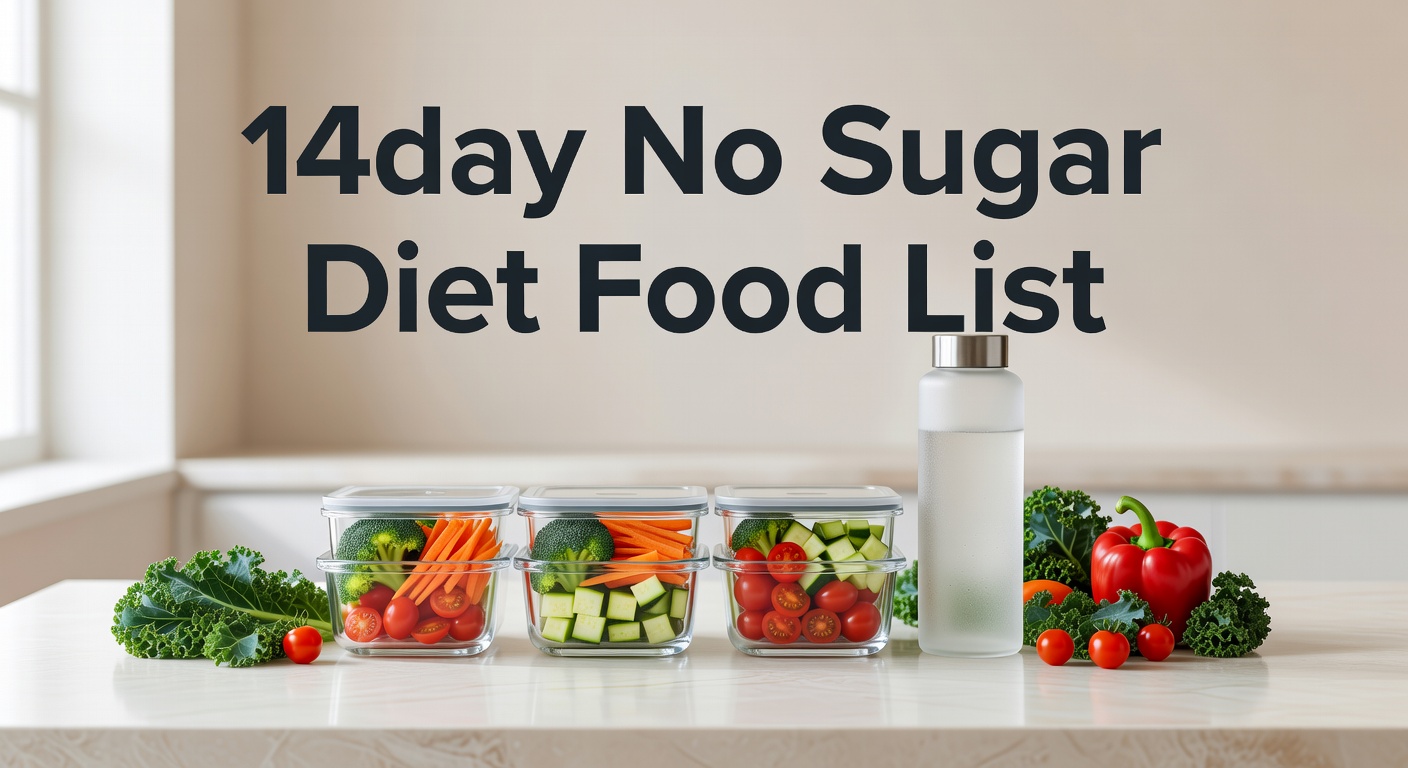
A 14-day no sugar diet removes all added sugars and processed ingredients from daily meals, replacing them with lean proteins, vegetables, and whole foods that stabilize blood sugar, reduce inflammation, and reset the body’s relationship with sweetness over two structured, focused weeks.
This guide covers what ‘no sugar’ actually means, lists every approved food by category with portion guidance, identifies foods to avoid and hidden sugar names that trip up most beginners, walks through the most common mistakes, and includes a complete sample meal plan for both weeks with craving management strategies to get through the first three days.
Cutting sugar for 14 days is one of the most impactful short-term health resets available. Energy stabilizes, digestion improves, mood lifts, and bloating disappears. The food list is practical, affordable, and built for real daily schedules. No supplements or specialty stores required.
What Is a 14-Day No Sugar Diet?
A 14-day no sugar diet eliminates all added and refined sugars from your meals for two full weeks, replacing them with whole foods that stabilize blood sugar and reduce inflammation. It targets white sugar, syrups, and processed ingredients. Natural sugars in whole fruit and dairy are allowed in moderation. The goal is a metabolic reset, not permanent sugar elimination.
Here’s the key distinction: this isn’t the same as a low-carb or keto approach. It focuses specifically on removing added sugars and refined flours. Whole grains, legumes, and starchy vegetables remain on the plan. The 14-day window is long enough to break sugar dependency and establish cleaner habits.
What Foods Are Allowed on a No Sugar Diet?
Approved foods on a no sugar diet include lean proteins, non-starchy vegetables, low-sugar fruits, healthy fats, whole grains, and unsweetened beverages that collectively provide complete nutrition without spiking blood sugar. Each food category serves a specific role. Proteins build satiety. Vegetables supply fiber and micronutrients. Healthy fats slow digestion and reduce cravings between meals.
Approved Food Categories:
- Lean proteins: chicken, turkey, fish, eggs, legumes, tofu
- Non-starchy vegetables: spinach, kale, broccoli, cauliflower, bell peppers
- Low-sugar fruits: berries, avocado, tomatoes
- Healthy fats: olive oil, avocado, nuts, seeds, coconut oil
- Whole grains: quinoa, brown rice, oats (up to 0.5 cup per meal)
- Dairy: unsweetened Greek yogurt, cheese (in moderation)
- Beverages: water, herbal tea, black coffee (no sugar)
Bottom line: whole foods form the foundation of every meal. Chicken, eggs, fish, spinach, broccoli, berries, avocado, olive oil, and quinoa are all approved. Water, herbal tea, and black coffee without sugar are the preferred beverages. Packaged items without added sugar are permitted if labels confirm zero added sugars.
What Does ‘No Sugar’ Actually Mean?
‘No sugar’ on this diet means eliminating all added sugars, refined syrups, and artificial sweeteners, while keeping naturally occurring sugars in whole fruit and unsweetened dairy within daily portion limits. Added sugar includes white sugar, honey, maple syrup, agave, and corn syrup. These are removed entirely. Artificial sweeteners like stevia, monkfruit, and erythritol are also excluded to fully reset taste preferences during the 14 days.
Natural sugars in berries, avocado, and plain Greek yogurt are acceptable. The good news? You don’t have to cut out all sweetness. The key distinction is the food matrix. Whole foods deliver sugar alongside fiber and nutrients. Processed sugars deliver calories with no nutritional benefit and spike insulin rapidly.
What Are the Benefits of Cutting Sugar for 14 Days?
Cutting sugar for 14 days delivers measurable improvements in mood, energy, skin clarity, digestion, and sleep quality as the body transitions away from glucose spikes and toward stable, fat-adapted fuel usage. Most people notice changes within the first week. Mood lifts, brain fog clears, and energy becomes consistent throughout the day. Skin often appears clearer as inflammation drops. These aren’t subtle shifts.
Digestive health improves as the gut microbiome adjusts to whole foods and fiber. Bloating decreases noticeably within the first two weeks. The 14-day window is short enough to stay motivated but long enough to produce real, visible results. Sound worth it? Here’s what the benefits look like in practice.
Benefits of a 14-Day No Sugar Diet:
- More consistent energy without afternoon crashes
- Improved mood and reduced irritability
- Clearer skin and reduced inflammation
- Better digestion and reduced bloating
- Sharper mental focus and clarity
- Improved sleep quality
- Reduced sugar cravings over time
Does a No Sugar Diet Improve Energy and Mood?
Yes. A no sugar diet stabilizes blood glucose and eliminates the energy crashes that follow sugar spikes, producing more consistent energy and a measurably brighter mood within four to seven days of starting the plan. Sugar creates a cycle of highs and crashes. Removing it breaks that cycle completely. The body shifts to burning stable fuel sources. Energy stays even across the full day without afternoon drops or irritability after meals.
This means mood improvement is tied directly to glucose stability. Fluctuating blood sugar triggers cortisol and stress hormones. Removing added sugars reduces those hormonal swings. Sleep quality improves as glucose stabilizes overnight. Most people report feeling noticeably calmer and more focused by day five or six.
Can Removing Sugar Help With Weight Loss?
Yes. Removing sugar reduces total caloric intake, lowers insulin secretion, and decreases water retention, which together produce measurable weight and bloating reduction within the 14-day no sugar diet timeframe. Processed sugary foods are calorie-dense and nutrient-poor. Replacing them with whole foods naturally reduces calorie intake. Lower insulin levels allow the body to access stored fat more efficiently. Water retention decreases as glycogen stores reduce.
Results vary by individual. Starting weight, activity level, and food quality all influence outcomes. That said, bloating reduction is the most consistent and visible change within 14 days. People with higher sugar intake before starting typically see the most dramatic early results.
What Is the Complete 14-Day No Sugar Diet Food List?
The complete no sugar diet food list spans eight categories including proteins, vegetables, fruits, healthy fats, whole grains, dairy alternatives, pantry staples, and approved drinks that together cover all macronutrients without any added sugars. Each category has specific portion guidance. Proteins target 0.8 to 1 gram per pound of body weight daily. Fruits are limited to 1-2 cups per day. Whole grains cap at half a cup per meal to prevent blood sugar spikes.
The good news? The list is practical and satisfying. It includes common, affordable ingredients available at any grocery store. No specialty health foods are required. The variety across categories prevents boredom and ensures nutritional completeness throughout the two weeks.
Complete No Sugar Diet Food List by Category:
| Category | Examples | Daily Portion |
|---|---|---|
| Lean Proteins | Chicken, turkey, fish, eggs, tofu, legumes | 0.8-1g per lb body weight |
| Non-Starchy Vegetables | Spinach, kale, broccoli, cauliflower, peppers | At least 1 cup per meal |
| Starchy Vegetables | Sweet potato, carrots | Up to 0.5 cup per meal |
| Low-Sugar Fruits | Berries, avocado, tomatoes | 1-2 cups daily |
| Healthy Fats | Olive oil, avocado, nuts, seeds | 1 cooking fat + 1 other per meal |
| Whole Grains | Quinoa, brown rice, oats | Up to 0.5 cup per meal |
| Dairy | Unsweetened Greek yogurt, cheese | In moderation |
| Beverages | Water, herbal tea, black coffee | Unlimited (no sugar added) |
Which Proteins Should You Eat on a No Sugar Diet?
The best proteins for a no sugar diet are lean animal and plant sources including chicken, turkey, fish, eggs, legumes, and tofu, all of which deliver the 0.8 to 1 gram per pound of body weight needed to preserve muscle and sustain satiety. Chicken breast and turkey are low in fat and free of added sugars. Salmon and other fatty fish add omega-3s that support inflammation reduction. Eggs are versatile, affordable, and nutrient-dense for daily meals.
Plant proteins like legumes and tofu work equally well. Legumes add fiber alongside protein, improving gut health and fullness. Tofu absorbs flavors from herbs and spices easily. Protein at every meal reduces cravings and prevents blood sugar dips between eating windows.
Which Vegetables Are Best for a No Sugar Diet?
The best vegetables for a no sugar diet are non-starchy options like spinach, kale, broccoli, cauliflower, and bell peppers, which should fill at least one full cup per meal to provide fiber, volume, and micronutrients without raising blood sugar. Leafy greens are the most nutrient-dense choice. Cruciferous vegetables like broccoli and Brussels sprouts support gut health and reduce inflammation. Bell peppers and cucumbers add crunch and variety without starch.
Starchy vegetables like sweet potato and carrots are also approved in smaller portions. Half a cup per meal is the recommended limit for starchy options. Zucchini and cucumber are unlimited options for adding bulk to meals without impacting blood sugar at all.
What Fruits Can You Eat on a No Sugar Diet?
Low-sugar fruits approved on a no sugar diet include berries, avocado, and tomatoes, which together provide antioxidants, healthy fats, and fiber within the 1 to 2 cup daily limit that keeps fruit sugar intake controlled throughout the 14 days. Berries are the top choice. Blueberries, strawberries, and raspberries are low in sugar and high in antioxidants. Avocado is technically a fruit and contributes healthy monounsaturated fats. Tomatoes add versatility to savory meals.
Approved vs. Excluded Fruits:
| Approved (Low-Sugar) | Excluded (High-Sugar) |
|---|---|
| Blueberries | Bananas |
| Strawberries | Mangoes |
| Raspberries | Grapes |
| Avocado | Pineapple |
| Tomatoes | Dried fruit |
| Blackberries | Fruit juice |
Wondering which fruit to grab first? Start with berries. Fruit portions matter on this plan. Exceeding 2 cups daily can raise sugar intake above the target threshold. Pairing fruit with a small handful of almonds slows sugar absorption and reduces cravings. High-sugar fruits like bananas, mangoes, and grapes are excluded for the 14-day period.
What Healthy Fats Belong on Your No Sugar Food List?
Healthy fats on the no sugar food list include olive oil, coconut oil, avocado, nuts, and seeds, with one cooking fat serving plus one additional fat source per meal to support hormone function, satiety, and nutrient absorption. Olive oil is the primary cooking fat for most meals. Avocado adds creaminess and monounsaturated fats to salads and bowls. Nuts and seeds serve double duty as both a fat source and a protein supplement between meals.
Here’s why fat matters: it doesn’t spike blood sugar. It slows digestion and extends the feeling of fullness. Including fat at every meal reduces the frequency of cravings. Almond butter without added sugar is a quick snack option that combines fats and protein effectively.
What Foods Should You Avoid on a No Sugar Diet?
Foods to avoid on a no sugar diet include all added sugars, refined flours, sweetened condiments, processed packaged foods, and artificial sweeteners that collectively disrupt blood sugar, prevent the metabolic reset, and extend sugar dependency beyond the 14-day plan. White sugar, honey, maple syrup, agave, and corn syrup are the primary exclusions. Refined flour products like white bread and pasta spike blood sugar as rapidly as pure sugar. Packaged sauces and dressings frequently contain hidden added sugars even when marketed as healthy options.
Artificial sweeteners are also excluded. Stevia, monkfruit, erythritol, and xylitol maintain sweet cravings without providing sugar. This prevents the taste bud reset the diet is designed to achieve. Reading every label is non-negotiable during the 14 days.
Foods to Avoid Completely:
- White sugar, brown sugar, powdered sugar
- Honey, maple syrup, agave nectar
- Corn syrup and high-fructose corn syrup
- Artificial sweeteners: stevia, monkfruit, erythritol, xylitol
- Refined flour products: white bread, pasta, crackers
- Sweetened beverages: soda, juice, flavored water, energy drinks
- Condiments with added sugar: ketchup, BBQ sauce, teriyaki
- Flavored yogurts and sweetened dairy products
- Premade meals and packaged snacks with added sugars
How Do You Spot Hidden Sugars on Food Labels?
Hidden sugars on food labels appear under names like dextrose, sucrose, fructose, maltose, and corn syrup, all of which count toward the under-5-gram daily added sugar target that keeps the 14-day no sugar diet effective and metabolically clean. Manufacturers use multiple sugar names to obscure total content. A single product can list three different sugar names while appearing low in sugar on a quick read. The ingredients list always tells the full story. Any sugar-derived name in the top five ingredients is a red flag.
Common Hidden Sugar Names on Labels:
- Dextrose, sucrose, fructose, glucose
- Maltose, lactose, galactose
- Corn syrup, high-fructose corn syrup
- Cane juice, evaporated cane juice
- Barley malt, rice syrup, molasses
- Fruit juice concentrate
The nutrition facts panel shows ‘Added Sugars’ as a separate line below total sugars. That’s the number to track. Aim for less than 5 grams of added sugar per day. This threshold allows for some flexibility. Healthy salad dressings with small amounts of added sugar still fit within the daily limit.
What Are the Most Common Mistakes on a No Sugar Diet?
The most common mistakes on a no sugar diet include consuming hidden sugars in packaged condiments, replacing sugar with artificial sweeteners, and eating too much fruit, all of which stall progress and prevent the full metabolic benefits of the 14-day reset. Hidden sugars are the biggest pitfall. Ketchup, salad dressing, flavored yogurt, and granola bars are common offenders. Many people eliminate obvious sugar sources but miss these daily additions. They add up quickly and push added sugar intake well above the 5-gram target.
Artificial sweeteners seem like a smart swap but maintain sweet cravings without satisfying them. The taste bud reset never happens. Fruit overconsumption is another frequent error. Berries are approved, but eating four cups daily exceeds the sugar budget. Hunger drives poor choices. Skipping meals amplifies cravings during the first three days.
How Do You Manage Sugar Cravings for 14 Days?
Sugar cravings on a no sugar diet peak during the first three days as glucose levels stabilize, then diminish significantly with consistent whole food intake, proper hydration, and strategic food pairing that blunts the intensity of sweet cravings throughout the plan. Days one through three are the hardest. The body expects its regular sugar dose. Staying well-hydrated reduces craving intensity. Eating protein and fat at every meal keeps blood sugar stable and prevents the dips that trigger urgent cravings for sweets.
Top Strategies to Beat Sugar Cravings:
- Pair low-sugar fruit with almonds or walnuts to slow sugar absorption
- Drink a full glass of water before reaching for a snack
- Eat a high-protein breakfast to reduce mid-morning cravings
- Stock the pantry with approved snacks before day 1
- Include healthy fat at every meal to extend fullness
- Avoid skipping meals, especially in the first week
- Use herbal tea to satisfy the urge for something warm and sweet
Here’s why preparation matters: stocking the pantry with approved foods before starting eliminates the moment of weakness when cravings hit and nothing convenient is available. Pairing fruit with almonds is one of the most effective strategies. The fat and protein slow sugar absorption and create lasting satisfaction.
What Happens to Your Body After 14 Days With No Sugar?
After 14 days without sugar, the body shows measurable improvements in mood, sleep quality, digestion, energy consistency, and skin clarity as insulin stabilizes, gut bacteria shift toward health-promoting strains, and inflammation markers decline. These aren’t placebo effects. Blood glucose becomes more stable, which directly improves hormone balance and sleep architecture. Digestive discomfort and bloating resolve as the gut microbiome adjusts to fiber-rich whole foods. Mental clarity and focus sharpen noticeably by the end of week two.
The 14-day reset also builds the habits needed for longer-term health gains. Most people find sugar cravings are significantly reduced after the two weeks. Taste preferences shift. Foods that previously tasted ‘not sweet enough’ become satisfying. The body adapts and the desire for highly sweetened foods decreases on its own.
How Much Weight Can You Lose in 14 Days Without Sugar?
Weight loss in 14 days without sugar varies by individual, but bloating reduction and water weight loss are the most consistent early results, with visible changes in abdominal fullness appearing for most people within the first five to seven days of the plan. There’s no single number for fat loss across 14 days. The variables are too individual. Starting weight, baseline sugar intake, activity level, and food quality all determine the outcome. People with high prior sugar consumption typically see the most dramatic early changes in both weight and energy.
Bloating is often the first and most visible change. As glycogen stores deplete and water retention decreases, the stomach appears flatter. Fat loss continues more gradually. Sustained results come from continuing the habits built during the 14 days rather than returning to a high-sugar diet immediately after.
What Does a Sample 14-Day No Sugar Meal Plan Look Like?
A sample 14-day no sugar meal plan follows a three-meal structure each day using approved proteins, vegetables, healthy fats, and whole grains, with meals designed to be simple, repeatable, and satisfying enough to prevent the hunger that triggers sugar cravings. The plan doesn’t require complex cooking. Most meals take under 30 minutes. Batch cooking proteins and grains on Sunday reduces daily prep time significantly. The structure stays consistent across all 14 days to build reliable habits without decision fatigue.
Variety is built in through rotating proteins and vegetables. Breakfast rotates between egg dishes, Greek yogurt bowls, and savory omelets. Lunches alternate between salads, wraps in lettuce leaves, and grain bowls. This rotation prevents boredom while keeping the food list manageable and the shopping list short.
What Should You Eat in Week 1 of Your No Sugar Diet?
Week 1 of a no sugar diet focuses on simple, familiar meals that eliminate obvious sugar sources while building the whole food habits and taste preferences that make week 2 easier, less reliant on willpower, and more naturally aligned with clean eating. Day 1 starts with scrambled eggs with spinach and avocado for breakfast, a grilled chicken salad for lunch, and baked salmon with broccoli and quinoa for dinner. Day 2 shifts to Greek yogurt with berries, turkey lettuce wraps, and tofu stir-fry with brown rice. Day 3 uses a veggie omelet, tuna salad over greens, and grilled chicken with sweet potato.
Week 1 Sample Meals:
| Day | Breakfast | Lunch | Dinner |
|---|---|---|---|
| Day 1 | Scrambled eggs, spinach, avocado | Grilled chicken salad | Baked salmon, broccoli, quinoa |
| Day 2 | Greek yogurt with berries | Turkey lettuce wraps | Tofu stir-fry, brown rice |
| Day 3 | Veggie omelet | Tuna salad over greens | Grilled chicken, sweet potato |
| Day 7 | Breakfast scramble with peppers | Grilled salmon salad | Turkey meatballs, spaghetti squash |
The first three days are the most challenging for cravings. Keeping meals simple and satisfying is the priority. High-protein breakfasts reduce mid-morning cravings significantly. Preparing lunches the night before prevents reaching for convenient but sugar-laden alternatives. Each day builds confidence that the plan is sustainable without feeling deprived.
How Does Week 2 of a No Sugar Diet Differ From Week 1?
Week 2 of a no sugar diet builds on the foundation of week 1 with greater meal variety, noticeably reduced sugar cravings, and measurable improvements in energy, mental clarity, and digestion that confirm the body has successfully adapted to a sugar-free fuel source. By day 10, most people report that cravings have nearly disappeared. The eating pattern feels natural rather than restrictive. Week 2 introduces slightly more complex flavor combinations to sustain interest. Day 14 features scrambled eggs with spinach and mushrooms, a quinoa and black bean salad, and baked chicken thighs with roasted carrots and quinoa.
Week 2 Sample Meals:
| Day | Breakfast | Lunch | Dinner |
|---|---|---|---|
| Day 8 | Eggs with avocado and tomatoes | Quinoa bowl with chickpeas | Baked cod with roasted vegetables |
| Day 10 | Greek yogurt, berries, seeds | Tuna salad, cucumber slices | Chicken stir-fry, cauliflower rice |
| Day 14 | Scrambled eggs, spinach, mushrooms | Quinoa and black bean salad | Baked chicken thighs, roasted carrots, quinoa |
Energy in week 2 is noticeably higher and more consistent than in week 1. The initial adjustment period is over. Sleep is deeper. Focus at work or during workouts is sharper. Many people decide to continue beyond 14 days after experiencing these compounding improvements. The discipline built in week 1 makes week 2 feel achievable and rewarding.
Want Your Free 14-Day No Sugar Meal Plan From Eat Proteins?
Our nutritionists at Eat Proteins have built a free 14-day no sugar meal plan with a complete food list, daily meals, a shopping guide, and craving management strategies so you can start immediately and get real results without guesswork. Everything is laid out day by day. The food list is ready to print. The meals are practical and fast to prepare. The plan is designed to work for real schedules, not ideal ones. No expensive supplements or specialty stores required.
Ready to start? Getting the plan takes seconds. Visit Eat Proteins, grab the free 14-day no sugar guide, and start tomorrow. The first three days are the hardest. After that, the body adapts and results accelerate. Our coaches at Eat Proteins have guided hundreds of people through this exact reset. The plan works when you follow it. Start today.