
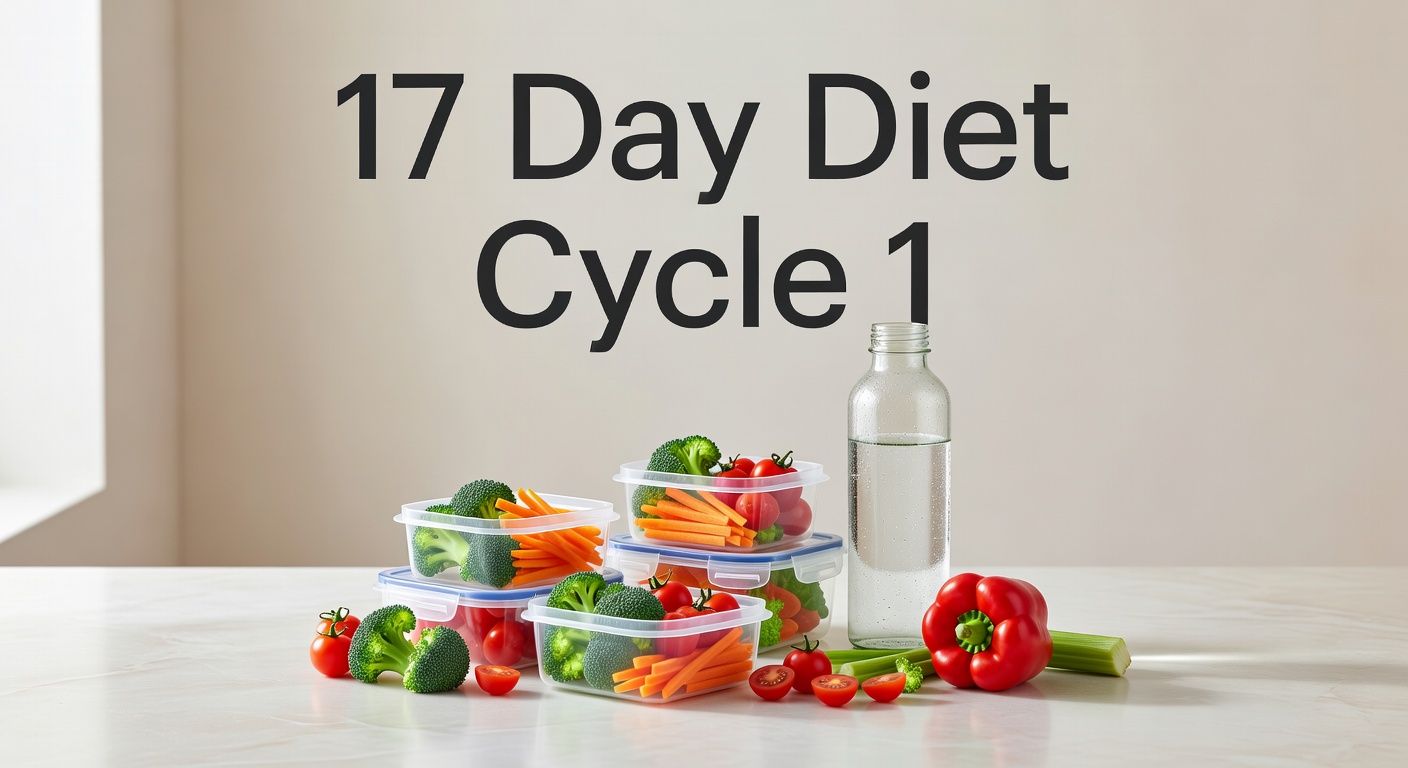
The 17 Day Diet cycle 1 is one of the most talked-about weight loss starts in structured dieting. It cuts grains, sugar, and alcohol entirely for 17 days. The results can be dramatic, and the rules are clear from day one.
Dr. Mike Moreno developed this program in 2010 after noticing that patients who rotated their food intake lost more weight than those stuck on static calorie plans. The first cycle, called Accelerate, is the foundation of the whole system. It’s strict, it’s intentional, and it’s designed to deliver fast visible results that keep you motivated through the cycles that follow.
This guide covers everything about the 17 Day Diet cycle 1: what to eat, what’s banned, sample meals, all four cycles, real weight loss expectations, and what the science actually says about how it works.
What Is the 17 Day Diet and How Does It Work?
The 17 Day Diet is a structured weight loss program divided into four sequential cycles, each designed to shift the body’s caloric intake and food combinations to prevent metabolic adaptation. Dr. Mike Moreno created it in 2010. The first three cycles each last exactly 17 days. The fourth cycle is a permanent lifestyle maintenance phase.
Here’s the core idea: each cycle changes what you eat and how much. This rotation keeps the body from settling into a predictable caloric pattern. The diet combines lean proteins, vegetables, probiotic foods, and structured exercise into one unified system. It’s not just about cutting calories. It’s about keeping your metabolism guessing.
Who Created the 17 Day Diet and Why?
Dr. Mike Moreno is a family physician who developed the 17 Day Diet after observing that patients who cycled their food intake lost more weight than those on static calorie-restricted plans. He published the program in 2010. The book became a bestseller. His goal was fast early results that motivate long-term adherence.
The diet’s structure is intentional. Cycle 1 delivers fast results in the first 17 days. That early win is built into the program design. It builds the motivation to complete Cycles 2, 3, and 4. Want a diet that gives you something to celebrate early? That’s exactly what Cycle 1 delivers.
How Does the Metabolic Confusion Concept Work?
Metabolic confusion is the principle that changing caloric intake and food types every 17 days prevents the metabolism from adapting to a fixed pattern, keeping fat-burning active throughout the program. Dr. Moreno uses this concept as the diet’s foundation. The idea is that the body never gets used to a set caloric level. Cycling breaks potential plateaus before they form.
Nutrition experts debate this mechanism. General caloric variation has some research support. However, no large clinical trials confirm the specific metabolic confusion effect as described in the 17 Day Diet. The practical results of eating whole foods and exercising regularly are well-supported, regardless of whether the metabolic confusion label is scientifically precise.
What Happens During Cycle 1 of the 17 Day Diet?
Cycle 1, called Accelerate, is the most restrictive phase of the 17 Day Diet, eliminating all grains, alcohol, added sugars, starchy vegetables, and most fruits while focusing on lean proteins and non-starchy vegetables for 17 days. The caloric intake sits at approximately 1,200 calories per day. No explicit calorie counting is required. Food type restrictions create the deficit automatically.
Daily rules in Cycle 1 are specific. You drink 64 ounces (1.9 liters) of water per day. You eat two servings of probiotic foods daily. You exercise for at least 17 minutes each day. Fruit is only consumed before 2pm. These aren’t suggestions. They’re the rules that make Cycle 1 work.
What Foods Are Allowed in Cycle 1?
Cycle 1 allows unlimited lean proteins and non-starchy vegetables, along with limited low-sugar fruits before 2pm, two daily servings of probiotic dairy, and healthy fats in moderation throughout the 17-day phase. Approved proteins include chicken breast, turkey breast, salmon, tuna, tilapia, shellfish, eggs, and egg whites. Skin is removed from all poultry. These proteins form the foundation of every meal.
Non-starchy vegetables have no serving limit. Leafy greens, broccoli, cauliflower, asparagus, cucumbers, tomatoes, peppers, onions, mushrooms, cabbage, and zucchini are all permitted. Low-sugar fruits including berries, apples, citrus, peaches, and plums are allowed but only before 2pm. So yes, you can eat. You just eat the right things.
Cycle 1 Approved Foods List:
| Category | Approved Foods |
|---|---|
| Lean Proteins | Chicken breast, turkey breast, salmon, tuna, tilapia, shellfish, eggs, egg whites |
| Non-Starchy Vegetables | Leafy greens, broccoli, cauliflower, asparagus, cucumbers, tomatoes, peppers, onions, mushrooms, zucchini, cabbage |
| Low-Sugar Fruits (before 2pm) | Berries, apples, citrus, peaches, plums |
| Probiotic Foods (2 daily) | Plain low-fat yogurt, kefir, acidophilus milk, cottage cheese |
| Healthy Fats | Olive oil, flaxseed oil (in moderation) |
| Beverages | Water, green tea, black coffee |
What Foods Are Banned in Cycle 1?
Cycle 1 eliminates all grains, starchy vegetables, high-sugar fruits, full-fat dairy, added sugars, alcohol, and processed or fried foods for the entire 17-day Accelerate phase. Bread, pasta, rice, and oatmeal are not permitted. Potatoes, corn, and peas are off the list. Bananas, grapes, and mangoes are excluded due to their high sugar content.
Alcohol is fully prohibited in Cycle 1. Processed foods and salty, high-sodium items are also banned. Full-fat dairy is replaced by low-fat probiotic options. These restrictions are what make Cycle 1 the toughest phase in the program. They’re also what make it the most effective one for rapid early results.
Cycle 1 Banned Foods List:
| Category | Banned Foods |
|---|---|
| Grains | Bread, pasta, rice, oatmeal, cereals |
| Starchy Vegetables | Potatoes, corn, peas |
| High-Sugar Fruits | Bananas, grapes, mangoes |
| Dairy | Full-fat dairy products |
| Other | Added sugars, alcohol, processed foods, fried foods, high-sodium foods |
How Many Calories Do You Eat in Cycle 1?
Cycle 1 produces approximately 1,200 calories per day through food group restrictions alone, without requiring any explicit calorie counting from the dieter. The elimination of grains, starches, and sugars naturally reduces caloric intake. Lean proteins and vegetables are calorie-light but filling. This structure creates a significant daily caloric deficit without weighing or measuring food.
No calorie tracking app is needed in Cycle 1. The food rules do the work. Eating unlimited approved proteins and vegetables keeps hunger manageable while staying within the implied caloric range. That’s one reason followers find the first cycle more doable than it first sounds.
What Does a Sample Cycle 1 Meal Plan Look Like?
A sample Cycle 1 day structures every meal around lean proteins and non-starchy vegetables, with probiotic foods and low-sugar fruit consumed before 2pm to align with the diet’s timing and food rules. Breakfast typically combines eggs with vegetables and a probiotic dairy. Lunch is a large protein-topped salad. Dinner is baked or grilled protein with two vegetable sides.
Snacks fit the same rules. Plain low-fat yogurt satisfies the probiotic requirement. An apple consumed before 2pm fills the fruit allowance. Water and green tea are the primary beverages throughout the day. This structure repeats across all 17 days of Cycle 1. Once you get the pattern down, it becomes automatic.
Sample Cycle 1 Daily Meal Plan:
| Meal | Example |
|---|---|
| Breakfast | Scrambled eggs with spinach and tomatoes, green tea |
| Snack (before 2pm) | Plain low-fat yogurt and an apple |
| Lunch | Grilled chicken salad with mixed greens, cucumber, avocado, and olive oil dressing |
| Dinner | Baked salmon with steamed broccoli and asparagus |
| Beverages | 8 glasses of water (64 oz / 1.9L), green tea, black coffee |
What Do You Eat for Breakfast on Cycle 1?
Breakfast on Cycle 1 centers on eggs or egg whites combined with non-starchy vegetables, paired with a probiotic food and a low-sugar fruit consumed early to stay within the before-2pm timing rule. Scrambled eggs with spinach and tomatoes is a standard option. Plain low-fat yogurt alongside berries is another. Green tea or black coffee replaces sugary morning drinks entirely.
Morning is the strategic window for fruit on this plan. Eating fruit at breakfast satisfies the sweet craving and complies with the 2pm cutoff. Probiotic dairy at breakfast counts toward the two daily required servings. Starting the day with protein and vegetables sets the satiety pattern for the rest of the day. It’s a strong foundation for what follows.
What Do You Eat for Lunch and Dinner on Cycle 1?
Lunch and dinner on Cycle 1 follow the same structure: a generous serving of baked, grilled, or steamed lean protein served alongside or over unlimited non-starchy vegetables, dressed lightly with olive oil or flaxseed oil. Grilled chicken over a large mixed green salad with cucumber and tomato is a typical lunch. Baked salmon alongside steamed broccoli and asparagus is a standard dinner.
No grains appear in any lunch or dinner during Cycle 1. The absence of bread, rice, or pasta is the most significant shift for most followers. Olive oil provides healthy fat. Herbs and spices add flavor without breaking any food rules. Portion size for vegetables is unlimited, so there’s no reason to go hungry.
What Are Cycles 2, 3, and 4 of the 17 Day Diet?
Cycles 2, 3, and 4 progressively reintroduce food groups removed in Cycle 1, moving from alternating low and higher-calorie days in Cycle 2 to broader food variety in Cycle 3 and permanent lifestyle maintenance in Cycle 4. Each cycle builds on the habits formed in the previous one. The gradual reintroduction prevents the weight regain common in extreme elimination diets.
Exercise requirements also increase across cycles. Cycle 1 starts at 17 minutes of moderate activity daily. By Cycles 3 and 4, the target is 40 to 60 minutes of aerobic exercise most days. The program builds fitness habits alongside dietary habits. Both matter for keeping the weight off long-term.
How Is Cycle 2 Different from Cycle 1?
Cycle 2, called Activate, alternates between strict Cycle 1 eating days and higher-calorie days every other day, adding two servings of natural starches on the higher-calorie days to stimulate the metabolism and prevent adaptation. The alternating structure is what distinguishes Cycle 2. One day follows Cycle 1 rules exactly. The next day adds starches. Then you reset. The pattern repeats for 17 days.
Approved starches for Cycle 2 higher-calorie days include legumes, whole grains, barley, brown rice, couscous, oatmeal, quinoa, tubers, and root vegetables. These are natural, unprocessed carbohydrates. The alternating pattern is the mechanism Dr. Moreno uses to activate the metabolism before each lower-calorie day resets it.
Cycle 2 Natural Starches (Higher-Calorie Days):
- Legumes (lentils, black beans, chickpeas)
- Whole grains (brown rice, quinoa, oatmeal, barley, couscous)
- Ancient grains (amaranth)
- Tubers and root vegetables
What Foods Does Cycle 3 Add Back?
Cycle 3, called Achieve, reintroduces whole-grain bread, gluten-free bread, high-fiber cereals, and various pasta types, giving followers the broadest food variety of any structured phase in the 17 Day Diet program. Most followers report feeling significantly better in Cycle 3. Energy levels rise. Meal options expand. The diet begins to resemble a sustainable long-term eating pattern rather than a strict elimination protocol.
Cycle 3 doesn’t remove the discipline of Cycles 1 and 2. Lean proteins, non-starchy vegetables, and probiotics remain central. The addition of whole grains and cereals rounds out the nutritional profile. Cycle 3 bridges the gap between the elimination phase and permanent maintenance. It’s where the diet starts feeling like real life again.
How Does Cycle 4 Work as a Maintenance Phase?
Cycle 4, called Arrive, is a permanent maintenance structure that follows Cycles 1 through 3 eating rules from Monday breakfast through Friday lunch, then permits more indulgent meals from Friday dinner through Sunday dinner. The weekend window allows one to two favorite meals. No carbohydrates after 2pm remains a rule throughout. One to two alcoholic drinks per weekend are permitted.
Saturday and Sunday require one hour of intense exercise each day. This offsets the extra weekend calories. The structure gives followers flexibility without abandoning the habits built in Cycles 1 through 3. Cycle 4 is designed to last a lifetime. That’s the whole point of calling it ‘Arrive.’
What Are the Pros and Cons of the 17 Day Diet?
The 17 Day Diet offers a structured, exercise-integrated approach to weight loss that delivers fast early results without calorie counting, but requires significant food group elimination in Cycle 1 and makes social eating challenging throughout the early phases. The program balances genuine strengths with real trade-offs. Understanding both sides helps you decide if it fits your lifestyle before you commit to day one.
What Are the Biggest Benefits of the 17 Day Diet?
The 17 Day Diet’s biggest benefit is its combination of fast early weight loss, built-in exercise, daily probiotic requirements, and unlimited lean protein that keeps hunger manageable while creating a meaningful caloric deficit in Cycle 1. Gut health improves with daily probiotic foods. Satiety stays high because lean proteins and vegetables are unlimited. No calorie counting removes a major friction point. Community support is widely available online.
The structured nature of the program removes daily decision fatigue. You know exactly what to eat. The gradual reintroduction of food groups across cycles builds sustainable habits. Fast early results in Cycle 1 provide the motivation many dieters need to continue through Cycles 2 and 3. That momentum is hard to put a value on.
Key Benefits at a Glance:
- Fast visible weight loss in the first 17 days
- No calorie counting required
- Unlimited lean proteins and vegetables prevent hunger
- Built-in daily exercise component
- Daily probiotics support gut health
- Structured plan removes decision fatigue
- Gradual food reintroduction builds long-term habits
What Are the Main Drawbacks of the 17 Day Diet?
The main drawback of the 17 Day Diet is that Cycle 1 eliminates entire food groups including grains and most fruits, does not meet USDA dietary guidelines, and makes social eating nearly impossible during the most restrictive phase. Bloating is a common complaint in early Cycle 1 as the gut adapts. Rapid early weight loss includes water weight, not only fat. The metabolic confusion claims lack strong clinical evidence.
No caloric guidelines beyond Cycle 1’s 1,200-calorie approximation are given for later cycles. This ambiguity can be confusing. The social eating challenge is significant. Restaurants rarely offer menu options that align with Cycle 1 rules without modification. Followers who travel frequently or eat out often find Cycle 1 particularly difficult to maintain.
Main Drawbacks at a Glance:
- Cycle 1 eliminates grains, most fruits, and starches entirely
- Does not meet USDA dietary guidelines in Cycle 1
- Bloating is common in the first week
- Social and restaurant eating is difficult
- Early rapid weight loss includes water weight
- Metabolic confusion claims are not clinically proven
- No explicit calorie guidance beyond Cycle 1
Is the 17 Day Diet Safe and Backed by Science?
The 17 Day Diet is generally safe for healthy adults in the short term because it centers on whole foods and regular exercise, both of which have strong evidence supporting weight loss and metabolic health, even if the metabolic confusion mechanism itself is debated. The probiotic focus adds a digestive health benefit that most diets ignore. Lean proteins and vegetables form a nutrient-dense base. The exercise requirement reinforces long-term habit formation.
Cycle 1’s restrictions aren’t suitable for pregnant women, those with eating disorder history, or individuals with specific medical conditions. Anyone with chronic health conditions should consult a physician before starting. The short 17-day duration of each cycle limits the risk of nutritional deficiency for most healthy adults who follow the plan as written.
What Do Experts Say About Metabolic Confusion?
Nutrition experts acknowledge that varying caloric intake over time has some research support for preventing plateaus, but the specific metabolic confusion mechanism Dr. Moreno describes lacks large-scale clinical trial evidence to confirm its unique effectiveness. The diet’s real-world results are more likely driven by the caloric deficit in Cycle 1, the whole food focus, and the daily exercise requirement. These three factors are consistently supported by nutrition science.
The term ‘metabolic confusion’ is a marketing framework more than a proven biological mechanism. That doesn’t mean the diet fails to produce results. Followers regularly lose significant weight. The mechanism driving that loss is the caloric deficit and food quality, not a unique metabolic response to cycling. Knowing that helps set realistic expectations going in.
How Much Weight Can You Lose on the 17 Day Diet?
The 17 Day Diet claims a loss of 10 to 12 pounds in the first 17 days, with real user reports ranging from 5 to 14 pounds, though a significant portion of early weight loss comes from water weight and glycogen depletion rather than pure fat loss. Dr. Moreno’s claim is based on the combined effect of the caloric deficit, food group elimination, and daily exercise in Cycle 1. The 1,200-calorie daily intake creates a sustained deficit across all 17 days.
Want to lose weight faster and keep it off? Get a proven weight loss plan that delivers real, lasting results built on whole foods and structured support.
Real users report varied outcomes. Some lose 5 pounds in the first 10 days. Others hit 14 pounds by the end of Cycle 1. The variation depends on starting weight, exercise intensity, and how strictly the food rules are followed. Heavier individuals with more to lose tend to see faster initial results.
Are the Weight Loss Results Realistic?
Yes. The weight loss results from the 17 Day Diet are realistic within the 5 to 14 pound range for Cycle 1, with actual fat loss accounting for a portion of that total and water weight making up a meaningful share of the rapid early drop. A 1,200-calorie daily intake combined with 17 minutes of daily exercise creates a real caloric deficit. That deficit drives genuine fat loss over 17 days. The scale drop is real, even if not all of it is fat.
Changing caloric intake each cycle prevents the plateau effect common in static-calorie diets. This is the practical benefit of the cycling structure, regardless of whether metabolic confusion is the actual mechanism. Followers who complete all four cycles tend to maintain more weight loss than those who stop after Cycle 1. Consistency across cycles is what makes the long-term results stick.
Want Your Free 17-Day Diet Meal Plan?
You don’t have to figure out Cycle 1 alone. Our nutritionists at Eat Proteins have built a ready-to-use 17-Day Diet meal plan that maps every approved food to every meal across all 17 days of Cycle 1, so you start strong and stay on track. It’s free. It’s structured. It removes every guessing game from your first 17 days.
Subscribe below and our coaches at Eat Proteins will send your complete plan straight to your inbox. You’ll get the Cycle 1 food list, a full week of sample meals, a shopping list, and tips for navigating the 2pm fruit rule and daily probiotic requirements. Start Cycle 1 with everything you need in hand.
How Can Eat Proteins Help You Start Cycle 1 Today?
Starting Cycle 1 today requires stocking the kitchen with lean proteins, non-starchy vegetables, probiotic dairy, and approved beverages before day one, so the food environment supports the rules from the very first meal. Clear out grains, sugary foods, and alcohol before you begin. This removes the temptation to break the rules in a moment of convenience. A prepared kitchen is the single biggest predictor of Cycle 1 success.
Set a 17-minute daily movement goal for day one. Walking works. The exercise requirement is low enough to start immediately. Stack it with your morning routine or evening wind-down. Small consistent actions in the first 17 days build the foundation for Cycles 2, 3, and 4 that follow.