
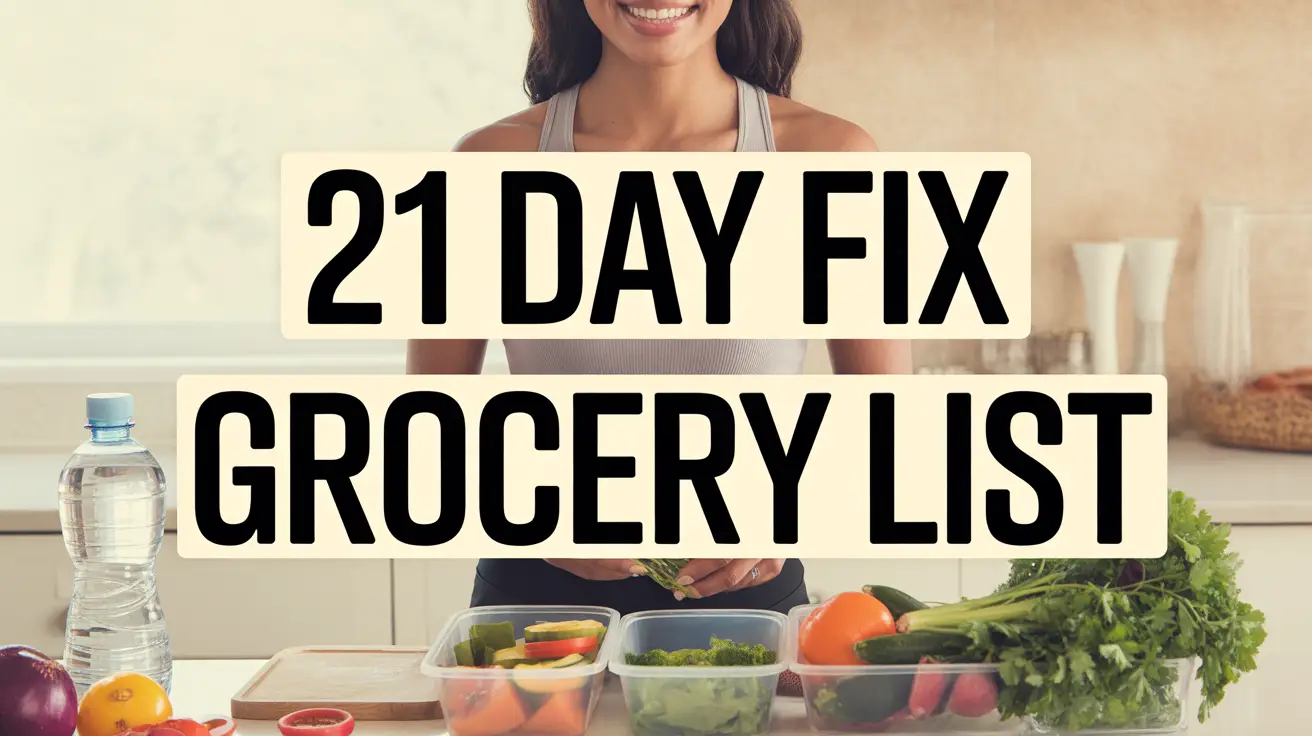
The 21 Day Fix grocery list is built around six color-coded containers, each representing a food group and portion size. This guide maps every approved food to its container, explains how to calculate daily allowances, and shows how to build a full weekly shopping list for the program.
The 21 Day Fix uses green (vegetables, 1 cup), purple (fruit, 1 cup), red (protein, 3/4 cup), yellow (carbs, 1/2 cup), blue (healthy fats, 1/3 cup), and orange (seeds and dressings, 2 tbsp) containers. Daily container counts are calculated from body weight using a target calorie bracket. Approved proteins include chicken breast, tuna, eggs, and Greek yogurt. Approved carbs include oats, sweet potatoes, brown rice, and quinoa. Foods to avoid include sugary beverages, white refined carbs, fried foods, and alcohol outside the 3-per-week treat allowance.
This guide covers every container food list, what to avoid, how to calculate daily allowances, and how to turn the container system into a practical weekly grocery list. Everything needed to shop, prep, and follow the 21 Day Fix from day 1.
What Is the 21 Day Fix Grocery List?
The 21 Day Fix grocery list is a categorized list of approved whole foods organized by the program’s six color-coded containers, each representing a food group, a portion size, and a daily allowance that creates a calorie deficit without calorie counting. The list replaces portion estimation with physical container limits.
The grocery list works by mapping foods to containers before the shopping trip. Each container corresponds to a specific food category and portion: vegetables in green, fruit in purple, protein in red, carbohydrates in yellow, healthy fats in blue, and seeds or dressings in orange. Knowing which container each food fills makes grocery shopping fast and systematic.
The list is updated periodically by Beachbody. The program was renamed from 21 Day Fix to Ultimate Portion Fix in 2019, then simplified to Portion Fix. The container system and food list remain the same across all versions. The core food categories — whole proteins, vegetables, fruits, complex carbs, and healthy fats — have not changed since the original launch.
How Does the 21 Day Fix Container System Work?
The 21 Day Fix container system works by assigning each food category to a colored container of a fixed volume, then setting a daily container count based on a calorie bracket calculated from body weight. Staying within the daily container counts automatically maintains a calorie deficit.
Each container has a fixed calorie range. The green vegetable container averages 40 kcal per serving. The red protein container averages 130 kcal. The yellow carbohydrate container averages 90 kcal. The blue healthy fat container averages 100 kcal. Daily container counts set total intake between 1,200 and 2,300 kcal depending on the bracket.
21 Day Fix Container Overview:
| Container | Color | Food Group | Volume | Avg Calories |
|---|---|---|---|---|
| Green | Green | Vegetables | 1 cup (240 ml) | 30-50 kcal |
| Purple | Purple | Fruits | 1 cup (240 ml) | 60-100 kcal |
| Red | Red | Proteins | 3/4 cup (180 ml) | 100-170 kcal |
| Yellow | Yellow | Carbohydrates | 1/2 cup (120 ml) | 45-140 kcal |
| Blue | Blue | Healthy Fats | 1/3 cup (80 ml) | 80-120 kcal |
| Orange | Orange | Seeds and Dressings | 2 tbsp (30 ml) | 30-60 kcal |
How Do You Calculate Your Daily Container Allowance?
Daily container allowances are calculated from body weight using the formula: body weight (lbs) x 11 = baseline calorie need. Adding 400 to this number gives total daily calorie target. Matching that target to a calorie bracket (A through F) determines daily container counts for all six containers.
Plan A covers 1,200-1,499 kcal. Plan B covers 1,500-1,799 kcal. Plan C covers 1,800-2,099 kcal. Plan D covers 2,100-2,299 kcal. Plans E and F continue for higher calorie needs. A 150 lb (68 kg) person calculates: 150 x 11 = 1,650 + 400 = 2,050 kcal, placing them in Plan C. Plan C allows 4 green, 3 purple, 4 red, 3 yellow, 1 blue, and 1 orange container per day.
What Goes on the 21 Day Fix Green and Purple Container List?
The green and purple containers cover all vegetables and fruits on the 21 Day Fix grocery list. Green holds 1 cup (240 ml) of non-starchy vegetables at 30-50 kcal per serving. Purple holds 1 cup (240 ml) of whole fruit at 60-100 kcal per serving. Both containers are the highest volume, lowest calorie options in the plan.
Green container vegetables form the nutritional foundation of every 21 Day Fix meal. Non-starchy vegetables fill the plate with fiber, vitamins, and minerals at very few calories. Loading every meal with at least one green container reduces hunger throughout the day without threatening the calorie deficit. It’s the one container most people wish they had more of — and the good news is that some vegetables (like spinach and lettuce) can be eaten freely in larger amounts.
What Vegetables Are Approved for the 21 Day Fix?
The 21 Day Fix green container list includes all non-starchy vegetables: broccoli, spinach, kale, zucchini, asparagus, bell peppers, tomatoes, cucumber, onions, mushrooms, cauliflower, Brussels sprouts, celery, and leafy greens of all varieties. Starchy vegetables like sweet potatoes and corn belong in the yellow carbohydrate container.
Frozen vegetables count the same as fresh. A 1-cup (240 ml) serving of frozen broccoli fills one green container identically to fresh broccoli. Canned vegetables are allowed only without added salt or sauce. Vegetable broth counts as 2 cups (480 ml) per one green container due to its very low calorie density.
Top 21 Day Fix Green Container Foods:
- Broccoli, cauliflower, Brussels sprouts
- Spinach, kale, collard greens, lettuce (all types)
- Zucchini, cucumber, celery, asparagus
- Bell peppers, onions, mushrooms, tomatoes
- Cabbage, beets, carrots (1/2 cup per container)
- Vegetable broth (2 cups per green container)
What Fruits Are Allowed in the Purple Container?
The 21 Day Fix purple container list includes all whole fruits: apples, bananas, berries, grapes, mangoes, oranges, peaches, pears, pineapple, watermelon, and kiwi. Fresh or frozen fruit fills the container. Canned fruit in syrup and all fruit juices are excluded.
Dried fruits count differently. Four dried apricots (unsweetened) fill one purple container. Two tablespoons of raisins fill one purple container. Dried fruits have 3-4 times more calories per cup than fresh due to water removal. Whole fresh or frozen fruits are the better choice for satiety and calorie value on the plan.
What Proteins and Carbs Go on the 21 Day Fix Grocery List?
Proteins and carbohydrates form the energy core of the 21 Day Fix grocery list. The red protein container (3/4 cup / 180 ml) covers lean meats, eggs, dairy proteins, and legumes. The yellow carbohydrate container (1/2 cup / 120 ml) covers whole grains, starchy vegetables, and legumes that double as carb sources.
Protein is the most filling macronutrient per calorie on the 21 Day Fix. Filling all daily red containers with lean proteins like chicken breast, Greek yogurt, and eggs creates satiety that carries through the day. In fact, the red container is the one most 21 Day Fix followers credit for eliminating between-meal hunger — even at the lowest calorie brackets.
What Proteins Are Approved for the Red Container?
The 21 Day Fix red container list includes chicken breast, turkey breast, lean beef (93% or leaner), salmon, tuna, shrimp, eggs, egg whites, Greek yogurt (plain low-fat), cottage cheese, tofu, tempeh, and protein powder mixed with water or unsweetened almond milk.
Eggs count differently: one whole egg plus two egg whites equals one red container. Plain Greek yogurt (3/4 cup / 180 ml) fills one red container at approximately 130 kcal and 18 g protein — making it one of the most efficient red container foods on the list. Legumes like lentils and black beans fill both a red and a yellow container simultaneously due to their combined protein and carbohydrate content.
Top 21 Day Fix Red Container Proteins:
| Food | Serving | Approx Protein | Container |
|---|---|---|---|
| Chicken breast (cooked) | 3/4 cup (180 ml) | 35 g | 1 Red |
| Plain Greek yogurt | 3/4 cup (180 ml) | 18 g | 1 Red |
| Tuna (canned in water) | 3/4 cup (180 ml) | 32 g | 1 Red |
| Eggs | 2 whole eggs | 12 g | 1 Red |
| Cottage cheese (low-fat) | 3/4 cup (180 ml) | 19 g | 1 Red |
| Salmon (cooked) | 3/4 cup (180 ml) | 33 g | 1 Red |
What Carbohydrates Go in the Yellow Container?
The 21 Day Fix yellow container list includes oats, brown rice, quinoa, sweet potatoes, corn, whole grain bread (1 slice), whole grain pasta, whole grain English muffins, peas, edamame, and all legumes. Each fills 1/2 cup (120 ml) and provides 45-140 kcal of slow-digesting carbohydrate energy.
The yellow container’s calorie range of 45-140 kcal per serving is the widest of all containers. Choosing lower-calorie yellows like oats (150 kcal per 1/2 cup) over higher-calorie options like granola (up to 250 kcal per 1/2 cup) makes a significant difference across 3 yellow containers per day. For most plans, oats, sweet potatoes, and quinoa are the best yellow container values on the grocery list.
What Healthy Fats and Oils Go on the 21 Day Fix Grocery List?
Healthy fats on the 21 Day Fix grocery list are divided between the blue container (1/3 cup / 80 ml) for solid fats like avocado, nuts, and cheese, and the orange container (2 tbsp / 30 ml) for seeds, olives, and dressings. Both containers are limited to 1 per day in most calorie brackets.
Healthy fats are calorie-dense but essential for hormone production, fat-soluble vitamin absorption, and satiety. The blue container’s 1/3 cup limit prevents calorie overrun from nuts and cheese — foods that are easy to overeat without portion control. Think of it this way: a 1/3 cup of mixed nuts fills one blue container and provides exactly the fat the body needs, without the calorie surplus that derails most diets.
What Foods Fill the Blue Container?
The 21 Day Fix blue container list includes avocado, all cheese varieties (hard and soft), hummus, coconut milk (full-fat), all nuts (almonds, cashews, walnuts, pecans), natural nut butters (in 2-tablespoon portions), and olives. All fill 1/3 cup (80 ml) for one blue container.
Avocado is one of the most popular blue container choices on the 21 Day Fix grocery list. One-third cup of mashed avocado provides heart-healthy monounsaturated fat, 3 g fiber, and potassium — making it a nutritionally dense blue container option. Cheese varieties from mozzarella to cheddar to feta all count as blue container foods at 1/3 cup shredded or crumbled.
What Goes in the Orange Container and Teaspoon?
The 21 Day Fix orange container holds 2 tablespoons (30 ml) of seeds, olives, and salad dressings. The teaspoon measure covers healthy oils (olive oil, coconut oil), nut butters (2 teaspoons per serving), butter, and mayonnaise at approximately 35-40 kcal per teaspoon.
The orange container and teaspoon are used for foods that need precise measurement due to high calorie density. Two tablespoons of pumpkin seeds fills one orange container at 75 kcal. One teaspoon of extra-virgin olive oil counts as 1 teaspoon serving at 40 kcal. The small portions are strict for a reason: oils and seeds can add 200-400 kcal per day without careful measurement.
What Foods Should You Avoid on the 21 Day Fix Grocery List?
Foods excluded from the 21 Day Fix grocery list are refined sugars, sugary beverages, white refined carbohydrates, fried foods, processed snacks, fast food, and any food with added sugar as a primary ingredient — all of which undermine the calorie deficit the container system creates.
Sugary beverages are the most important exclusion. Soda, fruit juice, sports drinks, and sweetened coffees add 200-400 kcal per day with no satiety value. Replacing all caloric beverages with water, black coffee, and herbal tea removes the single largest source of hidden calories for most adults following the plan.
White refined carbohydrates — white bread, white pasta, white rice, pastries, and crackers — are replaced by their whole grain equivalents in the yellow container. The substitution reduces blood glucose spikes, extends satiety, and keeps the calorie count nearly identical while improving fiber intake significantly.
Are Treats and Alcohol Allowed on the 21 Day Fix?
Yes. The 21 Day Fix allows 3 treats or ‘swaps’ per week from an approved list that includes dark chocolate (1.5-inch square = 1 yellow), potato chips (6 plain kettle chips = 1 yellow), wine (5 oz / 150 ml = 1 yellow), light beer (12 oz / 355 ml = 1 yellow), and 14 mini pretzels = 1 yellow.
Treats are tracked using yellow container equivalents. Each treat swap replaces one yellow container for that day — meaning it counts against the carbohydrate allowance. Three treat swaps per week does not derail the plan. The flexibility prevents the psychological deprivation that causes most structured diets to fail before the 21-day endpoint.
How Do You Build a 21 Day Fix Weekly Grocery List?
Building a 21 Day Fix weekly grocery list starts with calculating daily container counts for the applicable calorie bracket, mapping 7 days of meals to container totals, then listing every ingredient needed across all meals organized by store section — proteins, produce, grains, dairy, and pantry.
The most efficient approach is the ‘buffet prep’ method: buying 3-4 proteins, 4-5 vegetables, 2-3 carbs, and 1-2 fruits for the week, then combining them into different meal combinations each day. Buffet prep avoids recipe-specific shopping, reduces food waste, and allows the same ingredients to produce 15-20 distinct meals across 7 days without repetition fatigue.
What Are the Best Tips for 21 Day Fix Grocery Shopping?
The most effective 21 Day Fix grocery shopping tips are to shop the store perimeter first (produce, meat, dairy), buy proteins in bulk and freeze portions, choose frozen vegetables over canned for convenience without compromising nutrition, and stick to familiar approved foods in the first round before expanding the list.
Shopping the perimeter strategy works because whole, unprocessed foods — the foundation of the 21 Day Fix list — are located around the store’s edges. The center aisles contain the packaged, processed foods excluded from the plan. Starting at produce, moving to meat and fish, then to dairy, minimizes exposure to off-plan products and speeds up the shopping trip.
Our team at Eat Proteins builds weekly grocery lists pre-mapped to container counts for every bracket. The free plan includes a printable shopping list organized by store section for Plans A through C, with substitution options for dietary restrictions.
How Do You Meal Prep From a 21 Day Fix Grocery List?
Meal prepping from the 21 Day Fix grocery list involves cooking all proteins and grains on a single prep day (typically Sunday), washing and portioning vegetables into individual green containers, and storing 3-4 days of ready-to-assemble meals in the refrigerator for the start of the week.
Batch cooking is the single biggest predictor of 21 Day Fix adherence. Preparing 4-5 chicken breasts, a large pot of quinoa, and 3-4 portioned vegetables on Sunday eliminates daily cooking decisions for Monday through Wednesday. When meals are ready to assemble in minutes, off-plan eating becomes less tempting during busy weekday evenings.
Want Your Free 21 Day Fix Grocery List and Meal Plan?
You have the container breakdown. Now get the full grocery list built and ready to print. Our nutritionists at Eat Proteins put together a complete 21 Day Fix grocery guide with a container-mapped weekly shopping list for Plans A-C, a 7-day meal template, and a prep checklist — delivered free to your inbox.
A pre-built grocery list removes the most time-consuming part of starting the plan. Subscribers get the full printable list, container cheat sheet, weekly meal template, and first-week prep guide. Don’t spend Sunday figuring out what to buy. Start prepped and ready.
What Does the Eat Proteins 21 Day Fix Guide Include?
The free Eat Proteins guide includes a container-mapped weekly grocery list for Plans A, B, and C, a 7-day meal template with breakfast, lunch, dinner, and snack options, a full approved food list organized by container, and a Sunday prep checklist to set up the first 3 days.
The guide arrives via email immediately after sign-up. Subscribers receive printable versions of the grocery list, meal template, container cheat sheet, and prep checklist — everything needed to shop and start the 21 Day Fix without guesswork. Sign up using the form below to get the complete package today.