
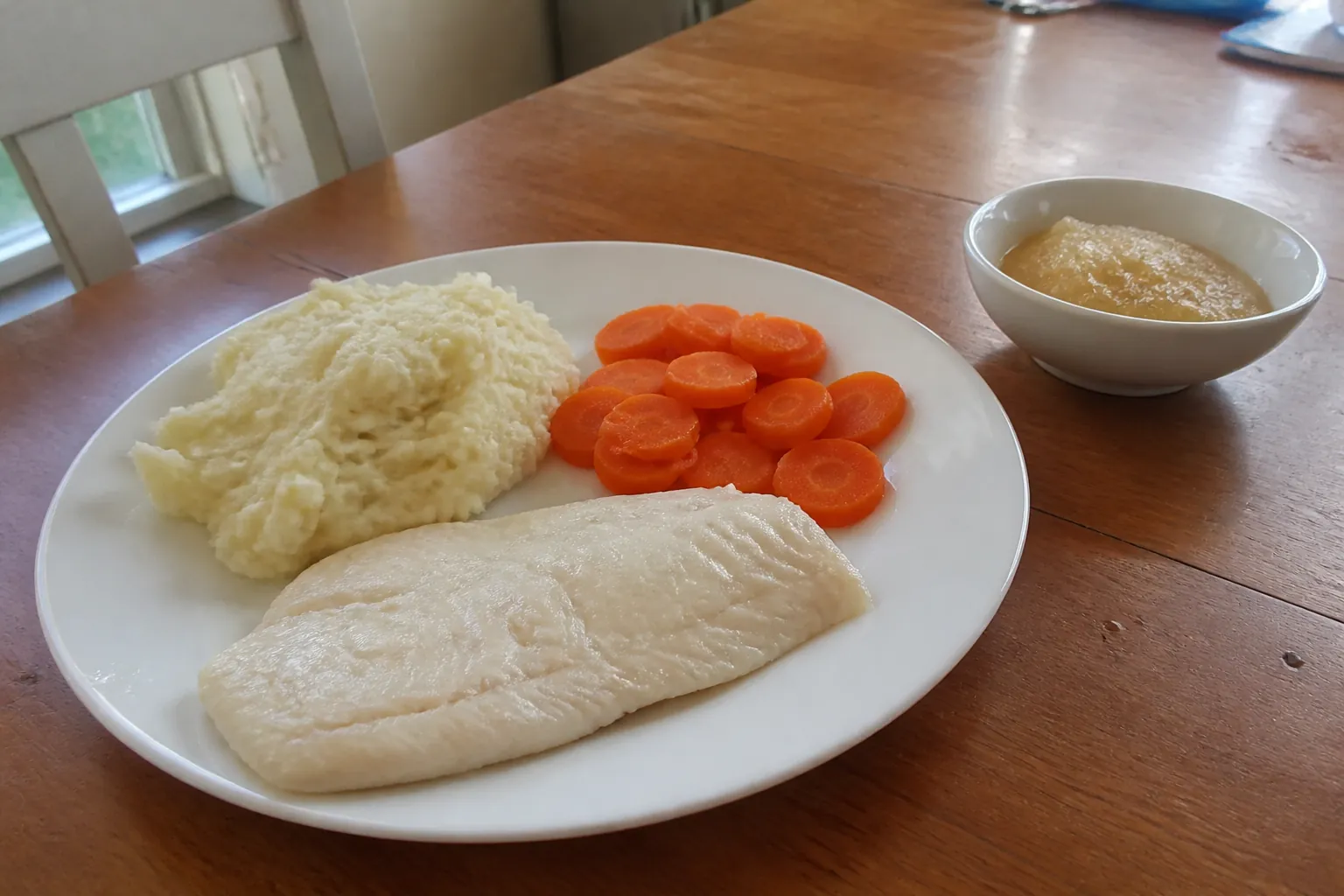
A 7-day bland diet menu is a sample meal plan of simple meals and snacks that repeat easy ingredients. The diet is recommended for people with peptic ulcers or gastritis and people recovering from stomach or intestinal surgery. One clinic’s sample plan lists 6 to 8 servings of breads and starches each day. A bland diet does not heal ulcers or gastritis, but it can make eating more comfortable.
Allowed foods are refined grains, lean proteins, soft cooked vegetables, soft fruit and low-fat dairy. Spicy, fried, fatty, raw, acidic and high-fiber foods are avoided. Helpful eating habits are small meals, slow eating, an early last meal and steady fluids. Bland diet length depends on what a healthcare provider recommends.
What Is a Bland Diet?
A bland diet is an eating plan made of soft, mild, low-fiber foods that are not spicy or fried. A bland diet means gentle food, not tasteless food.
Bland diet foods are cooked rather than eaten raw, because cooked food is easier to digest. Spicy, fried and fatty foods are left out because they are harder to digest. The diet favors foods that are low in fat and easy to chew.
Cleveland Clinic describes a soft food diet as soft in texture, low in fiber and easy to digest. That soft food diet overlaps with most bland diet staples.
How Is a Bland Diet Different From the BRAT Diet?
A bland diet is different from the bananas, rice, applesauce and toast (BRAT) diet in its wider food range. A bland diet can include all four BRAT foods, while adults use the BRAT diet for 1 to 2 days.
| Attribute | Bland diet | BRAT diet |
|---|---|---|
| Food range | Many soft, mild, low-fiber foods | Bananas, rice, applesauce and toast only |
| Nutrient completeness | Meets nutrient needs when planned | Too restrictive and short on nutrients |
| Typical length | As long as a provider recommends | 1 to 2 days for adults at the sickest point |
Sarah Pickering Beers of Cleveland Clinic says BRAT foods are gentle but do not improve nausea. BRAT foods only provide some nutrients when little food stays down. For children, the American Academy of Pediatrics no longer recommends a strict BRAT diet, so parents should ask a pediatrician.
Who Is a Bland Diet Recommended For?
A bland diet is recommended for people with peptic ulcers or gastritis and people recovering from stomach or intestinal surgery. Doctors suggest a bland diet for people with nausea, vomiting or diarrhea from a stomach bug.
Bland diet plans help people with digestive side effects of cancer treatment eat enough and keep a healthy weight. People with heartburn or gastroesophageal reflux disease symptoms use a bland diet alongside lifestyle changes. People with reflux who want a reflux-focused plan can read about the low acid diet for reflux.
A 1991 review in The Medical Clinics of North America named the main goal of an ulcer diet. That main goal is to avoid large rises in stomach acid and direct irritation of the stomach lining.
The National Institute of Diabetes and Digestive and Kidney Diseases asks people with reflux to discuss trigger foods with doctors. A doctor may suggest cutting foods or drinks that seem to raise symptoms to see if symptoms ease. People on a prescribed diet or treatment should talk to a doctor or registered dietitian before changing it.
Does a Bland Diet Heal Ulcers or Gastritis?
No, a bland diet does not heal ulcers or gastritis. A doctor treats the cause of a peptic ulcer or gastritis, while a bland diet can make eating more comfortable.
Researchers have not found diet important in causing, preventing or treating peptic ulcers. The National Institute of Diabetes and Digestive and Kidney Diseases reports that finding. For gastritis, the institute finds that eating, diet and nutrition play no important role in most cases. The institute links quitting smoking to lower ulcer risk and to healing of existing ulcers.
The Merck Manual finds no evidence that bland diets speed peptic ulcer healing or stop ulcers from coming back. Bland diets may lower acid, and avoiding foods that worsen pain and bloating still makes sense. People with these conditions should talk to a doctor or registered dietitian before changing a prescribed diet.
A review by R B Marotta at Norwalk Hospital found no support for restrictive diets in peptic ulcer patients. The same review judged bland and ulcer diets probably not harmful for short use.
What Does a 7-Day Bland Diet Menu Look Like?
A 7-day bland diet menu looks like a week of simple breakfasts, lunches, dinners and snacks that repeat easy ingredients. This 7-day bland diet menu uses only soft, mild, low-fiber foods from the allowed list.
- Day 1: A soup and fish day, with Cream of Wheat, chicken and white rice soup and baked cod.
- Day 2: An egg and poultry day, with scrambled eggs, a turkey sandwich and baked chicken breast.
- Day 3: An oatmeal and salmon day, with a skinless baked potato and shredded chicken at lunch.
- Day 4: A soft egg and turkey meatball day, with chicken noodle soup at lunch.
- Day 5: A smoothie and white fish day, with plain pasta and chicken at lunch.
- Day 6: A pancake and tofu day, with roasted skinless turkey breast at dinner.
- Day 7: A poached egg and shrimp day, with baked chicken and noodles at lunch.
| Day | Breakfast | Lunch | Dinner | Snacks |
|---|---|---|---|---|
| Day 1 | Cream of Wheat with banana | Chicken and white rice soup | Baked cod, mashed potatoes, cooked carrots | Applesauce, saltine crackers |
| Day 2 | Scrambled eggs, white toast | Turkey sandwich on white bread, canned peaches | Baked skinless chicken breast, white rice, cooked green beans | Low-fat yogurt without seeds |
| Day 3 | Well-cooked oatmeal with applesauce | Baked potato without skin, shredded chicken | Poached salmon, noodles, cooked peeled zucchini | Graham crackers, low-fat milk |
| Day 4 | Soft-boiled eggs, English muffin | Chicken noodle soup, crackers | Unspiced turkey meatballs, mashed potatoes, cooked carrots | Canned pears, cottage cheese |
| Day 5 | Banana and low-fat yogurt smoothie | Plain pasta with a little olive oil and chicken | Baked white fish, white rice, cooked butternut squash | Vanilla wafers, gelatin |
| Day 6 | Pancakes made with white flour, banana | Soft tofu, white rice, cooked green beans | Roasted skinless turkey breast, mashed potatoes, cooked carrots | Melon, rice cakes |
| Day 7 | Poached eggs, white toast with creamy peanut butter | Baked chicken, noodles, cooked carrots | Boiled shrimp, white rice, cooked peeled zucchini | Pudding, applesauce |
One hospital bland menu has 7 days, from Sunday to Saturday. That hospital menu lists a different breakfast, lunch and dinner each day. A bland diet varies with individual food intolerances and lifestyle, so any food that causes discomfort is left out.
Sample 7-day bland diet menus repeat a few easy ingredients across the week. Repetition makes meal prep easier when appetite is low. Full bland diet recipes for these meals are available in a separate collection.
What Is a Good Bland Breakfast?
A good bland breakfast combines scrambled, poached or soft-boiled eggs with white toast or an English muffin. A bland breakfast can include banana or applesauce and low-fat milk or yogurt.
One diet manual’s sample breakfast is 1/2 cup (120 ml) oatmeal, one soft cooked egg and white toast. That breakfast includes 1 cup (240 ml) of low-fat milk.
Eggs for a bland breakfast are boiled, poached or scrambled, not fried, to stay gentle. Cream of Wheat or another refined hot cereal can replace the eggs.
What Is a Good Bland Lunch?
A good bland lunch is chicken noodle soup with crackers or a turkey sandwich on white bread. Other bland lunch options are plain pasta with a little olive oil and chicken and white rice soup.
A bland lunch can be a baked potato without skin topped with shredded chicken. One diet manual’s sample lunch is 3 oz (85 g) meat loaf without gravy, whipped potatoes and green beans.
Soups on a bland lunch menu are clear or strained, while creamed soups are avoided.
What Is a Good Bland Dinner?
A good bland dinner is boiled shrimp with white rice or baked or poached white fish with mashed potatoes. Unspiced turkey meatballs with mashed potatoes make another bland dinner.
A bland dinner can be roasted skinless chicken or turkey with cooked carrots. Soft tofu with white rice and cooked green beans is a meat-free option. A sample supper in one diet manual is 3 oz (85 g) baked chicken with 1/2 cup (120 ml) noodles.
MedlinePlus advises no eating within 2 hours of bedtime on a bland diet.
What Are Good Bland Snacks?
Good bland snacks are rice cakes, gelatin, saltine or graham crackers and applesauce or a ripe banana. Bland snacks can include pudding or custard, low-fat yogurt or cottage cheese and canned peaches or pears in juice.
One clinic’s bland diet sheet counts 6 small saltine crackers, each 2 inches (5 cm) square, as one starch serving.
Pairing crackers or fruit with yogurt or cottage cheese adds protein to bland snacks.
What Drinks Fit a Bland Diet Menu?
Bland diet drinks that fit the menu are water, clear broth, low-fat milk and apple, grape or pear juice. Bland diet drinks can include decaffeinated, mint-free tea, so herbal teas are checked for peppermint or spearmint on the label.
R B Marotta, writing in The Medical Clinics of North America, called coffee a strong stimulator of stomach acid. Decaffeinated coffee stimulates acid too, so restricting all caffeine drinks is reasonable for ulcer patients.
Soda is limited to 2 cans a day on one clinic’s bland diet sheet. That sheet lists cranberry, orange, pineapple and grapefruit juice as do-not-drink items.
What Foods Can You Eat on a Bland Diet?
Foods people eat on a bland diet are refined grains, lean proteins, soft cooked vegetables, soft fruit and low-fat dairy. A bland diet uses the five food groups below.
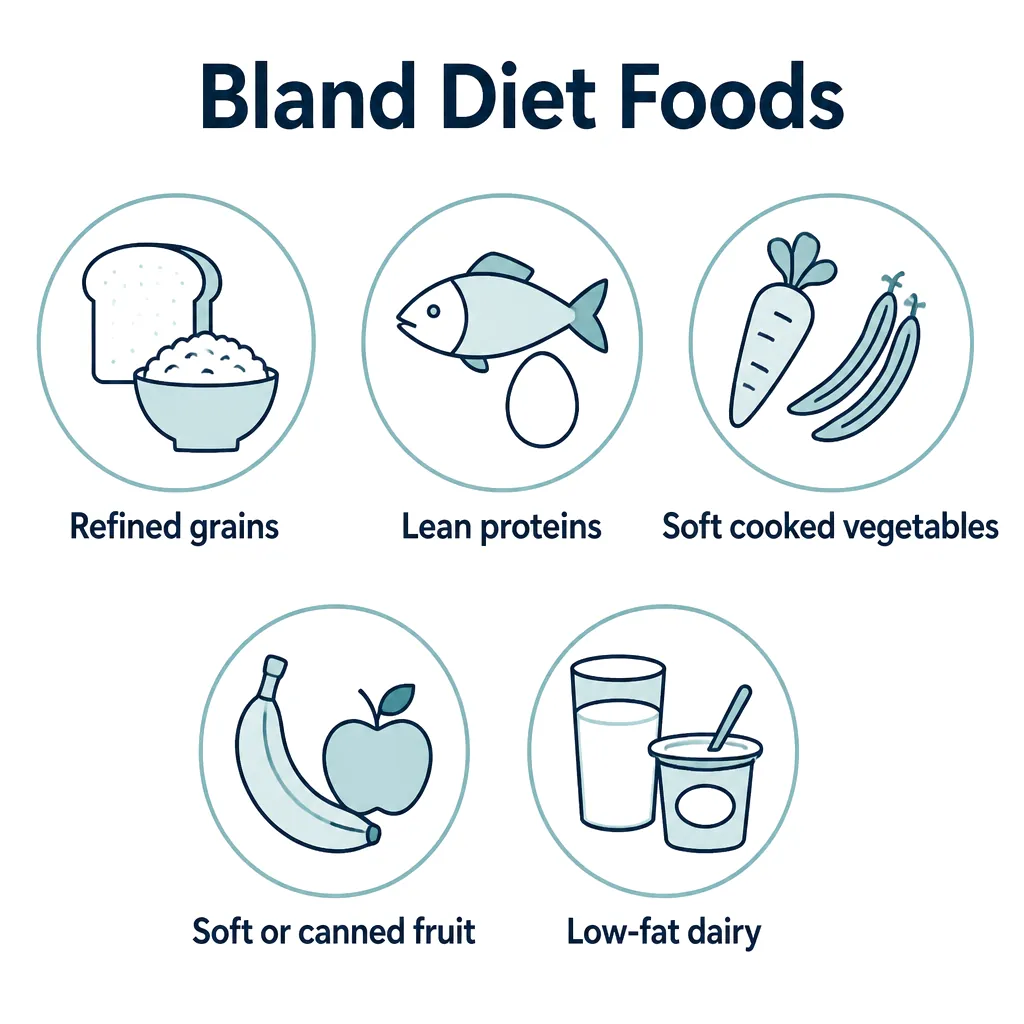
- Refined grains: White bread, saltines, white rice, pasta and refined hot cereals such as Cream of Wheat.
- Lean, tender proteins: Skinless poultry, white fish, shellfish, eggs, tofu and creamy peanut butter.
- Soft cooked vegetables: Carrots, green beans, peeled zucchini, squash and peeled potatoes, cooked until soft.
- Soft or canned fruit: Bananas, applesauce, melon and canned peaches and pears.
- Low-fat dairy: Milk, yogurt without seeds and cottage cheese, in low-fat or fat-free versions only.
Cleveland Clinic soft food diet guidance recommends foods with less than 2 grams of fiber per serving. Memorial Sloan Kettering advises cooking vegetables until soft and avoiding lightly steamed or blanched vegetables.
Grains with enriched white flour listed first on the label are refined products. Grain products that list whole wheat or whole grain first are high in fiber and are left off the menu.
Can Pancakes, Spaghetti, and Baked Potatoes Fit a Bland Diet?
Yes, pancakes, spaghetti and baked potatoes fit a bland diet when they stay plain. Pancakes from white flour, spaghetti without tomato sauce and baked potatoes without the skin are refined starches on bland lists.
One hospital bland menu serves buttermilk pancakes with scrambled eggs for Sunday breakfast.
A 1/2 cup (120 ml) portion of cooked pasta counts as one starch serving on one clinic’s sheet. Tomatoes and tomato-based pasta sauces are on bland diet avoid lists, so plain spaghetti fits best.
Potatoes fit when the skin is removed, while chipped or roasted potatoes are avoided.
What Foods Should Be Avoided on a Bland Diet?
Foods that should be avoided on a bland diet are spicy, fried, fatty, raw, acidic and high-fiber foods. A bland diet excludes raw vegetables, nuts, seeds, alcohol, coffee, chocolate and mint.
- Spicy foods and strong seasonings: Black pepper, chili powder, hot sauce and other strong spices.
- Fried and greasy foods: Fries, chips, fatty meats and fatty dairy such as whipped cream.
- Raw and gas-forming vegetables: Onions, garlic, peppers, cabbage, broccoli, cauliflower and salads.
- Whole grains and bran: Whole wheat bread and bran cereal.
- Acidic foods: Citrus fruits such as oranges, lemons and grapefruit, plus tomatoes and citrus juice.
- Nuts and seeds: Whole nuts, seeds and crunchy nut butters.
- Alcohol, coffee and caffeine drinks: Decaffeinated coffee is on the list too.
- Chocolate and mint: Both are common reflux triggers.
Memorial Sloan Kettering excludes any product with more than 5 grams of fiber per serving.
Marotta’s 1991 review from Norwalk Hospital no longer advises frequent milk drinking for ulcers. Milk buffers acid only briefly, and milk itself increases acid secretion.
Which Medicines Should Be Avoided on a Bland Diet?
Medicines that should be avoided on a bland diet are aspirin, ibuprofen, naproxen and other nonsteroidal anti-inflammatory pain relievers. Non-prescription drugs such as aspirin are avoided on a bland diet without a health care provider’s advice.
A 2019 review by Robert T Kavitt linked most peptic ulcer disease to Helicobacter pylori infection, these drugs, or both. Majid A Almadi’s 2024 seminar linked peptic ulcer disease to aspirin and other anti-inflammatory drugs. People taking a prescribed medicine, including daily aspirin, should talk to a doctor or pharmacist before stopping or switching it.
How Much Should Be Eaten Each Day on a Bland Diet?
One clinic’s sample bland diet plan lists 6 to 8 servings of breads and starches each day. The same bland diet plan lists 2 to 3 servings each of fruit and vegetables a day.
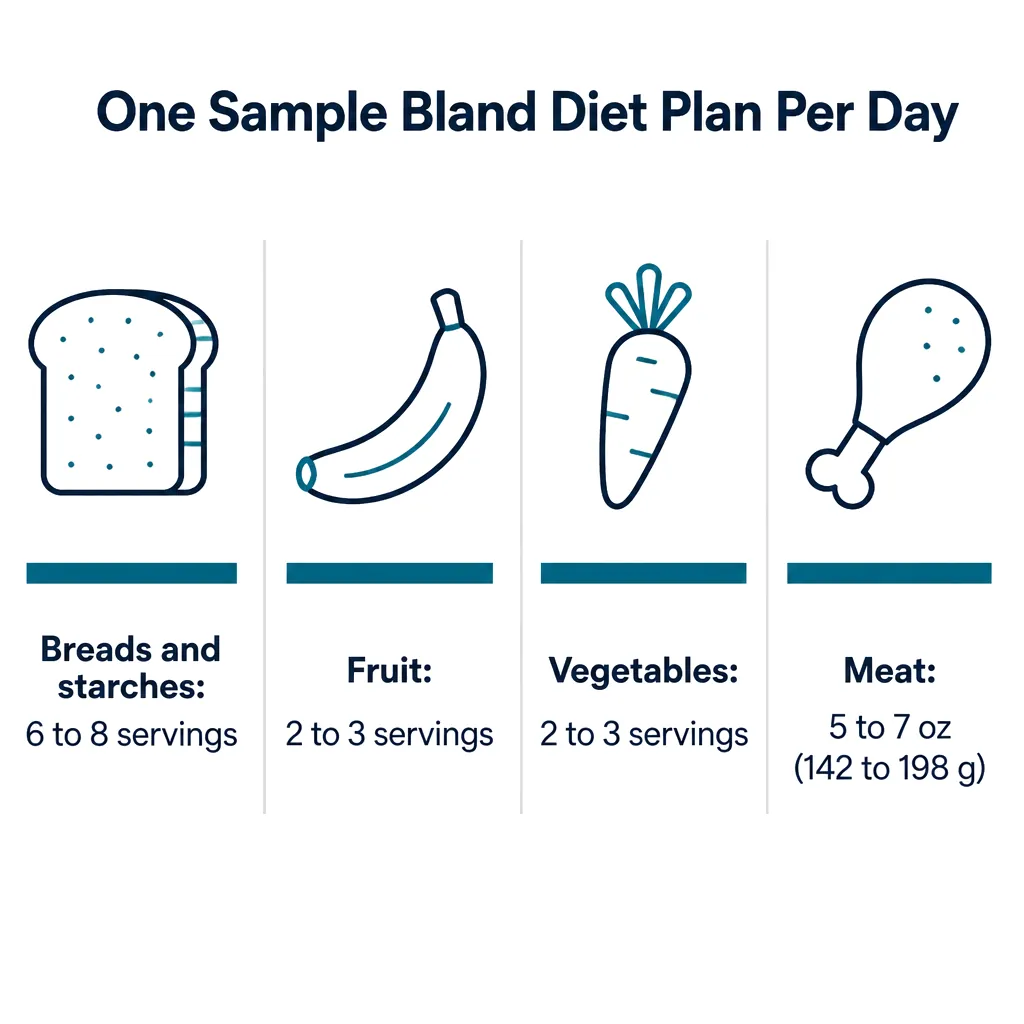
The plan allows 5 to 7 oz (142 to 198 g) of meat or meat equivalent a day. Two tablespoons (30 ml) of creamy peanut butter count as 1 oz (28 g) of meat. One large egg counts as 1 oz of meat too.
A diet manual recommends 3 to 5 small meals a day if tolerated. These amounts describe one clinic’s sample plan, not personal targets. A registered dietitian can set amounts for each person.
Is a Bland Diet Menu Nutritionally Complete?
It depends, a planned bland diet menu is nutritionally complete, but limited variety can leave nutrient gaps. A diet manual states that a planned bland diet meets the requirements for all essential nutrients.
One sample bland day in that diet manual provides 1,838 kcal, 107 g protein and 28 g dietary fiber. Food intolerances or habits that limit variety and quantity can cause some nutrient deficiencies. Chronic or severe blood loss can lead to iron deficiency.
Julia Zumpano of Cleveland Clinic says a multivitamin or fortified nutrition drink may be needed after 2 to 3 weeks. That advice applies to a soft food diet, after talking with the medical team. People should talk to a doctor or registered dietitian before changing a prescribed diet or starting a supplement.
What Eating Habits Help on a Bland Diet?
Eating habits that help on a bland diet are small meals, slow eating, an early last meal and steady fluids. Each habit below fits a bland diet.
- Small, regular meals: Small meals eaten more often during the day.
- Slow eating and thorough chewing: Food is chewed slowly and thoroughly.
- Early last meal: The last meal is eaten at least 3 hours before lying down, which may improve night-time reflux symptoms.
- Sipping fluids through the day: Fluids are drunk slowly, with water at meals, and plenty of fluid helps ease constipation from binding bland foods.
- Dropping any food that causes discomfort: Any food that causes pain or bloating is left out.
R B Marotta’s 1991 paper cited the Mayo Clinic Diet Manual on meal frequency. Small frequent feedings have not proven better than three meals a day for chronic peptic ulcer disease. Some patients report relief from smaller, more frequent meals.
How Can Bland Meals Get More Flavor?
To give bland meals more flavor, cooks season food with sea salt and mild herbs such as sage and thyme. Vanilla or cinnamon adds flavor to bland cereals and desserts.
Allowed seasonings in one diet manual include salt, vanilla, sage, cinnamon, thyme, paprika, vinegar and prepared mustard. The same manual lists pepper, chili powder, cocoa and chocolate among foods to avoid.
Marinades flavor poultry before cooking, and Memorial Sloan Kettering suggests orange or pineapple juice for them. People avoiding citrus should skip the orange juice marinade. Onion or garlic can flavor a marinade when they are removed before cooking.
How Can the 7-Day Menu Be Prepped Ahead?
To get the 7-day menu prepped ahead, cooks plan the week from the menu table first. Batch cooking rice, potatoes, chicken and carrots makes the meals easier to assemble.
Batch cooking ends with portioning meals into containers. Cooked rice and chicken are cooled quickly and stored in shallow, portioned containers in the refrigerator. Each meal is then reheated as needed.
Meal planning helps avoid repeating the same foods, the most common complaint on a bland diet.
How Long Should a Bland Diet Last?
A bland diet lasts as long as a healthcare provider recommends, which can be days, weeks or months. Vomiting or diarrhea lasting more than 1 to 2 days without improvement is a reason to contact a provider.
Registered dietitian Julia Zumpano links bland diet length to the reason the diet was prescribed. Sample plans describe a few days to a couple of weeks, depending on symptoms and the doctor’s advice.
Anyone ending a bland diet early should first talk to a doctor or registered dietitian. Symptoms that last or get worse need medical care.
How Are Foods Added Back After a Bland Diet?
To get foods added back after a bland diet, people add one new food every 2 to 3 days. Fiber is added back slowly, because sudden increases in fiber can cause gas, bloating and abdominal pain.
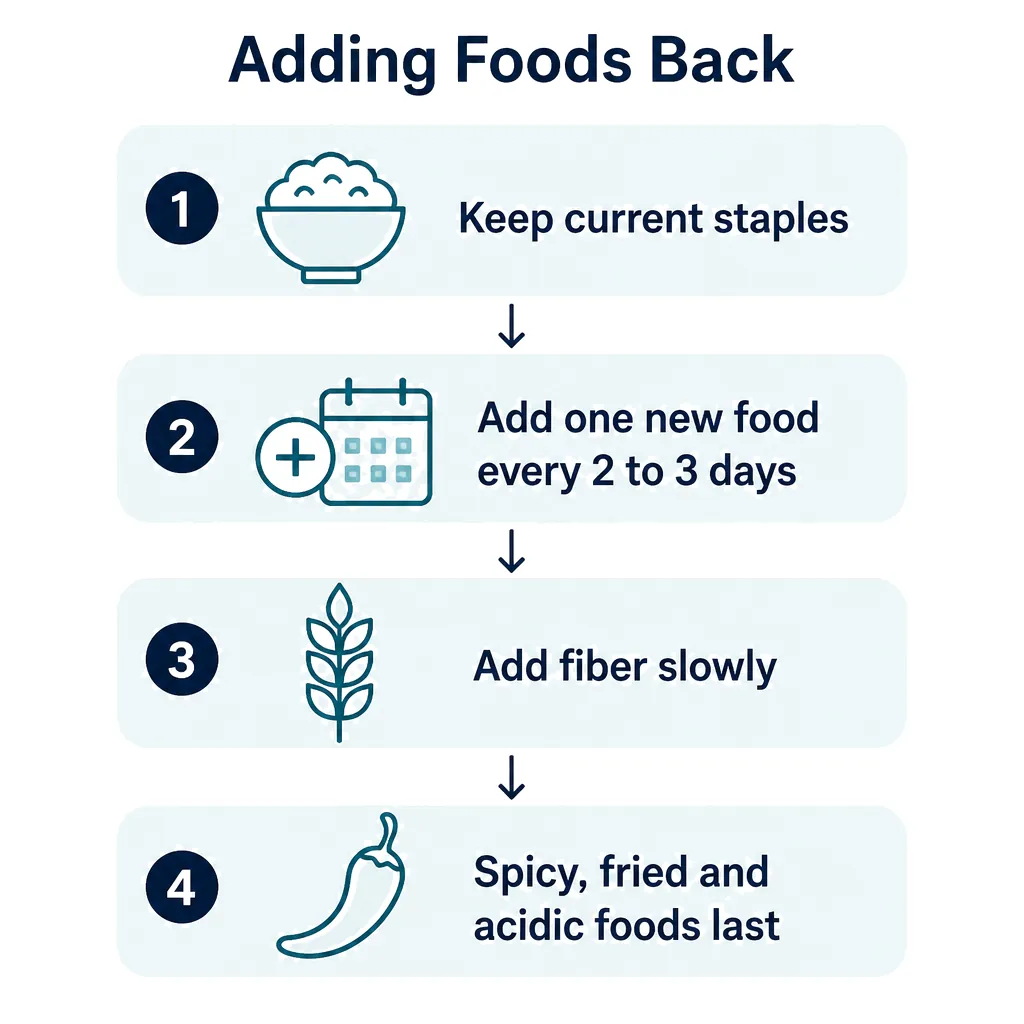
Food reintroduction starts from the current staples, adding cooked oats, a peeled fruit or another cooked vegetable. Spicy, fried and acidic foods are added back last. Julia Zumpano advises skipping a food that upsets the stomach or causes gas for a few days before retrying it.
Healthy eating after a bland diet starts with the provider, who decides when other foods return. A provider can refer the patient to a dietitian or nutritionist to plan a healthy diet.
Want Your Free 7-Day Bland Diet Meal Plan from Eat Proteins?
The free Eat Proteins meal plan turns this 7-day bland diet menu into a simple printable page. You get breakfast, lunch, dinner and snack ideas made only from gentle, low-fiber foods.
Sign up below to get the plan by email and keep it on the fridge for the week. Check with your doctor or registered dietitian before changing a prescribed diet.