
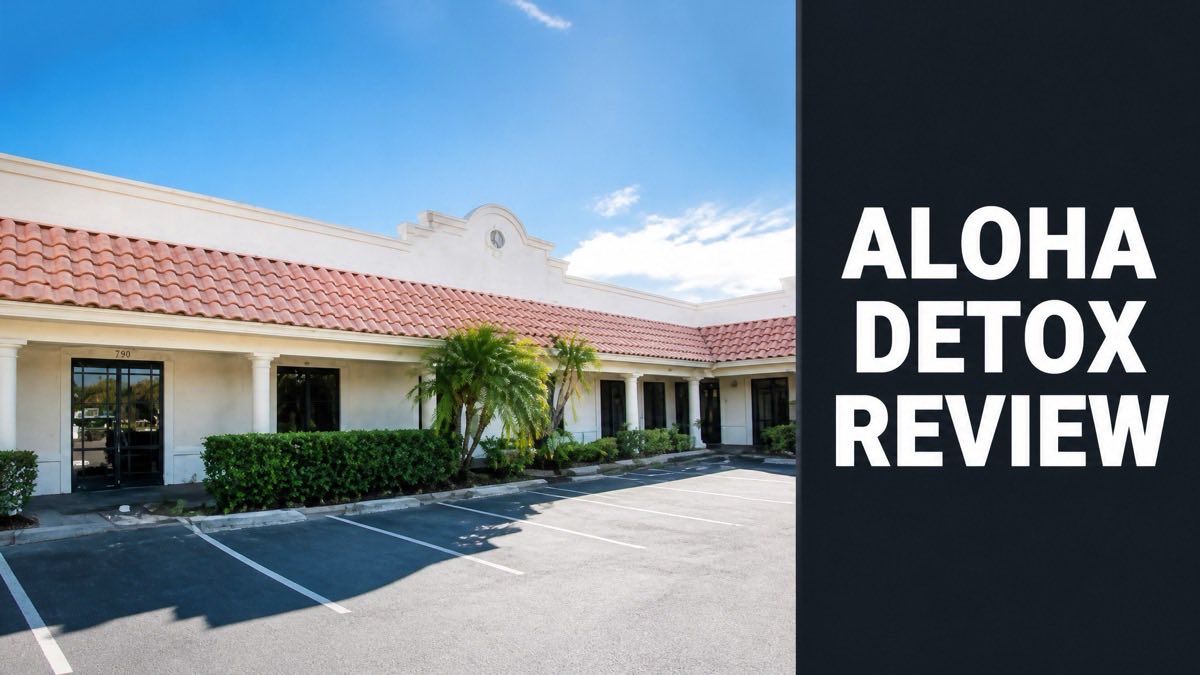
Aloha Detox is a licensed drug and alcohol detox center at 4800 Linton Blvd in Delray Beach, Florida. This review breaks down its services, cost, and reputation before you call.
Founded in 2020, the facility runs medical detox through outpatient care, holds Joint Commission and DCF accreditation, and takes most private insurance. Patients rate it 4.7 out of 5 across 230 reviews on Recovery.com, though staff feedback on Indeed is mixed.
So is Aloha Detox worth calling? Our team at Eat Proteins dug through licensing records, insurance pages, and real patient reviews. Here’s what you need to know before you pick up the phone.
What Is Aloha Detox?
Aloha Detox is a licensed addiction treatment center located in Delray Beach, Florida. The facility opened in 2020 and operates a 31 to 50 bed campus focused on medical detox and early recovery care. It treats adults facing substance use disorders and co-occurring mental health conditions.
The center describes its approach as ‘gentle and efficient detoxification’ built around safety in a tranquil setting. Programs run through a structured curriculum rather than a single quick fix. Most stays last at least seven days before stepping down to the next level of care.
Aloha Detox serves adults and young adults, with tracks for women, pregnant or postpartum patients, LGBTQ+ individuals, veterans, and trauma survivors. This means the intake process screens for more than just the substance involved.
Where Is Aloha Detox Located?
The facility sits at 4800 Linton Blvd, Building C, Delray Beach, Palm Beach County, FL 33445. Delray Beach sits roughly 50 kilometers (31 miles) north of Miami, in a stretch of South Florida known for its concentration of treatment centers. The campus is open 24 hours a day, seven days a week, and can be reached at 1-888-892-5642.
What Treatment Services Does Aloha Detox Offer?
Aloha Detox runs a full continuum of care from medical detox through outpatient follow-up. The lineup includes detoxification, residential treatment, partial hospitalization, intensive outpatient, standard outpatient, and aftercare. Each stage hands patients off to the next once clinical staff sign off.
The center treats withdrawal from alcohol, benzodiazepines, cocaine, methamphetamine, and opioids. Medication-assisted treatment using buprenorphine and naltrexone supports patients through opioid and alcohol withdrawal specifically.
Beyond the core levels of care, Aloha Detox runs a Family Program, a Dual Diagnosis track for co-occurring mental health conditions, and an Alumni Program for patients who’ve completed treatment. Recovery support extends to housing help, recovery coaching, and employment counseling.
Levels of Care at Aloha Detox:
| Level of Care | Typical Focus |
|---|---|
| Medical Detox | Managing acute withdrawal symptoms |
| Residential Treatment | 24-hour structured care on campus |
| Partial Hospitalization (PHP) | Day treatment, patient returns to housing at night |
| Intensive Outpatient (IOP) | Several sessions per week, more independence |
| Outpatient (OP) | Lowest-intensity step-down care |
| Aftercare / Alumni | Long-term relapse prevention support |
Does Aloha Detox Provide Medical Detox?
Yes. Aloha Detox operates a supervised medical detox unit for alcohol, benzodiazepines, cocaine, methamphetamine, and opioids. Nursing staff monitor vital signs and withdrawal severity around the clock during this phase. Medication protocols, including buprenorphine and naltrexone, ease physical symptoms where clinically appropriate.
What Levels of Care Are Available?
Patients typically move from medical detox into residential treatment, then step down through PHP, IOP, and OP as stability increases. This means the same intake doesn’t lock a patient into one fixed program length. Minimum stays run at least seven days at the detox stage before any step-down decision.
How Does Aloha Detox Treat Addiction?
Aloha Detox combines clinical therapy with a four-pillar approach built around daily monitoring, structured programming, and personal accountability. The center frames its philosophy around a twelve-step curriculum paired with individualized case management. Group, individual, and family sessions run alongside medical care rather than after it.
Clinical staff use cognitive behavioral therapy and dialectical behavior therapy as the backbone of counseling. Contingency management and anger management round out the behavioral toolkit for patients working through specific triggers.
The center also leans on holistic add-ons, including acupuncture, massage, reiki, and yoga, alongside evidence-based trauma work. This blend targets both the physical grip of withdrawal and the underlying behavioral patterns driving relapse.
What Therapies Does Aloha Detox Use?
Therapies Offered at Aloha Detox:
- Cognitive behavioral therapy (CBT)
- Dialectical behavior therapy (DBT)
- Eye Movement Desensitization and Reprocessing (EMDR)
- Individual, group, family, and couples counseling
- Acupuncture, massage, and reiki
- Music therapy and yoga
- Animal-assisted and expressive arts therapy
- Medication management
EMDR specifically targets trauma that often sits underneath substance use. Pairing it with talk therapy and holistic sessions gives patients more than one way to process the same underlying issue.
Is Aloha Detox Accredited and Licensed?
Yes. Aloha Detox holds accreditation from the Joint Commission, along with Florida Department of Children and Families (DCF) licensing. The center also carries SAMHSA accreditation and is listed as LegitScript certified, a credential specifically used to vet addiction treatment marketing online. Together, these credentials confirm the facility operates as a regulated medical provider, not an unlicensed sober-living setup.
The Joint Commission is the same accrediting body that reviews hospitals nationwide, and it requires on-site surveys covering safety protocols and clinical documentation. DCF licensing is Florida’s own state-level requirement for any facility providing substance abuse treatment in the state.
Which Organizations Accredit Aloha Detox?
The Joint Commission, Florida’s DCF, SAMHSA, and LegitScript each accredit or certify different parts of Aloha Detox’s operation. Each body reviews a different layer: clinical quality, state compliance, federal substance abuse standards, and online marketing practices respectively.
What Insurance Does Aloha Detox Accept?
Aloha Detox accepts most private insurance plans, along with Medicare, Tricare, and select military insurance. Named carriers include Cigna and Humana, based on the facility’s own coverage pages. Cash-pay admission is also available for patients without applicable coverage.
The exact cost of treatment depends heavily on the insurance plan, the level of care, and length of stay, so Eat Proteins can’t publish one fixed price with confidence. Third-party estimates put cash-pay treatment starting around $5,000 or more, but that figure isn’t confirmed directly by Aloha Detox and should be verified with admissions before assuming it applies to you.
Payment Options at Aloha Detox:
- Most private health insurance plans
- Medicare
- Tricare and military insurance
- Cigna and Humana (named carriers)
- Cash or self-pay
How Much Does Aloha Detox Cost?
No published, verified price list exists for Aloha Detox at the time of writing. Third-party directories estimate cash-pay treatment starts near $5,000, but insured patients typically pay far less out of pocket depending on their plan’s deductible and coverage tier. Calling admissions directly with insurance information in hand is the only reliable way to get a real number.
What Do Aloha Detox Reviews Say?
Aloha Detox holds a 4.7 out of 5 patient rating across 230 reviews on Recovery.com. A separate aggregator, Recovered.org, lists a lower TrustScore of 3.85 out of 5. That gap suggests the patient experience runs strong on the larger platform but isn’t uniformly rated across every review source.
Here’s the thing: patient reviews and employee reviews don’t always agree. On Indeed, some staff describe supportive management and steady work. Others, including at least one former nurse, described communication problems and raised concerns serious enough to say the location ‘should be shut down.’
So what does that mean for you? A high patient satisfaction score doesn’t automatically mean every internal operation runs smoothly. It’s worth weighing both sides before enrolling a loved one.
What Do Patients Praise?
Patient reviewers most often highlight compassionate staff and a personalized treatment approach. Nurses and therapists get specific praise for patience during a difficult, physically demanding stage of recovery. The 4.7 out of 5 average on Recovery.com backs up that pattern across 230 separate reviews.
What Complaints Come Up?
The main complaints come from employee reviews rather than patient reviews, centering on internal communication and management consistency. One LPN review flagged shift-to-shift inconsistency depending on which staff member was on duty. These are workplace concerns, not confirmed clinical incidents, but they’re worth knowing about.
How Does Aloha Detox Compare to Other Florida Detox Centers?
South Florida, and Delray Beach specifically, hosts one of the densest concentrations of addiction treatment centers in the country. Aloha Detox distinguishes itself through Joint Commission accreditation combined with a full continuum from detox through aftercare under one provider. Not every Delray Beach facility offers medical detox and long-term outpatient step-down in-house.
Many smaller detox-only providers in the region refer patients elsewhere once acute withdrawal passes. Aloha Detox instead keeps patients within its own PHP, IOP, and OP tracks, which can reduce the friction of transferring records and rebuilding rapport with new clinicians mid-recovery.
The tradeoff worth knowing: smaller capacity (31 to 50 beds) means Aloha Detox isn’t a large-scale campus like some bigger regional providers. That can mean more individualized attention, but also less flexibility if a specific bed type is full.
What Makes Aloha Detox Different?
The combination of Joint Commission accreditation, DCF licensing, and an in-house continuum of care sets Aloha Detox apart from smaller unaccredited detox providers in the same market. Its four-pillar approach and specialty tracks for veterans, LGBTQ+ patients, and trauma survivors also broaden who the program is built to serve.
How Do You Start Treatment at Aloha Detox?
Starting treatment at Aloha Detox begins with a phone call to verify insurance and schedule an intake assessment. The admissions line runs 24/7 at 1-888-892-5642. Staff typically ask about substance history, current symptoms, and insurance details during this first call.
Once insurance is verified, or cash-pay terms are set, the center schedules an arrival date. Medical staff complete a clinical intake on-site before assigning the patient to detox or the appropriate level of care.
Steps to Start Treatment:
- Call 1-888-892-5642 or submit an inquiry through in**@********ox.com
- Provide insurance information for verification
- Complete a phone pre-assessment covering substance history and symptoms
- Schedule an arrival date
- Complete an on-site clinical intake and medical evaluation
- Begin detox or the assigned level of care
What Happens During Admissions?
Admissions staff verify coverage first, then walk the patient or family member through what to expect during detox. This step exists to avoid financial surprises once treatment starts. Bringing insurance cards and a list of current medications to this call speeds the process considerably.
Should You Consider Aloha Detox?
Yes. Aloha Detox is a real, accredited option worth a phone call if you or a loved one needs medical detox in South Florida. Joint Commission accreditation, DCF licensing, and a 4.7 out of 5 patient rating give it a credible track record. The mixed staff reviews on Indeed are worth knowing, but they sit alongside a much larger body of strong patient feedback.
Here’s what matters most: no article can replace a direct conversation with a licensed provider about your specific situation. If you’re evaluating Aloha Detox, call 1-888-892-5642, verify your insurance, and ask direct questions about staffing ratios and current bed availability before committing.
Our team at Eat Proteins covers wellness and recovery-adjacent topics because physical health and addiction recovery are deeply connected. If ongoing nutrition, supplement, and wellness content like this is useful to you, our newsletter covers exactly this kind of research on a regular basis. It’s not a substitute for treatment, just a resource for the health journey around it.