
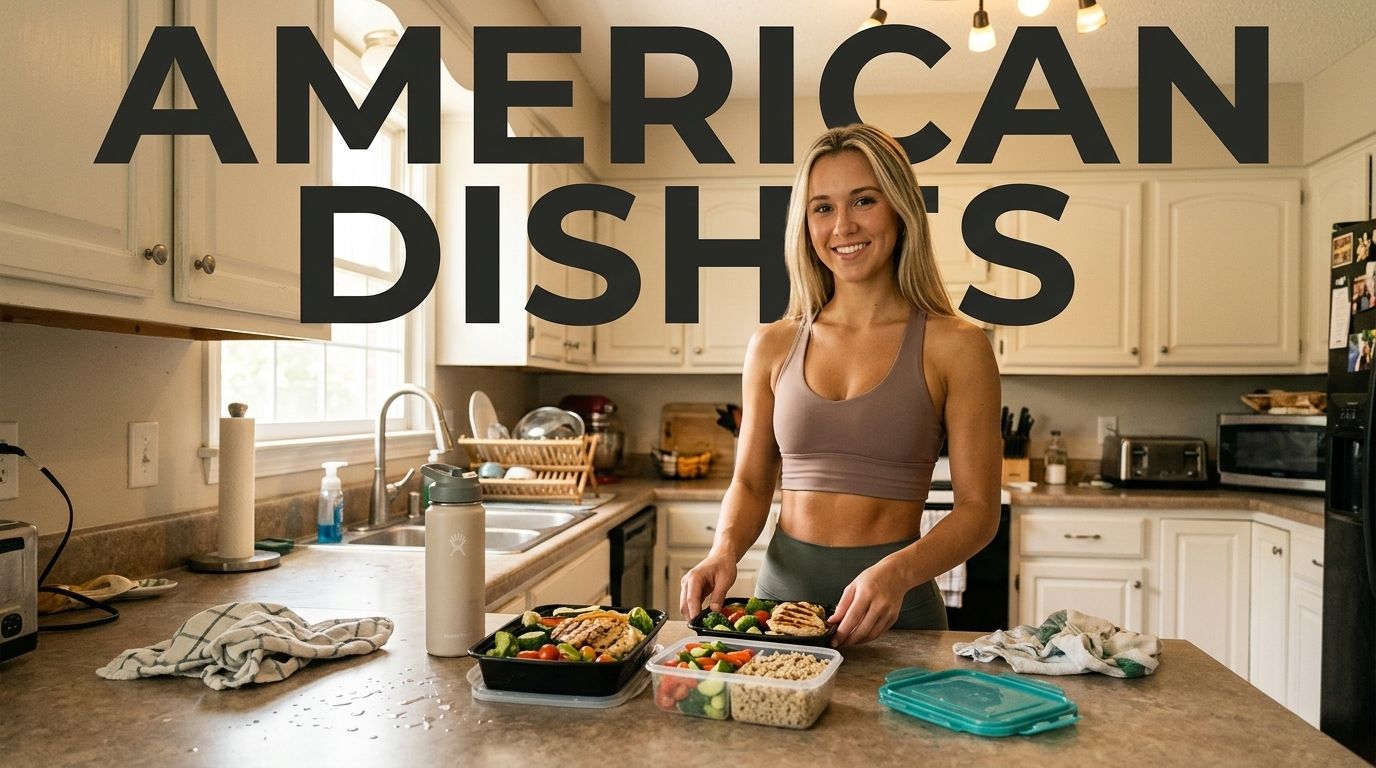
American dishes are the foods and meals that define the culinary identity of the United States. From coast to coast, these recipes blend immigrant traditions, regional ingredients, and bold cooking methods into a cuisine unlike any other on earth.
This guide covers what makes American cuisine unique, which regional specialties stand out, how fast food shaped modern eating habits, what the nutritional reality of classic American dishes looks like, which proteins dominate American cooking, how to build healthier versions of beloved meals, and how the Eat Proteins framework helps you enjoy American food without sacrificing your health goals.
You’ll find that American food isn’t just burgers and fries. It’s a living, evolving tradition with surprising roots, serious regional pride, and plenty of room for smart, protein-focused eating. Here’s everything you need to know about American dishes and how to make them work for your diet.
What Makes American Cuisine Unique?
American cuisine stands apart because it absorbs and transforms food traditions from every culture that has settled in the United States. No other national cuisine has been built so deliberately from immigrant contributions, regional climates, and constant reinvention. It’s a food culture that never stopped evolving.
Think about it this way. Hot dogs and hamburgers trace back to German traditions, yet today they’re considered quintessentially American. That transformation happened through adaptation, not imitation.
Here’s why that matters for your diet. When a cuisine is this flexible, it can also be adapted toward health. The same creativity that turned a Frankfurt sausage into an American icon can turn a calorie-heavy classic into a lean, protein-rich meal.
How Did American Food Develop Its Own Identity?
American food developed its identity through centuries of cultural exchange, geographic diversity, and the practical needs of settlers, workers, and immigrants across a vast continent. No single moment defined it. It grew from necessity and abundance at the same time.
Southern planters adapted African cooking techniques. New England fishermen built a cuisine around cold-water seafood. Midwestern farmers leaned on corn, pork, and beef. Each region solved the same problem differently: how do you feed people well with what’s available?
This means American cuisine is less a single tradition and more a federation of regional ones. Understanding that federation helps you find the healthiest expressions of American cooking in every part of the country.
What Are the Most Iconic American Dishes?
The most iconic American dishes include the hamburger, apple pie, barbecue, mac and cheese, fried chicken, clam chowder, and hot dogs — foods that have become symbols of American culture worldwide. Each one carries a story of adaptation and regional pride.
Here’s a quick look at why these dishes dominate the conversation. They’re accessible, shareable, and deeply tied to American social rituals. Burgers at cookouts. Apple pie at holidays. Fried chicken at family dinners. These aren’t just foods; they’re cultural events.
The nutritional profiles of these classics vary widely. A grilled chicken breast serves your goals. A deep-fried butter-battered version of the same bird does not. Knowing the difference is the first step toward eating American food without guilt.
Top Iconic American Dishes and Their Protein Content
| Dish | Avg Calories (per serving) | Protein (g) | Notes |
|---|---|---|---|
| Grilled Chicken Breast | 165 | 31 | Best lean option |
| Turkey Burger | 220 | 28 | Lower fat than beef |
| Beef Hamburger (fast food) | 550 | 25 | High sodium, high sat fat |
| Mac and Cheese | 310 | 12 | Low protein density |
| BBQ Pulled Pork | 290 | 22 | Watch added sugar in sauce |
| Clam Chowder | 190 | 10 | High sodium |
| Fried Chicken (skin on) | 320 | 24 | High saturated fat |
Which Classic American Recipes Are Worth Keeping?
Classic American recipes worth keeping are the ones that deliver strong protein, reasonable calories, and genuine satisfaction without requiring you to abandon nutritional goals entirely. The key is knowing which classics are already healthy and which need upgrading.
Grilled salmon, turkey chili, chicken salad wraps, and bean-rice bowls are already part of the American culinary tradition. They don’t need heavy modification. They just need to be elevated over the calorie-dense alternatives that often crowd menus.
Here’s the honest truth. Most American dishes can be made smarter. You don’t have to stop eating them. You have to start building them better.
What Are the Regional American Food Specialties?
Regional American food specialties reflect the geography, history, and immigrant cultures of each part of the country, creating distinct culinary identities that go far deeper than any single national dish. The South, Northeast, Midwest, and Southwest all eat differently.
This regional diversity is actually a nutritional advantage. Not every region defaults to deep-fried or calorie-dense food. New England’s seafood tradition, California’s fresh produce culture, and the Southwest’s legume-heavy Tex-Mex all offer protein-rich, nutrient-dense options.
Regional American Cuisine Overview
| Region | Signature Dishes | Protein Stars | Watch Out For |
|---|---|---|---|
| Southern US | Fried chicken, biscuits, cornbread, collard greens | Chicken, beans | Frying oils, heavy butter |
| New England | Clam chowder, lobster rolls, Boston baked beans | Seafood, legumes | Cream, sodium |
| Midwest | Deep-dish pizza, corn dogs, beef dishes | Beef, pork | Refined carbs, portion size |
| Southwest/California | Tex-Mex, burritos, fresh seafood, salads | Fish, beans, chicken | Cheese overload, sour cream |
How Does Southern Cuisine Compare Nutritionally to Other Regions?
Southern cuisine tends to be higher in saturated fat and sodium compared to coastal or Southwestern American food, but it also contains some of the most protein-rich traditions in the country. The cooking methods are the main variable.
Fried chicken gets the headlines, but Southern cooking also includes slow-cooked greens, black-eyed peas, and smoked meats that, when prepared with lean cuts and minimal added fat, are genuinely nutritious. The tradition has more depth than the stereotype suggests.
Here’s what most people miss. Collard greens cooked with smoked turkey instead of pork fatback become a high-fiber, low-calorie side dish. Small substitutions preserve the flavor while transforming the nutrition. That’s the Southern advantage when you know how to use it.
How Did Fast Food Change American Eating Habits?
Fast food fundamentally reshaped American eating habits starting in the 1950s by making calorie-dense, low-nutrient meals cheap, fast, and culturally dominant across all income levels and regions. McDonald’s, Burger King, and KFC built an empire on convenience.
The numbers tell the story clearly. A standard fast food burger runs 500-800 calories. Add a large soda and you’ve consumed 700-1,100 calories in one sitting, often with minimal protein density relative to the caloric load. That math doesn’t work for a health-focused diet.
This means understanding fast food isn’t about demonizing it. It’s about recognizing what it does to your calorie budget and making intentional choices when you eat it. Fast food can fit into a healthy diet. It just can’t be the default.
Can American Fast Food Ever Be Healthy?
American fast food can support a healthier diet when you consistently choose grilled over fried, skip sugary drinks, watch portion sizes, and prioritize menu items with higher protein-to-calorie ratios. It requires strategy, not avoidance.
Most major chains now offer grilled chicken options, side salads, and smaller portion sizes. A grilled chicken sandwich with a side salad and water runs around 400-450 calories with 30-35g of protein. That’s a workable meal in almost any dietary plan.
Fast Food Smarter Swaps
- Grilled chicken sandwich instead of crispy fried chicken sandwich (saves ~150 calories)
- Side salad instead of medium fries (saves ~300 calories)
- Water or unsweetened iced tea instead of large soda (saves 200-300 calories)
- Kids’ size burger instead of double patty (saves ~200 calories)
- Black beans instead of refried beans at Tex-Mex chains (saves fat, adds fiber)
What Is the Nutritional Reality of Traditional American Dishes?
The nutritional reality of traditional American dishes is that most classics are calorie-dense, high in saturated fat and sodium, and low in fiber — patterns directly linked to higher rates of obesity, type 2 diabetes, and heart disease in the US population. The data is not ambiguous.
Here’s why this matters beyond the obvious. The typical American diet isn’t just unhealthy for individuals. It’s expensive in healthcare terms, it’s tied to reduced energy and productivity, and it’s normalized in ways that make it hard to recognize as a problem until damage is already done.
But here’s what Eat Proteins emphasizes consistently. The cuisine itself isn’t the enemy. The preparation methods, portion sizes, and ingredient choices are the levers you can actually control. American food can be nutritionally sound. Most of it just isn’t, by default.
How Do Portion Sizes in America Affect Your Health?
American restaurant portion sizes average 2-3 times the recommended serving size, a distortion that has gradually reset people’s perception of what a normal meal looks like and how much food is actually needed. The portions became the baseline.
A restaurant steak might be 12-16 ounces when a nutritionally appropriate serving is 4-6 ounces. A bowl of pasta might contain three or four servings of refined carbohydrates in one dish. These aren’t edge cases. They’re the norm at sit-down restaurants across the country.
This means portion awareness is as important as food choice. You can order a healthy dish and still overeat by 600 calories if you don’t understand the portion distortion built into American dining culture. Half portions, shared plates, and leftovers are legitimate strategies, not deprivations.
Which Proteins Are Most Common in American Cooking?
The most common proteins in American cooking are chicken, beef, pork, turkey, and fish, with plant proteins like beans and legumes playing a major supporting role especially in Southern and Tex-Mex regional traditions. Animal proteins dominate, but plants hold their ground.
Chicken breast is the standout. At 165 calories and 31g of protein per 100g (3.5 oz), it delivers the highest protein-to-calorie ratio of any mainstream American protein source. It’s also the most versatile, fitting into Southern, Tex-Mex, New England, and Midwestern dishes with equal ease.
American Protein Sources — Nutrition Comparison
| Protein Source | Calories per 100g | Protein (g) | Fat (g) | Best Use |
|---|---|---|---|---|
| Chicken Breast | 165 | 31 | 3.6 | Grilling, baking, salads |
| Turkey Breast | 189 | 29 | 7 | Burgers, chili, wraps |
| Salmon | 208 | 20 | 13 | Grilling, baking |
| Lean Ground Beef (93%) | 218 | 26 | 11 | Burgers, tacos, chili |
| Black Beans | 132 | 9 | 0.5 | Bowls, burritos, soups |
| Pork Tenderloin | 143 | 22 | 3.5 | Roasting, grilling |
| Tuna (canned in water) | 116 | 26 | 1 | Salads, wraps, melts |
Why Is Chicken the Dominant Protein in American Diets?
Chicken became the dominant protein in American diets because it’s affordable, widely available, cooks quickly, absorbs flavors from any regional cuisine, and delivers exceptional protein density relative to its caloric cost. No other protein checks all five boxes simultaneously.
The rise of chicken mirrors the rise of health consciousness in America. As beef fell out of favor due to saturated fat concerns in the 1980s and 1990s, chicken stepped in as the default protein for health-aware eaters. It never gave back that position.
Here’s the Eat Proteins take on it. Chicken breast is a nearly perfect protein vehicle for any American dish you want to build or rebuild. It’s not glamorous. It’s reliable. And reliability is what actually produces results over weeks and months of eating.
How Can You Make American Dishes Healthier?
You can make American dishes healthier by applying targeted ingredient substitutions, adjusting cooking methods, increasing protein density, and controlling portions without eliminating the flavors and textures that make these dishes satisfying in the first place. It’s an upgrade, not a replacement.
Smart swaps work because they preserve the dish’s identity while shifting its nutritional profile. Ground turkey instead of ground beef in a burger drops saturated fat significantly while keeping the protein high. Greek yogurt instead of sour cream in a Tex-Mex bowl saves calories without losing creaminess. Baking instead of frying chicken preserves the crunch with a fraction of the added fat.
Here’s a practical framework Eat Proteins recommends. For every American dish you love, ask three questions. What’s the protein source and can it be leaner? What’s the cooking method and can it be drier? What’s the largest calorie contributor and can it be reduced or swapped? Answer those three questions and you’ve built a healthier version of almost any American classic.
Ready to see how these swaps work in practice? Get a proven weight loss plan built around these exact principles.
What Cooking Methods Make American Food Leaner?
Leaner cooking methods for American food include grilling, baking, broiling, steaming, and slow-cooking with lean cuts, all of which reduce added fat significantly compared to deep-frying, pan-frying, or braising in heavy sauces. Method is often more impactful than ingredients.
Grilling is the American cooking method with the best nutritional profile. It adds char and smoke flavor without adding fat, and it allows excess fat from meat to drip away during cooking. That’s a double win you don’t get from a frying pan.
Cooking Method Impact on Calories
| Method | Added Calories (approx.) | Fat Added | Protein Impact |
|---|---|---|---|
| Grilling | 0-20 | None (fat drips off) | Preserved fully |
| Baking | 0-50 | Minimal if no added oil | Preserved fully |
| Broiling | 0-30 | Minimal | Preserved fully |
| Pan frying (light oil) | 80-120 | Moderate | Preserved |
| Deep frying | 150-300 | High | Preserved but buried |
What Role Does Barbecue Play in Healthy American Eating?
Barbecue plays a central role in American food culture and can absolutely support a healthy diet when lean cuts are used, portions are managed, and sugar-heavy sauces are applied sparingly rather than as a cooking medium. BBQ is not inherently unhealthy.
Slow-cooked chicken breast on the smoker delivers 31g of protein per 100g (3.5 oz) with minimal added fat. Lean brisket, trimmed before cooking, provides around 26g of protein per serving. The issue isn’t the barbecue method. It’s the fatty cuts and sweet sauces that turn a nutritious cooking tradition into a calorie problem.
Here’s how to barbecue smarter. Choose chicken breast, pork tenderloin, or lean brisket over ribs and fatty shoulder cuts. Use dry rubs instead of sugar-heavy sauces during cooking. Apply sauce at the table in small amounts. Control the portion and you control the nutrition without giving up the experience.
Is Pulled Pork or Brisket Better for a High Protein Diet?
Lean brisket edges out pulled pork on protein density and fat content when both are prepared from lean cuts, making it the better choice for a high-protein diet focused on caloric efficiency. Both can work, but brisket has the structural advantage.
Pulled pork from a shoulder cut can run 290-320 calories per 100g with 18-22g of protein, depending on how much fat is left in. Lean brisket, trimmed and slow-cooked, runs closer to 250 calories with 26g of protein. That’s a meaningful gap across a full week of eating.
That said, you’re not eating 100g laboratory samples at a real barbecue. Portion size matters more than the per-gram comparison. A controlled serving of pulled pork beats an oversized plate of brisket every time from a nutritional standpoint.
How Do Plant Proteins Fit Into American Cuisine?
Plant proteins fit naturally into American cuisine through the longstanding traditions of Southern bean dishes, Tex-Mex legume staples, New England baked beans, and the growing plant-forward movement in contemporary American cooking. They’ve always been here.
Black beans, kidney beans, lentils, and chickpeas show up across every major American regional tradition. Boston baked beans are a colonial-era staple. Red beans and rice is a New Orleans institution. Bean burritos are a Tex-Mex daily staple. Plant protein is woven into the fabric of American food.
Here’s why this matters for your diet. Plant proteins are high in fiber, low in saturated fat, and extremely cost-effective. Combining them with lean animal proteins, as American regional cuisines often do, creates meals that are filling, nutritious, and genuinely satisfying without excessive calories.
Can a High Protein American Diet Be Mostly Plant Based?
A high-protein American diet can be built primarily from plant sources by strategically combining beans, lentils, tofu, tempeh, and whole grains in ways that mirror existing American culinary traditions without requiring a complete dietary overhaul. The infrastructure already exists.
A bean and rice bowl with avocado and salsa is Tex-Mex. A lentil soup with cornbread is Southern. A veggie burger with whole grain bun and a leafy green salad is as American as anything on the menu. You don’t have to leave American cuisine to eat a plant-dominant, protein-rich diet.
High Protein Plant Combinations in American Dishes
- Black beans + brown rice = complete protein (all essential amino acids)
- Lentil chili + whole grain cornbread = high fiber, ~18g protein per bowl
- Edamame + quinoa salad = 20g+ protein, low calorie density
- Chickpea burger + whole wheat bun = plant-forward American classic
- Tempeh taco + corn tortilla = ~22g protein, Tex-Mex tradition honored
What Are the Healthiest American Dishes You Can Make at Home?
The healthiest American dishes you can make at home are grilled salmon with roasted vegetables, turkey chili, chicken salad wraps, bean and rice bowls, leafy green salads with lean protein, and veggie-loaded burgers made with lean ground turkey or beef. These are all legitimate American classics.
Don’t let anyone tell you these are compromises. Grilled salmon is a staple of Pacific Northwest and New England American cooking. Turkey chili is a Southwestern and Midwestern tradition. Chicken salad wraps are on diner menus from Maine to California. You’re not eating diet food. You’re eating American food correctly.
Here’s a simple rule from Eat Proteins. If your plate is at least 30% lean protein, 30% vegetables, and 30% complex carbohydrate, you’re eating an American meal that supports your health goals regardless of which regional tradition it comes from. That framework works everywhere.
How Do You Build a High Protein American Meal Plan?
A high-protein American meal plan is built by anchoring each meal around a lean protein source drawn from American culinary tradition, then filling the rest of the plate with vegetables and complex carbs in proportions that keep total calories in check. It’s a structure, not a script.
Sample High Protein American Day
| Meal | Dish | Protein (g) | Approx Calories |
|---|---|---|---|
| Breakfast | 3-egg scramble with turkey sausage and peppers | 35 | 380 |
| Lunch | Grilled chicken salad wrap with Greek yogurt dressing | 38 | 420 |
| Snack | Canned tuna with whole grain crackers | 22 | 210 |
| Dinner | Grilled salmon with roasted sweet potato and greens | 36 | 480 |
| Total | 131 | 1,490 |
This meal plan pulls entirely from American culinary traditions. Nothing exotic, nothing expensive, nothing that requires special equipment or ingredients. It’s American food built smarter.
What Should You Know About American Food History and Nutrition?
American food history reveals that many dishes now considered unhealthy were originally practical, protein-forward solutions to feeding working people efficiently, and that the shift toward calorie-dense processed food happened primarily in the 20th century. The roots are often healthier than the modern versions.
Fried chicken originated in the American South as a preservation and preparation technique, not as a fast food product. Barbecue was a slow-cooking method designed to make tough, lean cuts edible and flavorful. Bean soups and stews were working-class staples high in plant protein and fiber. The original American table was leaner than the modern version suggests.
Here’s what this tells us about the future of American eating. The tradition supports health. The industrialization of that tradition created the nutritional problems. Going back to simpler, less processed versions of American classics is both historically accurate and nutritionally sound.
Did American Cuisine Always Feature Heavy Processed Foods?
American cuisine did not always feature heavy processed food consumption; that pattern emerged primarily after World War II with the rise of industrial food manufacturing, television advertising, and the fast food industry’s rapid national expansion. Processed food is recent, not foundational.
Pre-industrial American diets were largely whole-food based by necessity. Families grew, raised, or hunted most of what they ate. Preservation methods like smoking, fermenting, and pickling were common. The nutritional problems associated with American food today are largely post-1950 phenomena.
This means the idea of ‘healthy American food’ isn’t a contradiction or a modern invention. It’s a return to a more accurate version of what American cuisine actually was for most of its history. The tradition supports the goal.
How Does the Eat Proteins Plan Help You Eat American Food and Still Lose Weight?
The Eat Proteins plan helps you lose weight while eating American food by giving you a structured, protein-first framework that works with your regional food culture instead of asking you to abandon it for an unfamiliar dietary system. It’s built for real American eaters.
You don’t need to stop going to barbecues. You don’t need to refuse the chili at a family dinner. You don’t need to pretend you live somewhere with a different food culture. Eat Proteins meets you where you are and shows you how to build the protein density, portion awareness, and ingredient intelligence that makes sustainable weight loss possible inside American food culture.
Here’s what you actually get. A free plan that identifies your starting point. A protein-first meal structure that fits any American regional tradition. Practical swap guides for every major American classic. And a community of people doing exactly what you’re trying to do: eating food they recognize and actually enjoy while losing weight and feeling better.
Want to start eating American dishes the smart way? The Eat Proteins free plan is ready for you right now. No exotic ingredients. No recipes you don’t recognize. Just American food, built better.