
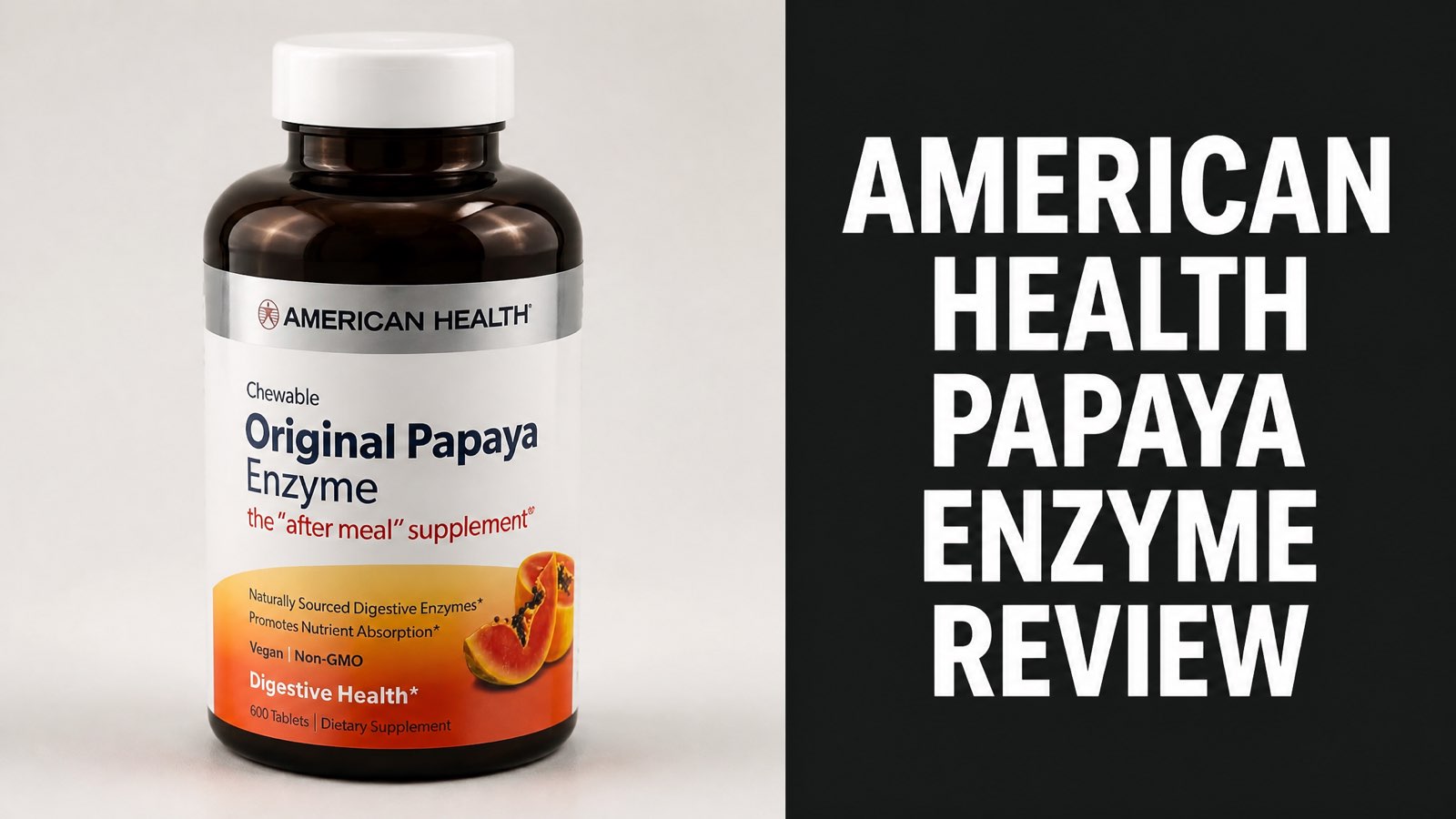
American Health Papaya Enzyme is a chewable digestive supplement sold in Original, Chlorophyll and Super Plus formulas. Adults take it after meals for daily digestive support. The line sells on Amazon and in retail stores. This review covers ingredients, dosing, pricing and warnings.
The tablets combine papaya fruit with papain, amylase and protease. Super Papaya Enzyme Plus adds bromelain, cellulase and lipase. Reviewers rate the line 4.7 stars and praise its taste. Pricing starts near ten dollars for 180 tablets. The label flags latex sensitivity and pregnancy as reasons to ask a doctor first. Dosing is three tablets per meal.
No clinical trial backs the branded product, so the evidence stays at the ingredient level. That still gives buyers useful ground to stand on. Our team at Eat Proteins compared the formulas, the prices and the risks. Read on to learn which formula fits your needs and how to take it.
What Is American Health Papaya Enzyme?
American Health Papaya Enzyme is a chewable digestive supplement built around papaya fruit and papain. The blend also carries amylase and protease, two enzymes that break down carbohydrates and proteins. Adults chew the tablets after meals for daily digestive support. The brand sells three formulas in several bottle sizes, from 90 to 600 tablets. Sizes vary.
In fact, our team at Eat Proteins sees the line as a simple after-meal habit. Original Papaya Enzyme ships in 100, 250 and 600 tablet bottles. The chlorophyll version uses the same sizes. Super Papaya Enzyme Plus ships in 90, 180 and 360 counts. Which one fits you? Sugar and budget decide.
Product Lineup:
- Original Papaya Enzyme in 100, 250 and 600 tablets
- Papaya Enzyme with Chlorophyll in 100, 250 and 600 tablets
- Super Papaya Enzyme Plus in 90, 180 and 360 tablets
Who Makes American Health Papaya Enzyme?
American Health sells the papaya enzyme line through its own website, Amazon and retail stores. The brand lists a store finder and direct Amazon links on each product page. Each bottle size carries its own UPC code, which makes the exact version easy to confirm at checkout. The brand pages carry no founder or factory details. Confirm the seller first.
Here’s the thing: the brand pitches the chewables as a naturally sourced digestive aid. Its pages describe the enzymes as naturally sourced and the papaya as freshly ripened. Those are marketing claims, so treat them as the company’s own description.
What Is in American Health Papaya Enzyme?
American Health Papaya Enzyme contains papaya fruit, papain, amylase and protease as its core active blend. The tablets also use sucrose, calcium carbonate, maltodextrin, corn starch and natural flavors as a chewable base. The label lists no yeast, lactose, egg, grapefruit, preservatives or artificial colors in the Original formula. Read the full label.
To be clear, the formulas differ. The chlorophyll version adds fructose and date powder to the base. Super Papaya Enzyme Plus swaps sugar for sorbitol and mannitol. The Plus formula also adds peppermint oil for flavor. Does the base matter? Yes, for sugar-conscious readers.
Look at the allergen line, though. The brand page for Super Papaya Enzyme Plus says it contains wheat ingredients. One retailer lists the same product as wheat free. Always read the bottle in your hands.
What Enzymes Does Super Papaya Enzyme Plus Contain?
Super Papaya Enzyme Plus packs eight active ingredients into one three-tablet serving. Papain leads the panel at 45 milligrams. Protease, bromelain, alpha amylase and cellulase each add 3 milligrams. Lipase adds 1.5 milligrams, papaya fruit adds 15 milligrams and chlorophyll adds 1.5 milligrams. A 180 count bottle holds 60 servings. Daily values are unset.
Per-Serving Amounts (3 Tablets):
| Ingredient | Amount | Role |
|---|---|---|
| Papain | 45 mg | Protein digestion |
| Protease | 3 mg | Protein digestion |
| Bromelain | 3 mg | Protein digestion |
| Alpha amylase | 3 mg | Starch digestion |
| Cellulase | 3 mg | Fiber breakdown |
| Lipase | 1.5 mg | Fat digestion |
| Papaya fruit | 15 mg | Whole fruit source |
| Chlorophyll | 1.5 mg | Plant pigment |
Daily values are not established for any of these ingredients. So what does that mean for you? The label gives amounts but no percentage benchmark to compare against.
How Does American Health Papaya Enzyme Work?
American Health Papaya Enzyme works by adding digestive enzymes to a meal that is already in your stomach. Papain and protease split proteins into smaller pieces. Amylase handles starches. The brand says the process also encourages nutrient absorption after eating. The tablets act as a helper for digestion, not a replacement for it. Food gives them work.
Papain comes from papaya, and it is a protein-digesting enzyme. Bromelain plays the same role in the Plus formula, and it comes from pineapple. Both enzymes target protein, which makes the supplement a natural match for meat-heavy meals. Does it replace a healthy diet? No.
Why does timing matter? The enzymes need food to act on. That’s why the brand calls the tablets an after-meal supplement.
How Do You Take American Health Papaya Enzyme?
Adults chew three tablets after a meal, one to three times daily. The label also allows one or two tablets dissolved in the mouth when needed. The tablets are chewable, so no water is required. Peppermint and papaya flavors make them easy to take. The directions are identical across the Original, Chlorophyll and Plus formulas. The dosing never changes.
Steps:
- Finish your meal first.
- Chew three tablets right after eating.
- Repeat after up to three meals per day.
- Dissolve one or two tablets in the mouth between meals if needed.
The bottom line: stay within the label range. The brand does not publish a higher dose, so extra tablets add risk with no stated benefit. Can more tablets help? The label makes no such claim.
Does American Health Papaya Enzyme Work?
Yes. American Health Papaya Enzyme delivers digestive support for most reviewers, but no clinical trial backs the branded product. Papain and amylase are established digestive enzymes. The brand’s own claims carry an asterisk, and the FDA has not evaluated them. Results vary from person to person, and the label promises support only. Treat it as support.
Think of it this way: the evidence sits at the ingredient level. Papain breaks down protein in lab settings. Our experts at Eat Proteins treat that as plausible support, not a proven cure for any digestive condition.
Does the supplement fix chronic digestive problems? No. The label describes it as support for daily digestive health only.
What Do American Health Papaya Enzyme Reviews Say?
Reviews skew strongly positive across major retailers. Walmart shows 4.7 out of 5 stars for the Original 250 count, from 92 ratings and 70 reviews. PureFormulas shows 4.7 stars from 75 reviews of Super Papaya Enzyme Plus. Reviewers praise the taste and the digestive relief they feel after meals, usually within minutes. The sample sizes remain modest.
Review Highlights:
- Pleasant, candy-like chewable taste
- Relief after heavy meals reported within minutes
- Breaks down food and supports nutrient absorption, per reviewers
- Better taste than many acid reducers, per a Vitacost reviewer
The bad news? Retailer reviews are self-selected, and PureFormulas notes it does not verify them. Complaints are rare in the sources we found, but absence of data is not proof of absence. Are reviews proof? Not quite.
Which American Health Papaya Enzyme Is Best?
Super Papaya Enzyme Plus is the strongest formula because it adds five more enzymes to the papain base. Original Papaya Enzyme is the simplest choice and uses sucrose. The chlorophyll version adds date powder and fructose to the same core blend. Pick the formula that matches your sugar and enzyme preferences, plus your budget. Compare labels before buying.
Formula Comparison:
| Formula | Key Difference | Sizes |
|---|---|---|
| Original | Papaya, papain, amylase, protease; sucrose base | 100, 250, 600 |
| With Chlorophyll | Adds fructose and date powder | 100, 250, 600 |
| Super Plus | Adds bromelain, cellulase, lipase; sugar free | 90, 180, 360 |
Sugar matters here. Why? Original uses sucrose, and Plus uses sorbitol and mannitol instead. Readers who limit sugar often lean toward Plus.
Is Super Papaya Enzyme Plus Worth the Upgrade?
Yes. Super Papaya Enzyme Plus is worth the upgrade for anyone who wants broader enzyme coverage. Lipase targets fats and cellulase targets plant fiber. Neither appears in the Original formula. The price gap stays small on mainstream retailers, so the extra enzymes cost little. The Plus formula also drops sugar in favor of sugar alcohols. Check the label.
But there’s a catch. Sorbitol and mannitol are sugar alcohols. They can loosen stools in some people. Start with one serving to see how your body responds.
Are There Side Effects of American Health Papaya Enzyme?
Yes. Side effects can occur in sensitive people, and the label says to stop use if they do. The label specifically flags latex sensitivity. Papaya allergy is another concern for some users. The sugar alcohols in the Plus formula may upset the stomach. Serious reactions are not reported in the sources reviewed, but data is limited. Stop if symptoms appear.
Possible Concerns:
- Allergic reaction in people sensitive to latex or papaya
- Stomach upset or loose stools from sugar alcohols in Plus
- Added sugar from sucrose in Original
- Unknown interactions with prescription medications
Do most users report problems? Short answer: no. Still, the brand tells anyone taking medications to talk with a doctor first.
Who Should Avoid American Health Papaya Enzyme?
Pregnant and nursing women need a doctor’s approval before using the supplement. The same warning covers anyone on medication or with a medical condition. People with a known latex sensitivity are also told to consult a doctor first. Children need adult supervision, and the bottle stays out of reach. Store the tablets at room temperature. Ask first.
Pay attention to this: papaya products can trigger allergies. Anyone with a history of reactions to papaya, pineapple or latex needs medical advice. Stop use at the first sign of rash or swelling.
How Much Does American Health Papaya Enzyme Cost?
American Health Papaya Enzyme costs roughly 10 dollars for the 180 count Super Plus bottle at mainstream retailers. PureFormulas lists the bottle at $9.79 with a one-time purchase. Autoship drops the price to $8.32, which saves 15 percent. Prices shift by retailer and by day, so compare a few stores before you check out. Shop around for the best deal.
Price Breakdown (180 Count):
| Option | Price | Per Serving |
|---|---|---|
| One-time purchase | $9.79 | $0.16 |
| Autoship (15% off) | $8.32 | $0.14 |
| Per tablet, one-time | $0.05 | n/a |
Is it worth the price? At about 16 cents a serving, yes. Few digestive supplements cost less per use.
Where Can You Buy American Health Papaya Enzyme?
The supplement is available at Walmart, PureFormulas, Vitacost, Swanson and Amazon. American Health also runs a store finder on its own website. Each product page links to Amazon listings for every bottle size. Check the UPC against the brand page to confirm the exact formula, since three versions look alike on the shelf. Compare sellers before you buy.
And here’s the best part: bigger bottles lower the cost per tablet. The 600 count Original suits daily users. Occasional users do fine with the 100 count. Which size wins? Usage decides.
Should You Try Eat Proteins?
Yes. Eat Proteins gives you the same research-first approach we used on this American Health review. Our team at Eat Proteins reads the labels, checks the prices and flags the risks. You get plain answers before you spend a dollar on any supplement. Every review follows one checklist. We tie every claim to a source and flag marketing language as such.
Don’t guess on digestive health. Our experts break down every formula, every dose and every warning. Browse more Eat Proteins reviews and pick your next supplement with confidence.
Why Trust Eat Proteins Reviews?
Eat Proteins reviews rest on label data, retailer pricing and published customer ratings. Every claim traces back to a source page. Marketing language gets labeled as marketing. Gaps in the evidence get stated plainly instead of hidden. Each verdict states what the evidence does and does not show. Verdicts reflect only what the sources confirm today.
What’s more, our coaches update reviews when labels change. Do labels change? Yes. Formulas shift, and prices move. Fresh data keeps each review useful.