
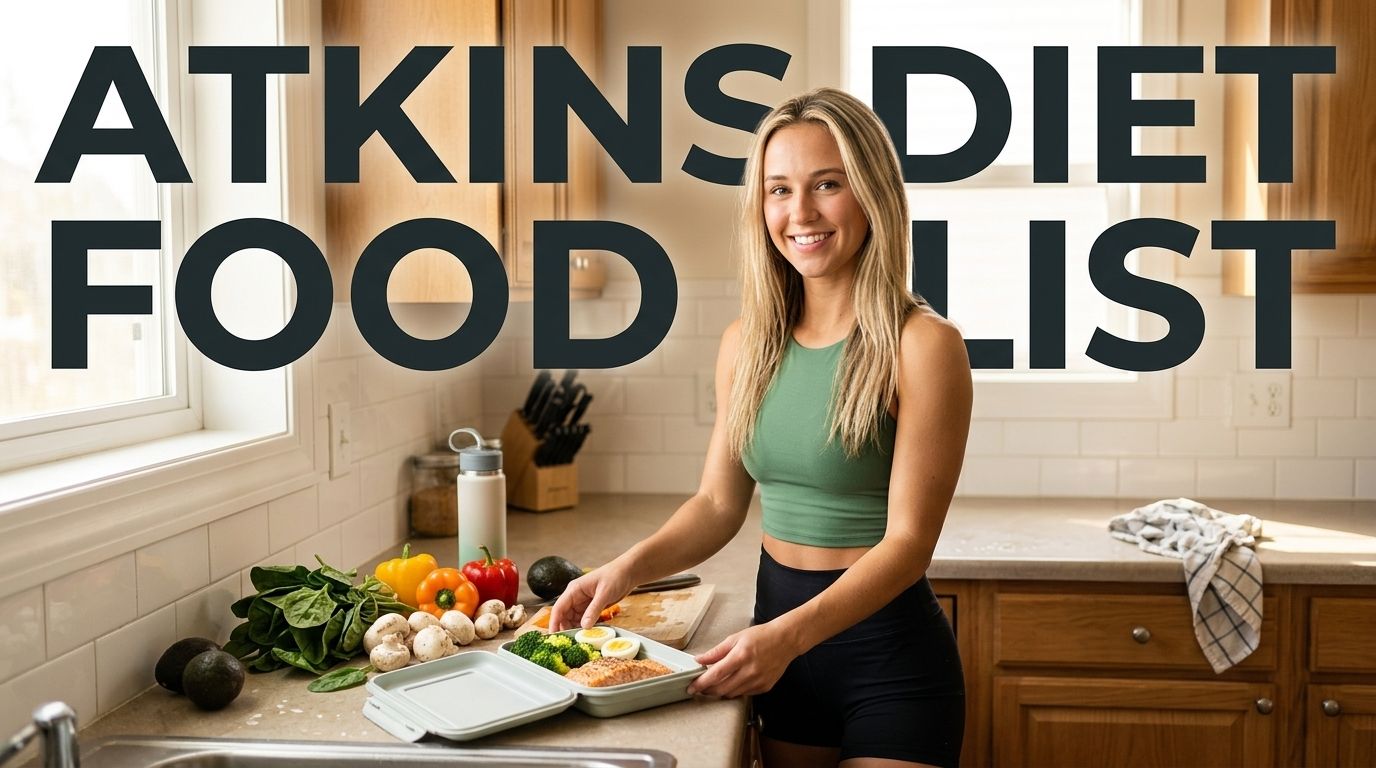
The Atkins diet food list covers every food allowed and avoided across four phases of a structured low-carb eating plan. Phase 1 (Induction) limits net carbs to 20 grams daily. Each phase gradually expands the food list as the body adapts to fat-burning metabolism.
Proteins — meat, fish, poultry, and eggs — are unrestricted on Atkins. Foundation vegetables (leafy greens, broccoli, cauliflower) are approved from Phase 1. Nuts, seeds, and most dairy enter in Phase 2. Legumes and grains reintroduce in Phases 3 and 4 for those who tolerate them.
This guide covers the complete Atkins food list by category and phase, explains the science behind ketosis and net carbs, outlines the four-phase structure, and addresses common mistakes that stall progress on the Atkins diet.
What Is the Atkins Diet Food List?
The Atkins diet food list is a phase-based system that starts with 20 grams of net carbs daily in Phase 1 and progressively adds food categories as the dieter approaches their goal weight. Proteins and fats are unrestricted from day one; carbohydrates are the controlled variable.
The diet divides into four phases. Phase 1 (Induction) lasts a minimum of 2 weeks. Phase 2 (Balancing) runs until 10 pounds from goal weight. Phase 3 (Fine-Tuning) continues until goal weight is maintained for one month. Phase 4 (Lifetime Maintenance) is permanent.
What Foods Are Allowed on the Atkins Diet?
Allowed Atkins foods include all meats, poultry, fish, shellfish, eggs, most cheeses, butter, oils, and leafy green vegetables from Phase 1 onward. Nuts and seeds enter in Phase 2. Most fruits, legumes, and whole grains reintroduce in Phases 3 and 4.
Atkins Phase 1 Approved Foods:
- Meat: beef, pork, lamb, veal, venison, bison
- Poultry: chicken, turkey, duck, goose
- Fish and shellfish: salmon, tuna, cod, shrimp, crab, lobster
- Eggs (all preparations)
- Cheese: cheddar, gouda, mozzarella, cream cheese (3-4 oz daily limit)
- Foundation vegetables: arugula, bok choy, broccoli, cauliflower, celery, cucumber, kale, lettuce, spinach, zucchini
- Fats and oils: olive oil, coconut oil, butter, avocado oil
- Beverages: water, coffee, tea (unsweetened)
The food list confirms that satiety is prioritized on Atkins. Protein and fat keep hunger suppressed without calorie counting. The structure removes decision fatigue by defining clear allowed and avoided categories.
What Foods Are Banned on the Atkins Diet?
Foods banned on all Atkins phases include sugar, refined carbohydrates, bread, pasta, rice, high-sugar fruits, starchy vegetables, and processed low-fat foods. These foods spike insulin and block the fat-burning state the diet requires.
Here’s what most people miss: low-fat packaged foods are specifically banned on Atkins. Low-fat products typically replace fat with sugar or refined starch to maintain palatability. The Atkins diet reverses this — fat is the macronutrient the body uses for fuel on a restricted-carb plan.
What Proteins Can You Eat on the Atkins Diet?
Atkins allows all animal proteins from Phase 1 — beef, pork, lamb, poultry, all fish, all shellfish, and eggs are unrestricted in quantity throughout the diet. Protein is the dietary anchor that preserves muscle mass while carbohydrates are restricted.
Protein sources carry zero net carbs in their natural form. Beef, chicken, salmon, and eggs contain no carbohydrate. This makes them foundational foods in all four Atkins phases. The protein variety on Atkins prevents the diet from feeling monotonous compared to plant-only low-carb approaches.
Is Meat Allowed on All Phases of Atkins?
Yes. All meat types are allowed throughout every Atkins phase with no quantity restrictions — beef, pork, lamb, veal, bison, venison, and all poultry remain on the approved list from Phase 1 through Phase 4. Fat content in meat is not restricted.
Processed meats like bacon and deli cuts are technically allowed but should be checked for added sugars. Some cured meats contain dextrose or corn syrup in the processing. Reading labels ensures processed meat choices stay within the net carb limit across all phases.
What Vegetables Are Approved for the Atkins Diet?
Atkins approves a category called foundation vegetables from Phase 1 — including arugula, bok choy, broccoli, cauliflower, celery, cucumber, daikon, endive, escarole, fennel, kale, lettuce, mushrooms, peppers, radicchio, radishes, spinach, and zucchini. Each serving counts toward the daily net carb limit.
Foundation vegetables provide fiber, vitamins, and minerals while keeping net carbs low. Spinach delivers 0.4 grams net carbs per cup. Broccoli delivers 4 grams net carbs per cup. Cauliflower delivers 3 grams per cup. These vegetables form the nutritional base of the Atkins diet across all phases.
Which Vegetables Are Too High in Carbs for Atkins Phase 1?
Starchy vegetables are restricted in Phase 1 and Phase 2 of the Atkins diet — potatoes, sweet potatoes, corn, peas, beets, carrots, and parsnips are the primary vegetables that exceed safe net carb levels for Induction. They reintroduce cautiously in Phase 3 and beyond.
A medium potato contains approximately 30 grams net carbs — exceeding the entire daily Phase 1 limit in a single serving. Sweet potatoes carry 20 grams net carbs per medium serving. These vegetables are not banned permanently but are incompatible with the 20-gram daily limit in the early phases of the diet.
What Fats and Dairy Are Included on the Atkins Food List?
Atkins includes all healthy fats and most dairy products from Phase 1 — butter, olive oil, coconut oil, avocado oil, heavy cream, and hard cheeses like cheddar, gouda, and mozzarella are approved without calorie restriction. Fat is the primary fuel source replacing glucose.
Dairy carries a small carb load from lactose. Hard aged cheeses contain close to zero net carbs per serving. Heavy cream has 0.4 grams net carbs per tablespoon (15 ml). Milk is restricted in Phase 1 because an 8 oz (240 ml) serving contains 12 grams net carbs — more than half the daily Induction limit.
Are Nuts and Seeds Allowed on Atkins?
Nuts and seeds enter the Atkins food list in Phase 2 (Balancing) when daily net carb targets expand to 25-50 grams. Almonds, walnuts, pecans, macadamia nuts, sunflower seeds, and pumpkin seeds are the primary approved options.
Nuts carry carbs that require measurement. One ounce (28 grams) of almonds contains 2.5 grams net carbs. Macadamia nuts are the lowest at 1.5 grams net carbs per ounce. Cashews and pistachios are higher at 7-8 grams per ounce and require careful portioning even in Phase 2 and beyond.
What Are the Four Phases of the Atkins Diet?
The Atkins diet runs through four distinct phases, each expanding the food list and carb target as the dieter progresses toward and maintains their goal weight. The phase structure is what distinguishes Atkins from a generic low-carb diet.
Atkins Four-Phase Structure:
| Phase | Net Carb Target | Duration | Goal |
|---|---|---|---|
| Phase 1 (Induction) | 20g daily | Minimum 2 weeks | Trigger ketosis |
| Phase 2 (Balancing) | 25-50g daily | Until 10 lbs from goal | Add food variety |
| Phase 3 (Fine-Tuning) | 50-80g daily | Until goal weight held 1 month | Slow weight loss |
| Phase 4 (Maintenance) | Variable | Lifelong | Sustain results |
The phase-based approach prevents the common low-carb mistake of cutting too many calories too fast. Each phase transition teaches the dieter their personal carb tolerance — the maximum carb intake at which they maintain weight without regaining fat.
What Is Atkins Phase 1 (Induction)?
Atkins Phase 1 (Induction) restricts net carbs to 20 grams per day for a minimum of 2 weeks to trigger ketosis — the metabolic state where the body burns fat for fuel instead of glucose. This is the strictest phase of the diet.
Phase 1 eliminates sugar, grains, most dairy beyond hard cheeses, nuts, alcohol, and most fruits entirely. The goal is to deplete liver glycogen stores and force the body into fat-burning mode within 3 to 7 days. Most people experience measurable fat loss in the first 2 weeks of Induction.
How Do Phases 2 Through 4 Work?
Phases 2, 3, and 4 progressively add 5 grams of daily net carbs per week while monitoring weight — if weight loss stalls, carbs are reduced until fat loss resumes. This process identifies each person’s individual carb tolerance level.
Phase 2 adds nuts, seeds, berries, and more dairy. Phase 3 introduces legumes and some starchy vegetables. Phase 4 allows whole grains for those who tolerate them without weight regain. The final carb tolerance level — where weight holds stable — becomes the permanent maintenance diet.
What Is the Science Behind the Atkins Diet?
The Atkins diet is built on the principle that reducing carbohydrates below 20-50 grams daily forces the body into ketosis — a metabolic state where stored fat and dietary fat become the primary energy source. This shift drives fat loss without calorie counting.
Carbohydrate restriction lowers blood insulin levels. Lower insulin reduces fat storage signals. The body switches from burning glucose (from carbs) to burning ketones (from fat). This metabolic flexibility is the mechanism underlying the Atkins diet’s weight loss effect.
How Does Ketosis Drive Fat Loss on Atkins?
Ketosis occurs when liver glycogen stores deplete and the body begins converting stored fat and dietary fat into ketone bodies for fuel. This state is achievable within 3 to 7 days of maintaining 20 grams net carbs daily in Phase 1. Get a proven low-carb meal plan designed around these exact principles.
Ketosis suppresses appetite through two mechanisms. First, fat and protein are more satiating per calorie than carbohydrates. Second, elevated ketone levels directly suppress ghrelin — the primary hunger hormone. Most Atkins dieters report significantly reduced appetite within 5 to 10 days of entering Phase 1.
What Is the Difference Between Net Carbs and Total Carbs?
Net carbs are calculated by subtracting fiber and sugar alcohols from total carbohydrates — because fiber and most sugar alcohols pass through the body without raising blood glucose or triggering insulin. Atkins tracks net carbs, not total carbs.
The distinction matters for food choices. A cup of spinach contains 1.1 grams total carbs and 0.4 grams net carbs. Broccoli contains 6 grams total carbs and 4 grams net carbs per cup. Using total carbs instead of net carbs would incorrectly restrict high-fiber vegetables that are staples of the Atkins diet.
What Are the Side Effects of the Atkins Diet?
Short-term Atkins side effects occur in the first 1 to 2 weeks as the body transitions from glucose to fat metabolism — commonly called the Atkins flu, including fatigue, headache, brain fog, constipation, and leg cramps. Most resolve within 7 to 14 days.
The transition symptoms result from electrolyte loss. When insulin drops, kidneys excrete more sodium. Sodium loss pulls water and electrolytes out with it. Increasing sodium (from broth or salt), potassium (from leafy greens), and magnesium intake resolves most Phase 1 symptoms within a few days.
What Are Common Mistakes on the Atkins Diet?
The most common Atkins mistake is failing to track net carbs accurately — hidden carbs in sauces, dressings, condiments, and processed meats accumulate quickly and stall ketosis without the dieter realizing the source. Label reading is not optional on Atkins.
Other frequent mistakes include not eating enough fat, relying on low-carb processed products with high sugar alcohol counts, skipping the foundation vegetables and missing fiber, and not adjusting electrolytes during Phase 1. Our coaches at Eat Proteins flag these errors consistently in client diet audits.
Common Atkins Mistakes to Avoid:
- Not tracking net carbs in sauces, dressings, and condiments
- Eating too little fat and not reaching satiety
- Relying on Atkins branded products with high sugar alcohols
- Skipping foundation vegetables and missing dietary fiber
- Not replacing sodium, potassium, and magnesium lost in Phase 1
- Jumping phases too fast before weight stabilizes
Want Your Free Atkins-Style Low-Carb Meal Plan from Eat Proteins?
You have the food list. Now you need the plan. The nutritionists at Eat Proteins built a free Atkins-style low-carb meal plan with phase-specific food lists, net carb targets, and daily meal structures — sent directly to your inbox.
Most people start Atkins with the right foods but wrong portions. The free plan eliminates guesswork. It maps proteins, fats, and approved vegetables into a full week of meals structured around the Phase 1 food list, with notes on transitioning to Phase 2. Don’t stall on a diet that works when a plan is all you’re missing.