
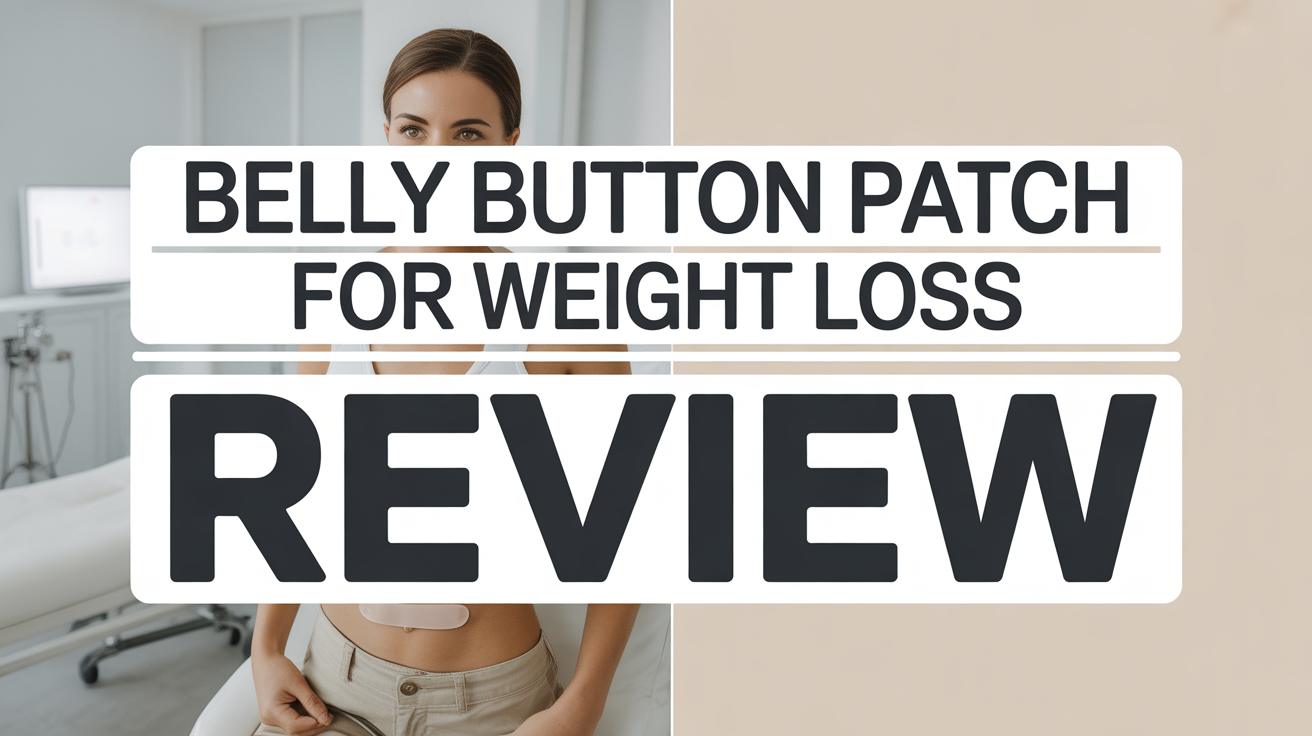
What Is a Belly Button Patch for Weight Loss?
A belly button patch for weight loss is an adhesive transdermal patch worn on or around the navel that claims to deliver active ingredients through the skin to suppress appetite and accelerate fat burning. The belly button is a common placement site, but not the only location — manufacturers also suggest arms, thighs, and abdomen.
The patches fall into the supplement category. That means the FDA does not tightly regulate them. Manufacturers are not required to prove safety or effectiveness before selling. That regulatory gap is central to understanding everything that follows.
The product category includes dozens of names: ‘firming patches,’ ‘metabolism support patches,’ ‘slimming patches,’ and ‘GLP-1 patches.’ The overarching promise is consistent — stick it on, lose weight. Instructions typically suggest wearing the patch 6-8 hours per day, 3-4 days per week.
How Does a Belly Button Patch Claim to Work?
Manufacturers claim belly button patches work transdermally — meaning active ingredients absorb directly through the skin into the bloodstream, bypassing the digestive system entirely. This transdermal route is how proven medical patches (nicotine, hormone, pain relief) deliver drugs. The question is whether the specific ingredients in weight loss patches can actually cross the skin barrier in meaningful quantities.
Transdermal delivery is real technology. It works for small, lipophilic (fat-soluble) molecules like nicotine. Most herbal ingredients in weight loss patches are large, water-soluble compounds. Large molecules do not penetrate the skin barrier effectively, which is the core problem with the claimed mechanism.
What Ingredients Are in Weight Loss Patches?
The most common ingredients in weight loss patches include green tea extract, bitter orange extract, garcinia cambogia, berberine, cinnamon extract, and green coffee bean extract, according to registered dietitian Jessica Cording, R.D. Some patches also contain ephedrine, CBD oil, and ashwagandha.
Common ingredients:
- Green tea extract (EGCG) — mild thermogenic effect in oral supplement form
- Bitter orange (synephrine) — stimulant that increases heart rate
- Garcinia cambogia — appetite-suppressing claim; weak oral evidence
- Berberine — blood sugar regulation; some oral metabolic benefit
- Cinnamon extract — blood sugar modulation; oral use only studied
- Green coffee bean extract — mild thermogenic; oral evidence only
The concern is that all evidence for these ingredients comes from oral studies. None of these compounds has been evaluated as a transdermal delivery agent. What a compound does when swallowed is not evidence of what it does when applied to skin.
Is There Any Evidence Belly Button Patches Work?
The short answer is no. No peer-reviewed studies have evaluated the effectiveness of weight loss patches as a delivery system or as a weight management intervention. The complete absence of clinical trials is not a regulatory technicality — it is the core problem. Without studies, there is no basis for any effectiveness claim.
Dr. Charlie Seltzer, a weight loss physician and exercise physiologist in Philadelphia, states directly: ‘There isn’t substantial research showcasing that the ingredients found in these patches are effective or have any benefit, even if they were delivered through the bloodstream.’ That caveat — ‘even if delivered’ — is important. The patches fail at two levels: delivery and ingredient efficacy.
The FDA does not regulate these patches as drugs. Manufacturers are not required to submit clinical data before selling. Any effectiveness claim on the product label is marketing, not evidence.
Do the Ingredients in Patches Have Weight Loss Benefits?
Some ingredients in weight loss patches have minimal weight loss evidence in oral form. Green tea extract has shown mild thermogenic effects in oral supplement studies, increasing calorie burning through thermogenesis at doses of 250-500 milligrams (0.009-0.018 ounces) per day. The effect is real but modest.
Bitter orange (synephrine) revs heart rate and slightly speeds metabolism. The effect is stimulant-based, not fat-targeted. Garcinia cambogia and green coffee bean extract show inconsistent results across oral trials. A 2020 Cochrane review found no clinically meaningful weight loss from most herbal supplements.
The critical point: all of this evidence is oral. Transdermal delivery of these compounds has not been studied. A compound that shows mild effects when absorbed through the gut does not automatically work when applied to skin — especially at the uncontrolled doses delivered by an unregulated patch.
What Do Obesity Medicine Doctors Say?
Obesity medicine specialists are uniformly skeptical. Dr. Jorge Moreno of Yale Medicine warns these patches can cause adverse side effects and emphasizes that the lack of FDA regulation means no one knows exactly what is in the products or at what doses.
Dr. Dina Peralta-Reich, obesity medicine specialist and founder of New York Weight Wellness Medicine, notes that even patches marketed as ‘GLP-1 patches’ do not contain actual GLP-1 molecules. GLP-1 (glucagon-like peptide-1) is a large peptide. Large peptide molecules cannot cross intact human skin — they require injection. The ‘GLP-1 patch’ label is marketing language targeting the popularity of Ozempic and Wegovy.
Are Belly Button Weight Loss Patches Safe?
Belly button weight loss patches carry real safety risks because they are not FDA regulated, their ingredient dosages are unknown, and stimulant-containing versions can cause cardiovascular side effects. The absence of regulation is not a minor caveat — it means no safety verification has occurred before the product reached shelves.
And here is the part that catches most buyers off guard: the lack of regulation means you cannot verify what is actually in the patch. Third-party testing is not required. Ephedrine — a nervous system stimulant with serious cardiovascular risks — appears in some weight loss patches. Buyers have no reliable way to confirm its presence or absence before purchase.
What Are the Side Effects of Weight Loss Patches?
The most common side effects of weight loss patches include skin irritation, redness, rash, and contact dermatitis at the application site, particularly with extended daily wear. These reactions occur regardless of the patch’s active ingredients.
Stimulant-containing patches (bitter orange, ephedrine) can cause increased heart rate, elevated blood pressure, insomnia, and anxiety. These effects become serious in individuals with pre-existing cardiovascular conditions. Dermatologist Dr. Ife J. Rodney notes that both the adhesive and herbal ingredients contribute to skin reactions.
Possible side effects:
- Skin irritation, redness, or contact dermatitis
- Increased heart rate (stimulant ingredients)
- Elevated blood pressure
- Insomnia or anxiety
- Allergic reactions to adhesive or herbal extracts
Who Should Avoid Using Weight Loss Patches?
Individuals with cardiovascular disease, high blood pressure, anxiety disorders, or skin conditions should not use weight loss patches containing stimulant ingredients such as bitter orange, synephrine, or ephedrine without physician review. These compounds are particularly risky for this population.
Pregnant and breastfeeding women should avoid all unregulated weight loss supplements, including patches. People taking prescription medications should note that some herbal compounds in patches can interact with blood thinners, statins, and antidepressants. The unregulated nature of the products makes interaction risk assessment impossible without knowing exact ingredient concentrations.
Where Is the Best Place to Apply a Slimming Patch?
Manufacturers commonly recommend placing slimming patches on or around the belly button, but no research confirms that application site affects weight loss outcomes in any way. Spot reduction of body fat is not physiologically possible — fat loss is systemic, not localized to the skin area underneath the patch.
The belly button persists as a preferred placement site due to marketing tradition and the popular belief in umbilical absorption. Some manufacturers claim the navel area offers superior transdermal access. No published study supports this claim. Placement site is irrelevant to any metabolic effect these patches might produce.
Does Placement Actually Matter for Effectiveness?
No. For transdermal patches with proven medical applications, placement matters because certain body areas have different skin thickness and blood vessel density, but for herbal weight loss patches, placement has no documented effect on weight loss outcomes.
The spot-reduction myth — the idea that you can target fat loss in a specific body area — has been consistently refuted by exercise science research. Applying a patch to the belly does not preferentially burn abdominal fat. The body determines fat mobilization based on hormonal and genetic factors, not patch location.
What Are the Different Types of Weight Loss Patches?
Four main types of weight loss patches exist: herbal and plant-based patches, metabolism and fat-burning ingredient patches, stimulant-based patches, and experimental microneedle patches. Each category claims a different mechanism but shares the same core limitation — no clinical evidence of effectiveness.
Herbal patches use botanical extracts (green tea, cinnamon, garcinia). Metabolism patches emphasize thermogenic ingredients. Stimulant patches use bitter orange or ephedrine for heart rate elevation. Microneedle patches use microscopic needles to create micro-channels in the skin for improved transdermal delivery — this technology is real but not yet validated for weight loss ingredients.
What Are GLP-1 Patches and Do They Work?
No. GLP-1 patches do not contain actual GLP-1 molecules and cannot deliver GLP-1 activity through the skin; the ‘GLP-1 patch’ label is a marketing term capitalizing on the popularity of semaglutide medications like Ozempic and Wegovy.
GLP-1 (glucagon-like peptide-1) is a large peptide hormone. Large peptides cannot cross intact skin — this is a basic pharmacological fact. Semaglutide (Ozempic) requires subcutaneous injection because oral absorption is too poor even in the gut without specialized formulation. A transdermal patch for a peptide hormone is pharmacologically implausible with current mainstream patch technology.
Some GLP-1 patches contain berberine or other natural compounds that mildly activate GLP-1 pathways when taken orally. But transdermal delivery of those compounds has not been validated either. The ‘GLP-1 patch’ framing borrows credibility from a proven drug class to sell an unproven product.
What Are Better Alternatives to Belly Button Patches?
Science-backed weight loss alternatives to belly button patches include adequate dietary protein intake, resistance training, sleep optimization, and clinical GLP-1 medications for eligible patients — all of which have randomized controlled trial evidence behind them.
The contrast with patches is stark. A 2022 meta-analysis in Obesity Reviews found dietary protein increases to 1.6-2.2 grams per kilogram of bodyweight (0.7-1.0 grams per pound) produce significant weight loss through satiety and muscle retention. That single dietary change outperforms every unregulated patch in the market — at no extra cost.
What Weight Loss Methods Have Actual Evidence?
Effective weight loss methods supported by peer-reviewed research include increased dietary protein, resistance exercise, sufficient sleep (7-9 hours per night), stress management, and prescription GLP-1 receptor agonists for patients meeting clinical criteria.
Evidence-based weight loss methods:
- High-protein diet (1.6-2.2g protein per kg bodyweight daily)
- Resistance training 3+ sessions per week
- 7-9 hours of sleep per night (sleep deprivation drives hunger hormones)
- Stress reduction (chronic cortisol elevates fat storage)
- Prescription GLP-1 agonists (semaglutide, tirzepatide) for eligible patients
Dietitian Keri Gans, R.D., author of The Small Change Diet, emphasizes that sustainable weight loss comes from consistent lifestyle changes, not supplements or patches. Small, compounding changes to diet and activity produce results that no adhesive sticker can replicate.
Should You Try a Belly Button Patch? The Eat Proteins Verdict
The belly button patch for weight loss has no peer-reviewed evidence of effectiveness, no FDA oversight, and carries real side effect risks from uncontrolled stimulant ingredients — our team at Eat Proteins recommends against it. The money spent on patches is better invested in protein intake.
Here is the honest picture. The patches are inexpensive, which makes them feel low-risk. But time spent on an ineffective strategy is time not spent building habits that actually move the needle. Every week chasing a weight loss shortcut is a week of compounding protein-forward habits not started.
You want results that last. Start with what the research confirms: hit 1.6-2.2 grams of protein per kilogram of bodyweight daily, add resistance training three times per week, and protect 7-9 hours of sleep. If you need help building that structure, the Eat Proteins coaching team is here. Real results come from real habits — not adhesive stickers.