
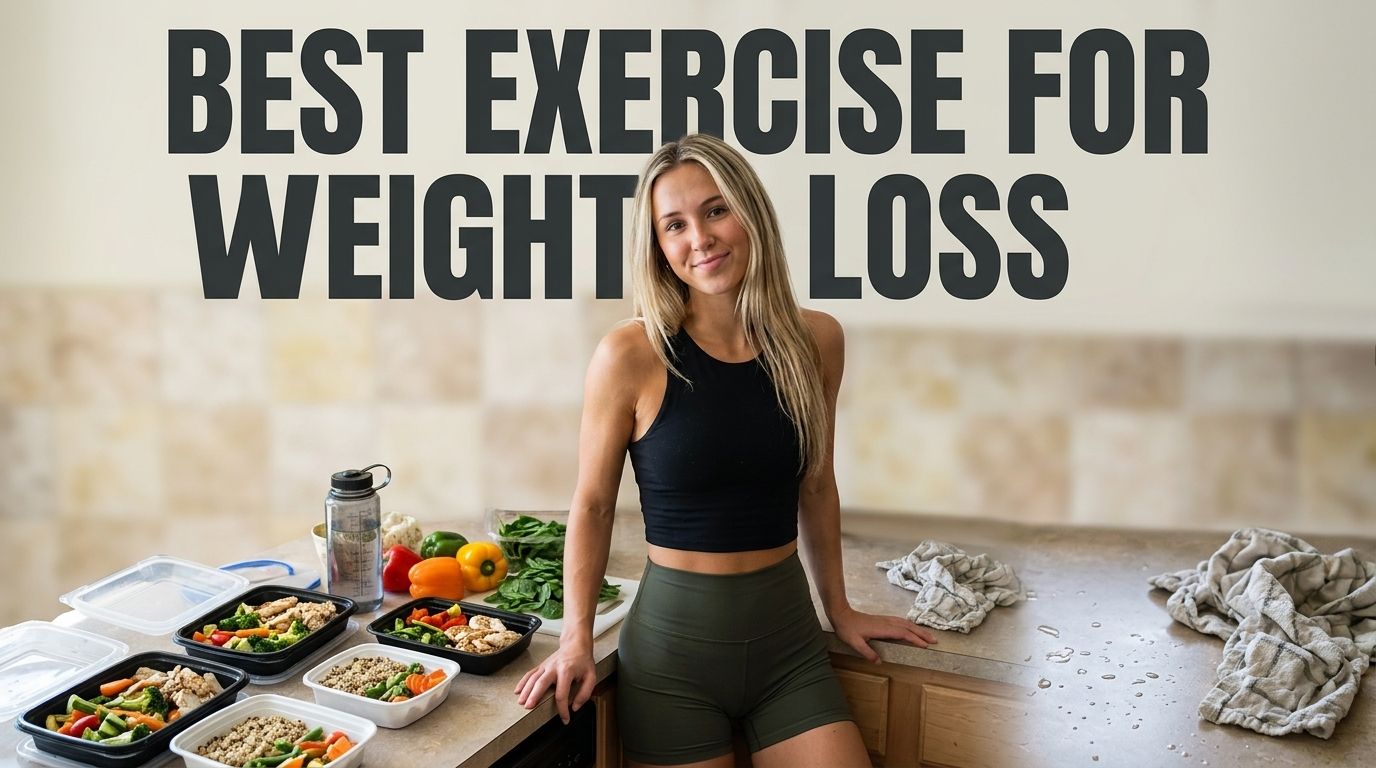
Exercise is one of the most effective tools for losing weight. The right type, frequency, and intensity can burn stored fat, raise metabolism, and produce visible changes in 12 weeks or less. The challenge is knowing which exercises actually work and which are overhyped.
HIIT keeps the body burning fat for up to 24 hours after a workout ends. Strength training raises resting metabolism by up to 7.4%, burning 125 extra calories per day. Walking 3 times per week reduces waist size by 1.1 inches in 12 weeks. Running burns nearly double the calories of walking per minute. Each method works through a different mechanism.
This guide covers the most effective exercises for weight loss, what science says about each, the most common mistakes that block results, and exactly what changes to expect in 12 weeks of consistent training.
What Is the Best Exercise for Weight Loss?
The best exercise for weight loss is the one a person will consistently perform over weeks and months. Research confirms that consistency beats intensity. A moderate workout done daily outperforms an intense session done once a week.
Here’s the thing: exercise types that support weight loss include aerobic cardio, strength training, HIIT, swimming, cycling, yoga, and walking. Each burns calories and improves metabolism differently. The most effective plan combines two or more of these types.
And here is what no one tells you: ACE exercise physiologist Anthony Wall puts it plainly: ‘A combination of diet and exercise is the most successful for long-term weight loss.’ Exercise alone rarely produces significant results. Nutrition and movement must work together.
Does Cardio or Strength Training Burn More Fat?
Cardio and strength training target fat loss through different but complementary mechanisms. Cardio burns more calories per session. Strength training raises resting metabolic rate (RMR), burning more calories around the clock.
To be clear: a 6-month study found 11 minutes of strength-based exercises 3 times per week increased metabolic rate by 7.4%. That increase equals approximately 125 extra calories burned per day. No extra effort required.
Beaumont Hospital and most exercise scientists recommend combining both. Cardio reduces fat mass rapidly. Strength training prevents muscle loss and keeps the metabolism elevated long-term. One without the other leaves results on the table.
Why Does HIIT Work So Well for Weight Loss?
HIIT (high-intensity interval training) alternates intense bursts of cardio with short recovery periods, maximizing calorie burn in minimal time. A typical session rotates exercises for 30-60 seconds with 10-second rests. Heart rate spikes into cardio zones while bodyweight movements build strength simultaneously.
And here is the best part: HIIT keeps the body in fat-burning mode for up to 24 hours after the workout ends. This is called EPOC (excess post-exercise oxygen consumption). Steady-state cardio stops burning elevated calories the moment you stop. HIIT doesn’t.
A meta-analysis in sports medicine research showed HIIT is as effective as moderate-intensity continuous training (MICT) for weight loss. Better yet, HIIT outperforms MICT for increasing cardiorespiratory fitness. More results, less time invested.
How Does Exercise Cause Weight Loss?
Exercise causes weight loss by creating a calorie deficit — burning more energy than the body consumes through food. MedlinePlus confirms the weight-loss formula: calories burned through exercise and daily living must exceed calories eaten. The resulting deficit forces the body to draw on stored fat for fuel.
In plain English: during aerobic exercise, the heart pumps harder to deliver oxygen to working muscles. The body meets this increased demand by breaking down stored triglycerides (fat) from tissue across the body into fatty acids for fuel.
Fat targeting does not work by location. The body pulls triglycerides from stores across the entire body. Spot reduction of fat is not physiologically possible — no amount of crunches burns belly fat specifically.
What Happens in Your Body During a Workout?
During aerobic exercise, oxygen demand rises sharply, triggering the breakdown of stored fat (triglycerides) into fatty acids that fuel muscle contractions. This process directly reduces fat stores over repeated sessions. Consistent training produces gradual but measurable body composition changes.
Strength training works differently. Muscles experience micro-tears from the resistance load. The body repairs these tears by synthesizing new muscle protein. That repair process raises resting metabolic rate — meaning more calories burn even during sleep.
How Each Exercise Type Affects the Body:
- Aerobic exercise: burns stored fat via oxygen-fueled metabolism
- Strength training: builds muscle, raises resting metabolic rate
- HIIT: combines both; extends calorie burn 24 hours via EPOC
- Swimming: full-body aerobic burn with zero joint stress
- Yoga: lowers cortisol, reduces stress-driven overeating
How Many Calories Does Exercise Actually Burn?
Calorie burn during exercise depends on body weight, exercise type, and intensity — with running and HIIT consistently burning the highest number per minute. The American Council on Exercise provides verified per-minute figures across standard body weights.
Walking burns 7.6 calories/minute for a 140-pound (65-kg) person and 9.7 calories/minute for a 180-pound (81-kg) person. Jogging burns 10.8 calories/minute. Running burns 13.2 calories/minute at the same 140-pound baseline. Running burns nearly double what walking does.
Cycling burns 400-750 calories per hour depending on speed, weight, and terrain. A 154-pound (70-kg) person burns approximately 145 calories in a 30-minute moderate-pace ride on flat terrain. Indoor cycling offers the same burn without weather limitations.
Which Exercises Burn the Most Calories?
Running, HIIT, cycling, swimming, and jumping rope rank highest for calorie burn per minute among common exercises. HIIT and running burn the most calories in the shortest time. Lower-intensity options like yoga and walking still contribute meaningfully when done consistently.
Highest-Calorie-Burning Exercises:
- Running (13.2 cal/min at 140 lbs / 65 kg)
- HIIT (varies; high calorie burn + 24-hour EPOC afterburn)
- Jumping rope (vigorous; comparable calorie burn to running)
- Cycling (400-750 cal/hr depending on intensity)
- Swimming (full-body burn with low joint impact)
- Stair climbing (versatile, requires no equipment)
Stair climbing stands out for accessibility. Climbing just two flights of stairs daily leads to 6 pounds (2.7 kg) of weight loss per year. It also raises HDL (good) cholesterol and keeps joints, muscles, and bones healthy.
Yoga and Pilates burn fewer calories per session but still support weight loss in the long run. Harvard Health research found both hatha and vinyasa yoga produced equal weight loss. Pilates research documented body composition improvements in sedentary overweight women. Consistency with any of these beats occasional intense sessions.
Is Running Better Than Walking for Weight Loss?
Running burns nearly double the calories of walking per minute — 13.2 versus 7.6 calories/minute for a 140-pound (65-kg) person, based on ACE data. Running pace exceeds 6 mph (9.7 km/h). Jogging is 4-6 mph (6.4-9.7 km/h). Walking is lower impact and more accessible for beginners.
But walking still delivers real results. A 12-week study found women with obesity who walked 50-70 minutes, 3 times per week, reduced body fat by 1.5% and waist circumference by 1.1 inches (2.8 cm). Walking is the safer, more sustainable starting point for most people.
Does Swimming Help You Lose Weight?
Swimming is a full-body aerobic exercise that burns significant calories while placing minimal stress on the joints. The Obesity Action Coalition confirms swimming supports fat loss. Water resistance engages more muscle groups simultaneously than most land-based cardio options.
So what does that mean for you? Swimming suits people with joint pain, obesity, or limited mobility. Water buoyancy reduces effective body weight by up to 90%. People who cannot comfortably run or cycle maintain high exercise frequency in the pool without injury risk.
How Does Strength Training Support Weight Loss?
Strength training supports weight loss by building muscle mass, which directly raises the resting metabolic rate (RMR) — the calories the body burns at rest, without any activity. A body with more muscle burns more calories than an equal-weight body with less muscle, including during sleep.
The American Council on Exercise estimates a 140-pound (65-kg) person burns 7.6 calories/minute during weight training. A 180-pound (81-kg) person burns 9.8 calories/minute. These session burns accumulate significantly across a consistent weekly schedule.
Trainer Aaron McCulloch, director at YOUR Personal Training, recommends afternoon or evening strength training while in a calorie deficit. Strength, coordination, and power peak later in the day. Better performance means more muscle stimulus and better muscle retention during the fat loss phase.
Does Building Muscle Increase Fat Burn at Rest?
Yes. Muscle tissue is metabolically active and increases the resting metabolic rate, burning more calories around the clock — even during sleep. More muscle means the body demands more energy simply to maintain itself. That energy comes from stored fat over time.
Here is the kicker: a 6-month study found 11 minutes of strength training 3 times per week increased metabolic rate by 7.4%. In numbers, that’s 125 extra calories burned per day. Over 30 days, that equals 3,750 extra calories burned from rest alone. No extra exercise. Just muscle doing its job.
Ready to speed things up? Get a proven weight loss plan built around these exact principles.
How Often Should You Lift Weights to Lose Weight?
Most trainers and exercise guidelines recommend 2-3 strength training sessions per week for effective weight loss without overtraining. This frequency builds muscle progressively while allowing 48 hours of recovery between sessions. Muscle is built during rest, not during the workout itself.
Combining HIIT and strength training accelerates fat loss beyond either method alone. Crunch Fitness coaches confirm this combination builds lean muscle, improves aerobic fitness, and speeds fat loss. A balanced weekly plan includes 2 strength sessions and 2 HIIT sessions with rest days between each.
What Are the Most Common Exercise Mistakes for Weight Loss?
The most common exercise mistakes for weight loss include ignoring diet, starting at too high an intensity, skipping recovery, and choosing exercises that feel like punishment. Each mistake erodes consistency. Consistency is the single most important factor in long-term fat loss.
Penny Weston, personal trainer and founder at MADE, says it directly: ‘Extreme bursts of effort followed by long gaps rarely lead to lasting change. Steady, enjoyable movement builds momentum and sustainable weight loss.’ Short daily walks beat weekly marathon sessions left incomplete.
Pay attention to this: HIIT should not be done every day. The body needs 48 hours between high-intensity sessions. Skipping rest elevates cortisol, raises injury risk, and slows the muscle repair process that drives long-term metabolic improvement.
Common Exercise Mistakes to Avoid:
- Exercising without addressing calorie intake
- Jumping into daily HIIT without recovery days
- Doing only cardio and skipping strength training
- Choosing workouts that feel punishing and hard to sustain
- Expecting visible results in less than 4 weeks
Can You Out-Exercise a Bad Diet?
No. Research and exercise professionals agree that diet cannot be out-exercised — consuming more calories than burned results in weight gain regardless of training volume. Anthony Wall of ACE says: ‘You can train really hard, but if your nutrition isn’t where it should be, you’ll find challenges losing weight.’
The math is unforgiving. MedlinePlus confirms: calories burned must exceed calories eaten. A single fast-food meal can add 1,000-1,500 calories. A 30-minute run burns roughly 300-400 calories. No workout erases a consistently poor diet.
How Long Does It Take to See Weight Loss from Exercise?
Most people see measurable changes within 4-12 weeks of consistent exercise. Walking for 12 weeks reduced waist circumference by 1.1 inches (2.8 cm). HIIT for 12 weeks produced a 6.1% reduction in body weight. Results vary by starting weight, diet quality, and exercise consistency.
And this is where it gets interesting: a 2023 study found 24-hour fat oxidation is greater in people who exercise in the morning. Morning workouts enhance fat-burning metabolic signals throughout the day. The evidence points to morning training as more effective for fat loss; evening training edges it for performance output.
Bottom line: consistency overrides intensity in long-term fat loss. A 30-minute walk 5 days per week outperforms one extreme session per week. The body adapts to regular movement. Fat metabolism improves progressively over weeks, not days.
What Results Can You Expect in 12 Weeks?
In 12 weeks of consistent exercise, research documents meaningful changes in body weight, body fat percentage, and waist circumference across multiple exercise types. Specific results depend on exercise type, frequency, and dietary control during the period.
12-Week Exercise Results by Type:
| Exercise Type | Duration | Result |
|---|---|---|
| HIIT | 12 weeks | 6.1% body weight loss; greater waist reduction vs MICT |
| Walking (50-70 min, 3x/week) | 12 weeks | 1.5% body fat loss; 1.1 inch (2.8 cm) waist reduction |
| Strength training (11 min, 3x/week) | 6 months | 7.4% metabolic rate increase; 125 extra cal/day |
Walking produced 1.5% body fat reduction and a 1.1-inch (2.8-cm) waist loss in women with obesity over 12 weeks. Strength training for 6 months raised metabolic rate by 7.4%, burning an extra 125 calories per day at rest. These numbers are clinically verified, not estimates.
Want Your Free Weight Loss Exercise Plan?
You have the science. Now you need the plan. HIIT burns fat fast. Strength training raises your metabolism. Consistency beats intensity every single time. But knowing that doesn’t tell you what to do on Monday, Wednesday, or Saturday.
Our nutritionists at Eat Proteins built a free weekly exercise protocol combining HIIT, strength, and cardio — structured around the latest fat oxidation research. No guesswork. No wasted sessions. Just a plan built to produce results in 12 weeks. Get it below.