
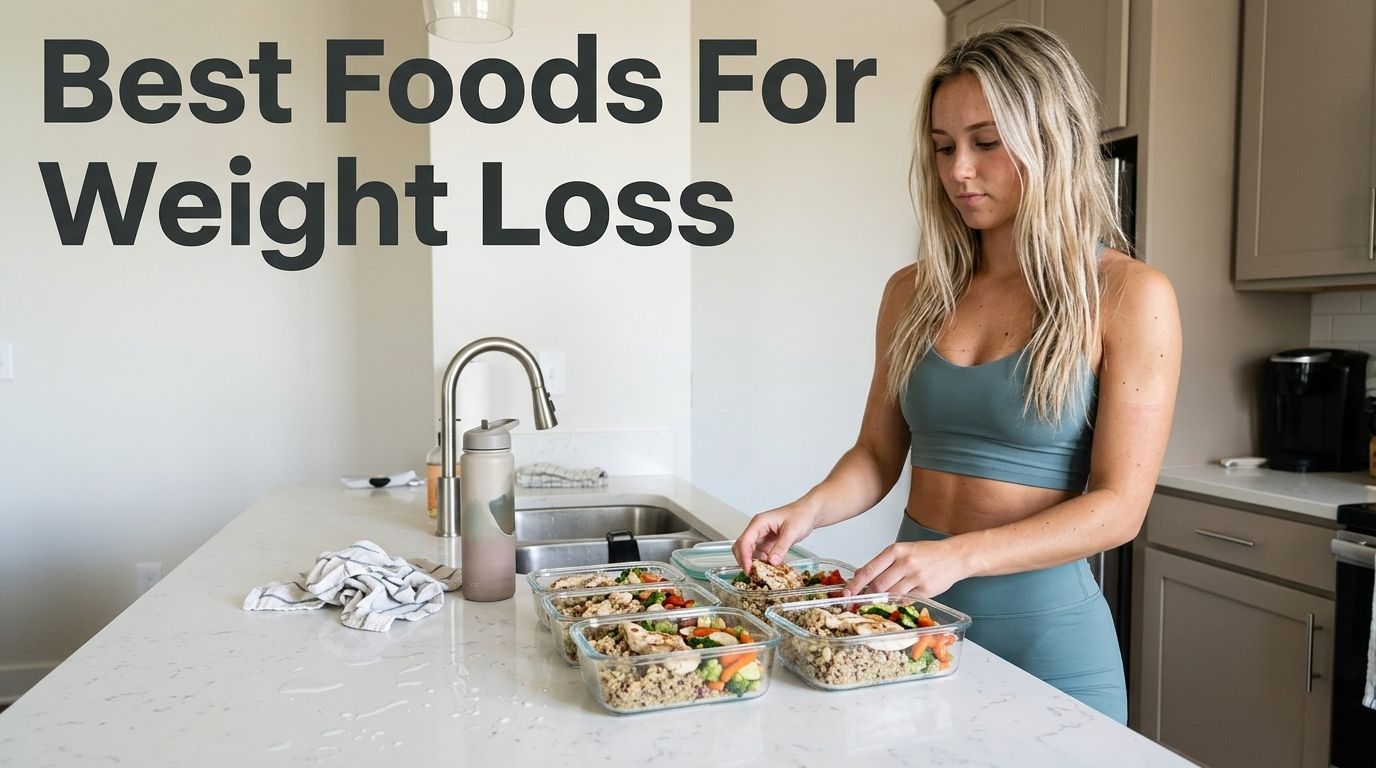
Weight loss foods are ingredients that support a caloric deficit by increasing satiety, boosting metabolism, or slowing digestion. No single food causes fat loss on its own, but the right choices make eating less far easier and more sustainable over time.
This article covers the top high-protein foods like eggs, Greek yogurt, and lean fish that trigger satiety hormones, the best fiber-rich vegetables and whole grains that slow digestion, metabolism-supporting options like chili peppers and green tea, and the water-rich fruits that deliver volume with almost no calories.
The bigger picture is this: most people fail at weight loss not because of willpower, but because of food choices that spike hunger. Building meals around protein and fiber changes the hunger equation entirely. Here is exactly how to do it.
What Makes a Food Good for Weight Loss?
A weight loss food earns that label by supporting a caloric deficit without leaving you hungry, depleted, or craving more food twenty minutes later.
To be clear, no food burns fat by itself. Weight loss happens when you consume fewer calories than you burn. The right foods just make that deficit easier to maintain day after day.
Here’s why: protein, fiber, and water content are the three variables that determine how full a food makes you relative to its calorie cost. Foods high in all three are the foundation of every effective weight loss diet.
Bottom line: the best weight loss foods are nutrient-dense, high in protein or fiber, and low in empty calories.
Does Caloric Deficit Matter More Than Food Choice?
Yes. A caloric deficit is the one non-negotiable driver of weight loss — food choice determines how sustainable that deficit is.
Think of it this way: you could lose weight eating only crackers if you ate few enough of them. But crackers do nothing to suppress hunger hormones, so the deficit collapses within days.
High-protein and high-fiber foods suppress ghrelin, the hunger hormone, while stimulating PYY and CCK, the satiety hormones. This means the deficit holds longer with far less suffering involved.
Is Losing 1-2 Pounds Per Week a Realistic Target?
Yes. Losing one to two pounds per week is the medically recommended rate — faster loss typically strips muscle and triggers metabolic adaptation.
A one-pound loss requires a weekly deficit of approximately 3,500 calories, or 500 calories per day. High-satiety foods make that daily gap achievable without relying on willpower alone.
Which High-Protein Foods Support Weight Loss Best?
High-protein foods support weight loss by triggering satiety hormones, requiring more energy to digest, and preserving lean muscle mass during a caloric deficit.
Protein has the highest thermic effect of any macronutrient. The body burns roughly 20-30% of protein calories just digesting them, compared to 5-10% for carbohydrates. That gap adds up across an entire day of eating.
In fact, our nutritionists at Eat Proteins consistently rank protein density as the single most important variable when building a weight loss meal plan for clients who struggle with hunger.
Top High-Protein Weight Loss Foods:
- Eggs — 6g protein each, high satiety, low calorie
- Skinless chicken breast — 25g protein per 3.5oz (99g) serving
- White fish (cod, tilapia) — 25g protein per 5oz (142g) serving
- Greek yogurt (plain) — 20g protein per 7oz (200g) serving
- Cottage cheese (low fat) — high protein, low calorie density
- Lean beef (tenderloin, flank steak) — complete protein, high iron
- Legumes and lentils — protein plus fiber in a single food
Are Eggs One of the Best Weight Loss Proteins?
Yes. Eggs deliver six grams of complete protein each and activate satiety pathways that reduce calorie intake at subsequent meals.
Research shows that a high-protein breakfast reduces total daily calorie consumption more than a carbohydrate-based breakfast. Eggs are low cost, fast to prepare, and versatile across meal types.
Does Greek Yogurt Actually Help With Satiety?
Yes. Plain Greek yogurt delivers 20 grams of protein per seven-ounce serving and directly stimulates the satiety hormones PYY and CCK.
Now here is the thing: fruit-flavored yogurt undoes all of that. A single six-ounce container of fruit-flavored yogurt contains up to 31 grams of added sugar. That sugar spike accelerates hunger rather than suppressing it.
Always choose plain Greek yogurt and add fresh berries yourself. You get the protein benefit without the sugar penalty hidden inside the flavored versions.
Is Fish a Superior Protein for Weight Loss?
Yes. Fish combines 25 grams of protein per five-ounce serving with omega-3 fatty acids that improve fat metabolism and reduce inflammation.
Shellfish carries the same omega-3 and protein profile. Both white fish and fatty fish like salmon belong in a weight loss diet, though white fish is lower in calories per serving for those tracking tightly.
Which High-Fiber Foods Speed Up Weight Loss?
High-fiber foods slow digestion, stabilize blood sugar, and extend the feeling of fullness far longer than low-fiber foods at equivalent calorie counts.
Here’s why: soluble fiber forms a gel in the digestive tract that delays gastric emptying. This stretches the satiety window and prevents the blood sugar crashes that trigger cravings between meals.
Short answer: 95% of Americans do not get enough fiber. A 2022 study confirmed that a high-fiber diet supports decreased body fat — the effect applies to weight loss broadly.
Best High-Fiber Foods for Weight Loss:
- Leafy greens (spinach, kale) — high fiber, very low calorie density
- Broccoli and cauliflower — high fiber, high volume, low calorie
- Chia seeds — dense fiber plus healthy fats in small portions
- Apples and pears — soluble fiber plus natural sweetness
- Berries (blueberries, raspberries) — fiber, antioxidants, low sugar
- Beans and lentils — fiber plus protein in one food
- Oats — soluble fiber, slow digestion, sustained energy
Are Leafy Greens Worth Eating Every Day for Weight Loss?
Yes. Leafy greens deliver high fiber and micronutrient density at almost zero calorie cost, making them the highest-volume food option in any weight loss plan.
A full cup of spinach contains roughly seven calories. Filling half a plate with leafy greens before adding protein and complex carbs is one of the most effective volume-eating strategies our coaches at Eat Proteins recommend to new clients.
Do Whole Grains Outperform Refined Grains for Weight Loss?
Yes. Whole grains contain significantly more fiber and protein than refined grains, which translates directly into greater satiety per calorie consumed.
Quinoa stands out specifically: one cup delivers eight grams of protein and five grams of fiber, making it both a grain and a partial protein source in a single ingredient. Brown rice and oats follow closely behind as practical daily staples.
Refined grains like white bread and white rice strip the bran and germ, removing most of the fiber. They digest quickly, spike blood sugar, and accelerate hunger rather than suppressing it.
Can Chia Seeds Help Reduce Daily Calorie Intake?
Yes. Chia seeds absorb up to ten times their weight in water, expanding in the stomach and extending fullness well beyond what their calorie count suggests.
Two tablespoons provide roughly ten grams of fiber. Add them to plain Greek yogurt or oats to combine their satiety effect with the protein satiety from those foods simultaneously.
What Metabolism-Boosting Foods Actually Have Evidence?
Metabolism-boosting foods increase the body’s calorie burn through thermogenesis, improved fat oxidation, or the thermic effect of digesting specific nutrients.
This means the category is real, but heavily overhyped. Chili peppers, green tea, and high-protein foods have the strongest evidence. Most metabolism supplements borrow from these three and add very little on top of them.
Evidence-Backed Metabolism Supporters:
| Food | Active Compound | Mechanism |
|---|---|---|
| Chili peppers | Capsaicin | Boosts thermogenesis, increases fullness |
| Green tea | EGCG + caffeine | Stimulates fat oxidation |
| Fish and shellfish | Omega-3 + protein | Improves fat metabolism |
| Legumes | Protein + fiber | High thermic effect |
| Berries | Antioxidants | Reduces inflammation linked to obesity |
| Almonds | Protein + healthy fats | Satiety and energy regulation |
Does Capsaicin in Chili Peppers Boost Fat Loss?
Yes. Capsaicin directly improves fat metabolism and increases feelings of fullness, giving chili peppers a measurable edge over most other vegetables in a weight loss diet.
The effect is modest but consistent across multiple studies. Adding chili peppers or cayenne to meals is a zero-calorie upgrade to almost any dish in the rotation.
Does Green Tea Support Weight Loss Beyond Hydration?
Yes. Green tea contains EGCG, a compound that stimulates fat burning, paired with moderate caffeine that amplifies the thermogenic effect.
The calorie burn per cup is small in isolation. The value compounds when green tea replaces high-calorie beverages like juice, flavored coffee drinks, or soda. If you want to get a proven weight loss plan that integrates these foods into a structured daily schedule, a targeted meal plan closes the gap between knowing and doing.
Are Water-Rich Foods Effective for Cutting Calories?
Yes. Water-rich foods deliver high volume and physical stomach fullness at extremely low calorie costs, making them one of the most underrated tools in a weight loss diet.
Think of it this way: watermelon contains 46 calories per cup and is 92% water. Cantaloupe runs 60 calories per cup at 90% water. Cucumber hits 16 calories per cup at 95% water. These foods fill the stomach before the calorie budget is spent.
Water-Rich Foods by Calorie and Water Content:
| Food | Calories per Cup | Water Content |
|---|---|---|
| Cucumber | 16 | 95% |
| Watermelon | 46 | 92% |
| Oranges | 45 | 87% |
| Cantaloupe | 60 | 90% |
| Leafy greens | 10-20 | 90-95% |
Can Eating Fruit Help Reduce Total Daily Calories?
Yes. Whole fruit delivers fiber, water, and natural sweetness in a package that satisfies sugar cravings without the calorie load of processed sweets.
Apples, pears, and berries stand out specifically because their fiber slows digestion and their water content adds physical volume. Replacing an afternoon snack with a large apple and a handful of berries typically cuts 200-300 calories from the day with no perceived sacrifice.
Do Nuts and Avocados Belong in a Weight Loss Diet?
Yes. Nuts and avocados provide healthy fats, protein, and fiber that improve satiety and support hormonal balance during a caloric deficit.
The concern with both is calorie density. A single ounce of almonds contains roughly 160 calories. That is not a problem when measured. It becomes a problem when eaten straight from a large bag while distracted.
Short answer: both belong in the plan. Portion control is the only non-negotiable. A one-ounce serving of nuts or a quarter of an avocado is an asset. An unmeasured handful three times a day is not.
Are Almonds the Best Nut for Weight Loss?
Yes. Almonds lead common nuts in protein and fiber per ounce, making them the most satiating option relative to calorie cost in the category.
One ounce (28g) of almonds delivers six grams of protein and three and a half grams of fiber alongside healthy monounsaturated fats. This combination slows digestion and holds off hunger longer than most snack alternatives at a similar calorie count.
What Foods Actively Sabotage Weight Loss?
Foods that sabotage weight loss do so by spiking blood sugar quickly, delivering empty calories with no satiety value, or hiding large calorie loads behind a healthy-sounding label.
Fruit-flavored yogurt is a prime example. The label reads yogurt and suggests health, but a single six-ounce container carries up to 31 grams of added sugar. That sugar load spikes insulin, accelerates the return of hunger, and delivers almost none of the satiety benefit of plain Greek yogurt.
Fast-food salads follow the same pattern. A base of greens sounds low-calorie until the dressing, croutons, and toppings add 600-900 calories to a single meal.
Foods That Undermine Weight Loss Goals:
- Fruit-flavored yogurt — up to 31g added sugar per 6oz serving
- Fast-food salads with dressing — hidden calorie loads
- White bread and refined grains — low fiber, rapid digestion
- Sugary beverages (juice, soda, flavored coffee) — liquid calories with no satiety
- Processed snack foods — engineered to override fullness signals
Are Refined Grains a Major Driver of Weight Gain?
Yes. Refined grains digest rapidly, spike blood sugar, and return hunger faster than whole grains — a pattern that systematically overpowers caloric deficit efforts.
Swapping white bread for whole grain bread, or white rice for brown rice or quinoa, is one of the simplest structural changes in any weight loss diet. The calorie difference is small, but the satiety difference across a full day is substantial.
How Do You Build a Daily Meal Plan Around These Foods?
A daily weight loss meal plan works best when it anchors every meal around one high-protein source and one high-fiber source, then fills remaining calories with water-rich and metabolism-supporting foods.
Here’s why: protein and fiber together cover both major satiety pathways — hormonal suppression of hunger and mechanical fullness from fiber volume. Hitting both at every meal eliminates the mid-morning and mid-afternoon hunger windows that derail most diets.
Sample One-Day Weight Loss Meal Structure:
- Breakfast: plain Greek yogurt plus berries plus chia seeds
- Lunch: grilled chicken breast plus large leafy green salad plus olive oil and lemon
- Snack: one ounce almonds plus one apple
- Dinner: white fish plus broccoli plus quinoa
- Optional: green tea replacing any sugary afternoon beverage
Does Meal Timing Affect Weight Loss Results?
Yes. Meal timing influences hunger hormone cycles, and front-loading protein and fiber earlier in the day reduces total calorie consumption by the end of it.
A high-protein breakfast specifically reduces ghrelin levels throughout the morning and decreases calorie intake at lunch. Skipping breakfast or choosing a carbohydrate-heavy one sets up a hunger cycle that is harder to break as the day progresses.
Can Small Food Swaps Produce Real Weight Loss Over Time?
Yes. Consistent small swaps — whole grain for refined, plain yogurt for flavored, water-rich snacks for processed ones — compound into significant calorie reductions over weeks and months.
And here is the best part: none of these swaps require eating less food by volume. Most people eat more food by volume on a whole-food, high-fiber diet than they did before, while still losing weight consistently week over week.
Want a Free Weight Loss Meal Plan from Eat Proteins?
You know the foods. Now you need the plan that puts them together in the right order, the right portions, and the right combinations every single day.
Our team at Eat Proteins built a free meal plan that does exactly that. It is structured around the protein-fiber anchor model, uses only real whole foods, and takes the guesswork out of every meal from breakfast through dinner.
No counting, no confusion, no starting over every Monday. Just a clear, proven structure that works with your hunger instead of against it. Grab the free plan below and start the week with a real system behind you.