
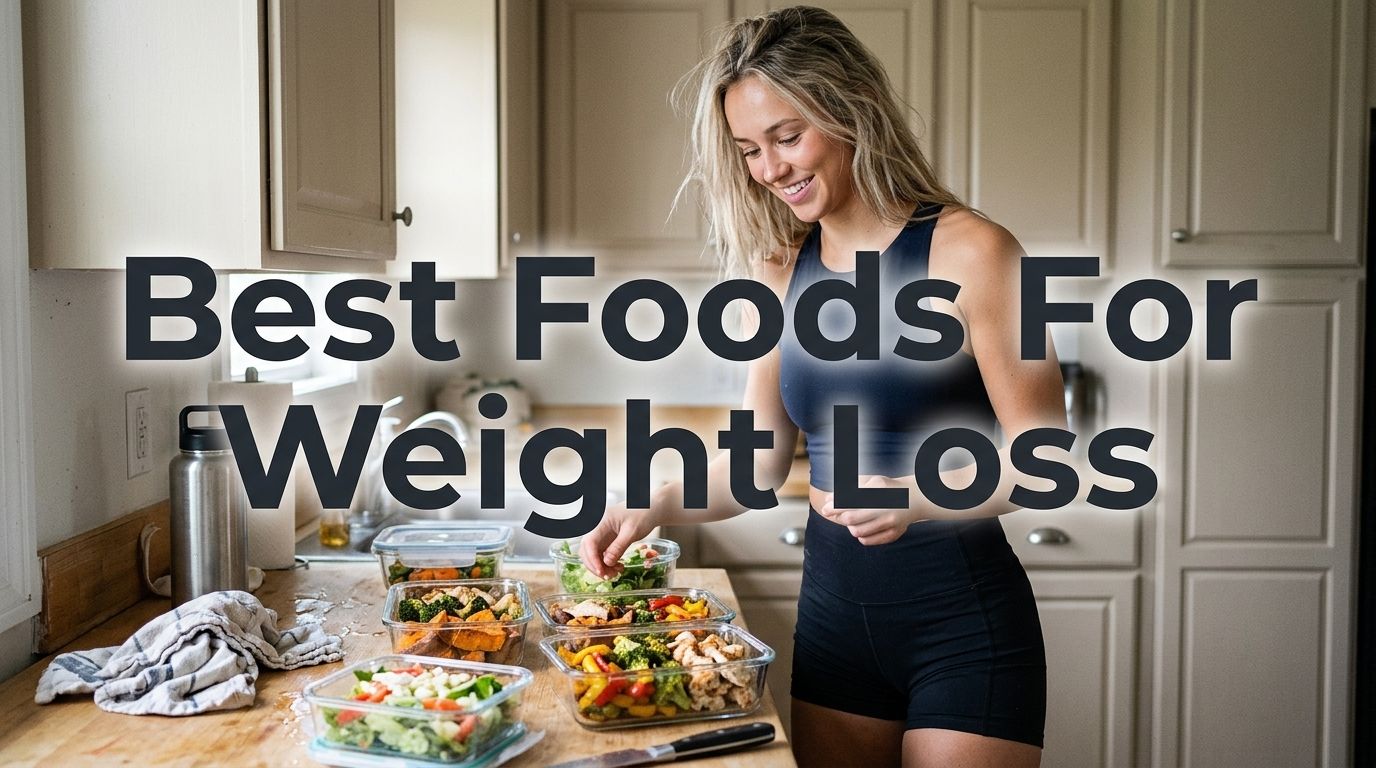
The best foods for weight loss are nutrient-dense, high-volume options that combine protein, fiber, and water content to reduce hunger and support a calorie deficit. The average adult needs 1.2-1.6 grams of protein per kilogram (0.54-0.73g per pound) of body weight to preserve muscle mass during fat loss.
Eggs reduce total daily caloric intake by 300-400 calories compared to carbohydrate-based breakfasts. Lentils and beans combine 15-18g of plant protein with 8-12g of soluble fiber per cup (240ml), keeping blood sugar stable for 3-5 hours. Oatmeal’s beta-glucan fiber reduces LDL cholesterol and hunger hormones simultaneously. Leafy greens deliver under 20 calories per 100g (3.5 oz) with full micronutrient density. These foods form the foundation of every evidence-based fat loss diet.
Every food type works through a different satiety mechanism. The right meal structure depends on your starting point, protein needs, and daily caloric target. This guide covers what works, why it works, and how to build a diet around it.
What Are the Best Foods for Weight Loss?
The best foods for weight loss are nutrient-dense, high-volume options that deliver high satiety per calorie, including eggs, leafy greens, lean proteins, cruciferous vegetables, legumes, and whole grains. These foods reduce hunger, stabilize blood sugar, and support a calorie deficit without triggering the intense cravings that derail most diets.
Here’s the thing: no single food melts fat. The mechanism is calorie control through satiety. Foods high in protein, fiber, and water volume produce the strongest fullness signals per calorie consumed. That creates the deficit that drives fat loss.
The worst foods do the opposite. Refined grains, flavored yogurts, and fast-food salads with high-calorie dressings spike blood sugar and return hunger within 60-90 minutes. These sabotage the calorie deficit before it can compound.
Top Weight Loss Food Categories:
- High-protein foods (eggs, chicken breast, cottage cheese, fish)
- Non-starchy vegetables (leafy greens, broccoli, asparagus, carrots)
- Legumes (lentils, black beans, chickpeas)
- Low-sugar fruits (pears, berries, apples)
- Whole grains (oats, barley, brown rice)
Why Do Some Foods Help You Lose Weight?
Certain foods promote weight loss because they combine high protein, high fiber, or high water content with low calorie density, which fills the stomach, triggers satiety hormones like GLP-1 and PYY, and slows gastric emptying to delay hunger. These three mechanisms work simultaneously in the most effective weight loss foods.
Protein is the most satiating macronutrient per calorie. It requires more energy to digest than carbohydrates or fat, which increases total daily calorie burn by 20-30% through the thermic effect of food. Lean proteins keep hunger suppressed for 3-4 hours per meal.
Fiber adds bulk without calories. Soluble fiber in oats, lentils, and fruits forms a gel in the gut that delays glucose absorption. This flattens blood sugar peaks, which reduces the insulin spike that signals fat storage and post-meal hunger crashes.
What Foods Should You Avoid for Weight Loss?
Foods that sabotage weight loss are those that combine high caloric density with low fiber, low protein, and high glycemic impact, including refined grains, fruit-flavored yogurts, enhanced waters with added sugars, and fast-food salads with high-fat dressings. These look healthy on the surface but quietly erode the calorie deficit.
Fruit-flavored yogurt is a common pitfall. A single serving can contain 20-30g of added sugar. That’s equivalent to eating a small candy bar. Plain Greek yogurt delivers 17g of protein per cup (240ml) with no added sugars and far stronger satiety.
Refined grains digest rapidly, spike blood glucose, and return hunger within 60-90 minutes. Replacing them with whole grain versions adds fiber and slows glucose absorption without requiring a smaller portion size. Ready to get a proven weight loss plan built around these exact principles?
Do High-Protein Foods Help You Lose More Weight?
Yes. High-protein foods produce greater weight loss than low-protein alternatives because protein increases satiety hormones, suppresses hunger hormones including ghrelin, and burns more calories through digestion via the thermic effect of food. High-protein diets consistently outperform lower-protein diets for fat loss in controlled trials.
Research shows that increasing protein intake to 1.2-1.6 grams per kilogram (0.54-0.73g per pound) of body weight preserves lean muscle mass during calorie restriction. Muscle preservation keeps metabolic rate higher during weight loss, which protects against the metabolic slowdown that causes weight regain.
Are Eggs Good for Weight Loss?
Yes. Eggs are one of the most effective weight loss foods because they combine complete protein (6g per egg), essential amino acids, and fat-soluble vitamins in a low-calorie package that produces strong 4-hour satiety signals. Eating eggs at breakfast reduces total daily caloric intake by 300-400 calories compared to bagel-based breakfasts of equal calories.
The protein in eggs triggers a larger GLP-1 and PYY satiety response than carbohydrates of the same caloric value. This hormonal response is why egg-based breakfasts consistently outperform carbohydrate-based breakfasts for appetite control across the full day.
Eggs also pair well with black beans and peppers for a complete weight loss meal. This combination delivers a full amino acid profile, sustained satiety from fiber, and micronutrient density in a single meal under 400 calories.
Does Chicken Breast Help With Fat Loss?
Yes. Chicken breast is one of the highest-protein, lowest-fat animal proteins available, delivering 31g of protein per 100g (3.5 oz) serving with only 3.6g of fat, making it the most efficient lean protein for a weight loss diet. The thermic effect of digesting chicken burns 20-30% of its calories through processing alone.
Adding cayenne pepper to chicken amplifies its weight-loss benefits. Capsaicin temporarily increases metabolic rate by 4-5% and suppresses appetite. The combination of lean protein plus capsaicin extends satiety while marginally increasing calorie burn per meal.
What Vegetables Are Best for Weight Loss?
The best vegetables for weight loss are non-starchy, high-fiber options including leafy greens, broccoli, asparagus, carrots, cauliflower, and mushrooms, which deliver high volume and high nutrient density with very few calories per gram consumed. Non-starchy vegetables allow large portion sizes without approaching caloric excess.
Mushrooms are particularly underrated. Research shows replacing meat with mushrooms in meals reduces caloric intake by 300 calories per meal on average without reducing satiety. Fiber, water content, and umami compounds create a uniquely satisfying low-calorie meal component.
Are Leafy Greens the Top Weight Loss Vegetables?
Yes. Leafy greens are the most calorie-efficient weight loss vegetables, with spinach, kale, arugula, and Swiss chard delivering under 20 calories per 100g (3.5 oz) while providing fiber, magnesium, folate, and iron that support metabolic function during calorie restriction. Their high water content adds gastric volume without adding to the caloric load.
Pairing leafy greens with avocado amplifies nutrient absorption. The monounsaturated fats in avocado increase the bioavailability of fat-soluble vitamins A, E, and K found in dark greens. This pairing delivers more nutritional value per meal alongside the satiety benefit of healthy fat.
Do Cruciferous Vegetables Help Burn Belly Fat?
Yes. Cruciferous vegetables like broccoli, cauliflower, and cabbage support belly fat reduction by delivering DIM (diindolylmethane) and indole-3-carbinol, compounds that support healthy estrogen metabolism and reduce estrogen-dominant fat storage in the abdominal region. Sulforaphane in these vegetables also reduces systemic inflammation linked to fat accumulation.
Steak and broccoli is one of the most studied body composition combinations. Iron from red meat enhances oxygen delivery to muscle during exercise. Sulforaphane in broccoli reduces training-induced inflammation. Together they support fat loss and muscle preservation simultaneously.
What Are the Best Fruits for Weight Loss?
The best fruits for weight loss are low-sugar, high-fiber options including pears, raspberries, apples, and grapefruit, which deliver natural sweetness alongside soluble fiber that slows sugar absorption and keeps blood glucose stable after eating. Whole fruits consistently outperform fruit juices because the fiber matrix is intact.
Pairing fruit with protein extends satiety further. Yogurt and raspberries is a classic combination: casein protein in yogurt provides 4-6 hours of satiety while raspberries add 8g of fiber per cup (240ml). This pairing supports satiety through the entire morning.
Are Avocados Good for Weight Loss Despite Being High in Fat?
Yes. Avocados support weight loss despite their caloric density because the monounsaturated fat they contain suppresses hunger hormones, reduces post-meal inflammation, and enhances fat-soluble nutrient absorption from other foods eaten in the same meal. Their 10g of fiber per medium avocado adds significant satiety alongside the fat content.
Half an avocado (about 100g) before a meal reduces food intake at that meal by up to 40% in research studies. This effect is driven by cholecystokinin (CCK) secretion in the small intestine triggered by the fat content. CCK is one of the most powerful short-term satiety hormones in the body.
Which Fruits Support Fat Loss Best?
Pears, raspberries, apples, and grapefruit are the most effective fruits for fat loss because they combine low sugar with high soluble fiber, which slows glucose absorption, feeds beneficial gut bacteria, and produces longer satiety signals per calorie than high-sugar tropical fruits. Pears contain 5.5g of fiber per medium fruit, more than most vegetables per serving.
Dark chocolate paired with almonds is a smart dessert swap. A 1-ounce (28g) serving of 85% dark chocolate combined with 14 almonds delivers antioxidants, magnesium, and 6g of protein under 300 calories while satisfying sweet cravings without a blood sugar spike.
What Whole Grains and Legumes Support Weight Loss?
Whole grains and legumes support weight loss by delivering slow-digesting complex carbohydrates combined with soluble fiber and plant protein, which produce flat glucose curves, extended satiety, and a positive effect on gut microbiome diversity compared to refined grains. They form the carbohydrate foundation of every evidence-based weight loss diet.
Oatmeal paired with walnuts is one of the most studied weight loss breakfast combinations. Oats deliver 2-4g of beta-glucan per serving. Walnuts add omega-3 fatty acids and protein that amplify the satiety signal of the beta-glucan fiber.
Do Lentils and Beans Help You Lose Weight?
Yes. Lentils and beans are among the most satiating weight loss foods per calorie, combining plant protein (15-18g per cooked cup, or 240ml), soluble fiber (8-12g per cup), and slow-digesting starch that keeps blood glucose stable for 3-5 hours after a meal. Bean and vegetable soups consistently reduce next-meal caloric intake by 20-30% in controlled studies.
Black beans with eggs and peppers deliver a complete amino acid profile from the plant-animal protein combination. This provides sustained satiety, high thermic effect, and the iron, zinc, and B vitamins that support metabolism during calorie restriction.
Is Oatmeal a Good Weight Loss Food?
Yes. Oatmeal is one of the most effective weight loss breakfast foods because the beta-glucan soluble fiber it contains forms a thick gel in the gut that slows glucose absorption, reduces hunger hormones, and keeps blood sugar stable for 2-4 hours after eating. A standard 40g (1.4 oz) serving delivers 2g of beta-glucan, half the daily dose shown to reduce LDL cholesterol.
Plain oats with walnuts and fruit deliver protein, fiber, and healthy fats in one meal. Instant oats with added sugars strip out much of the satiety benefit by reducing the molecular weight of the beta-glucan through processing. So the preparation method matters as much as the ingredient itself.
What Are Common Mistakes With Weight Loss Foods?
The most common mistakes with weight loss foods are misidentifying healthy-sounding processed foods as beneficial, underestimating liquid calories from smoothies and flavored drinks, ignoring portion sizes even with healthy foods, and building meals without protein as the anchor macronutrient. Each error quietly erodes the calorie deficit.
In plain English: fast-food salads are a classic trap. A chain restaurant salad with croutons, cheese, and ranch dressing can exceed 800 calories. The same caloric value delivered through lean protein and vegetables would create 3-4 times the satiety and a much stronger metabolic response.
Common Weight Loss Diet Mistakes:
- Choosing flavored yogurt over plain Greek yogurt
- Drinking fruit juice instead of eating whole fruit
- Ordering salads with high-calorie dressings
- Skipping protein at breakfast and front-loading carbs
- Eating refined grains instead of whole grain alternatives
How Should You Build a Weight Loss Diet?
A weight loss diet should anchor every meal with a lean protein source (30-40g), add non-starchy vegetables for volume, include a small portion of whole grains or legumes for sustained carbohydrate energy, and limit ultra-processed foods to under 20% of total daily caloric intake. This structure maximizes satiety per calorie across the full day.
Meal timing matters too. Our nutritionists at Eat Proteins recommend front-loading calories toward breakfast and lunch. Eating 60-70% of daily calories before 3 PM reduces total daily calorie intake through hormonal regulation. The hunger hormone ghrelin peaks in the evening when meals are skipped earlier in the day.
Steps to Build a Weight Loss Meal:
- Start with a lean protein (eggs, chicken breast, fish, lentils, cottage cheese)
- Add 2-3 cups (480-720ml) of non-starchy vegetables for volume
- Include a small portion of whole grains or legumes for sustained energy
- Add a small amount of healthy fat (avocado, olive oil, walnuts)
- Drink 240-480ml of water before eating to pre-fill stomach volume
How Long Does It Take to Lose Weight by Changing Your Diet?
Most people begin noticing measurable weight loss within 2-3 weeks of consistent dietary changes that create a 500-750 calorie daily deficit, with a rate of 0.5-1 kg (1-2 lbs) per week considered the safest and most sustainable pace for long-term fat loss. The first week often shows a larger drop due to water weight reduction from reduced carbohydrate intake.
Timeline varies by starting weight, caloric deficit size, protein intake, and activity level. Higher starting body weight produces faster initial loss. Consistent protein intake above 1.2g per kilogram (0.54g per pound) of body weight preserves muscle mass and prevents metabolic adaptation over time.
Weight Loss Timeline by Approach:
| Approach | Weekly Loss | Muscle Preservation |
| High-protein + whole foods | 0.5-1 kg (1-2 lbs) | High |
| Moderate protein + calorie restriction | 0.5-0.75 kg (1-1.5 lbs) | Moderate |
| Low-protein crash diet | 1-2 kg (2-4 lbs) | Low (muscle loss risk) |
What Results Can You Expect From Eating Weight Loss Foods?
With consistent dietary changes, most people achieve 2-4 kg (4.4-8.8 lbs) of fat loss over 4-8 weeks when replacing high-calorie processed foods with protein-rich, fiber-dense whole foods, alongside reduced cravings, better energy, and improved blood sugar stability within the first 2-3 weeks.
And here is the kicker: results compound over time. As blood sugar stabilizes and gut microbiome diversity improves, appetite becomes easier to manage. The satiety improvements from high-fiber, high-protein eating become the new normal after 4-6 weeks of consistency. That’s when weight loss accelerates.
Want Your Free Weight Loss Meal Plan From Eat Proteins?
You have the science. Now you need the plan. Get the exact meal structure our nutritionists at Eat Proteins built for sustainable fat loss, sent straight to your inbox.
Stop guessing which foods belong in your weight loss diet. Our free guide covers the best protein sources, vegetables, grains, and meal timing strategies for consistent, lasting results. You can’t afford to skip this.