
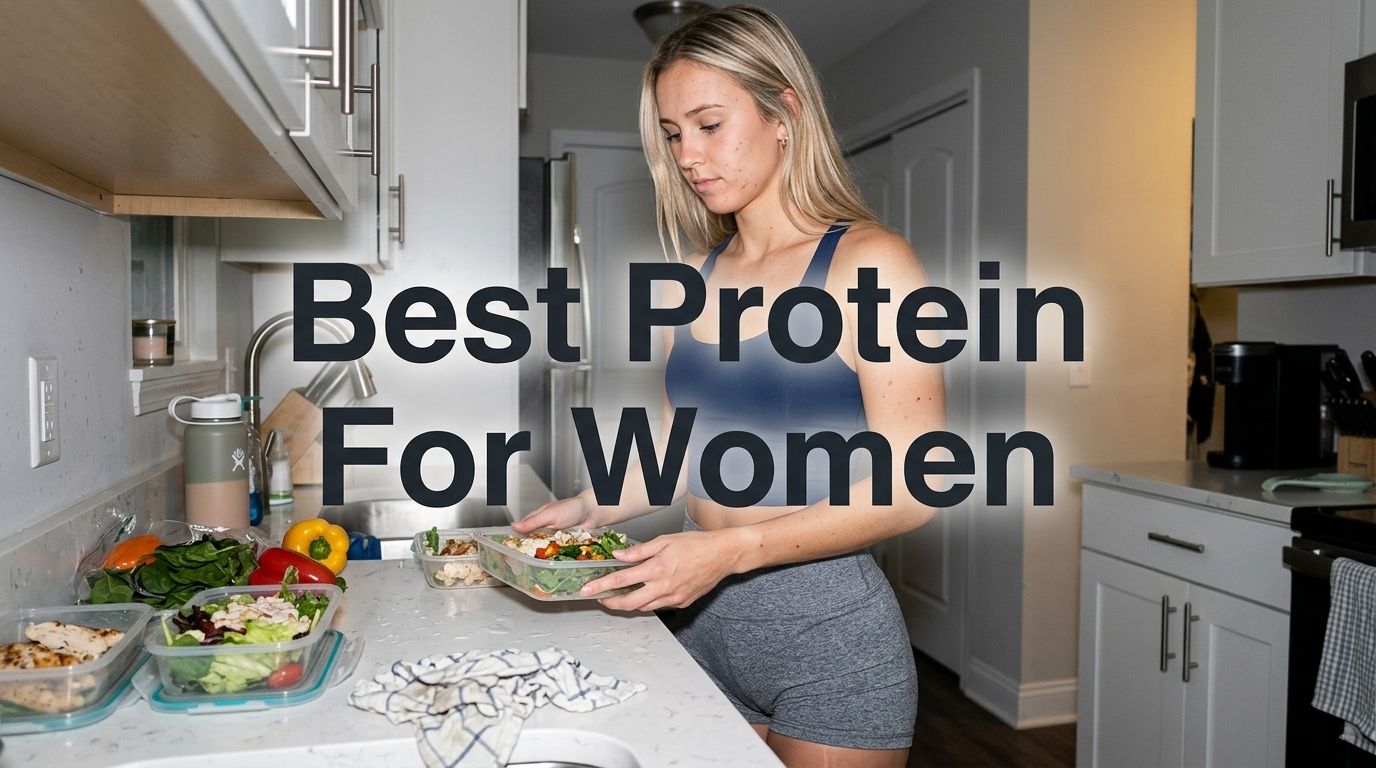
Protein is the most under-consumed nutrient by women, and it’s the single biggest driver of muscle retention, metabolic health, and body composition. Most women need 1.2-2.2 grams per kilogram (0.54-1.0 g/lb) of body weight daily to see real results.
Whey protein reduces fat mass and builds lean muscle. Plant-based blends with pea, rice, and soy cover all essential amino acids when dosed correctly. Leucine, found in highest concentrations in whey, is the key trigger for muscle protein synthesis. Women 50 and older face anabolic resistance, making protein timing and dose especially critical after menopause.
This guide covers what types of protein work best for women, how much to eat by goal and life stage, what ingredients to avoid, and how long results take. By the end, you’ll have everything needed to build a protein strategy that actually works.
What Is Protein and Why Do Women Need It?
Protein provides the raw materials needed to build and repair muscle tissue. Most women significantly under-consume it, contributing to muscle loss, a slowing metabolism, and worsening insulin resistance with age, according to Dr. Amie Hornaman, a functional medicine practitioner specializing in thyroid health and women’s hormones.
Here is the thing: women have lower testosterone levels than men, averaging 15-70 ng/dL compared to 300-1,000 ng/dL. That gap means women have 8.4% less lean mass on average. So they rely more heavily on dietary protein to maintain and build muscle.
Progesterone is a catabolic hormone. It breaks down muscle during the luteal phase. Women’s bodies are more likely to break down muscle at this time, making higher protein intake especially critical in the days before menstruation.
How Does Protein Support Muscle and Hormone Health in Women?
Leucine is the primary amino acid that triggers muscle protein synthesis, and each 30g protein serving should contain at least 2-3g of leucine. Whey protein powders deliver the highest leucine concentrations per serving, giving them the best muscle-building response over plant-based options.
And here is the best part: timing matters just as much as the dose. Spacing protein every 3-4 hours and consuming it within 30-60 minutes after exercise maximizes its anabolic effect. This is especially important during the high hormone phase, where muscle repair is most responsive to nutrition.
Estrogen is anabolic. Does it build muscle as effectively as testosterone? No. Its role in stimulating muscle protein synthesis is significantly less potent, which means women must rely more on dietary protein than men to achieve comparable muscle maintenance, particularly as estrogen declines with age.
How Much Protein Do Women Need Per Day?
Active women need 1.2-1.6 grams of protein per kilogram (0.54-0.73 g/lb) of body weight per day, spread across 3-4 meals, to support muscle recovery and performance. For strength training or body recomposition, the target rises to 1.6-2.2 g/kg/day (0.73-1.0 g/lb), per Frontiers in Nutrition, 2024.
Daily Protein Targets for Women by Goal:
| Goal | g/kg/day | g/lb/day | Key Note |
|---|---|---|---|
| Minimum physiological | 0.8 | 0.36 | Sedentary baseline only |
| Everyday active | 1.2-1.6 | 0.54-0.73 | Spread across 3-4 meals |
| Strength / recomposition | 1.6-2.2 | 0.73-1.0 | 30g+ post-workout |
| Women 50+ (anabolic resistance) | 1.6-2.2 | 0.73-1.0 | Prioritize breakfast protein |
Women aged 50 and older face anabolic resistance. Building and maintaining lean tissue becomes significantly harder post-menopause. About 30g of high-quality protein at breakfast helps overcome this resistance and preserve muscle mass over time.
And the per-meal target matters just as much as the daily total. Research in Sports Medicine shows 30g of protein post-workout works as well as 60g for body recomposition in trained women. That 30g threshold is the minimum to meaningfully trigger muscle protein synthesis per meal.
What Are the Best Types of Protein for Women?
Animal-based proteins provide all 9 essential amino acids needed for muscle growth and repair, while plant-based sources may lack one or more. Well-designed plant blends covering all essential amino acids can support muscle effectively if dosed at 20-30g per serving, per Mayo Clinic Press guidance.
To be clear: Dr. Hornaman recommends grass-fed beef isolate as the top protein for midlife women focused on body composition and hormone balance. It’s highly bioavailable and easy on the gut. Why does that matter? Gut stress raises cortisol, and elevated cortisol stalls fat loss and disrupts hormones.
The Johns Hopkins Medicine target for a quality serving is 100-200 calories, 20-30g protein, and less than 5g sugar. NSF Certified for Sport or Informed Choice certification verifies purity beyond what manufacturers claim on labels.
Is Whey Protein Good for Women?
Yes. Whey protein contains all essential amino acids, is rapidly absorbed, and research consistently shows it reduces fat mass while increasing lean muscle mass in women. It’s the most studied and validated protein type for body composition improvement.
Whey isolate undergoes more processing than concentrate. The result? Higher protein per serving and most lactose removed during ultra-filtration. For women with weight loss or macro-specific goals, isolate is the preferred form due to its lower carbohydrate and fat content per serving.
A 30g serving of Promix Whey Protein Isolate delivers just 0.5g fat and 2g carbs. That high protein-to-calorie ratio supports muscle preservation during a calorie deficit. Isolate is the best form for women aiming to lose fat without sacrificing lean muscle.
Are Plant-Based Proteins as Effective as Animal Proteins for Women?
Plant-based proteins are as effective as animal proteins for weight loss and appetite control when consumed in equivalent doses, according to multiple research reviews. Well-designed plant blends covering all essential amino acids support muscle development comparably to whey when protein targets are met.
In fact, pea protein is effective for building muscle and keeping women full. It supports fat loss and appetite control while being gentle on the digestive system. Its organic, allergen-free formula makes it easy to incorporate into any weight management plan.
ALOHA’s organic plant protein delivers 21g per serving from organic pea, brown rice, and chia seed proteins, creating a comprehensive amino acid profile. Soy is the only single plant source with all 9 essential amino acids. Blending pea and rice proteins covers the remaining gaps effectively.
Common Plant Protein Sources for Women:
- Pea protein isolate (complete with blending, gentle on digestion)
- Brown rice protein (pairs well with pea for full amino acid coverage)
- Soy protein isolate (only single-source plant protein with all 9 EAAs)
- Hemp protein (rich in omega-3s, gentle on digestion)
- Chia seed protein (adds fiber and micronutrients to blends)
What Are the Benefits of Protein for Women?
Protein reduces hunger hormones and cravings, increases satiety, supports muscle retention, and elevates metabolism through the thermic effect of food. These benefits are especially pronounced for women navigating hormonal changes during the menstrual cycle, pregnancy, and menopause.
And here is what no one tells you: gut health matters for protein, too. Plant-based protein powders with added prebiotics support gut health, improve nutrient absorption, and regulate appetite and energy levels. Pea and hemp proteins are gentler on the digestive system than dairy-based options.
Key Benefits of Adequate Protein for Women:
- Reduced hunger hormones and cravings throughout the day
- Increased satiety between meals
- Muscle retention during weight loss
- Improved insulin sensitivity and metabolic rate
- Better body composition over time
- Gut health support with plant-based options containing prebiotics
Does Protein Help Women Lose Weight?
Yes. Protein reduces hunger hormones and cravings, increases satiety, and increases the number of calories burned through its thermic effect. Whey protein supplements specifically reduce fat mass and increase lean muscle mass, according to multiple research studies.
So what does that mean for you? Studies show that consuming a protein powder drink helps with weight management. Both plant-based and animal-based proteins are equally effective for boosting weight loss. Choosing a powder with 20-30g protein and less than 5g sugar per serving supports a calorie deficit without losing lean muscle.
Recent research shows intermittent fasting may positively affect testosterone levels, aiding weight loss in women with PCOS. Pairing a structured intermittent fasting approach with adequate protein intake supports hormone balance and body composition improvement simultaneously. Ready to speed things up? Get a proven weight loss plan built around these exact principles.
Does Protein Help Women Build Muscle?
Yes. High protein intake is the biggest driver of maintaining and building muscle for women, with targets of 1.2-2.2 grams per kilogram (0.54-1.0 g/lb) of body weight per day. Whey protein provides the best muscle-building response due to its high leucine concentration per serving.
Here is the part most people miss: the leucine threshold. Each 30g protein serving must contain at least 2-3g of leucine to stimulate muscle protein synthesis. Leucine acts as the primary trigger for muscle building. Whey protein naturally delivers these leucine concentrations per serving.
Creatine monohydrate is worth adding alongside protein, particularly during the luteal phase when progesterone is catabolic. Thorne Creatine Monohydrate Powder is recommended by experts as the best creatine for women combining it with a high-protein diet.
How Do You Choose the Best Protein Powder for Women?
The best protein powder for women delivers 100-200 calories, 20-30g protein, and less than 5g sugar per serving, with third-party certification for purity (Johns Hopkins Medicine). Protein source, amino acid completeness, digestive tolerance, flavor, and cost all factor into the right choice for each woman.
And this is where it gets interesting: independent testing found 47% of protein powders exceeded at least one safety limit for contaminants. Plant-based and chocolate flavors test higher for heavy metals such as cadmium. Choosing NSF Certified for Sport or Informed Choice products provides verified safety beyond manufacturer claims.
What Ingredients Should Women Avoid in Protein Powders?
Women should avoid protein powders with more than 5g sugar per serving, artificial sweeteners in high amounts, proprietary blends that hide ingredient quantities, and heavy metal risk factors like non-certified chocolate-flavored plant proteins. Choosing non-chocolate flavors and whey or collagen bases lowers contamination risk (Clean Label Project).
On the flip side: look for added vitamins, minerals, probiotics, collagen, and all 19 amino acids, per Kylie Bensley, RD. Always verify your exact product SKU for third-party testing. Certification can vary by flavor and version within the same brand.
Protein Powder Label Checklist for Women:
- 20-30g protein per serving
- Less than 5g sugar per serving
- 100-200 calories per serving
- NSF Certified for Sport or Informed Choice certified
- No artificial fillers or proprietary blends
- Third-party tested for heavy metals (verify exact SKU)
Should Women Choose Third-Party Tested Protein Powders?
Yes. Third-party tested protein powders are essential because independent testing found 47% of products exceeded at least one safety limit for contaminants. Levels vary by batch, flavor, and protein type. NSF Certified for Sport and Informed Choice certifications verify purity and potency beyond manufacturer claims.
Promix undergoes third-party testing through Eurofins and Covance labs. Transparent Labs 100% Grass-Fed Whey Protein and Sports Research Whey Protein are recognized for rigorous testing. Always confirm that the specific SKU, flavor, and version carries the certification, not just the brand name.
What Are Common Mistakes Women Make With Protein Intake?
The most common mistake women make is significantly under-consuming protein, which drives muscle loss, slows metabolism, and worsens insulin resistance with age. Not spacing protein across meals and skipping post-workout protein are the two habits most responsible for poor body composition outcomes.
Here is what no one tells you about collagen: it’s not a complete protein. It lacks several essential amino acids needed for muscle protein synthesis. Collagen must be paired with a complete protein source for muscle-building goals (Mayo Clinic Press). Using it as a primary protein leaves significant amino acid gaps.
And then there is meal distribution. Spreading protein across 3-4 meals every 3-4 hours maximizes muscle protein synthesis throughout the day. Concentrating daily protein in one or two large meals reduces its anabolic effect significantly.
Common Protein Mistakes Women Make:
- Under-eating total daily protein (below 1.2 g/kg/day)
- Using collagen as a primary protein source
- Concentrating protein in one or two meals instead of spreading across the day
- Skipping post-workout protein within the 30-60 minute window
- Not increasing protein intake after age 50 to counter anabolic resistance
Are Women Getting Enough Protein Each Day?
Most women significantly under-consume protein, contributing to muscle loss, a slowing metabolism, and worsening insulin resistance. The minimum physiological requirement is 0.8 g/kg/day (0.36 g/lb), but research recommends 1.2-2.0 g/kg/day for active women to support muscle and metabolism.
For women 50 and older, the protein gap is even more critical. Anabolic resistance makes it significantly harder to build and maintain lean tissue after menopause. About 30g of high-quality protein at breakfast is the single most impactful habit for preserving muscle mass post-menopause.
How Long Does It Take for Women to See Results From Protein?
Muscle protein synthesis is triggered per meal within hours of consuming 30g of high-quality protein. Visible body composition changes from a consistently high-protein diet combined with resistance training typically appear within 4-8 weeks of sustained practice.
And the timing window matters. Consuming protein within 30-60 minutes after exercise is optimal for muscle repair and growth, especially during the high hormone phase. Spacing intake every 3-4 hours throughout the day maximizes the cumulative anabolic effect across all meals (Frontiers in Nutrition, 2024).
What Results Can Women Expect From Higher Protein Intake?
Women who consistently hit 1.2-2.2 g/kg/day (0.54-1.0 g/lb) of protein can expect improved muscle retention, reduced fat mass, better satiety, fewer cravings, and improved insulin sensitivity. Research shows whey protein supplements specifically reduce fat mass and increase lean muscle mass.
In trained women, 30g of protein post-workout achieved the same body recomposition results as 60g per session (Sports Medicine). At the higher end of 1.6-2.2 g/kg/day, women see simultaneous lean muscle gain and fat reduction from active training programs.
Who Should Avoid Protein Powders?
Women with kidney or liver disease should consult a healthcare provider before using protein supplements, as high protein intake may have negative implications for these conditions. Pregnant and postpartum women should choose specifically formulated options designed for their nutritional stage.
But for most women, options exist for every sensitivity. Whey isolate removes most lactose during ultra-filtration, making it suitable for many women with lactose intolerance. Plant-based proteins including pea, rice, hemp, and soy are naturally lactose-free. Mt. Capra Clean Whey Protein is the best option for women with dairy sensitivities.
Want Your Free High-Protein Meal Plan for Women?
You have the science. Now you need the plan. The Eat Proteins free plan is a structured daily protein roadmap built around the 30g per-meal threshold and 1.2-2.2 g/kg/day (0.54-1.0 g/lb) targets that research supports. It tackles the three biggest mistakes women make: under-eating, poor meal spacing, and relying on incomplete proteins.
Women who follow a structured high-protein plan can expect improved muscle retention, reduced cravings, better satiety, and real body composition change within 4-8 weeks. Don’t wait until muscle loss and metabolism slowdown catch up with you. The plan is free, and the results are backed by Mayo Clinic Press, Johns Hopkins Medicine, and Frontiers in Nutrition research.
How Can the Eat Proteins Free Plan Help Women Reach Their Goals?
Our nutrition coaches at Eat Proteins specialize in protein optimization for women at every life stage, from active women in their 20s to post-menopausal women aged 50 and older. The free plan accounts for hormonal phases, activity levels, and dietary preferences including plant-based and lactose-free options.
Consistent protein at 1.2-2.2 g/kg/day (0.54-1.0 g/lb) with proper meal spacing produces measurable results within 4-8 weeks. Get the exact daily protein roadmap our team at Eat Proteins built, sent straight to your inbox. It’s the most practical step you can take today.