
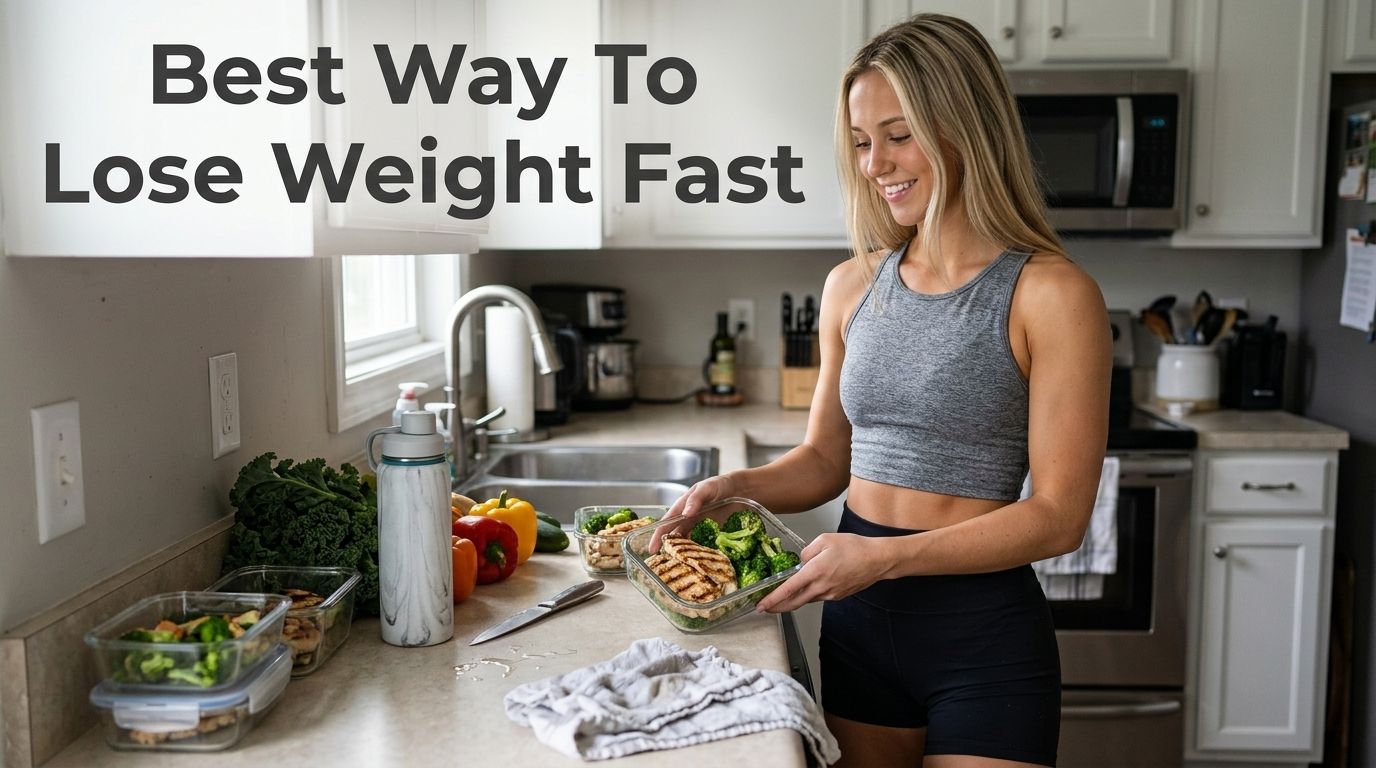
The best way to lose weight fast combines a 500 to 1,000 calorie daily deficit with high protein intake, HIIT exercise, and liquid calorie elimination. Applied together, these produce 1 to 2 pounds of fat loss per week sustainably.
Cutting refined carbs stabilizes blood sugar and lowers insulin, producing rapid early losses. High protein preserves muscle mass and boosts metabolism through the thermic effect of food. HIIT training triggers EPOC afterburn that elevates calorie burn for hours after each session ends.
Lifestyle factors including sleep, hydration, and meal timing amplify results from diet and exercise. This guide covers every method, common mistakes, and realistic timelines for seeing measurable results.
What Is the Best Way to Lose Weight Fast?
The best way to lose weight fast is to combine a sustained calorie deficit of 500 to 1,000 calories per day with high-protein intake, regular exercise, and elimination of liquid calories — producing 1 to 2 pounds (0.45 to 0.9 kg) of fat loss per week sustainably. No single intervention works as effectively as all four applied together.
Fast weight loss is defined medically as losing more than 2 pounds (0.9 kg) per week. Losses beyond that rate typically include muscle mass and water rather than fat. Preserving muscle while losing fat requires adequate protein and resistance exercise alongside the calorie deficit.
The most effective fast weight-loss strategy is one maintainable beyond the initial phase. Methods that produce rapid results but cannot be sustained for 12 to 24 weeks fail because the weight returns when the method stops. The goal is the fastest rate of fat loss the body can sustain without muscle loss or metabolic suppression.
How Does a Calorie Deficit Drive Fast Weight Loss?
A calorie deficit forces the body to draw on stored energy — primarily body fat — to meet its metabolic needs, with each 3,500-calorie deficit producing approximately 1 pound (454 g) of fat loss. A daily deficit of 700 calories produces exactly 1 pound of fat loss per week.
The deficit is created through three levers: eating less, moving more, or both simultaneously. Combining dietary reduction with exercise is more effective than either approach alone because it prevents the metabolic adaptation that occurs when calorie intake drops without increased activity.
Cutting liquid calories is one of the fastest-acting deficit strategies. Sodas, juice, alcohol, and sweetened coffees often contribute 300 to 600 calories per day without producing fullness. Replacing them with water, black coffee, or unsweetened tea eliminates a significant calorie load while improving hydration and satiety.
Is Fast Weight Loss Safe?
Fast weight loss at 1 to 2 pounds (0.45 to 0.9 kg) per week is medically recognized as safe when achieved through dietary adjustment and exercise rather than extreme caloric restriction or meal replacement programs. Losses above 2 pounds (0.9 kg) per week carry risks of muscle loss, nutrient deficiency, and gallstones.
Very low calorie diets of 800 calories or fewer per day require medical supervision. These protocols can produce 3 to 5 pounds (1.4 to 2.3 kg) of weekly loss but risk metabolic rate suppression, bone density reduction, and lean mass catabolism without controlled refeeding protocols.
The Academy of Nutrition and Dietetics recommends aiming for 1 to 2 pounds (0.45 to 0.9 kg) of weekly loss as the standard safe rate. Fast results within this range come from consistency and adherence, not from extreme restriction. The fastest safe fat loss is the maximum deficit that preserves muscle tissue and micronutrient intake.
What Diet Changes Produce the Fastest Weight Loss?
The diet changes that produce the fastest weight loss are eliminating liquid calories, reducing refined carbohydrate intake, increasing dietary protein to 1.6 grams per kilogram (0.7 grams per pound) of body weight, and prioritizing fiber-rich vegetables at every meal. These four changes act on calorie intake, hunger hormones, and muscle preservation simultaneously.
Portion control paired with whole food substitutions produces consistent deficits without calorie counting. Replacing white rice with cauliflower rice, pasta with zucchini noodles, or chips with raw vegetables cuts 200 to 500 calories from typical meals while maintaining meal volume and reducing hunger.
Fastest-Acting Dietary Changes for Weight Loss:
- Eliminate liquid calories (soda, juice, alcohol, sweetened coffee)
- Replace refined grains with leafy greens and non-starchy vegetables
- Increase protein to 1.6 g/kg (0.7 g/lb) of body weight daily
- Eat at least 4 servings of vegetables per day
- Use smaller plates to reduce portion sizes without hunger
- Avoid eating after 8 PM to reduce late-night surplus calories
Does Cutting Carbs Help Lose Weight Fast?
Yes. Reducing refined carbohydrate intake accelerates weight loss by stabilizing blood sugar, lowering insulin levels, and reducing glycogen-bound water weight — producing rapid early losses of 2 to 5 pounds (0.9 to 2.3 kg) in the first week of carb reduction. Much of this initial loss is water, but fat loss follows.
Low-glycemic carbohydrates from whole grains, vegetables, and legumes do not need to be eliminated. The key distinction is between processed refined carbs — white bread, pasta, pastries, and sweetened cereals — and whole food carbohydrates. Processed carbs spike insulin and drive fat storage. Whole food carbs do not produce the same response.
Choosing carbohydrates lower on the glycemic index — green vegetables, most fruits, legumes, and oats — keeps insulin stable and reduces fat storage signals throughout the day. Stable insulin is the metabolic condition that most effectively supports continuous fat oxidation.
Does High Protein Intake Speed Up Weight Loss?
Yes. High protein intake speeds up weight loss by preserving muscle mass during a calorie deficit, increasing satiety hormones that reduce hunger, and boosting the thermic effect of food — the calories burned during digestion. Protein has a 25 to 30% thermic effect versus 6 to 8% for carbohydrates.
Preserving muscle mass is the most underappreciated function of dietary protein during weight loss. Every pound of muscle tissue burns approximately 6 calories per day at rest. Losing 5 pounds (2.3 kg) of muscle reduces daily resting metabolism by 30 calories. Over a year, this gap prevents 3 pounds (1.4 kg) of fat loss.
Research shows that protein intake of 1.6 to 2.2 grams per kilogram (0.7 to 1 gram per pound) of body weight maximizes muscle retention during a deficit. Sources include chicken, fish, eggs, Greek yogurt, cottage cheese, and legumes. Spreading protein across 3 to 4 meals per day optimizes muscle protein synthesis.
What Exercises Burn Fat the Fastest?
The exercises that burn fat fastest are HIIT cardio sessions, compound strength training movements, and brisk aerobic activity — with HIIT producing the highest calorie output per minute and strength training delivering the greatest long-term metabolic elevation. Combining both types produces faster results than either alone.
Any movement helps. Beyond structured workouts, daily activity plays a measurable role in total calorie expenditure. Using stairs instead of elevators, parking farther away, standing during phone calls, and walking during TV commercials add 200 to 400 extra calories of expenditure per day without formal exercise.
Is HIIT Better Than Steady Cardio for Fast Fat Loss?
Yes. HIIT burns up to 30% more calories than steady-state cardio in the same time period due to the EPOC afterburn effect, where the body continues burning elevated calories for 12 to 24 hours after the session ends. Time efficiency makes HIIT the highest-return exercise format for fast fat loss.
A 20-minute HIIT session produces calorie expenditure comparable to a 30 to 40-minute moderate run. The afterburn extends total calorie burn well beyond the session itself. For individuals with limited workout time, HIIT delivers maximum fat-loss stimulus in minimum time.
Steady-state cardio remains effective for recovery days and for individuals new to exercise. It is less effective for fast fat loss because it does not trigger EPOC and burns fewer calories per minute. The optimal approach for fast results is 3 HIIT sessions per week combined with 2 moderate steady-state sessions.
Does Strength Training Help Lose Weight Faster?
Yes. Strength training accelerates weight loss by building lean muscle mass, which permanently increases resting metabolic rate and burns additional calories continuously — even during sleep and rest periods. Every pound of added muscle raises daily calorie burn by approximately 6 calories.
The metabolic elevation from strength training extends beyond individual sessions. Muscle tissue has a high metabolic cost. Building 5 pounds (2.3 kg) of lean mass raises daily resting calorie expenditure by 30 calories, producing an additional 3 pounds (1.4 kg) of fat loss per year without any other changes.
Strength training at least twice per week is recommended alongside cardio for optimal fast weight loss. Compound movements — squats, deadlifts, rows, and presses — recruit the largest muscle groups, burn the most calories per set, and produce the greatest hormonal response for fat oxidation.
What Lifestyle Habits Accelerate Weight Loss?
Beyond diet and exercise, sleep quality, hydration, stress management, and consistent meal timing each accelerate weight loss through hormonal mechanisms that directly affect fat storage, hunger regulation, and metabolic rate. These habits are often the difference between stalled results and consistent progress.
Eating slowly is one behavioral change with consistent research support. Slow eaters consume fewer calories per meal and have lower obesity rates than fast eaters. The satiety signal from the gut takes 15 to 20 minutes to reach the brain. Eating quickly outpaces that signal, leading to overconsumption before fullness registers.
Does Sleep Affect How Fast You Lose Weight?
Yes. Sleep deprivation slows weight loss by elevating ghrelin (the hunger hormone) and reducing leptin (the fullness hormone), increasing daily calorie intake by an average of 300 to 500 calories in sleep-deprived individuals compared to those sleeping 7 to 9 hours.
Poor sleep also elevates cortisol, the stress hormone that promotes visceral fat storage. Chronically elevated cortisol signals the body to hold fat, particularly around the abdomen. No amount of dietary restriction fully compensates for the fat-storage signal produced by sustained cortisol elevation from sleep debt.
Seven to nine hours of sleep per night is the target for optimal fat loss. Sleep quality matters as much as duration. Reducing screen exposure before bed, maintaining consistent sleep and wake times, and keeping the bedroom cool (65 to 68°F / 18 to 20°C) improve sleep depth and hormonal restoration.
Does Drinking More Water Speed Up Weight Loss?
Yes. Drinking water accelerates weight loss by increasing satiety before meals, temporarily boosting metabolism by 24 to 30% for 60 to 90 minutes after consumption, and replacing high-calorie beverages that contribute to daily surplus. Hydration is one of the simplest and most overlooked fat-loss accelerators.
Drinking 500 ml (17 oz) of water before meals reduces food intake at that meal by an average of 13%. Over three meals per day, consistent pre-meal hydration produces a meaningful weekly calorie reduction without any other dietary change.
The metabolic boost from cold water is a thermogenic effect. The body expends energy warming water to body temperature. Drinking 2 liters (68 oz) of cold water daily adds an estimated 95 to 100 additional calories of daily expenditure. Small in isolation, but compounding over weeks of consistent intake.
Ready to speed things up? Get a proven weight loss plan with the exact habits, diet structure, and exercise schedule built for fast results.
What Are Common Mistakes That Slow Weight Loss?
The most common mistakes that slow weight loss are underestimating calorie intake, skipping meals and overeating later, doing only cardio without strength training, and focusing on extreme short-term restriction rather than sustainable habits. Each error either reduces the calorie deficit or impairs the metabolic conditions needed for fat loss.
Underestimating calorie intake is the most prevalent mistake. Studies show that people systematically underreport food intake by 30 to 50%. Restaurant meals and snacks are the primary sources of uncounted calories. Tracking food intake even for 2 weeks creates accurate awareness that typically reveals the gap between perceived and actual intake.
Fad diets and scam products promise fast results but produce rapid regain. Reliable fat loss comes from dietary changes that can be maintained over months, not days. The Academy of Nutrition and Dietetics recommends avoiding any program claiming results that sound ‘too good to be true.’
Does Skipping Meals Hurt Weight Loss Progress?
Yes. Skipping meals increases hunger hormones and reduces metabolic rate, leading to larger compensatory meals later in the day that typically exceed the calories saved by skipping — producing a net negative effect on the daily calorie deficit.
Research shows that skipping breakfast specifically is associated with higher total daily calorie intake. Hunger builds across the morning without food, driving overconsumption at lunch and dinner. The spike in ghrelin from prolonged fasting overwhelms the intention to eat less at subsequent meals.
Eating at regular intervals maintains stable blood sugar and consistent appetite hormone levels. Three structured meals with adequate protein at each keeps hunger predictable and manageable. Consistent meal timing supports adherence to the calorie deficit that drives fat loss.
How Long Does It Take to See Results From Fast Weight Loss Methods?
With consistent application of diet and exercise changes, measurable weight loss results appear within 1 to 2 weeks, visible body composition changes occur at 4 to 6 weeks, and significant transformation is apparent at 12 weeks. Each phase builds on the last when the deficit is maintained.
The first 1 to 2 weeks typically show rapid losses of 3 to 5 pounds (1.4 to 2.3 kg) as glycogen and water weight deplete. This early phase is motivating but does not represent fat loss at that rate. Fat loss accelerates from week 3 onward as the body adapts to the new energy balance.
Week 6 is the inflection point where most people see the first visible changes in waist circumference and clothing fit. The changes began weeks earlier but were not yet visible. Consistency through weeks 1 to 5 without visible feedback requires trusting the process.
How Much Weight Can You Lose in a Month?
With a sustained 700 to 1,000 calorie daily deficit, a realistic and sustainable monthly weight loss is 4 to 8 pounds (1.8 to 3.6 kg) of body fat — the equivalent of 3,500 to 7,000 calories of deficit per week maintained across four weeks.
Scale weight can show larger drops in the first month due to water and glycogen depletion. Total scale loss of 6 to 12 pounds (2.7 to 5.4 kg) in the first month is possible. Actual fat loss within that total is 4 to 8 pounds (1.8 to 3.6 kg). The distinction matters because water weight fluctuates and is not permanent change.
Individual variation is significant. Starting weight, activity level, hormone status, sleep quality, and diet adherence all determine the monthly outcome. Heavier individuals starting at a higher baseline typically see faster initial monthly losses due to greater calorie expenditure at the same activity level.
Can You Lose Weight in Just One Week?
Yes. In one week of consistent deficit eating and exercise, a loss of 1 to 3 pounds (0.45 to 1.4 kg) is achievable — with the higher end including water weight reduction alongside early fat loss. The result is real, measurable, and sets the foundation for sustained progress.
The single most effective one-week strategy is eliminating liquid calories, eating high-protein whole foods, and adding 30 minutes of daily cardio. These three changes together create a deficit of 500 to 1,000 calories per day without complex dietary overhauls or gym equipment.
Week 1 results are motivating but not predictive of the monthly rate. Initial losses slow as water weight stabilizes. Maintaining the deficit into weeks 2, 3, and 4 is what converts the week-1 momentum into sustained fat loss that compounds across months.
Ready for Your Free Fast Weight Loss Plan?
You have the methods. Now you need the sequence. The coaches at Eat Proteins built a free structured plan that combines the right calorie deficit, protein targets, exercise schedule, and habit framework to deliver the fastest safe fat loss your body can sustain.
Most people trying to lose weight fast fail not because the methods do not work — they do. They fail because the methods are applied randomly, without progression, and without the habit scaffolding that keeps adherence above 80% past week 3. Our nutritionists at Eat Proteins designed this plan to close that gap. The protocol runs 12 weeks and adapts as your body changes.
Get the free plan. It maps your starting point to the right calorie target, the right protein level, and the right workout split for your schedule. Whether you have 20 minutes per day or 60, the plan works with what you have. Week 1 results are built in. Weeks 2 through 12 are where it gets real.