
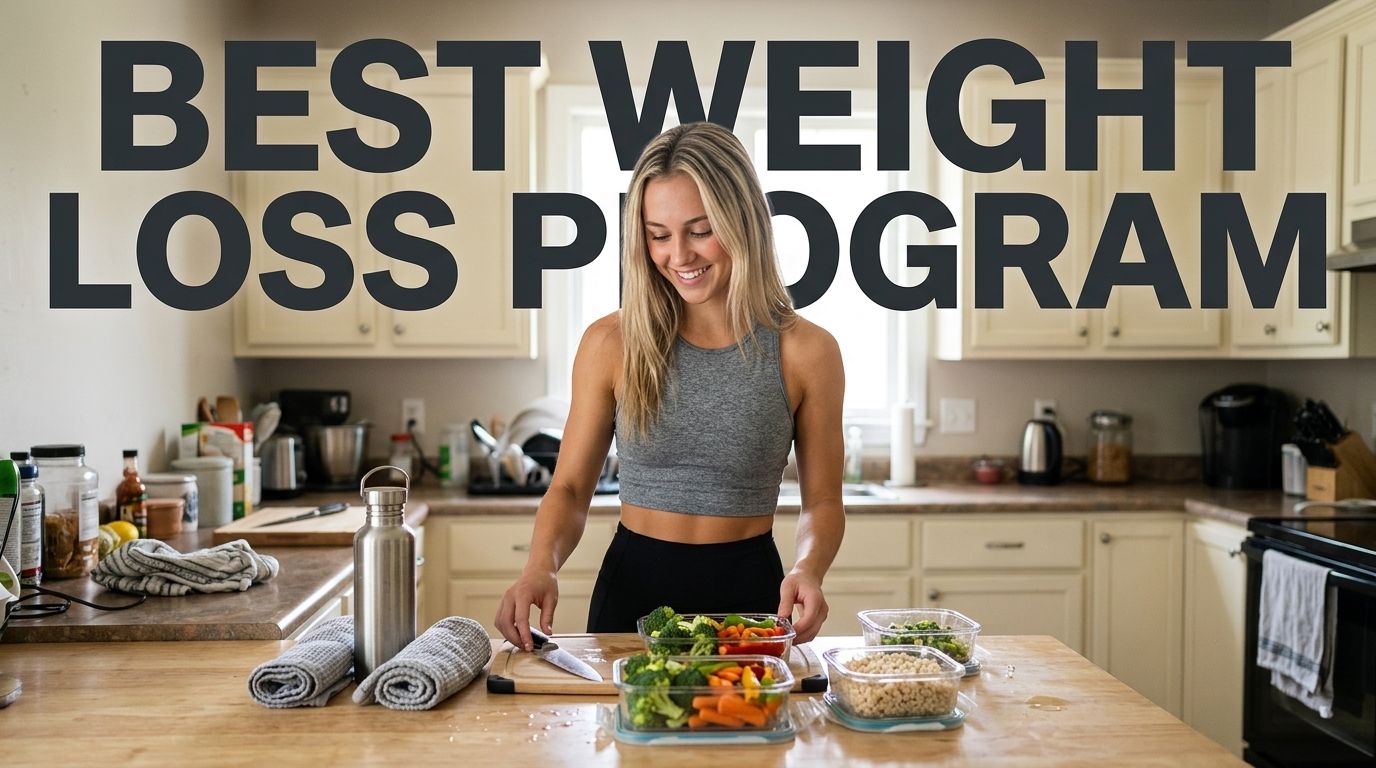
A weight loss program is a structured system combining dietary guidance, behavioral coaching, physical activity, and goal-tracking to produce sustained weight reduction. Unlike a simple diet, a program adds accountability and professional support — the two factors that most predict long-term success.
Top-ranked programs in 2026 include Noom for behavioral coaching, WeightWatchers for flexible tracking, Mayo Clinic Diet for evidence-based nutrition, and Nutrisystem for meal delivery. Program costs range from free (National Diabetes Prevention Program) to $300+/month for medically supervised options with GLP-1 access.
This guide covers what separates good programs from bad ones, which options deliver real results, how to match a program to your goals, and the mistakes that make even top-rated programs fail. Readers leave with a clear, practical choice for their situation.
What Is a Weight Loss Program?
A weight loss program is a structured system that combines dietary guidance, behavioral coaching, physical activity, and goal-tracking to produce sustained weight reduction. Programs range from app-based (Noom, WeightWatchers) to medically supervised (Cleveland Clinic Diet, National Diabetes Prevention Program) and meal-delivery options (Nutrisystem, Jenny Craig). The structured weight loss program market includes dozens of options in 2026, evaluated annually by U.S. News and Healthline on evidence, safety, and sustainability.
How Is a Weight Loss Program Different from a Diet?
A weight loss program adds behavioral support, progress tracking, accountability, and professional guidance to a set of eating rules — making long-term adherence far more achievable than a diet alone. The evidence backs this up. Participants in structured programs with coaching components maintain weight loss for 12+ months at twice the rate of those following a diet alone.
Who Are Weight Loss Programs Designed For?
Weight loss programs are designed for adults who have struggled to lose weight through diet alone and benefit from structured accountability, behavioral coaching, or medically supervised intervention. Specialized programs target niche audiences: the National Diabetes Prevention Program focuses on adults with prediabetes; TOPS Club serves budget-conscious users; Noom Med adds prescription GLP-1 access for clinical obesity cases.
What Makes a Good Weight Loss Program?
A quality weight loss program includes goal-setting and food tracking, qualified professional leadership (a registered dietitian or certified obesity specialist), physical activity guidance, and a structured maintenance plan. Red flags include promises of rapid weight loss above 0.5-1 kg (1.1-2.2 lbs)/week, no professional oversight, and no post-program support. Programs that include a maintenance phase show 50% better long-term weight retention compared to those that end at the goal with no follow-up.
What a Good Weight Loss Program Includes:
- Daily food tracking with a clear calorie or points target
- Qualified professional oversight (RD or certified obesity specialist)
- Physical activity component
- Behavioral or counseling support
- Structured maintenance phase after reaching the goal
Should a Weight Loss Program Include Counseling?
Yes. Behavioral counseling addresses the psychological drivers of overeating — stress eating, reward associations, and habit loops — that diet rules alone cannot fix. Noom’s psychology-based curriculum reduces emotional eating triggers and builds self-monitoring habits, contributing to its top ranking across multiple expert reviews in 2026.
Does a Good Program Track Food and Set Goals?
Yes. Participants who track food daily within a structured program lose 2-3 times more weight than those who follow program guidelines without logging. Specific, measurable weekly goals — like a 500 kcal (2,100 kJ) daily deficit — improve adherence by giving users a clear target rather than a vague outcome to pursue.
What Are the Best Weight Loss Programs in 2026?
Programs are ranked on evidence base, nutritional completeness, sustainability, behavioral support quality, physical activity integration, and cost. Top-ranked programs include Noom (behavioral coaching), WeightWatchers (flexible points system), Mayo Clinic Diet (evidence-based), and Nutrisystem (meal delivery) — each targeting a different user profile. Noom ranks as the best overall for its combination of psychology-based coaching, calorie tracking, and personalized goal-setting.
Best Weight Loss Programs by Category:
- Best overall: Noom (psychology + calorie tracking + coaching)
- Best flexible: WeightWatchers (points system, no food restrictions)
- Best evidence-based: Mayo Clinic Diet
- Best meal delivery: Nutrisystem
- Best for prediabetes: National Diabetes Prevention Program
- Best with GLP-1 access: Noom Med
What Is the Best Overall Weight Loss Program?
Noom ranks as the best overall weight loss program in 2026 for its color-coded food system, daily behavioral psychology lessons, and one-on-one coaching. WeightWatchers is the top flexible alternative — its points system allows dietary freedom without rigid food rules, making it the pick for users who need structure but resist restriction.
What Is the Best Weight Loss App for Sustainable Results?
Noom Weight is built around habit formation rather than short-term caloric restriction, teaching behavioral skills that persist after the program ends. Wellos earns high marks for recipe integration and lifestyle coaching, combining meal planning with behavioral nudges for users who want food-focused support. Think of it this way: the best app is the one that fits your daily routine well enough to actually use.
Which Weight Loss Programs Should You Avoid?
Programs promising more than 1 kg (2.2 lbs)/week weight loss, requiring extreme caloric restriction below 800 kcal (3,360 kJ)/day without medical supervision, or eliminating entire macronutrient groups carry significant safety and sustainability risks. Programs run without registered dietitians or certified obesity specialists increase the risk of nutritional deficiency, muscle loss, and metabolic damage from unsupervised restriction.
What Are the Red Flags in a Weight Loss Program?
The four most cited red flags are: rapid weight loss promises above 1 kg (2.2 lbs)/week, no maintenance phase, proprietary supplement requirements, and no professional credentials behind the program. Here is what no one tells you: programs that end at the weight loss goal without a transition plan result in 80% of participants regaining weight within 5 years, according to longitudinal obesity research.
Weight Loss Program Red Flags:
- Promises of more than 1 kg (2.2 lbs)/week loss
- No registered dietitian or certified obesity specialist involvement
- Requires proprietary supplement purchases
- No structured maintenance or transition phase
- Eliminates entire food groups without medical justification
How Do You Choose the Right Weight Loss Program for You?
The right program depends on eating pattern: behavioral programs (Noom) suit users with emotional eating patterns; flexible tracking (WeightWatchers) suits users who resist rigid rules; meal delivery (Nutrisystem) suits users who want decisions made for them. Costs range from free (National Diabetes Prevention Program) to $60-$80/month (Noom, WeightWatchers) to $300+/month for medically supervised options with GLP-1 medications.
How Do Your Goals Affect Program Choice?
Users with 5-10 kg (11-22 lbs) to lose do well with app-based programs; users with 20+ kg (44+ lbs) benefit from medically supervised programs with dietitian access and possible GLP-1 support. Programs that include exercise programming — like BetterMe and Cleveland Clinic Diet — show 30% better results than diet-only programs for users who are also building fitness habits.
Do GLP-1 Medications Belong in a Weight Loss Program?
Yes. GLP-1 medications reduce appetite by 300-500 kcal (1,260-2,100 kJ)/day and are most effective when paired with behavioral coaching and dietary structure — not used in isolation. Noom Med pairs prescription GLP-1 access with behavioral coaching, addressing both the physiological and psychological drivers of weight gain at the same time. Ready to build the diet foundation that makes any program — or any medication — actually work? Get a proven weight loss plan built by our nutritionists at Eat Proteins.
What Are Common Mistakes When Starting a Weight Loss Program?
The three most common mistakes are: setting unrealistic weekly loss targets, skipping the behavioral components to focus only on food rules, and not planning for a maintenance phase. Here is the kicker: users who treat one off-plan meal as a program failure are 3 times more likely to abandon the program within 30 days than those who use flexible thinking. All-or-nothing thinking is the fastest way out of any program.
Common Mistakes When Starting a Weight Loss Program:
- Setting unrealistic weekly weight loss targets
- Skipping behavioral lessons and tracking to focus only on food rules
- Treating one off-plan meal as full program failure
- Not planning a maintenance phase from day one
Why Do Most People Quit Weight Loss Programs?
The leading causes of dropout are: no visible scale progress in week 1-2, logging fatigue, program cost, and the program feeling too rigid or too complex to sustain alongside daily life. Programs that highlight non-scale victories — better energy, improved mood, looser clothing — in the first two weeks retain 40% more participants past the 30-day mark.
How Long Does It Take a Weight Loss Program to Work?
Most structured programs produce 1-2 kg (2.2-4.4 lbs) of weight loss in the first two weeks from water retention reduction and early caloric deficit. Consistent 90-day participation produces 4-8 kg (8.8-17.6 lbs) of weight loss on average — with results depending on starting weight, adherence, and program intensity.
What Results Can You Expect in the First 90 Days?
A realistic 90-day outcome is 4-8 kg (8.8-17.6 lbs) of fat loss with consistent adherence; medically supervised programs with GLP-1 support can reach 6-12 kg (13.2-26.4 lbs). Beyond the scale, most participants report improved energy, better sleep, reduced hunger between meals, and lower fasting glucose within 30-60 days. That is four measurable wins before the scale fully reflects the change.
Weight Loss Program Results Timeline:
| Timeframe | Expected Loss | Key Driver |
|---|---|---|
| Week 1-2 | 1-2 kg (2.2-4.4 lbs) | Water retention reduction + initial deficit |
| 30 Days | 2-3 kg (4.4-6.6 lbs) | Consistent food tracking + behavioral habit |
| 90 Days | 4-8 kg (8.8-17.6 lbs) | Sustained adherence + program coaching |
| 90 Days (GLP-1) | 6-12 kg (13.2-26.4 lbs) | Medical appetite suppression + structure |
Ready for Your Free Weight Loss Plan from Eat Proteins?
You have seen what the best programs deliver. Now get the foundation they all run on — free. The Eat Proteins 7-day weight loss meal plan is built by our nutritionists to give you the exact calorie structure and food framework that top-rated programs charge monthly to provide.
Don’t start another program without the diet behind it. Sign up below and get your plan sent straight to your inbox — no subscription, no app required.