
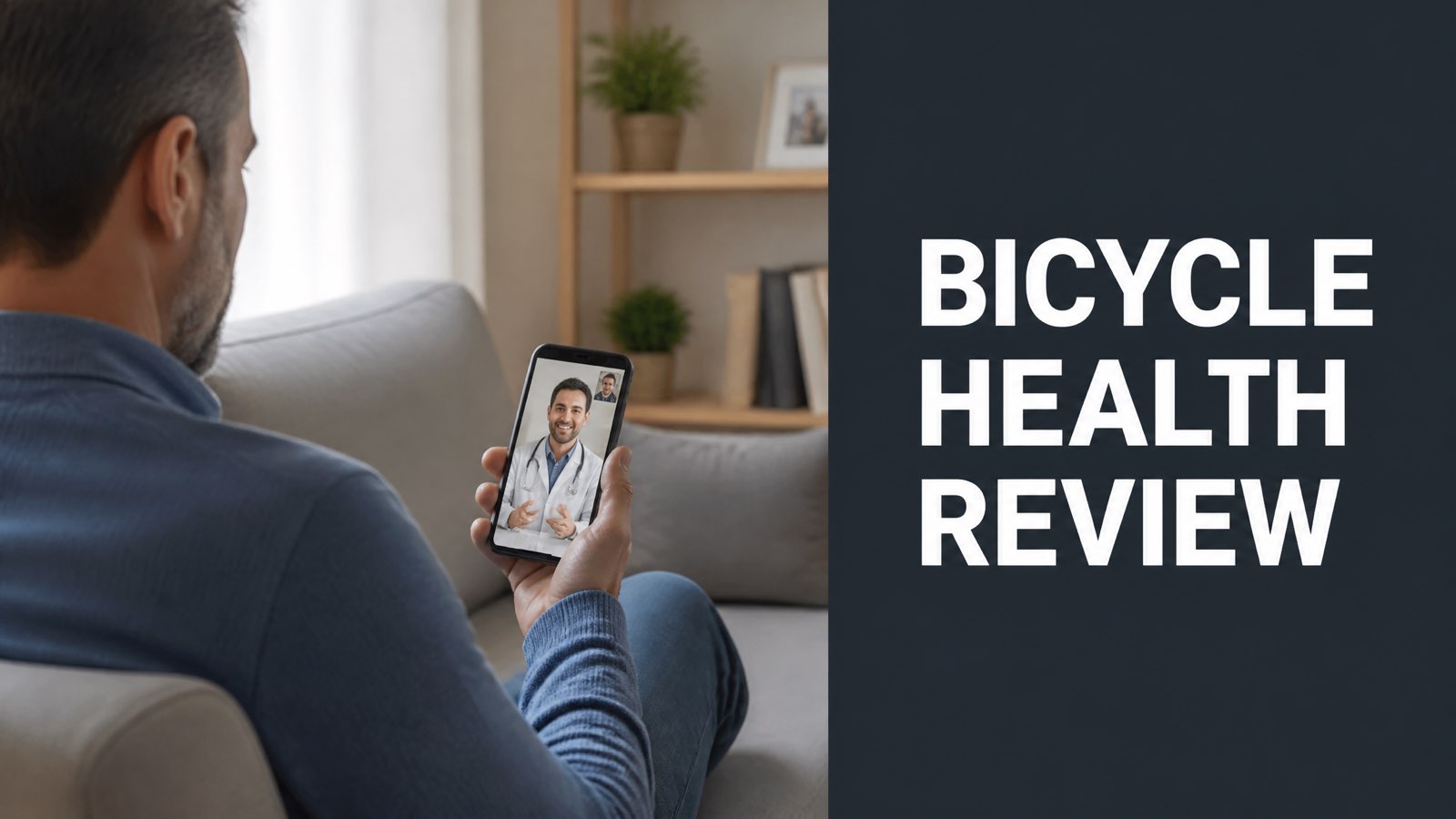
Bicycle Health is a US telehealth company that treats opioid use disorder with medication-assisted treatment. Patients meet licensed providers by video, receive Suboxone prescriptions, and join online support groups from home. Care starts in the app and continues through messaging.
Our review covers how enrollment works, what the monthly plan includes, and which medications are offered. The company holds a 4 out of 5 rating from ChoosingTherapy. Insurance acceptance is strong and same-day treatment is possible. Online support groups come with the plan. Costs and state availability get a full breakdown. Each part answers one question.
The picture has gaps too. Customer service gets mixed reviews, only Suboxone is prescribed, and availability depends on your state. Read on to learn the real costs and the safety details. You will also learn who should look at other options before enrolling with Bicycle Health today.
What Is Bicycle Health?
Bicycle Health is a telehealth company that treats opioid use disorder with medication and online support. Patients meet providers by video and pick up prescriptions at a local pharmacy. Some cities also offer in-person care, which our team at Eat Proteins found worth noting. The company focuses on adults who want private care without a clinic commute.
Core Services:
- Video visits with licensed providers
- Suboxone prescriptions sent to a local pharmacy
- Unlimited messaging with your care team
- Online recovery support groups
- Care navigation with a clinical support specialist
The core service is medication-assisted treatment, or MAT. Providers prescribe Suboxone (buprenorphine/naloxone) and pair it with support groups. In plain English: it’s addiction care without the waiting room.
Who is it built for? Adults with opioid dependence who want private, flexible care. Work, school, and family schedules often block clinic visits, and telehealth removes that barrier.
Is Bicycle Health Legit?
Yes. Bicycle Health is a real operating provider with licensed prescribers and a published pricing model. ChoosingTherapy gave it 4 out of 5 stars. It scored reliability, care team credentials, and privacy at 5 out of 5 each. Reviewers confirm the company publishes its pricing. Patients can verify provider credentials during enrollment and ask questions.
Here’s the thing: legit doesn’t mean perfect. The same review scored customer service at 3.5 out of 5 and dual diagnosis services at 1 out of 5.
The good news? Bicycle Health accepts several major insurers and follows HIPAA privacy rules. Bottom line: the service is genuine, though some gaps matter for certain patients.
How Does Bicycle Health Work?
Bicycle Health works through an online enrollment, a video evaluation, and a pharmacy pickup. You start on the website or in the Apple or Google Play app. An enrollment specialist reviews your assessment answers and matches you with a licensed prescriber, often within a day. The app handles scheduling and messaging. Enrollment takes only a few minutes.
Getting Started Steps:
- Schedule a call or enroll directly online.
- Speak with a scheduling agent about an evaluation.
- Get matched with a licensed prescriber.
- Attend a video evaluation session.
- Build a personalized treatment plan with your provider.
- Receive a prescription if the provider finds it appropriate.
- Pick up the medication at a local pharmacy.
- Schedule follow-up appointments as needed.
Think of it this way: the visit happens on your phone, but the medication still comes from a real pharmacy. Bicycle Health doesn’t ship Suboxone to your door.
After that, visits are frequent early on and taper off over time. Between visits, you can message your provider with questions. Who answers those messages? Your care team does, though some users report slow replies.
What Happens at the First Visit?
The first visit is a video evaluation where the provider reviews your history and opioid use. The provider decides whether Suboxone fits your situation. If it does, the prescription goes to your pharmacy, sometimes the same day. The visit runs on video and phone. Patients should list current medications and past treatment. Honest answers help the provider.
To be clear, this isn’t a rubber stamp. The enrollment specialist screens you first, and the provider makes the final medical call.
Fin vs Fin describes a similar flow. A coordinator learns your goals, then a provider builds a treatment plan with you. Many plans include a Suboxone prescription during that first visit.
What Does Bicycle Health Treat?
Bicycle Health treats opioid use disorder with medication-assisted treatment. MAT combines an FDA-approved medication with behavioral support. The goal is to ease withdrawal, cut cravings, and lower overdose risk while you rebuild daily routines. Treatment plans change over time as symptoms improve. Providers adjust visits and doses with each follow-up.
What MAT Helps With:
- Withdrawal symptoms
- Opioid cravings
- Opioid effects blocked at the receptor
- Overdose risk
The medication handles several jobs at once. It manages withdrawal symptoms like sweating, aching muscles, agitation, insomnia, and anxiety. It also blocks opioid effects and reduces cravings.
Providers may also prescribe medicine for symptoms tied to opioid dependence. Fin vs Fin lists muscle pain, anxiety, nausea, vomiting, diarrhea, and abdominal cramps as examples.
Which Medications Does Bicycle Health Prescribe?
Bicycle Health prescribes Suboxone, a buprenorphine and naloxone combination. ChoosingTherapy lists this single-medication approach as a con. Providers don’t prescribe methadone or naltrexone through the platform. Pharmacies fill the prescription, so patients still pick it up. Cost varies with insurance coverage and pharmacy choice in each local area.
Opioid Use Disorder Medications:
| Medication | Offered by Bicycle Health |
|---|---|
| Buprenorphine (Suboxone) | Yes |
| Methadone | No |
| Naltrexone | No |
Why does that matter? The FDA recommends that people receiving opioid use disorder treatment have access to all three approved medications. Fin vs Fin notes Bicycle Health offers only buprenorphine, and only one brand.
For many patients, Suboxone is enough. But if you need methadone or naltrexone, our experts at Eat Proteins suggest asking a local clinic instead.
What Are the Benefits of Bicycle Health?
Bicycle Health makes medication-assisted treatment more accessible, private, and flexible. You skip the clinic visit and fit care around work or school. ChoosingTherapy rates its insurance acceptance at 5 out of 5. Online recovery groups add peer support. A clinical support specialist also helps with scheduling, billing, and prescriptions in one place.
Main Benefits:
- Same-day treatment is possible
- Insurance accepted by several major plans
- Treatment from home with discreet care
- Online support groups included
- HIPAA-level privacy
And it gets better: the monthly plan bundles several services. Video visits, unlimited provider messaging, care navigation, and online group therapy all sit inside one fee.
Privacy is another draw. Treatment happens from home, which suits people who want discreet care. Does that make it right for everyone? No, but it removes real barriers for many.
Does Bicycle Health Offer Same-Day Treatment?
Yes. Bicycle Health can match you with a provider and prescribe medication on the same day. ChoosingTherapy confirms that the whole process moves quickly. You can enroll online, finish your video evaluation, and send the prescription to a pharmacy. Patients should finish the assessment early in the day. Pharmacy hours can limit pickup after evening visits.
Same-day access isn’t guaranteed. The provider still decides whether treatment is appropriate, and pharmacy stock can vary.
Here is the part most people miss: speed matters in opioid treatment. A long wait can mean another day of withdrawal, so fast access is a real advantage.
Does Bicycle Health Offer Support Groups?
Yes. Bicycle Health includes online support groups in its monthly plan. Each group lasts one hour and a recovery coach runs it. Topics include stress management, triggers, relationships in recovery, and self-care. Groups meet online, so patients join from home. Sessions follow a topic, and the coach keeps the conversation focused and supportive for everyone.
Members check in, support one another, and discuss the topic of the day. It’s peer support with structure.
But there’s a catch. Fin vs Fin notes that groups and coaching differ from counseling by a credentialed professional.
What Do Bicycle Health Reviews Say?
Bicycle Health reviews are generally positive about the clinicians and mixed about customer service and billing. ChoosingTherapy reports 3.6 stars from over 150 Apple App Store reviews. Google Play shows 4.1 stars from more than 480 reviews. Read recent reviews before you enroll. Service quality shifts as companies grow and change their billing systems.
Review Ratings at a Glance:
| Source | Rating | Review Count |
|---|---|---|
| ChoosingTherapy | 4 out of 5 | Editorial review |
| Apple App Store | 3.6 out of 5 | Over 150 |
| Google Play Store | 4.1 out of 5 | More than 480 |
Short answer: patients like the care, and some dislike the admin. That pattern shows up across app stores and review sites.
Does the rating tell the whole story? Not quite. App ratings capture billing and scheduling frustrations that never touch the medical care itself.
What Are the Positive Experiences?
Positive reviewers praise compassionate clinicians, quick responses, and an easy-to-use app. One Reddit user wrote that the doctor listens without judgment. The same user said a text app always gets a response. Reviewers say visits feel respectful and unhurried. Patients also value text support between appointments and friendly staff members who reply.
Another patient on the Bicycle Health site credited the program with helping them feel hopeful about the future. Of course, this is testimonial content from the company’s own page, so weigh it accordingly.
What’s more, ChoosingTherapy notes that users describe the service as reliable and easy to navigate.
What Are the Common Complaints?
Negative reviewers mention unresolved customer service issues and billing problems most often. ChoosingTherapy found the company very difficult to reach during its own testing. That finding matches the 3.5 out of 5 customer service score. Reviewers describe waiting for callbacks and sorting out charges. Patients should message the care team early on.
The bad news? Billing confusion can hit hardest when you’re already stressed. Check what your insurer covers before your first visit.
Other complaints are structural. Only Suboxone is offered, availability is limited to select states, and co-occurring mental health conditions aren’t treated.
Is Bicycle Health Safe?
Yes. Bicycle Health delivers care through licensed prescribers under HIPAA privacy standards. Suboxone is an FDA-approved medication, and providers evaluate each patient before prescribing. Your medical history shapes the treatment plan. The platform also offers care navigation and messaging. These features help patients raise concerns between visits.
Safety also depends on follow-through. Regular visits let providers adjust the dose and refill prescriptions. Why does that matter? Opioid treatment works best with consistent monitoring.
Talk to a licensed clinician about side effects and interactions before starting any medication. Our team at Eat Proteins can’t replace that conversation.
Who Should Avoid Bicycle Health?
People who need a broader range of care should look at other providers. That includes anyone who needs methadone or naltrexone, since Bicycle Health prescribes only Suboxone. It also includes anyone outside the service area. Patients who need urgent emergency care should call 911 or go to an emergency room. Telehealth does not replace emergency services.
Dual diagnosis is another gap. ChoosingTherapy scored these services 1 out of 5. Patients with co-occurring mental health conditions need a second source of care.
Finally, if you want in-person counseling by a credentialed therapist, look elsewhere. Workit Health and Brightside Health are alternatives named by ChoosingTherapy.
How Much Does Bicycle Health Cost?
Bicycle Health costs $249 per month without insurance, according to ChoosingTherapy. The fee covers video visits, unlimited provider messaging, care navigation, and online group therapy. Medication is not included. Self-pay patients should confirm every fee before enrolling. Insurance changes the math, so check coverage for both visits and medication first.
Cost Breakdown:
| Item | Reported Cost |
|---|---|
| Monthly plan (self-pay) | $249 |
| Medication | $0 to $150 |
| Lab tests (self-pay) | Up to $78 |
| Older reported plan price | $199 |
Medication costs usually range from $0 to $150 depending on coverage. Older reviews list $199 per month, so confirm the current price on the company site. Prices change.
Lab tests are separate too. Fin vs Fin cites self-pay lab costs of up to $78.
Is Bicycle Health Worth the Price?
Yes, for many patients. Bicycle Health bundles visits, messaging, and groups into one monthly fee. Insurance can lower the cost, and telehealth saves travel time and missed work. Compare the monthly fee against clinic copays, travel costs, and lost work hours. Time saved counts as value. Medication costs apply either way, so compare the visit fees only.
Now here is the thing: compare before you commit. Ask whether an in-person clinic near you costs less or offers more services. Fin vs Fin raises this exact question.
So what does that mean for you? Run the numbers with your insurer first. The best value depends on your plan and your state.
Where Is Bicycle Health Available?
Bicycle Health operates in 32 US states, according to ChoosingTherapy. It serves only patients inside the United States. The state list has grown over time, and older reviews list fewer states. The company expands state by state. Rural patients benefit most, since telehealth reaches places without nearby clinics. Confirm your state first before enrolling.
Insurance Acceptance:
| Plan | Accepted |
|---|---|
| Aetna | Yes |
| Anthem | Yes |
| Blue Cross Blue Shield | Yes |
| Cigna | Yes |
| UnitedHealthcare | Yes |
| Medicaid | Limited |
States named by ChoosingTherapy include Arizona, California, Colorado, Florida, Illinois, Michigan, Texas, and Virginia. Check the company site for your state before enrolling. Availability changes.
Does Bicycle Health Accept Insurance?
Yes. Bicycle Health accepts several major insurance plans, including Aetna, Anthem, Blue Cross Blue Shield, Cigna, and UnitedHealthcare. Some Medicare plans also qualify. Medicaid eligibility exists in some states but looks quite limited. Coverage rules differ by state and plan. Call your insurer to confirm telehealth opioid treatment visits are covered.
The website has a state drop-down menu. Pick your state and it shows which plans apply there. That check takes under a minute.
Prescriptions are generally covered by insurance too. Pharmacy copays still vary by plan.
Is Eat Proteins a Good Place to Start?
Yes. Eat Proteins gives you plain-language research before you pick a health service. Our team reads the reviews, the pricing, and the fine print so you don’t have to. That saves hours of guesswork. Eat Proteins also keeps its tone honest. We flag weak spots such as limited states, one medication, and slow customer service alongside the real strengths.
Our coaches focus on facts you can verify, such as pricing, state availability, and insurance. Then you decide with confidence.
What Should You Do Next?
Check your state and insurance on the Bicycle Health site first. Then talk to a licensed clinician about your treatment goals. You deserve care that fits your situation, and Eat Proteins is here to help you compare options before you decide. Your health decisions deserve careful research and a clear plan. Take it one step at a time, starting today.
Don’t wait on the answer. Opioid treatment works best when you start. Explore more Eat Proteins reviews and take your next step today.