
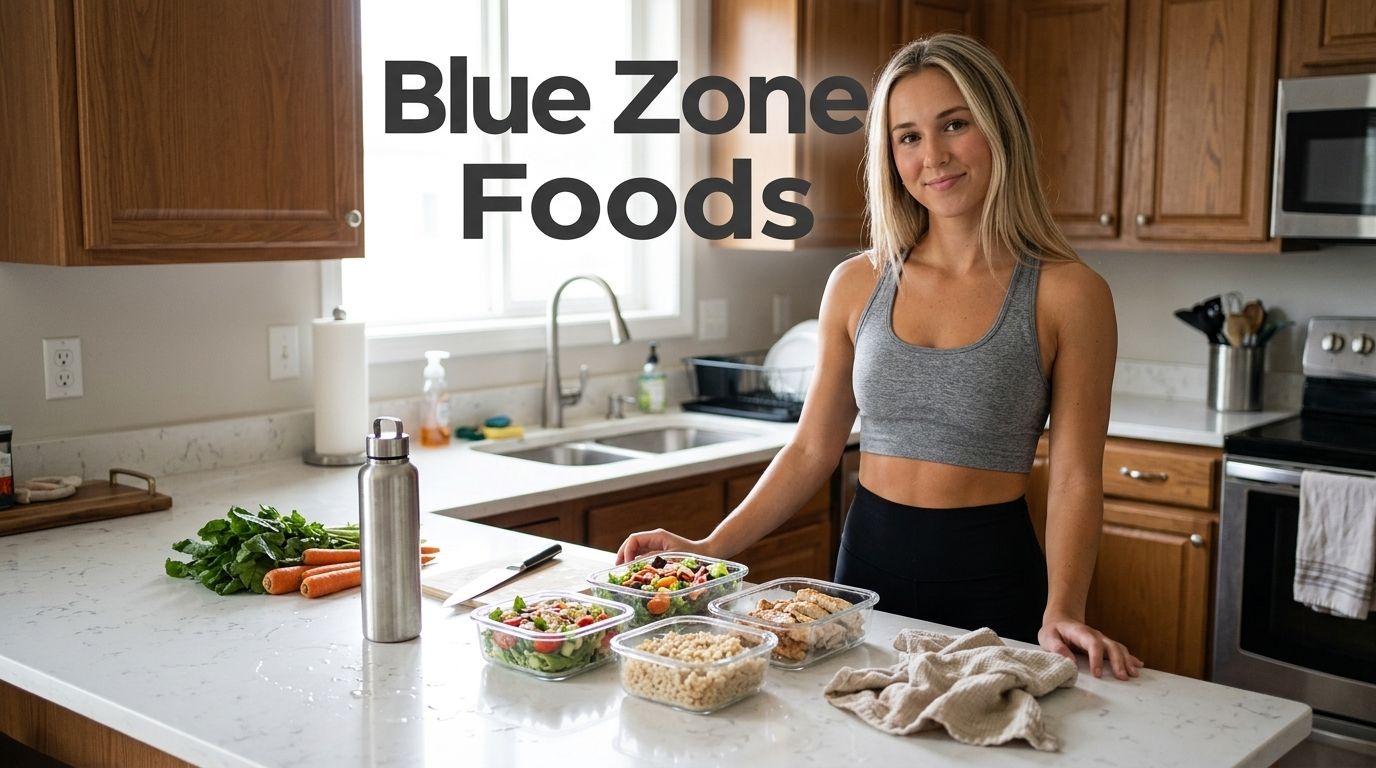
Blue Zone foods are the everyday ingredients eaten by the world’s longest-lived populations. Across five regions, Okinawa, Sardinia, Ikaria, Nicoya, and Loma Linda, researchers found striking dietary patterns tied directly to exceptional lifespans and low rates of chronic disease.
The diet across all five zones is 95-100% plant-based, with beans standing out as the single most consistent food. Leafy greens top the longevity charts, daily fruit intake is tied to a 60% lower risk of early death, and a small handful of nuts is eaten twice a day. Meat appears fewer than five times a month, processed foods are essentially absent, and Okinawans practice stopping at 80% full.
What these regions reveal is that long-term health is built one meal at a time. The foods Blue Zone populations rely on are affordable, widely available, and supported by decades of research. Shifting your plate closer to these patterns is one of the most evidence-backed moves you can make for a longer life.
What Are Blue Zones?
Blue Zones are five geographic regions with the highest concentrations of centenarians and lowest rates of chronic disease, identified by researcher Dan Buettner through demographic data and longevity research spanning decades of field observation.
But here’s what makes this genuinely fascinating: despite being culturally distinct, all five Blue Zone populations share overlapping lifestyle and dietary patterns. These habits, not genetics alone, drive exceptional longevity outcomes across every region studied.
The term emerged from National Geographic-backed research and has since been validated through multiple epidemiological studies, including the Adventist Health Studies, which isolated diet as a primary longevity variable. So this isn’t guesswork. It’s decades of hard data pointing at the same conclusion.
Which Regions Qualify as Blue Zones?
The five recognized Blue Zones are Okinawa (Japan), Sardinia (Italy), Nicoya (Costa Rica), Ikaria (Greece), and Loma Linda (California), each with documented above-average centenarian populations and consistently low chronic disease rates across generations.
Each region eats differently on the surface. Okinawans rely on sweet potatoes and tofu, Sardinians on sourdough and Cannonau wine, and Loma Linda Adventists follow a formally plant-based diet. But here’s the thread that ties them all together: every single one converges on legume-heavy, low-meat eating patterns.
Think of it this way: five cultures, five continents, five completely different food traditions, and they all end up at roughly the same nutritional destination. That’s not a coincidence.
Loma Linda is the only Blue Zone in the United States, anchored by a community of Seventh-day Adventists whose religious dietary guidelines align closely with the plant-forward eating patterns found across all five zones.
The Five Blue Zones at a Glance:
| Blue Zone | Location | Dietary Signature | Key Longevity Food |
|---|---|---|---|
| Okinawa | Japan | 95%+ plant-based, hara hachi bu practice | Sweet potato, tofu, seaweed |
| Sardinia | Italy | High legume, moderate Cannonau wine | Fava beans, sourdough, Cannonau wine |
| Nicoya | Costa Rica | Corn, bean, squash trinity | Black beans, plantains, papaya |
| Ikaria | Greece | Mediterranean-style, wild greens heavy | Lentils, wild greens, herbal teas |
| Loma Linda | California, USA | Formally plant-based, Adventist diet | Nuts, legumes, whole grains |
What Is the Blue Zone Diet?
The Blue Zone diet is a plant-based, whole-food eating pattern that eliminates processed foods and limits animal products, observed as a dietary common denominator across all five longevity regions rather than a structured or commercially defined program.
To be clear: this isn’t a branded meal plan you buy in a box. It’s a pattern of eating that researchers observed independently across five separate populations who had never heard of each other. And they all arrived at essentially the same place.
Blue Zone populations derive 95 to 100% of calories from plant sources. Animal products, primarily fish, eggs, and small amounts of meat, appear occasionally rather than as dietary staples, keeping saturated fat intake consistently low.
The Okinawan practice of hara hachi bu, eating until 80% full, functions as a built-in caloric restriction mechanism. Why does that matter? Because this one behavioral rule reduces overconsumption and is credited with keeping Okinawan BMI and disease rates exceptionally low. No calorie counting required. Just stopping before you’re stuffed.
What Core Principles Define Blue Zone Eating?
The six core Blue Zone food groups are leafy greens, beans, whole grains, nuts, vegetables, and fruit, forming the caloric and micronutrient foundation of every Blue Zone diet regardless of region, cultural context, or local agricultural tradition.
Beans are the single most consistent food across all five Blue Zones. Black beans, lentils, chickpeas, fava beans, and soybeans each appear in at least one region’s daily diet, delivering protein, fiber, and resistant starch. So if you’re only going to take one thing from this entire article, make it this: eat more beans.
Processed foods, added sugars, and refined grains are absent from traditional Blue Zone diets. This means the exclusion is as defining as what Blue Zone populations do eat. Removing these foods reduces inflammation and metabolic disruption in ways that adding superfoods alone simply can’t replicate.
And here’s the best part: core Blue Zone staples, beans, oats, barley, sweet potatoes, and leafy greens, rank among the lowest-cost foods available globally. The absence of meat further reduces grocery spend, making the pattern broadly accessible across income levels. You don’t need a premium food budget to eat like a centenarian.
Six Core Blue Zone Food Groups:
- Leafy greens — spinach, kale, purslane, dandelion, and arugula; highest polyphenol density of any food group in Blue Zone research
- Beans and legumes — the single most consistent food across all five zones; black beans, lentils, chickpeas, fava beans, and soybeans
- Whole grains — oats, barley, brown rice, and sourdough; primary carbohydrate source delivering sustained energy and B vitamins
- Nuts — almonds, walnuts, and cashews; approximately two handfuls daily for healthy fats, magnesium, and anti-inflammatory compounds
- Vegetables and fruit — seasonal and varied; daily fruit intake linked to a 60% lower risk of death over four-year follow-up periods
- Herbs and spices — garlic, turmeric, and fresh herbs used as primary seasonings in place of salt or processed condiments
How Much Protein Do Blue Zone Populations Eat?
Blue Zone populations source the vast majority of protein from plants, primarily beans, lentils, and whole grains, with animal protein appearing in small, infrequent amounts that contradict the high-protein norms dominant in Western dietary culture.
Here’s the kicker: these populations aren’t protein-deficient. They’re thriving. Our nutritionists at Eat Proteins have looked at the data, and the numbers are clear. Plant-based protein at adequate daily volume supports long-term metabolic health just as effectively as animal sources, and often without the inflammatory baggage.
Fish is the most common animal protein in Blue Zone diets, consumed up to three times per week at servings of three ounces (85g) or less. It delivers omega-3 fatty acids without the saturated fat load associated with red meat.
Meat is consumed fewer than five times per month and in portions under two ounces (57g), roughly the size of a deck of cards. Exceeding these thresholds moves outside documented Blue Zone norms entirely. So what does that mean for you? If you’re eating red meat daily, you’re operating on a completely different dietary frequency than every centenarian population ever studied.
Blue Zone Protein Sources Compared to Western Norms:
| Protein Source | Blue Zone Frequency | Typical Western Frequency | Saturated Fat Level |
|---|---|---|---|
| Beans and lentils | Daily (1+ cup per meal) | 1-2 times per week | Negligible |
| Fish | Up to 3 times per week, 3 oz (85g) max | 1-2 times per week, larger portions | Low |
| Poultry | Rarely, under 2 oz (57g) | 4-5 times per week | Moderate |
| Red meat | Fewer than 5 times per month, under 2 oz (57g) | Daily or near-daily | High |
| Whole grains | Daily as primary carbohydrate base | Inconsistent; often refined versions | None |
What Foods Do Blue Zone Populations Eat Most?
Blue Zone staple foods form the daily caloric base of every major longevity population studied. Legumes, leafy greens, whole grains, nuts, and vegetables appear at virtually every meal and deliver the fiber, micronutrients, and phytochemicals consistently linked to reduced mortality in long-term population studies.
Blue Zone populations consume approximately two handfuls of nuts daily. Almonds, walnuts, and cashews are the most common varieties across the zones, delivering healthy fats, magnesium, and anti-inflammatory compounds at consistent serving volumes. That’s it. Two handfuls. It’s one of the simplest longevity upgrades you can make starting today.
Daily fruit consumption is associated with a 60% lower risk of death over a four-year period in Blue Zone research. In fact, even a quarter-pound serving daily produces measurable longevity effects through antioxidant and fiber mechanisms that operate independently of other dietary factors. A single apple. A banana. That’s the threshold you’re working with.
Fermented foods appear regularly across all five Blue Zone diets. Sourdough bread in Sardinia, miso and tempeh in Okinawa, and fermented goat milk in Ikaria each contribute to gut microbiome diversity and reduced inflammatory markers observed in these populations. This means fermentation isn’t a trend. It’s been a longevity tool for centuries.
Which Legumes Appear Most in Blue Zone Diets?
Blue Zone legumes vary by region but appear as dietary constants across all five longevity zones. Black beans dominate in Nicoya, lentils and chickpeas anchor Ikarian and Sardinian diets, fava beans are central in Sardinia, and soybeans form the protein base in Okinawa.
Legumes are the protein and fiber anchor of every Blue Zone dietary pattern. A single cup of cooked lentils or black beans provides 15 to 18 grams of protein, substantial resistant starch, and key micronutrients including iron and magnesium. So the next time someone asks where plant-based eaters get their protein, the answer is right here.
Epidemiological data across Blue Zones identifies legume intake as one of the strongest dietary predictors of longevity. Here’s why: their combination of fiber, plant protein, and low glycemic index supports cardiovascular, metabolic, and gut health in a single daily food group. One food category. Three major health systems supported simultaneously.
Blue Zone Legumes by Region:
- Black beans (Nicoya, Costa Rica) — eaten daily in rice-and-bean combinations; provide 15g protein and 15g fiber per cooked cup
- Lentils (Ikaria, Greece) — cornerstone of Ikarian soups and stews; among the highest iron content of any legume
- Chickpeas (Sardinia and Ikaria) — used in soups, spreads, and slow-cooked dishes; high magnesium and resistant starch
- Fava beans (Sardinia) — a dietary staple with historical roots; slow-digesting and deeply filling
- Soybeans and tofu (Okinawa) — primary protein source replacing meat; miso and tempeh forms add fermentation benefits
- Pinto and white beans (Loma Linda) — common in Adventist cooking; featured in casseroles, soups, and grain bowls
What Role Do Whole Grains Play in Longevity Diets?
Whole grains serve as the primary carbohydrate source across all five Blue Zones, with oats, barley, brown rice, and sourdough bread appearing most frequently. Each grain type delivers sustained energy through complex carbohydrates and fiber that refined grain equivalents are unable to match.
Traditional sourdough fermentation breaks down a significant portion of the bread’s sugars and gluten, producing a lower glycemic index than conventional bread. Sardinian sourdough made from ancient wheat varieties is directly associated with reduced blood sugar spikes after meals. That’s a meaningful difference if you’re managing energy levels or metabolic health.
But here’s what you need to understand about refined grains: conventional versions, white bread, white rice, and processed cereals, are entirely absent from Blue Zone diets. Whole grain versions preserve the bran and germ layers that deliver B vitamins, fiber, and minerals stripped away during industrial processing. You’re not just choosing ‘healthier.’ You’re choosing a fundamentally different food.
Are There Specific Superfoods Tied to Blue Zones?
Yes. Leafy greens hold the designation of single best longevity food in Blue Zone research. Wild greens consumed in Ikaria, including purslane, dandelion, and arugula, contain higher polyphenol and omega-3 concentrations than commercially grown leafy vegetable varieties available in standard grocery markets.
The bad news? Most people aren’t eating nearly enough of them. The good news? You don’t need wild-foraged Greek hillside greens to get the benefit. Spinach, kale, and arugula from your local store get you most of the way there if you’re eating them consistently.
Cannonau, a Sardinian red wine, contains approximately twice the flavonoids of other red wines. Moderate consumption of one to two small glasses daily, taken with food and in social settings, is a documented component of the Sardinian longevity dietary pattern. And yes, context matters here. It’s wine with a meal among friends, not a nightly solo pour in front of a screen.
Blue Zone cuisines rely on garlic, turmeric, and fresh or dried herbs as primary seasonings rather than salt or processed condiments. These ingredients deliver anti-inflammatory compounds and raise the phytochemical density of meals across every Blue Zone cuisine studied. Our coaches at Eat Proteins often say this is one of the easiest swaps you can make: season with intention, and your food starts doing more work for you.
What Foods Should You Avoid on a Blue Zone Diet?
Processed foods are universally absent from traditional Blue Zone diets, and their removal is a defining structural feature of every longevity eating pattern documented. Eliminating them removes refined sugars, industrial seed oils, sodium overload, and artificial additives — all tied to accelerated chronic disease progression in global epidemiological data.
This means sweetened beverages, packaged desserts, and added-sugar products fall outside Blue Zone dietary norms entirely. Natural sweetness in these diets comes from whole fruit, which simultaneously delivers fiber and antioxidants that blunt the metabolic impact of fructose at the cellular level.
White bread, white pasta, and conventional breakfast cereals aren’t part of Blue Zone eating patterns. Replacing these with sourdough, oats, or barley restores fiber and micronutrient content while lowering the glycemic load of each meal to levels consistent with longevity outcomes.
Foods to Eliminate and Their Blue Zone Replacements:
| Food to Avoid | Why It Falls Outside Blue Zone Norms | Blue Zone Replacement |
|---|---|---|
| White bread and white pasta | Refined; bran and germ removed, glycemic load high | Sourdough, barley, oats, brown rice |
| Sweetened beverages and sodas | Added sugar with no fiber buffer; drives metabolic disruption | Water, herbal teas, modest red wine with meals |
| Packaged snacks and processed cereals | Industrial seed oils, sodium overload, artificial additives | Raw nuts, fresh fruit, whole grain options |
| Red meat as a daily staple | Saturated fat load; exceeds documented Blue Zone thresholds | Legumes, fish (max 3 times per week) |
| Processed condiments and salt-heavy sauces | High sodium; displaces anti-inflammatory herb-based seasoning | Garlic, turmeric, fresh herbs, lemon |
How much meat is too much on a Blue Zone diet?
Meat consumption threshold in Blue Zone populations is governed by a documented upper limit of fewer than five servings per month, with each serving kept under two ounces (57g). Exceeding these thresholds moves dietary behavior outside the longevity pattern observed across all five Blue Zone regions.
Here’s why that matters: vegetarian Adventists in Loma Linda outlive their meat-eating counterparts by up to eight years. That’s one of the most robust dietary longevity outcomes in the epidemiological record, drawn from the Adventist Health Study cohort.
When meat does appear in Blue Zone meals, it functions as a condiment or flavoring agent rather than a caloric centerpiece. A two-ounce (57g) portion, roughly the size of a small deck of cards, adds flavor to vegetable-forward dishes without dominating the plate.
Does Science Support the Blue Zone Diet?
Yes. The Blue Zone diet carries substantial mortality evidence from large-scale research, including the Adventist Health Studies tracking over 96,000 participants, which links plant-based dietary patterns to measurably longer lifespans and reduced all-cause mortality across diverse population groups.
In fact, research cited in Blue Zone literature found that consuming a quarter pound of fruit daily was associated with a 60% lower risk of death over a four-year follow-up period. That dose-response relationship strengthens the case for consistent daily fruit intake as a longevity lever.
Blue Zone-aligned diets deliver higher levels of vitamins A, C, and E, along with iron and magnesium, compared to omnivore Western diets. This micronutrient density supports immune function, cellular repair, and oxidative stress reduction across decades of consumption.
What do clinicians say about Blue Zone eating patterns?
Clinicians broadly align Blue Zone eating with established chronic disease prevention guidelines, noting that the diet’s emphasis on fiber, plant protein, and micronutrient-dense whole foods maps directly onto cardiology, diabetes, and oncology dietary recommendations used in clinical practice.
That said, if you’re transitioning from a low-fiber Western diet, you’ll want to increase Blue Zone food intake gradually. A rapid shift to high-legume, high-grain eating can cause digestive discomfort, and a staged four-to-six week transition is the standard clinical recommendation.
For people with specific chronic conditions, including chronic kidney disease, the plant protein composition of the Blue Zone diet requires clinical assessment. Protein source and quantity targets may need individual adjustment based on GFR stage and nephrologist guidance.
What Does a Blue Zone Meal Plan Look Like?
A Blue Zone meal plan centers every meal on at least one of six core food groups, leafy greens, beans, whole grains, nuts, vegetables, or fruit, with animal products occupying a minor supporting role rather than the caloric center of the plate across any given day.
And here’s something most people don’t expect: a week of Blue Zone eating is economically accessible. Beans, oats, barley, sweet potatoes, and seasonal greens rank among the lowest-cost grocery items, and eliminating frequent meat purchases reduces overall food spend in a measurable and consistent way.
Beyond food selection, a true Blue Zone meal plan incorporates the hara hachi bu principle of stopping at 80% fullness. This behavioral layer prevents caloric excess without requiring calorie counting or portion measurement tools of any kind.
What is a sample Blue Zone day of eating?
A Blue Zone-aligned breakfast includes steel-cut oats topped with a handful of walnuts and fresh fruit, delivering whole grains, healthy fats, fiber, and antioxidants in one bowl that aligns with both Okinawan and Adventist dietary patterns documented in longevity research.
Lunch in a Blue Zone framework features a legume base, lentil soup, chickpea salad, or black bean bowl, layered with leafy greens, seasonal vegetables, and sourdough or whole grain bread as a side component of the meal.
Dinner follows the same plant-forward logic: a grain base of barley or brown rice, a bean or vegetable protein source, roasted seasonal vegetables seasoned with garlic and herbs, and optionally a small portion of fish in modest quantities.
Sample Blue Zone Day of Eating:
- Breakfast — Steel-cut oats with walnuts, fresh blueberries, and a drizzle of honey; herbal tea or black coffee
- Mid-morning (optional) — One small handful of raw almonds or a piece of whole fruit; stop at 80% fullness per hara hachi bu
- Lunch — Lentil soup with leafy greens, sourdough bread on the side, and a seasonal vegetable salad dressed with olive oil and lemon
- Afternoon (optional) — Fresh fruit or a small portion of mixed nuts; no processed snacks
- Dinner — Barley or brown rice base, black bean or chickpea protein, roasted seasonal vegetables seasoned with garlic and turmeric; small fish portion optional (max 3 oz)
- Evening (Sardinian pattern) — One small glass of Cannonau or red wine taken with food in a social or family setting; not required for other Blue Zone frameworks
How do you build a Blue Zone-friendly grocery list?
A complete Blue Zone grocery list covers six core categories: dried or canned beans and lentils, leafy greens and seasonal vegetables, whole grains including oats, barley, brown rice, and sourdough, nuts, fresh or frozen fruit, and a full selection of herbs and spices.
Nuts are the highest-cost staple on a Blue Zone grocery list, but the daily portion is modest at two handfuls, or roughly one ounce (28g). Buying raw almonds or walnuts in bulk reduces cost per serving in a significant and repeatable way.
Fish, the primary animal protein in Blue Zone diets, appears at most three times per week in small portions. Meat purchases, when included, are planned for fewer than five occasions per month in sub-two-ounce (57g) quantities per serving.
What Lifestyle Habits Complement a Blue Zone Diet?
Diet is a critical but not isolated variable in Blue Zone longevity, as all five populations combine their eating patterns with regular low-intensity physical activity, strong social networks, a clear sense of purpose, and active stress management practices embedded in daily cultural life.
To be clear, Blue Zone populations eat in community contexts, family meals, social gatherings, and religious fellowship. Research consistently links strong social ties to reduced inflammatory markers and lower all-cause mortality independent of any specific dietary variable.
And here’s something that surprises most people: Blue Zone populations don’t rely on structured gym exercise. Movement is embedded in daily life through walking, gardening, and manual domestic tasks, consistent low-level physical activity throughout the day without dedicated or scheduled exercise sessions.
Blue Zone Lifestyle Pillars Beyond Diet:
- Natural movement — Walking, gardening, and daily manual tasks replace structured gym exercise; consistent low-intensity activity throughout the day
- Sense of purpose — Okinawans call it ikigai (reason for waking); Nicoyans call it plan de vida; having a defined purpose is linked to lower mortality across all five zones
- Stress downregulation — Daily naps in Ikaria, Sabbath observance in Loma Linda, and ancestor rituals in Okinawa each provide structured physiological recovery
- Community and belonging — Strong social networks and religious or community groups reduce inflammatory markers independent of diet
- Moderate, purposeful alcohol — Sardinians drink one to two small glasses of Cannonau wine with food and in social settings; no Blue Zone supports drinking alone or heavily
How does stress management affect longevity in Blue Zones?
Chronic stress activates inflammatory pathways that accelerate cellular aging, cardiovascular disease, and immune dysfunction, and Blue Zone populations demonstrate lower chronic stress biomarkers than Western counterparts through culturally embedded stress-mitigation practices observed across all five regions.
Stress mitigation takes different forms across Blue Zone regions. Okinawans practice ancestor remembrance rituals, Sardinians observe afternoon rest, Ikarians nap daily, and Loma Linda Adventists observe the Sabbath as a structured weekly recovery day with consistent physiological downregulation effects.
Bottom line: stress management and anti-inflammatory diet are mutually reinforcing in Blue Zone populations. A low-processed, high-phytochemical diet reduces baseline inflammation, while consistent stress reduction practices prevent the cortisol spikes that drive metabolic disruption over time.
Who Should Follow a Blue Zone Diet?
The Blue Zone diet suits anyone seeking long-term longevity, chronic disease prevention, or sustainable weight management. Its whole-food plant-based structure aligns with evidence-based recommendations for cardiovascular health, metabolic function, and cancer risk reduction.
For individuals already following plant-based diets for ethical or environmental reasons, the Blue Zone framework provides a structured longevity rationale and practical food group guidance that reinforces their dietary identity with outcome data.
People transitioning from high-meat, low-fiber Western diets treat Blue Zone eating as a gradual shift. Incrementally increasing legume and whole grain intake over four to six weeks reduces digestive adjustment symptoms significantly.
Ready to speed things up? Get a proven weight loss plan built around these exact principles.
Is the Blue Zone diet safe for people with chronic conditions?
Yes. The Blue Zone diet is considered safe and potentially therapeutic for most chronic conditions, including type 2 diabetes, hypertension, and obesity, due to its low glycemic load, high fiber content, and anti-inflammatory profile, as recognized by clinicians and dietitians.
Individuals with chronic kidney disease require clinical review before adopting a high-legume Blue Zone diet. Plant protein sources affect potassium and phosphorus load differently than animal proteins, and portions may need adjustment based on GFR stage.
The Blue Zone dietary pattern has been observed across diverse cultural populations, from rural Japanese Okinawans to American Adventists, demonstrating its adaptability to different food traditions, budgets, and health starting points with consistent longevity associations.
Want Your Free Blue Zone Meal Plan from Eat Proteins?
You’re one step away from eating like the world’s longest-lived people. Eat Proteins has already done the research, mapped the six core food groups, calibrated the portions, and built a week-long Blue Zone meal plan you can start using today. Don’t keep guessing at longevity eating while others are already living it.
This is free. It’s personalized. And it’s going fast. Claim your plan from Eat Proteins now before you talk yourself into another week of the same old habits.
How does Eat Proteins personalize a Blue Zone plan for you?
The Eat Proteins Blue Zone plan accounts for individual health goals, dietary restrictions, and chronic condition considerations, ensuring the plant-forward framework is calibrated to protein needs, fiber tolerance, and caloric requirements rather than applied as a generic template.
For users with chronic conditions such as kidney disease or diabetes, the Eat Proteins plan adjusts legume portions, protein sources, and carbohydrate distribution to align with clinical safety thresholds while preserving the core longevity structure.
The personalized plan delivers a Blue Zone-aligned grocery list organized by the six core food groups, making it straightforward to shop, prep, and execute the diet without requiring prior nutrition expertise.