
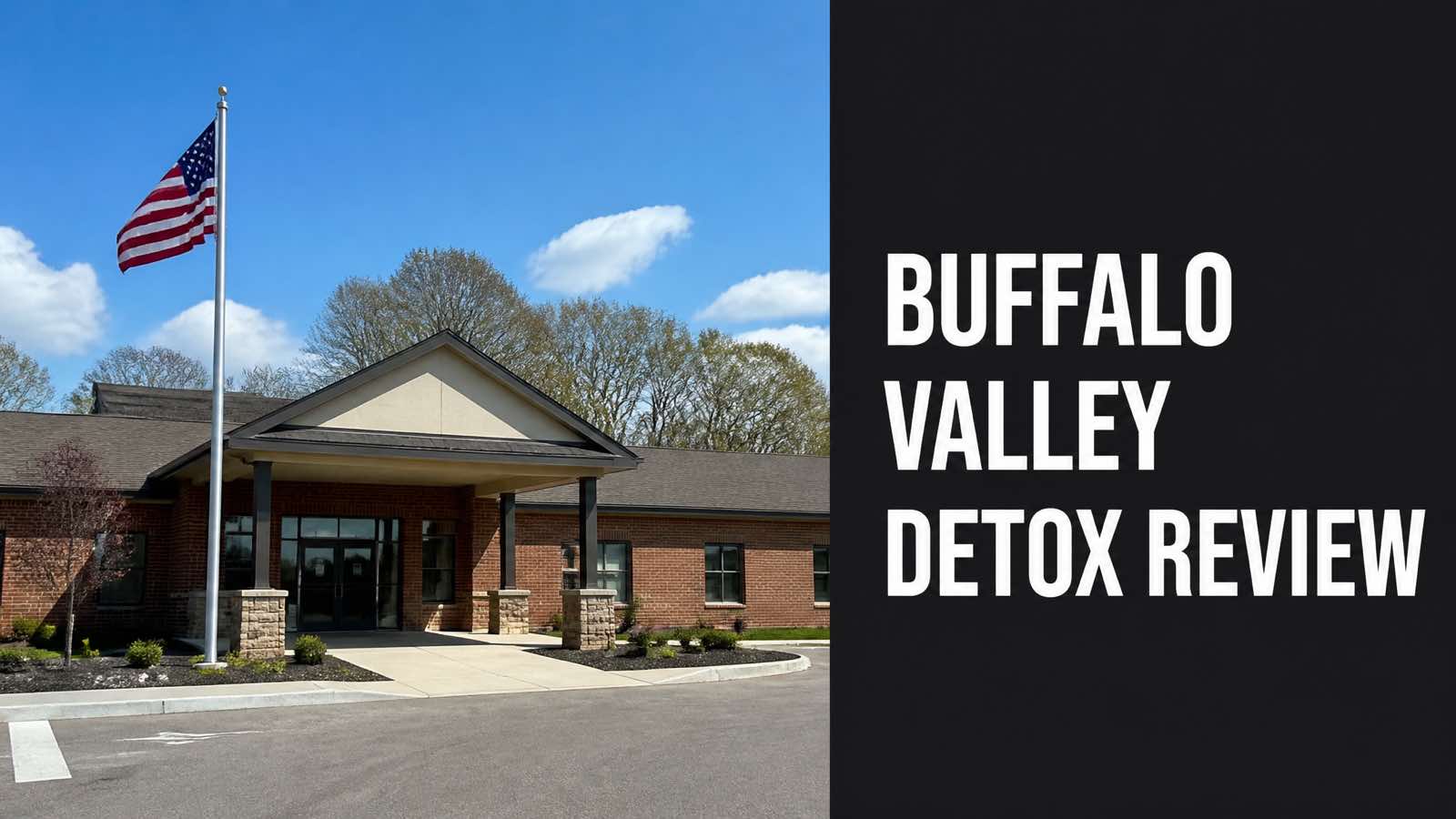
Buffalo Valley operates a nonprofit detox and treatment network across Nashville and Hohenwald, Tennessee. Founded in 1979, it runs a dedicated 33-bed detox unit alongside residential and outpatient care.
The center combines medical withdrawal support with Medicaid access, medication-assisted treatment, and housing services. It’s rated 5.0 on Google and holds Joint Commission accreditation, and it treats opioid, alcohol, and co-occurring conditions through a full continuum of care.
This review breaks down how Buffalo Valley’s detox process works, what past patients and families say, and how its pricing and payment options compare to nearby centers. Here’s what to know before you call.
What Is Buffalo Valley Detox?
Buffalo Valley operates as a nonprofit alcohol and drug treatment provider based in Tennessee. Founded in 1979, the organization runs a dedicated 33-bed detox unit plus residential and outpatient programs across the Nashville and Hohenwald service area.
The nonprofit status matters here. Buffalo Valley reinvests funding from TDMHSAS grants and TennCare into low-cost treatment rather than shareholder returns. That structure explains the sliding-fee and self-pay options most private detox chains skip.
Who Runs Buffalo Valley?
Executive Director Jerry T. Risner has directed the organization’s clinical programs for over 25 years. His team reports serving more than 3,500 patients a year, making Buffalo Valley one of the largest TennCare-funded addiction providers in the state.
Where Is Buffalo Valley Located?
The main detox campus sits at 501 Park Avenue South in Hohenwald, Tennessee. A separate outpatient and residential site operates at 105 Oak Valley Drive in Nashville, TN 37207, roughly 45 minutes from downtown Hohenwald.
How Does Buffalo Valley Detox Work?
Buffalo Valley screens every incoming patient through a full medical history and physical exam before assigning a level of care. Staff test for tobacco use, substance use, mental health conditions, HIV, and tuberculosis during intake.
Clinicians then match each patient to inpatient detox, outpatient detox, or intensive outpatient treatment based on withdrawal severity. This assessment-first structure follows the same intake model used by most Joint Commission accredited detox centers.
What Levels of Care Does Buffalo Valley Offer?
Level:
| Level of Care | Setting | Best For |
|---|---|---|
| Inpatient detox | 24-hour residential | Moderate to severe withdrawal |
| Outpatient detox | Clinic visits, live at home | Mild to moderate withdrawal |
| Intensive outpatient | Several sessions weekly | Strong home support system |
| Short-term residential | On-site stay | Post-detox stabilization |
Short-term residential care follows detox for patients who need extra stabilization. This step-down model reduces relapse risk during the fragile first weeks after withdrawal ends.
Does Buffalo Valley Use Medication-Assisted Treatment?
Yes. Buffalo Valley prescribes buprenorphine, naltrexone, and clonidine to ease opioid and alcohol withdrawal symptoms. The facility holds in-network prescribing status for these medications under most insurance plans.
Naltrexone comes in both oral and extended-release injectable forms. This flexibility lets clinicians adjust the medication plan as a patient’s cravings and physical response change over the first 90 days (3 months).
What Services Does Buffalo Valley Provide?
Buffalo Valley bundles clinical detox with housing, job training, and case management under one roof. Few regional detox centers combine medical withdrawal care with GED screening and vocational rehabilitation.
Core Services:
- Medically monitored detox
- Outpatient and intensive outpatient therapy
- Transitional and permanent housing
- Job training and placement
- Individual and group counseling
Does Buffalo Valley Treat Co-Occurring Disorders?
Yes. Buffalo Valley screens every patient for co-occurring psychiatric conditions during intake. Staff treat depression, anxiety, and trauma alongside substance use rather than referring patients elsewhere for mental health care.
The program also serves pregnant and postpartum women through a dedicated track. This specialization addresses a gap that many general detox facilities in Tennessee do not cover.
What Counseling Does Buffalo Valley Offer?
Therapists deliver cognitive behavioral therapy, motivational interviewing, and the Matrix Model across individual and group sessions. Contingency management adds structured incentives that reward sustained sobriety milestones.
Relapse prevention planning runs through every stage of treatment. Counselors build this planning into discharge paperwork, not just the final week of a stay.
What Are the Benefits of Buffalo Valley Detox?
Buffalo Valley delivers medically supervised withdrawal at a fraction of private-pay detox pricing. Its Medicaid and TennCare acceptance opens medical detox to patients who cannot afford $10,000-plus private facility stays.
Reported Benefits:
- Accepts Medicaid and TennCare
- 33-bed dedicated detox unit
- On-site housing after discharge
- Joint Commission accreditation
Does Buffalo Valley Treat Opioid Addiction?
Yes. Buffalo Valley treats heroin, fentanyl, and prescription painkiller dependence with a full medication-assisted protocol. Naloxone and overdose education accompany every opioid discharge plan.
Recovery Navigators extend this opioid focus into the community. These staff members connect uninsured opioid patients with same-day intake, according to local news coverage of the program.
Does Buffalo Valley Support Long-Term Recovery?
Buffalo Valley reports that roughly half of the 3,500 patients treated annually remain sober one year later. Discharge planning, peer mentoring, and self-help group referrals continue past the initial detox stay.
Valley Housing extends this support further. The division provides affordable permanent housing across middle Tennessee for patients who need stable shelter to sustain recovery.
What Do Buffalo Valley Reviews Say?
Buffalo Valley holds a 5.0 rating on Google and a 3.85 out of 5 Trustscore on Recovered.org. Facebook reviewers report an 84 percent recommendation rate across 29 reviews, a strong figure for a state-funded detox provider.
Positive Experiences
Family members frequently describe the intake staff as responsive during crisis calls. One reviewer credited a staff Navigator with coordinating placement for a loved one within days of first contact.
Former patients also highlight the kindness of front-line staff during residential stays. Several reviews single out the calm, non-judgmental tone of counselors during early withdrawal.
Common Complaints
Employee reviews on Indeed describe a stressful internal work environment for some staff roles, including Recovery Navigator positions. This complaint centers on workplace culture rather than patient care quality.
Independent directories note that Buffalo Valley’s Nashville outpatient location and Hohenwald detox campus sit roughly 90 minutes apart. Patients coordinating between sites should confirm transportation before admission.
Buffalo Valley vs Cumberland Heights vs Samaritan Recovery
Comparison:
| Center | Setting | Payment |
|---|---|---|
| Buffalo Valley | Detox, residential, outpatient | Medicaid, TennCare, self-pay |
| Cumberland Heights | Residential, outpatient | Private insurance, self-pay |
| Samaritan Recovery | Outpatient, residential | Medicaid, sliding scale |
Cumberland Heights leans toward private-pay clients with a larger residential campus near Nashville. Samaritan Recovery, like Buffalo Valley, focuses on Medicaid access but does not run its own dedicated detox unit.
Is Buffalo Valley Accredited and Legitimate?
Yes. Buffalo Valley holds Joint Commission accreditation, the same standard used to evaluate hospitals nationwide. The organization has also operated continuously as a licensed Tennessee provider since 1979.
State funding through TDMHSAS adds another layer of oversight. Grant-funded providers face regular compliance audits that self-pay-only facilities do not.
Does Buffalo Valley Accept Insurance?
Yes. Buffalo Valley accepts Medicaid, TennCare, private health insurance, and cash self-payment. This range of payment options makes the center accessible to uninsured patients as well as those with employer coverage.
Is Buffalo Valley Worth the Cost?
For Medicaid and TennCare patients, yes. Buffalo Valley removes the cost barrier that keeps many Tennessee residents out of medical detox entirely, since the state funds a large share of its bed capacity.
Self-pay patients should call ahead for exact rates. Buffalo Valley’s fee structure runs lower than most private-pay detox chains, but published online pricing is limited.
How Do You Start Treatment at Buffalo Valley?
Steps:
- Call the main intake line at (800) 447-2766
- Complete a prescreen application online
- Undergo a medical history and physical exam
- Receive a level-of-care assignment
- Begin detox or outpatient treatment
Patients without insurance can request a Recovery Navigator during the first call. These staff members work specifically to place uninsured opioid patients into treatment quickly.
Should You Try Eat Proteins?
Recovery does not end at discharge. Nutrition support plays a real role in stabilizing energy and mood during early sobriety, and this is where our team at Eat Proteins comes in.
Our experts at Eat Proteins build protein-forward nutrition plans that support the physical rebuilding many patients need after detox. The right fuel matters just as much as the right program.