
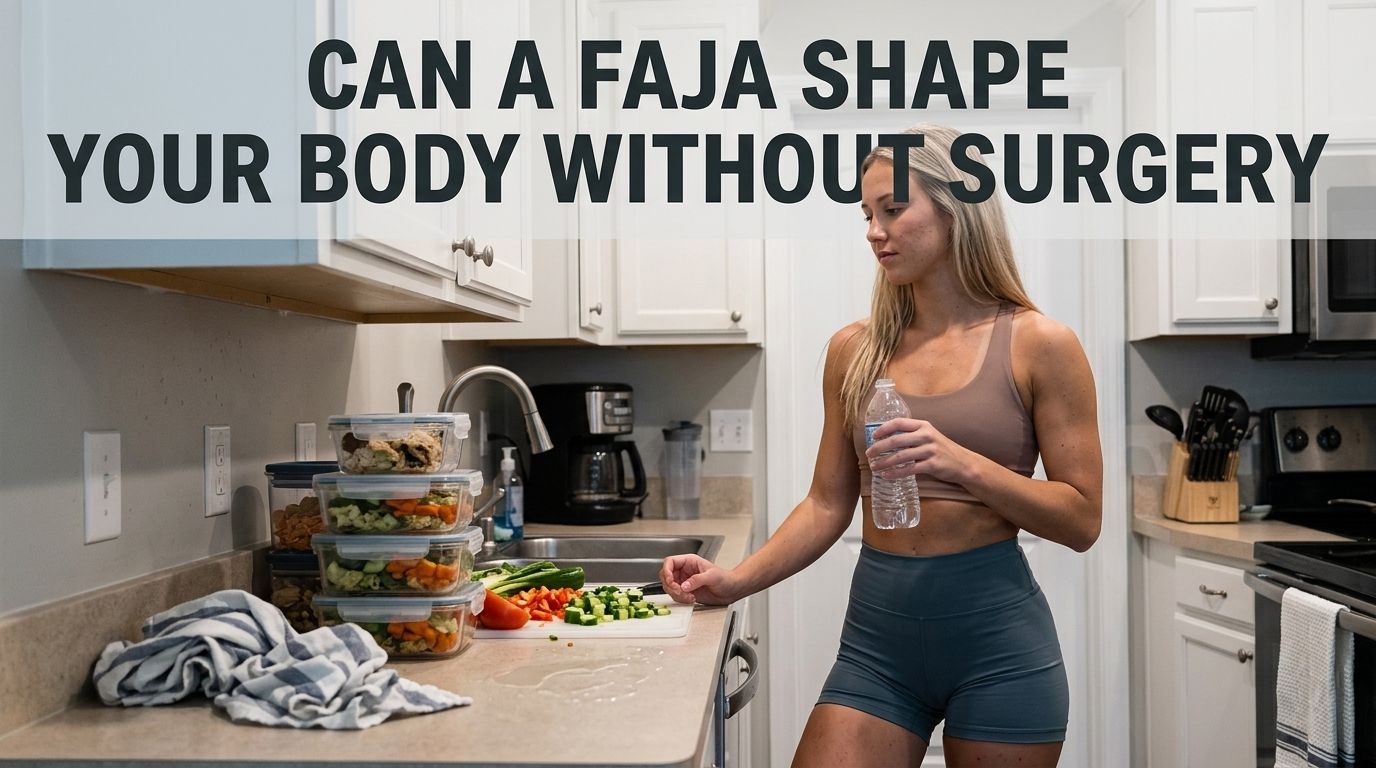
A faja is a Colombian compression garment that shapes the waist, abdomen, and hips without surgery or downtime. Consistent daily use redistributes soft tissue and trains the midsection into a more defined silhouette over weeks when paired with balanced nutrition and regular exercise.
Fajas provide immediate waist reduction from the first wear and measurable structural shaping after 4 to 12 weeks. Compression creates a thermogenic effect during workouts, supports posture alignment, and reduces appetite during meals. Post-surgical fajas are prescribed by surgeons after liposuction and tummy tucks to support recovery and tissue healing.
Fajas are safe for most healthy adults when correctly sized and worn for 6 to 8 hours daily, with decompression time built in for sleep and recovery periods. This guide covers how fajas work, realistic results, correct wearing technique, safety guidelines, and the full timeline for visible body shaping.
What Is a Faja?
A faja is a compression garment designed to shape, support, and contour the body — originating from Colombian shapewear tradition and widely used both post-surgery and for everyday non-surgical body shaping. Unlike standard shapewear, a faja provides medical-grade compression targeting specific zones including the abdomen, waist, hips, and thighs.
Fajas Colombianas have become a global body shaping category. Leading brands like Salome, Delie, and MYD manufacture to precise compression standards. Demand has grown substantially among women seeking non-surgical alternatives to contouring procedures.
Where Does the Faja Come From?
Fajas originate from Colombia, where the term ‘faja’ (meaning ‘band’ or ‘girdle’ in Spanish) refers to compression garments manufactured to medical-grade precision standards that set the global benchmark for body shaping garments. Colombia’s faja industry is recognized worldwide for superior compression technology and high-quality construction.
Colombian manufacturers pioneered the graduated compression design used in today’s premium fajas. The industry combines textile engineering with anatomical shaping principles. That combination distinguishes genuine fajas colombianas from mass-market compression garments.
What Is a Faja Made Of?
Quality fajas are constructed from high-elastane blends — typically nylon and spandex or powernet fabric — that provide graduated compression while remaining breathable during extended daily wear. Premium fajas add reinforced compression panels targeting the abdominal zone and boning inserts for waist definition.
The powernet fabric used in professional fajas combines high stretch with controlled resistance. Compression is strongest at the waist panel and graduated toward the thighs. That directional pressure is what distinguishes a shaping faja from basic elasticated underwear.
Can a Faja Shape Your Body Without Surgery?
Yes. A faja shapes the body without surgery by applying consistent external compression to soft tissue, redistributing fat cells and training the waist and midsection into a more defined silhouette over time with regular use. Here’s the part most people miss: results are gradual and reversible — they depend on consistent wear combined with active lifestyle habits, not on tissue removal.
A faja creates visible waist reduction and smoother contours during wear from the first use. Long-term reshaping requires consistent use over weeks paired with exercise and nutrition. The faja amplifies lifestyle-driven results. It does not replace them.
Unlike surgical body contouring, faja shaping produces no downtime, no surgical risk, and no permanent structural change. The trade-off is gradual progress rather than immediate transformation. For many people, that trade-off aligns perfectly with their goals and their circumstances.
Faja vs Surgery Comparison:
| Factor | Faja | Surgery |
|---|---|---|
| Results timeline | 4-12 weeks | Immediate (post-recovery) |
| Permanence | Requires lifestyle habits | Structural change |
| Downtime | None | Weeks of recovery |
| Risk level | Low when sized correctly | Surgical risk |
| Cost | Low | High |
Do Fajas Really Work for Body Shaping?
Yes. Fajas demonstrably reduce visible waist circumference during wear and support improved posture from the first session; their ability to permanently alter body structure depends on consistent use paired with nutrition and exercise habits. Compression creates a thermogenic effect at the core, increasing local temperature and supporting muscle engagement during activity.
The thermogenic effect of consistent abdominal compression contributes to gradual waist definition over time. Does that mean the faja alone creates weight loss? No. Combined with diet and exercise, though, the effects compound meaningfully over weeks.
Do Fajas Have Long-Term Effects on Body Shape?
Regular faja use over months can contribute to sustained waist definition by training the muscles and connective tissue into a narrower resting position — but those effects are enhanced and maintained only through accompanying physical exercise. The garment provides external compression. The muscles provide the lasting structural change.
Extended faja use without exercise risks reducing core muscle engagement. The core muscles receive less activation stimulus when external compression does the stabilization work. Pairing faja use with dedicated core training prevents this dependency and amplifies long-term results.
What Are the Benefits of Wearing a Faja?
Key faja benefits include immediate body contouring, posture support, lower back pain relief, post-surgical recovery support, increased thermal activity during workouts, and measurable confidence improvement from enhanced silhouette appearance. Post-operative fajas are prescribed by surgeons after liposuction, tummy tucks, and C-sections to reduce swelling and support tissue healing.
And here’s what often gets overlooked: the immediate silhouette enhancement from a faja creates a measurable psychological boost. Research on body confidence shows improved self-perception supports motivation for healthy lifestyle changes. That confidence effect is a genuine benefit, not a vanity side note.
Key Benefits of Wearing a Faja:
- Immediate waist and abdominal contouring
- Posture alignment support throughout the day
- Lower back pain reduction during activity
- Post-surgical swelling reduction and healing support
- Increased core thermogenic activity during workouts
- Improved body confidence and psychological motivation
Does Wearing a Faja Help with Posture?
Wearing a faja provides immediate external spinal support and cues the body toward an upright posture, reducing the tendency to slouch during extended sitting or standing — a benefit users report from the first wear session. Lasting postural change requires pairing faja use with targeted core and back strengthening exercises.
Short-term postural improvement is immediate and consistent with each session. Long-term postural change requires the core muscles to internalize the upright position independently. The faja accelerates postural awareness. Exercise builds the muscular capacity that sustains it.
Can a Faja Support Weight Loss?
A faja supports weight loss indirectly by increasing core temperature during physical activity and by reducing physical capacity to overeat through consistent abdominal compression — but the faja alone does not cause meaningful weight loss without dietary changes. Its contribution is supportive, not primary.
Some wearers report that consistent abdominal compression reduces appetite during meals. External pressure creates a physical sense of fullness that reduces eating capacity. It’s not a substitute for structured nutrition. But combined with a calorie-controlled eating plan, it provides useful daily reinforcement. Ready to start losing weight faster with a plan built around these principles?
How Do You Wear a Faja Correctly?
To wear a faja correctly, roll the garment down from the waist, step in, and slowly roll upward — never tug aggressively, as distorting the compression panels reduces shaping effectiveness and risks fabric damage that shortens the garment’s functional lifespan. Proper sizing is the most important factor in both safety and results.
Most body shaping fajas are recommended for 6 to 8 hours of daily wear during active hours. Post-surgical fajas follow surgeon-directed schedules that may require continuous wear during early recovery. Non-surgical users should remove the faja for sleep and allow the body decompression time each night.
Correct faja sizing is non-negotiable. Too small creates dangerous over-compression. Too large fails to deliver the graduated pressure needed for active shaping. Measure waist and hip circumference precisely and cross-reference the brand’s size chart before purchasing.
Steps to Put On a Faja Correctly:
- Roll the faja down from the waist to create a compact roll
- Step into the garment and position around the hips
- Slowly roll upward, smoothing compression panels into place
- Check breathing — full deep breath must be possible
- Adjust any boning or panels to align with target shaping zones
How Tight Should a Faja Be?
A correctly fitted faja feels firm and supportive without restricting full deep breathing — the ability to take a complete breath is the primary safety benchmark for determining correct faja tightness for both shaping and post-surgical garments. Any faja that causes shallow breathing is immediately too tight.
Over-compression triggers specific warning signs: tingling in the limbs, skin discoloration, or acid reflux from stomach compression. Each of these signals requires immediate removal. Wearing a faja through discomfort never accelerates results. It only adds health risk.
Does Wearing a Faja Overnight Help?
No. Wearing a faja overnight is not recommended for most non-surgical users because the body requires periods of decompression for healthy circulation and lymphatic drainage — both of which extended overnight compression disrupts, increasing risk without adding shaping benefit. Post-operative patients follow different clinical protocols directed by their surgeons.
Post-surgical patients may be directed to wear fajas continuously including during sleep in the first recovery weeks. This medical use differs entirely from elective body shaping in purpose and compression specifications. Non-surgical users who want overnight contouring support should use lighter compression garments specifically designed for sleep.
Are Fajas Safe to Wear?
Yes. Fajas are safe to wear when correctly sized, used for appropriate durations, and worn by people without contraindicated health conditions such as circulatory disorders, diaphragmatic hernia, or advanced pregnancy. The safety risk with fajas comes almost entirely from incorrect sizing or excessive wear duration, not from the garment category itself.
Safe faja use requires three conditions: proper sizing (full breathing maintained), limited continuous wear (6 to 8 hours maximum for non-surgical use), and immediate removal at the first sign of numbness, pain, or breathing difficulty. Following these guidelines makes faja use low-risk for most healthy adults.
Post-surgical fajas meet medical compression standards and are prescribed under clinical supervision. These garments differ from commercial body shapers in compression grade, construction, and intended use duration. Both types are safe when used as directed.
What Are the Risks of Wearing a Faja Too Long?
Wearing a faja too long daily risks acid reflux from abdominal pressure on the stomach, reduced core muscle activation over time, skin irritation from sustained friction, and impaired circulation in compressed tissue zones. The most significant long-term risk is core muscle dependency.
Extended daily faja use without core training creates reliance on external compression. Core muscles receive reduced activation stimulus and may weaken progressively. Continued faja use then becomes necessary to maintain posture. Breaking this cycle requires a deliberate transition to active core training alongside faja use reduction.
Who Should Avoid Wearing a Faja?
People with circulatory disorders, hiatal hernia, severe acid reflux, active pregnancy beyond the first trimester, or open wounds should avoid compression fajas unless specifically cleared by a medical professional familiar with their full health history. Standard compression fajas are not suitable for use during pregnancy.
Maternity compression garments with gentler, belly-supporting compression exist specifically for pregnant women. These differ fundamentally from body shaping fajas in construction, compression grade, and anatomical design. The distinction matters for both maternal and fetal safety.
How Long Does It Take for a Faja to Work?
A faja provides immediate visual waist reduction from the first wear; gradual structural shaping effects become noticeable after 4 to 8 weeks of consistent daily use when paired with regular physical activity and a calorie-controlled eating approach. Results depend on compression level, wear consistency, and lifestyle habits.
Visible waist reduction measurable without the faja typically requires 8 to 12 weeks of consistent use combined with a caloric deficit of 300 to 500 calories (1,256 to 2,092 kilojoules) per day. The faja shapes and compresses. Diet and exercise create the fat loss that makes the shaping permanent.
Starting body composition influences the timeline. Users with more fat tissue to redistribute see more dramatic early changes. Users closer to their goal body composition see more subtle but still meaningful waist definition gains over the same period.
Faja Results Timeline:
| Timeframe | Expected Result |
|---|---|
| First wear | Immediate silhouette improvement during wear |
| 2-4 weeks | Improved posture and core awareness |
| 4-8 weeks | Noticeable waist definition with consistent use |
| 8-12 weeks | Visible shaping measurable without the faja |
What Results Can You Expect from Wearing a Faja?
Consistent faja use produces immediate silhouette improvement during wear, gradual waist definition over 4 to 12 weeks, posture improvement throughout the day, and enhanced workout performance — but does not replicate the permanent fat removal results of surgical contouring procedures. The right expectations prevent disappointment and support sustained commitment.
The strongest faja results occur when compression is combined with structured exercise and balanced nutrition. The faja supports and amplifies lifestyle-driven body changes. It does not create them independently. This distinction separates users who achieve lasting results from those who abandon the garment when unrealistic expectations go unmet.
Want Your Free Body Shaping and Weight Loss Plan?
You’ve got the garment. Now you need the strategy. The Eat Proteins free body shaping plan pairs faja compression with structured nutrition and exercise protocols that address the lifestyle component determining whether results become permanent — not just visible during wear. No surgery. No extreme restriction. Just the evidence-based approach that turns compression into lasting change.
A faja creates external structure. The plan provides internal strategy. Together they address both the visual and physiological dimensions of non-surgical body transformation without the recovery time, cost, or risk of surgical alternatives.
Our coaches at Eat Proteins built this plan around evidence-based methods for body composition change — the same combination of balanced nutrition, progressive exercise, and targeted support used in clinical weight management. Get your free plan now. You have the garment. Now get the strategy to make the results last.