
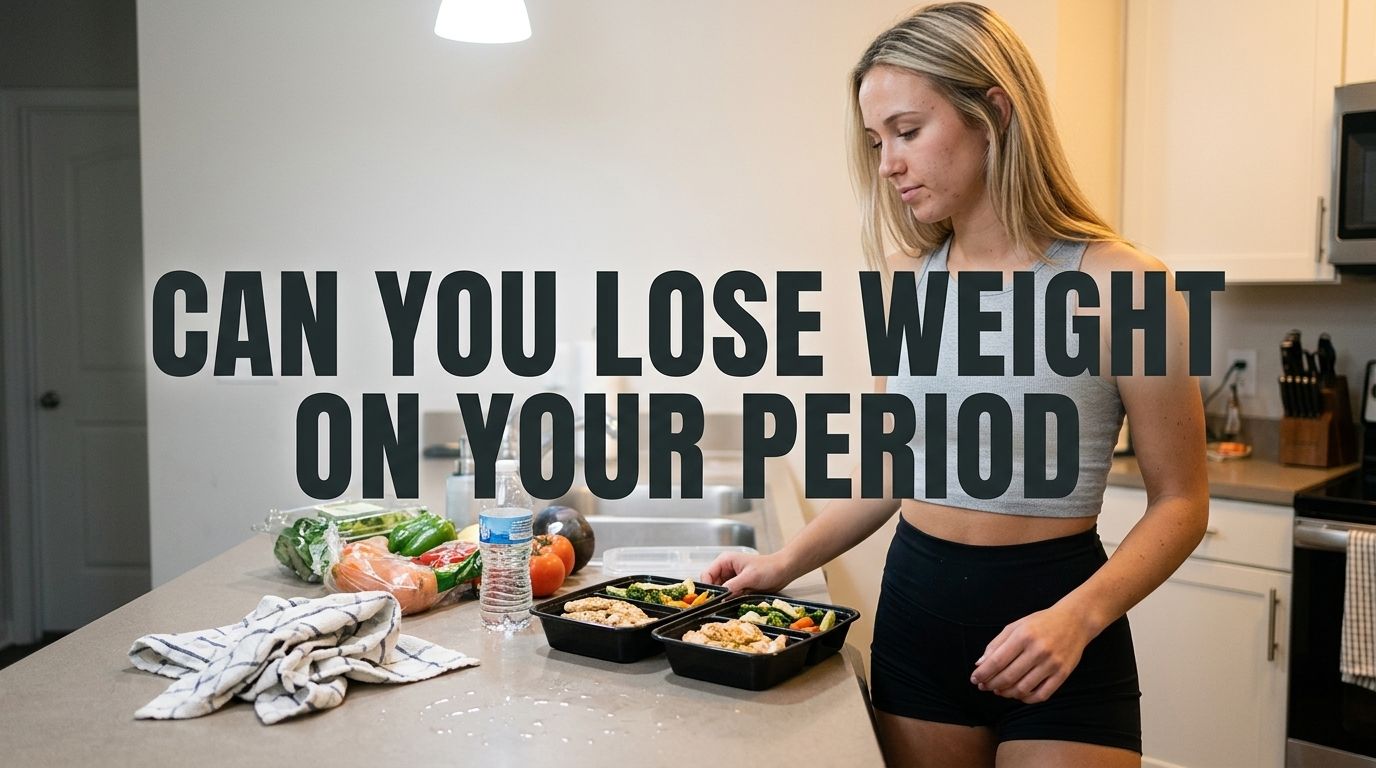
The menstrual cycle causes temporary weight fluctuations driven by hormonal changes, not fat gain or loss. Most women see the scale rise before and at the start of their period, then drop as hormones settle. Understanding what is actually happening makes these shifts far less alarming.
Research shows weight changes across the cycle are almost entirely water retention, not changes in body composition. Estrogen and progesterone shifts cause the body to hold extracellular fluid. The scale reflects that fluid, not fat. Resting metabolic rate rises slightly in the luteal phase, but increased cravings often offset any extra calorie burn. Tracking weight daily during the cycle misleads more than it informs.
This guide covers why the scale moves during your period, when water retention peaks, how to reduce bloating, which foods help, and how to stop the cycle from derailing your long-term progress. The Eat Proteins team built this around what the science actually shows — not what the scale says on day one of bleeding.
Can You Lose Weight on Your Period?
The scale typically does not reflect fat loss during menstruation itself, but many women notice a weight drop of 1-3 pounds (0.5-1.4 kg) within a few days of bleeding starting as water retention clears. This drop is water leaving the body as estrogen and progesterone levels fall, not a change in body composition.
Actual fat loss is a slow process that occurs over weeks. A single period does not accelerate or block fat metabolism in a meaningful way. The cycle affects the scale through fluid, not fat tissue.
In plain English: the number you see during your period is not a reliable indicator of your real weight or your progress. The most useful approach is to weigh yourself at the same time each day and average results across a full cycle.
Why Does Your Weight Change During Your Period?
Hormonal fluctuations cause the body to retain and then release extracellular water at predictable points across the menstrual cycle, creating weight swings of 1-5 pounds (0.5-2.3 kg) that have nothing to do with fat. Estrogen rises in the follicular phase, progesterone peaks in the luteal phase, and both influence fluid retention.
When progesterone drops sharply before menstruation begins, aldosterone, a hormone that regulates sodium and water balance, spikes temporarily. The kidneys retain more sodium. Sodium pulls water into tissues. The result is the bloated, heavier feeling most women recognize in the days before their period.
What Does the Science Say About Weight Loss and Menstruation?
Research confirms that weight fluctuations tied to the menstrual cycle average around 0.45 kg (1 pound), though some women retain up to 5 pounds (2.3 kg) of water in the luteal and early menstrual phases. These are temporary fluid shifts, not fat accumulation.
Studies also show GI symptoms affect up to 73% of people with menstrual cycles in the days before their period. Constipation, gas, and slower gut motility contribute additional bloating that shows up on the scale but disappears within days. None of these changes reflect changes in body fat.
What period weight gain actually consists of:
- Water retained due to estrogen and progesterone fluctuations
- Sodium-driven fluid retention from aldosterone spikes
- GI bloating from constipation and slower motility
- Increased food intake from luteal phase cravings
How Does Your Menstrual Cycle Affect Weight?
The menstrual cycle moves through four distinct hormonal phases, each creating different conditions for appetite, fluid retention, energy levels, and how the scale reads on any given day. Treating every day of the month as identical ignores these biological realities.
The follicular phase (days 1-14, starting with bleeding) tends to produce the lightest weight readings as estrogen rises and progesterone stays low. The luteal phase (days 15-28) is when most women experience water retention, increased appetite, and the heaviest scale readings.
Do You Burn More Calories on Your Period?
Resting metabolic rate increases modestly during the luteal phase, with some research showing a rise of 100-300 calories per day in the week before menstruation. This extra burn happens before the period starts, not during it.
The problem? Progesterone also drives appetite up during this same window. Increased hunger and cravings for calorie-dense foods often outpace the metabolic boost. The net effect on calorie balance is frequently neutral or slightly negative for fat loss.
When Does Period Water Retention Peak?
Water retention peaks in the late luteal phase, typically in the 3-5 days immediately before menstruation begins, when progesterone and estrogen both drop rapidly and aldosterone rises. This is when the scale hits its highest point in the cycle.
Retention begins clearing once bleeding starts. Estrogen and progesterone fall. Aldosterone follows. The kidneys flush the retained sodium and water over 2-4 days. By days 3-5 of bleeding most women return to their baseline weight or below it.
Weight across the menstrual cycle:
| Phase | Days (approx.) | Scale Trend |
|---|---|---|
| Menstruation | 1-5 | Drops as water releases |
| Follicular | 6-13 | Lowest, most stable |
| Ovulation | 14 | May rise slightly (1 lb) |
| Luteal | 15-28 | Rises, peaks day 25-28 |
Why Does the Scale Go Up Before Your Period?
Pre-period weight gain is driven by the sharp drop in estrogen and progesterone that triggers aldosterone release, causing the kidneys to retain sodium and pull water into surrounding tissues. This is a normal, predictable hormonal response rather than a sign of fat gain.
Constipation also contributes. Progesterone slows gut motility in the luteal phase. Stool builds up. The GI tract adds physical weight and volume that registers on the scale. Combined with fluid retention, pre-period scale readings can be 2-5 pounds (0.9-2.3 kg) above true baseline.
What Causes Period Bloating?
Period bloating results from a combination of hormonal fluid retention in tissues, gas from slower digestive transit, and the inflammatory prostaglandins released during menstruation that affect gut function. These are three distinct mechanisms acting together.
Prostaglandins, the compounds that cause uterine cramps, also act on the intestinal wall. They trigger contractions that can shift GI contents irregularly, causing both cramping and gas. Higher prostaglandin levels correlate with worse bloating and more pronounced GI symptoms.
How Much Weight Can You Gain on Your Period?
Research shows the average period-related weight gain is approximately 0.45 kg (1 pound), though individual variation is wide and some women retain up to 5 pounds (2.3 kg) during peak fluid retention. The amount depends on hormone levels, salt intake, and individual kidney sensitivity.
Higher sodium intake in the days before the period amplifies retention. Women who eat more processed food in the premenstrual window tend to retain more fluid than those who maintain a low-sodium diet. The relationship is direct and reversible.
What Are the Benefits of Tracking Your Cycle for Weight Loss?
Cycle tracking removes the confusion that daily scale readings create by giving context to weight fluctuations, allowing a woman to distinguish water retention from real fat loss trends across the month. Without tracking, the pre-period scale spike looks like failure when it is physiology.
Our coaches at Eat Proteins consistently find that women who understand their cycle patterns stay more consistent with their diet and exercise habits. Knowing that the scale will spike before a period and drop after it removes the panic response that often leads to abandoning a plan.
When Is the Best Time in Your Cycle to Lose Weight?
The follicular phase is the hormonal window most favorable for fat loss, as estrogen is rising, progesterone is low, insulin sensitivity is higher, and appetite tends to be more controlled than in the luteal phase. Days 6-13 are when most women find calorie restriction and exercise feel easiest.
This is not to say fat loss stops in the luteal phase. Consistent calorie deficit over the full cycle drives results. But understanding the follicular phase as a high-performance window helps with planning higher-intensity workouts and stricter eating windows at the right time.
How Long Does Period Bloating Last?
Period bloating typically begins 3-5 days before menstruation, peaks in the first 1-2 days of bleeding, and resolves within 3-5 days of the period starting as hormones normalize and the kidneys flush retained fluid. Total duration is usually 5-10 days.
Women with higher prostaglandin levels or those who are more sensitive to hormonal shifts may experience longer or more intense bloating. Dietary factors such as high sodium, alcohol, and refined carbohydrate intake extend the duration of retention.
How Do You Reduce Bloating and Water Retention During Your Period?
The most effective strategies for reducing period bloating are increasing water intake, limiting sodium and processed foods, maintaining regular exercise, and prioritizing magnesium and potassium-rich foods that counterbalance fluid retention. These address the underlying hormonal mechanism rather than just masking symptoms.
Hydration is counterintuitive but critical. Drinking more water signals the kidneys to release retained sodium. Dehydration triggers the body to hold onto more fluid as a protective response, worsening bloating.
Ready to get a proven weight loss plan built around your cycle? Our nutritionists at Eat Proteins designed a protocol that works with your hormones, not against them.
What Foods Help With Period Bloating?
Magnesium-rich foods reduce period bloating by supporting muscle relaxation in the uterus and gut, lowering prostaglandin activity, and helping the kidneys excrete excess sodium and water. Dark leafy greens, pumpkin seeds, and dark chocolate are high-magnesium options.
Potassium counteracts sodium directly. Bananas, avocado, sweet potato, and spinach are potassium-dense foods that help restore electrolyte balance and reduce fluid retention. Fermented foods such as yogurt and kefir support gut motility, reducing the constipation that contributes to bloating.
Best foods to reduce period bloating:
- Spinach, kale, and dark leafy greens (magnesium)
- Avocado, banana, sweet potato (potassium)
- Pumpkin seeds and almonds (magnesium + healthy fat)
- Greek yogurt and kefir (gut motility support)
- Ginger tea (anti-inflammatory, reduces GI cramping)
Should You Exercise on Your Period?
Yes. Exercise reduces prostaglandin activity, lowers perceived cramp intensity, and releases endorphins that counteract the mood and energy dips common in the early days of menstruation. Gentle to moderate movement is beneficial even on heavy-flow days.
The type of exercise matters less than consistency. Walking, yoga, swimming, and light resistance training all deliver the anti-inflammatory and mood-stabilizing benefits during menstruation. Intense high-impact exercise may be harder on days one and two due to lower iron levels from blood loss, but it is not harmful.
What Common Mistakes Slow Weight Loss During Your Cycle?
The most damaging mistake for weight loss during the menstrual cycle is using daily scale readings in the luteal or early menstrual phase as the primary measure of progress, which leads to discouragement and dietary abandonment based on water weight rather than fat. This single habit derails more long-term efforts than any other cycle-related factor.
The second most common error is overeating in response to premenstrual cravings without accounting for those calories later. Cravings for carbohydrates and fat increase in the luteal phase due to serotonin fluctuations. Acting on every craving without adjustment can add 200-500 extra calories per day across a full week.
Do Period Cravings Cause Real Weight Gain?
Period cravings can cause genuine fat gain if calorie intake consistently exceeds expenditure during the luteal phase, but the cravings themselves are driven by serotonin depletion rather than actual calorie need. The body requests carbohydrates to boost serotonin synthesis.
The kicker: most women do not need extra calories during the luteal phase despite the metabolic rate increase. The extra burn is modest. Structured, protein-rich meals reduce the intensity of cravings by stabilizing blood sugar and extending satiety. This is where the right eating strategy makes the difference.
Common cycle-related weight loss mistakes:
- Weighing daily in the luteal phase and panicking at the number
- Responding to every premenstrual craving without calorie awareness
- Skipping workouts during the period entirely
- Eating high-sodium processed foods that amplify water retention
- Abandoning the diet plan based on period-week scale readings
Is the Scale Reliable During Your Period?
No. The scale during menstruation reflects water retention, GI contents, and hormonal fluid shifts rather than changes in body fat, making it an unreliable indicator of weight loss progress for 5-10 days each cycle. Daily readings during this window mislead more than they inform.
The most accurate method for tracking body composition across the cycle is to weigh at the same time every morning and calculate a weekly average. Comparing cycle-day equivalents month over month (for example, day seven of one cycle to day seven of the next) gives the clearest picture of real progress.
Want Your Free Cycle-Synced Weight Loss Plan From Eat Proteins?
You now know what the scale is actually telling you during your period — and it is not what most people think. The real work is building a nutrition and habit plan that accounts for your cycle rather than fighting it every month. Our nutritionists at Eat Proteins built a free cycle-synced protocol for exactly this.
You get a phase-by-phase food and habit guide, protein targets that adjust for where you are in your cycle, and a simple framework that turns period week from a setback into a recovery window. No complicated tracking. No restriction that ignores your biology. Just the structure that works with how your body actually functions.