
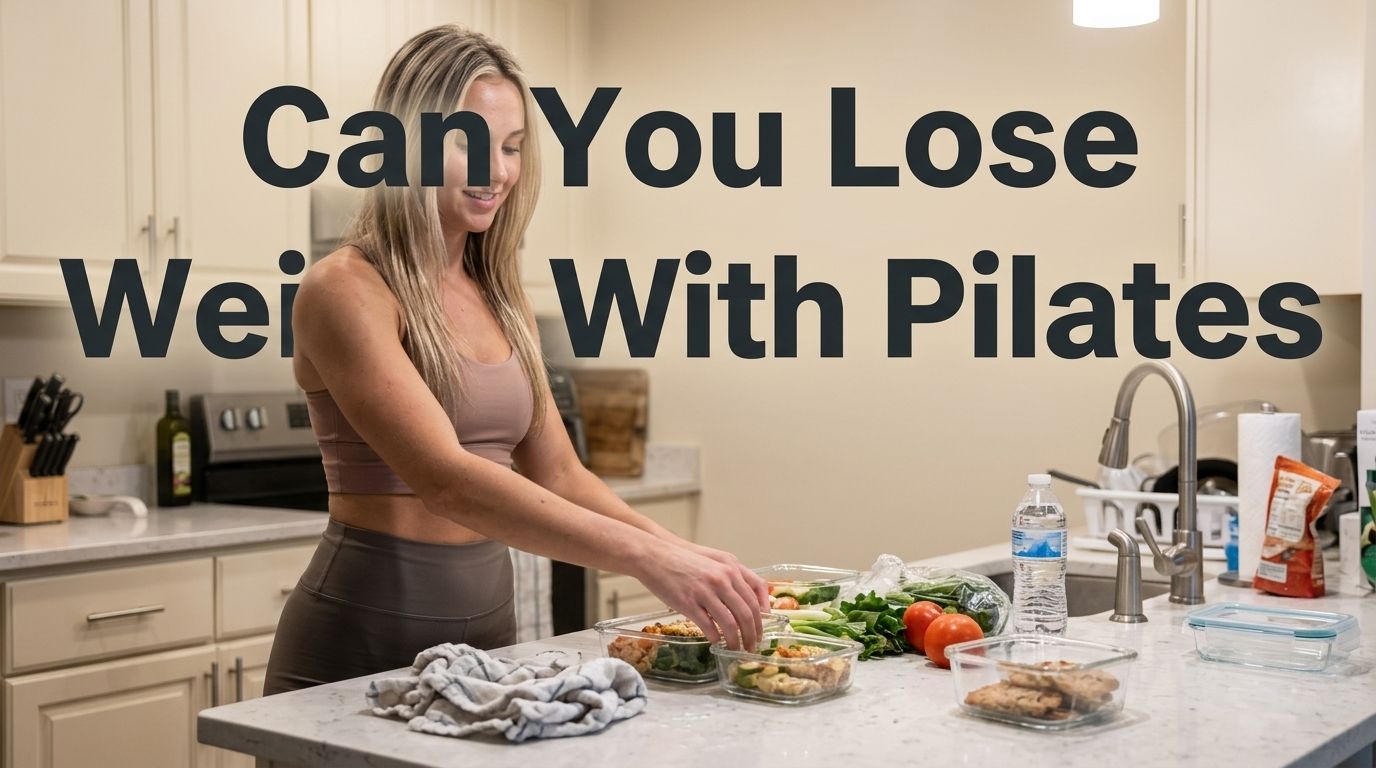
Pilates is a low-impact, full-body workout system built around controlled resistance, core engagement, and mindful movement. It builds lean muscle, raises metabolic rate, and improves body composition — making it a genuine weight loss tool when supported by the right nutrition strategy.
Pilates burns 175–600 calories per hour depending on class type and intensity. Lean muscle from consistent practice raises the body’s basal metabolic rate, meaning more calories burned at rest each day. A 2021 clinical study confirmed measurable weight loss over 12 weeks. The greatest results came in participants who combined pilates with a calorie-deficit diet.
This guide covers how pilates burns calories, which class type works best, how it compares to cardio, and how to combine it with nutrition for maximum fat loss. Whether you’re a complete beginner or returning to exercise, pilates offers a proven, joint-safe path to lasting results.
Can You Lose Weight with Pilates?
Pilates supports weight loss by building lean muscle, raising basal metabolic rate, and improving overall body composition. Here’s the honest answer: it works, but not in the way most people expect. Pair it with good nutrition, and the results become significantly more impressive.
A moderate pilates session burns around 175–250 calories per hour (700–1,000 kilojoules). High-intensity reformer sessions reach 400–600 calories per hour (1,680–2,520 kilojoules). The burn depends on class intensity, session length, and body weight.
How Does Pilates Burn Calories?
Pilates burns calories through full-body muscle engagement, resistance-based movement, and sustained controlled effort that raises heart rate without high-impact joint stress. Every movement recruits multiple muscle groups at once. That simultaneous recruitment is what drives energy demand up — and it’s why pilates feels harder than it looks from the outside.
Reformer pilates adds spring resistance to every movement. That resistance increases muscle activation compared to mat classes. Greater intensity means higher calorie expenditure per hour — simple as that.
Can Pilates Alone Drive Weight Loss?
Pilates alone burns fewer calories per session than high-intensity cardio, which limits fat loss when diet remains unchanged. Without a calorie deficit, the body holds onto fat regardless of how many pilates classes you attend. The exercise helps, but diet is still the lead variable here.
A 2021 study tracked two groups of women doing reformer pilates for 12 weeks. The group following a calorie-deficit diet lost 4 kg (8.8 lbs) on average. The group without dietary changes still lost weight — but significantly less. The data is clear: pilates amplifies a good diet. It doesn’t replace it.
Which Type of Pilates Is Best for Weight Loss?
Reformer pilates and high-intensity mat classes are most effective for weight loss because dynamic compound movements keep heart rate elevated throughout the session. Traditional slow-flow beginner classes build foundational strength, but they don’t sustain the calorie burn needed for meaningful fat loss. Here’s the thing: class structure matters more than equipment type.
Session intensity determines calorie burn more than whether you’re on a reformer or a mat. Faster-paced classes with minimal rest between exercises burn significantly more. Consistent higher-intensity sessions produce better outcomes over time.
Is Reformer Pilates Better Than Mat Pilates?
Reformer pilates burns 400–600 calories per hour (1,680–2,520 kilojoules) versus 170–250 calories per hour (710–1,050 kilojoules) for mat pilates, making it the higher-intensity option. The reformer’s spring resistance engages more muscles simultaneously and adds progressive overload that mat workouts can’t replicate. For weight loss, the reformer provides a measurable calorie advantage.
Mat pilates is still effective for core strengthening and muscle toning. When performed at high intensity with compound movements and minimal rest, it supports fat loss without requiring equipment. Both formats work — the reformer just works harder per hour.
Pilates Calorie Comparison:
| Pilates Type | Calories/Hour | Kilojoules/Hour |
|---|---|---|
| Reformer Pilates (High Intensity) | 400–600 | 1,680–2,520 |
| Mat Pilates (Standard) | 170–250 | 710–1,050 |
| Yoga | 150–250 | 630–1,050 |
| Walking (5.6 km/h / 3.5 mph) | 150–200 | 630–840 |
How Intense Does Your Pilates Class Need to Be?
Pilates classes must incorporate continuous compound movements that elevate and sustain heart rate to produce meaningful calorie burn for weight loss. Beginner classes with extended rest periods and isolated movements don’t maintain sufficient energy expenditure for fat loss. The heart rate must stay elevated consistently throughout — not just spike briefly and drop again.
Pilates routines that flow continuously between exercises targeting multiple muscle groups burn the most calories per session. Sequences combining core, glutes, and upper body without stopping simulate the metabolic demand of low-intensity cardio. That’s what makes pilates a genuine weight loss tool rather than a flexibility exercise.
How Does Pilates Build Lean Muscle?
Pilates builds lean muscle through slow, controlled resistance that targets stabilizing and deep postural muscles across the entire body. Bodyweight and reformer spring tension place muscles under sustained tension throughout each movement. The result is functional, elongated muscle mass — not bulk.
Lean muscle raises basal metabolic rate (BMR) — the number of calories the body burns at rest each day. The more lean muscle pilates develops, the more calories the body uses during sleep, desk work, and everyday activities. That’s the metabolic shift behind long-term pilates-driven weight loss.
Does Muscle Mass Help You Lose Weight Faster?
Muscle tissue burns more energy than fat tissue at rest, meaning greater lean muscle mass directly accelerates fat loss even between exercise sessions. Does that add up over time? Significantly. Building lean muscle through pilates raises daily calorie expenditure without adding more workout hours. The metabolic advantage compounds as muscle mass increases with consistent training.
Consistent pilates practice creates a physique that burns more calories passively. This passive burn forms the foundation for lasting weight management. Short-term diets and cardio programs that ignore muscle development don’t produce the same sustained metabolic result.
How Long Does It Take to Lose Weight from Pilates?
Pilates weight loss results emerge over 6–12 weeks of consistent practice, with the pace determined by class frequency, session intensity, and dietary choices. A 2021 reformer pilates study showed measurable weight loss and lean muscle gains across 12 weeks of regular practice. Combining pilates with a calorie-deficit diet accelerated outcomes significantly — that’s what the clinical data shows.
Improved muscle tone and energy levels typically appear within 2–3 weeks. Visible body composition changes take 6–8 weeks depending on session frequency and nutrition. And here’s the part most people miss: structural improvements in posture and core definition often arrive before the scale moves at all.
Many pilates practitioners see visual improvements in core definition before the scale shifts. Why does that happen? Early lean muscle gain can offset fat loss on the scale in the first weeks, masking progress that’s clearly visible in the mirror. Tracking measurements and energy levels alongside weight gives the full picture.
Pilates Progress Timeline:
| Timeframe | Expected Results |
|---|---|
| 2–3 weeks | Improved energy, early muscle tone changes |
| 4–6 weeks | Posture improvement, core definition begins |
| 6–8 weeks | Visible body composition changes |
| 10–12 weeks | Measurable weight loss, lean muscle increase |
How Often Should You Do Pilates to See Results?
Practicing pilates 3–5 times per week produces consistent strength, toning, and fat loss results when combined with appropriate nutrition. Daily pilates is achievable, but it requires varying session intensity to allow muscle recovery. Lower-intensity sessions on alternating days prevent overtraining while keeping the practice going.
Consistency is the most critical factor in pilates weight loss outcomes. Sporadic practice doesn’t sustain the metabolic and muscular adaptations required for fat loss. A reliable weekly schedule — even at moderate frequency — outperforms irregular high-frequency bursts every time.
How Does Pilates Compare to Cardio for Weight Loss?
High-intensity cardio burns more calories per session than traditional pilates, but pilates builds lean muscle that raises resting metabolic rate and produces sustained fat loss between sessions. Running and cycling create faster short-term calorie deficits. Pilates creates the metabolic conditions for long-term body recomposition. Both serve different but complementary roles.
Pilates improves oxygen efficiency, body alignment, and movement quality. These adaptations make other physical activities more effective and reduce the injury risk that frequently interrupts cardio-only programs. A body conditioned through pilates performs cardio better and recovers from it faster.
Is Pilates or Running Better for Losing Weight?
Running burns more calories per hour than pilates and provides direct cardiovascular conditioning that creates a rapid calorie deficit. For otherwise healthy individuals without joint limitations, running produces faster initial weight loss. The cardiovascular demands of sustained running elevate energy expenditure well beyond what a typical pilates session achieves.
But pilates is lower-impact and builds lean muscle that sustains resting calorie burn over time. For people with joint issues, beginners, or those returning from injury, pilates offers fat loss support without running’s injury risk. The best choice depends on individual fitness level and physical condition.
Should You Combine Pilates with Cardio?
Combining pilates with cardio creates a complementary training program that simultaneously builds lean muscle, improves movement quality, and maximizes total calorie expenditure. Pilates develops the core strength and alignment that makes cardio more efficient and safer. Cardio raises overall energy output beyond what pilates sessions alone achieve.
Pairing 3 pilates sessions with 2–3 cardio sessions per week balances toning, metabolic conditioning, and fat loss. Activities like brisk walking, cycling, or swimming complement pilates without excessive joint stress. This structure avoids overtraining while maintaining sufficient volume for consistent progress. Ready to speed things up? Get a proven weight loss plan built around these exact principles.
Sample Weekly Pilates + Cardio Schedule:
| Day | Activity |
|---|---|
| Monday | Pilates (45–60 min) |
| Tuesday | Cardio — brisk walk or cycling (30 min) |
| Wednesday | Pilates (45–60 min) |
| Thursday | Rest or light stretching |
| Friday | Pilates (45–60 min) |
| Saturday | Cardio — swimming or walk (30–45 min) |
| Sunday | Rest |
Does Pilates Help Reduce Belly Fat?
Pilates engages the transverse abdominis — the deepest abdominal muscle layer — which improves core tone, reduces bloating, and creates a more defined waistline over consistent practice. Strengthening this deep core muscle builds structural support for a flatter abdominal appearance. Combined with a calorie deficit, pilates accelerates visible core definition as overall body fat decreases.
Here’s what pilates can’t do: spot-reduce belly fat in isolation. Fat loss is systemic — the body reduces fat stores from across the body in response to a calorie deficit. Pilates accelerates the visual result at the core, but that result requires overall fat reduction through diet and exercise volume.
Is Pilates Better for Weight Loss or Toning?
Pilates is primarily a body conditioning and toning method that builds lean, elongated muscle definition without bulk, and supports weight loss most effectively when paired with cardio and nutrition. The method creates muscle definition, posture improvement, and core strength that produce a leaner appearance. Weight loss is a secondary outcome that accelerates when pilates is part of a broader program.
Many pilates practitioners report a leaner, more defined appearance without significant scale changes in the early weeks. This reflects improved muscle tone and posture — not large-scale fat loss yet. Over time, with consistent practice and dietary support, the scale catches up to the visual changes already underway.
What Are the Weight Loss Benefits of Pilates Beyond the Scale?
Pilates improves flexibility, posture, stability, endurance, and mind-body awareness — gains that enhance overall fitness quality and support the sustainable active lifestyle habits that drive long-term weight management. These structural improvements make daily movement more efficient and comfortable. Active, comfortable bodies move more throughout the day, increasing total daily calorie expenditure beyond formal workouts.
Pilates also reduces cortisol levels through controlled breathing and mindful movement. Lower cortisol reduces stress-driven fat storage, particularly in the abdominal region. The mental health benefits create a positive feedback loop that supports consistent healthy behavior over the long term.
Key Pilates Benefits Beyond Weight Loss:
- Improved core strength and spinal stability
- Increased flexibility through active lengthening
- Better posture and body alignment
- Reduced joint stress and injury risk
- Lower cortisol and reduced stress response
- Enhanced mind-body awareness and movement quality
Does Pilates Reduce Stress That Causes Weight Gain?
Pilates activates the parasympathetic nervous system through controlled breathing and focused movement, directly reducing cortisol output and chronic stress response. The mind-body focus shifts the nervous system out of fight-or-flight mode during and after sessions. This physiological shift produces measurable stress hormone reduction. Is that meaningful for weight loss? Our nutritionists at Eat Proteins say yes — and the research backs it up.
Chronic cortisol elevation promotes visceral fat accumulation around the abdomen. Regular pilates practice that reduces cortisol indirectly supports belly fat reduction alongside its direct core-strengthening effects. Stress management is an often-overlooked but evidence-supported component of sustainable weight management.
Will Pilates Make You Too Muscular?
Pilates builds lean, elongated muscle using bodyweight and light spring resistance — a stimulus that creates definition and tone without the hypertrophic bulk produced by heavy resistance training. The controlled, low-load nature of pilates movements doesn’t trigger the hormonal and mechanical signals required for significant muscle mass gain. Bulk simply isn’t a physiological outcome of consistent pilates practice.
Pilates practitioners develop a toned, functional physique with improved posture and core definition. The visible outcome is a leaner, longer appearance — not larger muscles. Athletes who add pilates to their training report improved movement quality and injury resilience, not unwanted size increases.
Who Can Do Pilates for Weight Loss?
Pilates suits all fitness levels from complete beginners to elite athletes, with a graded exercise system that progresses from very easy foundational movements to highly challenging advanced sequences. The low-impact, joint-friendly nature makes it accessible to individuals who can’t tolerate high-impact exercise. Sedentary individuals and those returning to exercise after a long break benefit particularly from pilates as an entry point.
Some groups should consult a doctor before starting: pregnant individuals, men over 45, women over 55, and those managing heart disease, recovering from surgery, or significantly overweight. Most can practice safely with medical clearance and appropriate class modifications. A qualified instructor provides the adaptations needed.
Who Should Get Medical Clearance Before Pilates:
- Pregnant individuals
- Men over 45 or women over 55
- People managing heart disease
- Those recovering from surgery or injury
- Individuals who are significantly overweight or have been sedentary long-term
Is Pilates Safe for Beginners Trying to Lose Weight?
Beginner pilates is among the safest forms of exercise available, placing minimal stress on the knees, hips, and spine compared to running, HIIT, or heavy weightlifting. The low-impact design lets beginners build movement competency without the injury risk of higher-intensity training. That joint safety is what makes pilates a sustainable long-term practice rather than a short-lived program.
Think of it this way: pilates acts as a bridge between gentle movement and challenging strength training. The foundational strength, body awareness, and flexibility developed in beginner classes make harder exercise progressions safer and more effective over time. Starting with pilates builds the physical foundation that supports all future fitness development.
Want Your Free Pilates Weight Loss Plan from Eat Proteins?
You’ve got the science. Now you need the plan. Our coaches at Eat Proteins built a free, nutritionist-designed pilates and protein nutrition protocol that takes the guesswork out of weight loss. It combines a structured weekly workout schedule with protein-optimized meal guidance — two things most people try to figure out separately, without success.
Pilates and protein nutrition together accelerate body recomposition beyond what either approach delivers alone. Muscle needs fuel. Fat needs a deficit. The Eat Proteins plan delivers both in a format that fits into a real life with a real schedule. Don’t leave results on the table.
What Does the Eat Proteins Free Plan Include?
The Eat Proteins free plan includes a weekly pilates session schedule, protein-optimized meal guidelines, and progress tracking principles built by the Eat Proteins nutrition and coaching team. Every component is designed to work together — pilates builds muscle, protein nutrition fuels recovery and reduces hunger, and tracking reveals what works for your body specifically. Structure without rigidity.
High-protein nutrition supports pilates muscle recovery, reduces hunger hormones like ghrelin, and accelerates body recomposition when paired with consistent practice. Lean meats, eggs, Greek yogurt, tofu, and legumes supply the amino acids that rebuild muscle after every session. Matching protein intake to training volume is the nutritional complement pilates needs to deliver maximum results.
Best Protein Foods to Pair with Pilates:
- Lean meats (chicken, turkey, lean beef)
- Eggs and egg whites
- Greek yogurt
- Tofu and tempeh
- Legumes (lentils, chickpeas, black beans)