
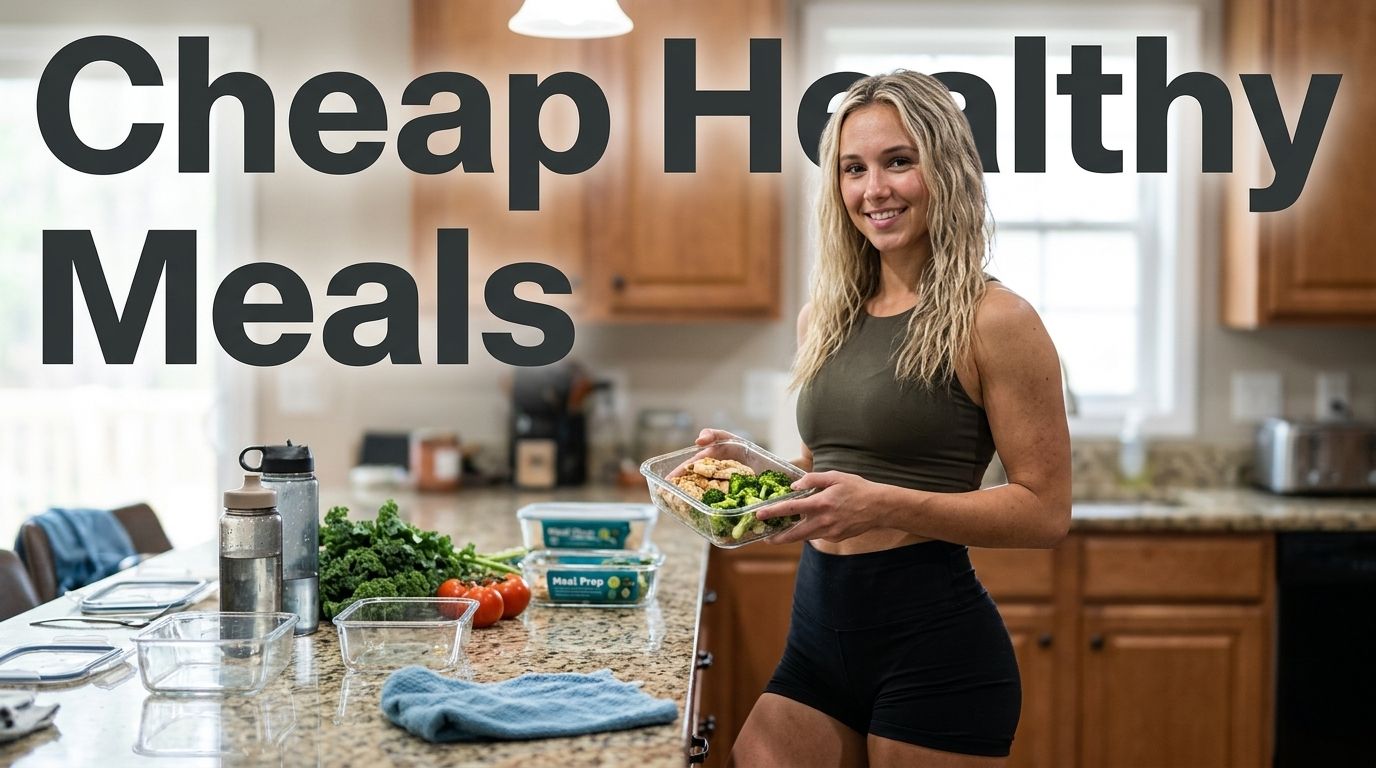
Eating healthy on a budget means choosing whole foods over cheap processed alternatives. Beans, eggs, oats, and frozen vegetables deliver complete nutrition for under $2 per serving. These affordable staples form the backbone of a diet that costs less than most people expect while covering all major nutrient needs.
Cheap healthy meals span four main categories: legume-based dishes, egg-based meals, grain-forward recipes, and vegetable-centered bowls. Red lentil soup costs $0.60 per serving and delivers 18g of protein. Egg fried rice runs under $1 per plate. A family of four covers a full week of diverse, nutritious meals for around $100 with structured meal planning.
This guide covers the best cheap healthy meal ingredients, budget dinner ideas ready in under 30 minutes, weekly meal planning strategies, and the most common mistakes that cause budget eating to fail nutritionally. The right approach costs less and delivers more nutrition than most expensive convenience diets.
What Are Cheap Healthy Meals?
Cheap healthy meals are simple, whole-food dishes built around affordable staples like beans, rice, eggs, and frozen vegetables that deliver complete nutrition for under $2 per serving. And here is the part most people miss: whole foods cost less per nutrient than processed alternatives. The key is choosing ingredients over packaging.
Take a can of chickpeas at $0.90. It feeds two people and delivers more fiber and protein than a $3 protein bar. Budget-friendly nutrition is not about sacrifice. It is about knowing which foods do the most work per dollar.
What Makes a Meal Both Cheap and Nutritious?
A meal qualifies as both cheap and nutritious when it costs under $2 per serving, contains at least 15g of protein, and includes one or more fiber-rich vegetables or legumes. These three criteria separate genuinely healthy budget food from cheap junk.
Here is a real example. Dried lentils cost around $0.10 per serving and deliver 18g of protein and 15g of fiber. Is that impressive? For a food that costs less than a candy bar per serving, yes — it is one of the highest nutrient-to-dollar ratios of any food in a standard grocery store.
How Much Should You Spend on Healthy Meals Per Day?
A single adult can eat nutritionally complete meals for $5 to $10 per day by centering meals on legumes, eggs, oats, and seasonal produce. That spending range covers three full meals with sufficient protein, fiber, and micronutrients. No supplements required.
But here is the thing: a family of four can cover a full week of diverse, healthy meals for around $100 — approximately $3.57 per person per day — with structured meal planning. That figure is achievable without sacrificing nutritional quality or variety. Our nutritionists at Eat Proteins have built meal plans at exactly this budget.
What Are the Best Cheap Healthy Meal Ingredients?
The most cost-effective healthy pantry is built on four pillars: legumes (beans, lentils, chickpeas), whole grains (rice, oats, pasta), eggs, and frozen or canned vegetables. Together, these four categories cover protein, carbohydrates, fiber, and most essential micronutrients — at prices that make sense.
Think of it this way: a single bag of dried chickpeas at $1.50 makes hummus, curries, soups, and roasted snacks. Versatility is the key multiplier of a budget ingredient. The fewer single-use items in a pantry, the lower the weekly spend. Simple rule, big impact.
What Proteins Are Cheapest and Most Nutritious?
The top affordable protein choices are eggs ($0.15 to $0.40 each, 6g protein), canned tuna ($0.60 to $1 per can, 25g protein), dried lentils ($0.10 per serving, 18g protein), and canned chickpeas ($0.30 per serving, 7g protein). These four cover most protein needs at minimal cost.
A dozen eggs costs around $2 to $4 and provides 12 servings of complete protein containing all essential amino acids. Does that make eggs the best budget protein? For most households, yes. They are one of the cheapest complete protein sources available anywhere.
And it gets better: canned tuna and sardines deliver 20 to 25g of protein per can for under $1.50. These fish also provide omega-3 fatty acids. That makes them a nutritionally superior budget option compared to most cheap carbohydrate-heavy alternatives.
Cheap High-Protein Foods by Cost:
| Food | Cost per serving | Protein per serving |
| Dried lentils | $0.10 | 18g |
| Eggs (2 eggs) | $0.30–$0.80 | 12g |
| Canned chickpeas | $0.30 | 7g |
| Canned tuna | $0.60–$1.00 | 25g |
| Dried black beans | $0.25 | 7g |
What Grains and Legumes Stretch a Grocery Budget?
One pound (450g) of dried black beans costs about $1.50 and yields 6 cups of cooked beans — enough for 6 to 8 meal servings at under $0.25 per serving. Dried legumes consistently outperform canned versions in both cost and yield. This is where the real savings live.
Brown rice, oats, and whole wheat pasta cost $0.10 to $0.30 per serving and provide complex carbohydrates and B vitamins. These grains sustain energy levels for hours. They form the caloric backbone of every effective budget eating plan.
And oats deserve special mention. A 42oz (1.2kg) container costs about $4 and provides 30 servings at $0.13 per serving. Use them for breakfast porridge, energy bars, or savory grain bowls. Maximum versatility. Minimum cost.
What Are Easy Cheap Healthy Dinners You Can Make Tonight?
Bean-based curries, egg shakshuka, lentil soups, and vegetable stir-fries all cost under $1.50 per serving and take 20 to 30 minutes to prepare. These four categories cover most global flavor profiles and require no special equipment — just a pan and a pot.
Here is the kicker: one-pot meals reduce cleanup time and concentrate flavors without extra ingredients. Chili, stews, and pasta dishes are the most cost-efficient single-pan dinners. One pot, one wash, multiple servings from a single cook session.
What Bean and Lentil Dinners Cost Under $2 Per Serving?
Red lentil soup costs approximately $0.60 per serving and delivers 18g of protein, 15g of fiber, and substantial iron — a nutritionally complete meal at minimal cost. A single pot yields 6 to 8 servings from one 60-minute cook session. Freeze the rest.
Three-bean chili, kidney bean curry, and white bean shakshuka are high-satiety dinners that each cost $0.80 to $1.20 per serving. All three freeze well and reheat without quality loss. Cook once, eat four times.
Chana masala, chickpea and coriander burgers, and roasted chickpea bowls offer global flavor variety for $0.90 to $1.30 per serving. One bag of dried chickpeas supports all three dishes — that is maximum variety from a single $1.50 purchase.
Budget Bean and Lentil Dinners:
- Red lentil soup — $0.60 per serving, 18g protein
- Three-bean chili — $0.90 per serving, high fiber
- Kidney bean curry — $1.00 per serving
- Chana masala — $0.95 per serving
- White bean shakshuka — $1.20 per serving
What Cheap Egg-Based Meals Are High in Protein?
Two eggs provide 12g of complete protein for $0.30 to $0.80 depending on region — egg shakshuka, fried rice, and frittatas are full dinners for under $1.50 per serving. Eggs are the fastest high-protein budget dinner available in any kitchen.
Egg fried rice is the standout example. It combines leftover rice, 2 eggs, and frozen vegetables for a complete dinner costing under $1 per serving with 15 to 20g of protein. Leftover rice from a batch-cooked pot drops the per-serving cost below $0.70. That is a legitimate meal for less than a cup of coffee.
What Vegetable-Forward Meals Keep Costs Low?
Cabbage, sweet potatoes, cauliflower, and frozen spinach are the cheapest vegetables per serving — meals centered on these cost $0.50 to $1 per serving and deliver vitamins A, C, and K. These four vegetables cover most micronutrient needs at the lowest price point in any produce section.
Now, watch this: frozen vegetables are harvested and frozen at peak ripeness, preserving up to 90% of their nutrients. A 1kg (2.2lb) bag of frozen spinach costs about $2 and provides 10 or more meal portions. Fresh spinach at the same weight costs $4 to $6 and wilts within days.
Buying vegetables in season reduces costs by 20 to 50%. Butternut squash in autumn and courgette in summer cost $0.30 to $0.60 per serving versus $1 or more out of season. Season-shopping is one of the highest-leverage budget tactics with zero downside.
How Do You Plan a Week of Cheap Healthy Meals?
Effective budget meal planning starts with choosing 4 to 5 base ingredients, building 7 dinners and 5 lunches around them, then writing a targeted grocery list before shopping. The list eliminates impulse purchases that inflate weekly spend by 15 to 30%.
Here is what the research shows: households without a meal plan waste an average of 25% of purchased food. Planning meals before shopping eliminates impulse buys and reduces weekly food costs by $30 to $50 for a family. The plan pays for itself in saved waste alone.
What Does a $100-a-Week Healthy Meal Plan Look Like?
A $100 weekly grocery shop for 4 people covers oats and eggs for breakfasts, bean or lentil soups for lunches, and lean protein with vegetable sides for dinners across all 7 days. The key is selecting overlapping ingredients that serve multiple meals.
To be clear: a balanced budget divides spending as follows: proteins at 30% (~$30), grains and pantry at 25% (~$25), produce at 30% (~$30), and dairy or other at 15% (~$15). This allocation covers all macronutrients and leaves room for variety across the week. Ready to get a proven budget meal plan that maps this out day by day? Our coaches at Eat Proteins built one that fits exactly these numbers.
What Meal Prep Strategies Cut Costs and Save Time?
Cooking large batches of grains and legumes on Sunday reduces weeknight cooking time to 10 to 15 minutes per meal and prevents costly last-minute takeout purchases. Batch cooking is the single most effective budget eating strategy — bar none.
Here is what a basic Sunday prep looks like: cook a large pot of rice ($0.50), roast a sheet pan of vegetables ($1.50), and boil a dozen eggs ($1.50 to $4). That creates building blocks for 15 or more meals across the week at a total prep cost under $6.
And the freezer multiplies everything. Doubling recipes and freezing half cuts active cooking days in half. A batch of lentil soup — 8 servings at $0.60 each — frozen in individual portions provides 4 future lunches at zero additional cost or labor.
How Do You Shop Smart for Budget-Friendly Healthy Food?
Shopping with a written list, choosing store brands over name brands, and shopping the perimeter of the store first are the three most effective tactics for reducing a weekly grocery bill by 20 to 35%. These three habits require no coupons, no apps, and no special knowledge.
In plain English: compare unit prices — price per 100g (3.5oz) or 100ml — not package prices. The largest pack often offers 20 to 40% savings per serving compared to the medium-sized version of the same product. Most shoppers never check this number.
What Supermarket Hacks Stretch Your Food Budget?
Buying reduced-price items near their use-by date, using loyalty cards, and buying frozen over fresh for most vegetables and fruits cuts grocery bills by 15 to 30% without reducing nutritional quality. These habits compound across a full shopping year into hundreds of dollars in savings.
Store-brand staples — oats, rice, canned beans, frozen vegetables — are typically 20 to 40% cheaper than name brands. Are they lower quality? Research consistently shows they are often produced in the same facilities. The label difference adds cost. It does not add nutrition.
When Is Buying in Bulk Actually Worth It?
Buying in bulk saves money only for non-perishable shelf-stable items — dried beans, oats, rice, pasta, and canned goods — where spoilage risk is zero. Bulk buying fresh produce increases food waste and negates the per-unit savings entirely.
Only bulk-buy what gets used within its shelf life. A 5kg (11lb) bag of rice at $4.50 saves money if the household eats rice weekly. A 5kg bag of specialty flour does not if it sits unused for months. The savings must be real savings, not theoretical ones.
What Are the Health Benefits of Budget-Friendly Eating?
Diets built on legumes, whole grains, and vegetables are associated with lower rates of cardiovascular disease, type 2 diabetes, and obesity compared to processed-food-heavy diets. Budget-friendly eating and health-optimized eating are the same thing — when done correctly.
And here is what that means in practice: beans, lentils, and whole grains provide 10 to 20g of dietary fiber per serving. Adequate fiber intake — 25g daily for women, 38g for men (0.9oz and 1.3oz respectively) — reduces colon cancer risk by up to 20% according to clinical research.
Can Cheap Meals Still Deliver Full Nutritional Value?
Yes. Research published in PLOS Medicine found that the most nutritionally complete diets are not the most expensive — legume and vegetable-based diets score highest on diet quality indexes at the lowest cost. Expensive food does not equal nutritious food.
Think of it this way: eggs provide B12, iron, and complete protein. Lentils provide folate, iron, and zinc. Sweet potatoes provide vitamin A and potassium. Together, these three staples cover approximately 90% of daily micronutrient requirements for under $1 per person per day.
What Are Common Mistakes When Eating Healthy on a Budget?
The four most common budget eating mistakes are relying on cheap processed food, skipping meal planning, buying single-use specialty ingredients, and not using the freezer effectively. Each error adds hidden costs that cancel out the savings from buying cheap ingredients in the first place.
Here is the reality: instant noodles and frozen pizza cost $0.50 to $1 per serving but provide minimal fiber, vitamins, or protein. The nutritional deficit requires more frequent eating. More frequent eating increases total daily cost beyond that of a properly constructed bean and vegetable meal.
Common Budget Eating Mistakes:
- Relying on cheap processed food with low nutritional value
- Shopping without a weekly meal plan or grocery list
- Buying specialty ingredients used in only one recipe
- Not using the freezer to preserve batch-cooked meals
- Ignoring unit pricing when comparing product sizes
Why Do Budget Meals Fail Nutritionally?
Budget meals fail nutritionally when protein is absent, vegetables are replaced by starches, and meals rely on refined carbohydrates that spike blood sugar and increase hunger within 2 hours. The fix is not spending more. It is restructuring the plate.
Skipping protein increases hunger frequency and reduces muscle preservation. Adding one egg ($0.15 to $0.40) or one cup of cooked lentils ($0.10) to any starch-heavy meal solves the protein gap. That is a nutritional upgrade for under $0.40 per plate.
Want Your Free Cheap Healthy Meal Plan from Eat Proteins?
You have the science. Now you need the plan. The free Eat Proteins meal plan gives a 7-day budget meal schedule with exact grocery lists, prep instructions, and nutritional breakdowns — all under $100 per week for a family of four.
Readers who follow a structured meal plan eat 30% healthier and spend 25% less on food weekly. The plan does the planning so the savings happen automatically. Get it below — it takes 30 seconds to sign up.