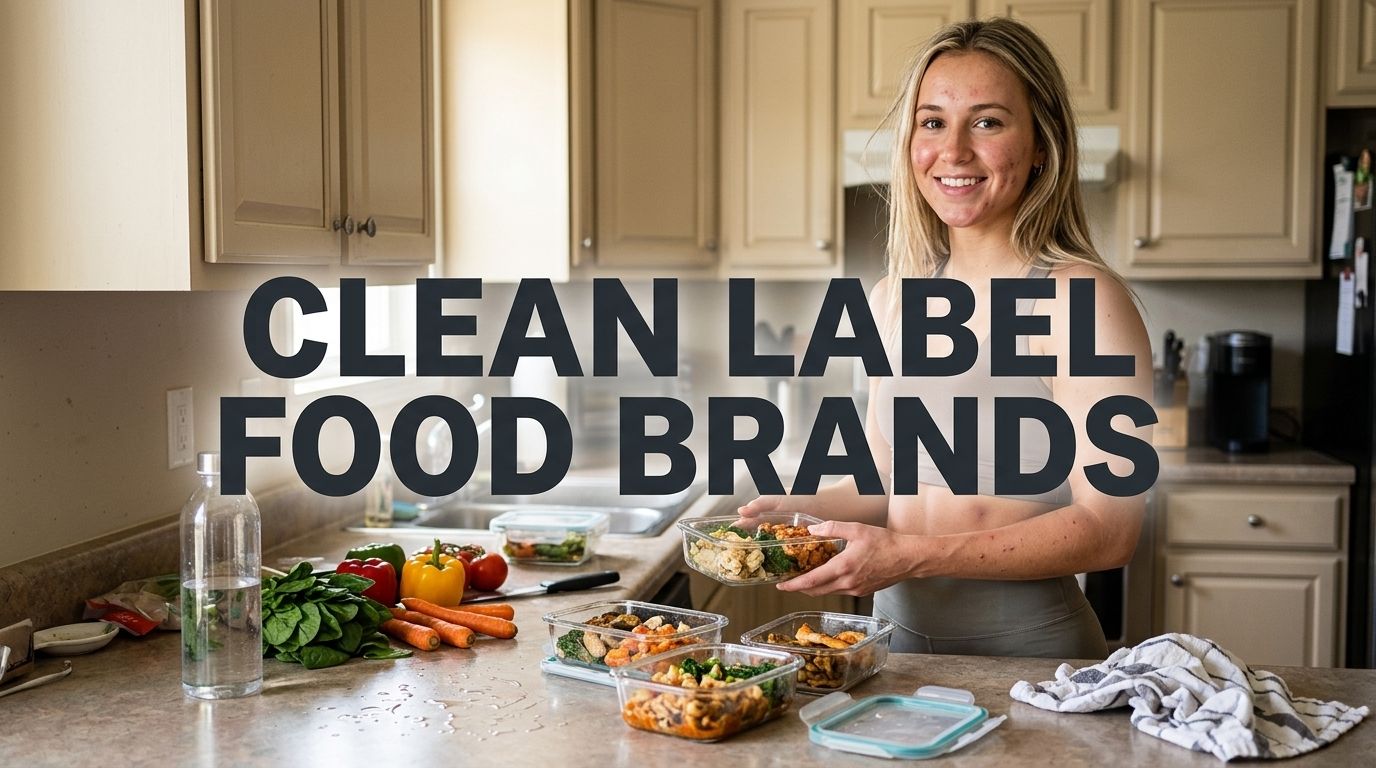
Clean label food brands prioritize simple ingredient lists, minimal processing, and full transparency about what goes into every product. The movement spans everything from baby food and breakfast cereal to snack bars and frozen meals. Knowing which brands meet genuine clean label standards helps consumers avoid marketing tricks that disguise processed ingredients behind ‘natural’ packaging.
The clean label industry has grown rapidly as consumers demand fewer artificial additives, shorter ingredient lists, and traceable sourcing. Brands like One Degree Organic Foods, Simple Mills, and Lundberg Family Farms have built loyal followings by refusing to use bioengineered components or synthetic preservatives. Third-party certifications from organizations like Clean Label Project add an extra layer of trust through contaminant testing.
This guide covers what clean label actually means, which brands deliver on the promise, how to spot misleading labels at the store, and what health benefits come from choosing clean label products. A free clean eating guide from Eat Proteins waits at the end to help put these principles into daily practice.
What Are Clean Label Food Brands?
Clean label food brands produce foods with short, recognizable ingredient lists free from artificial additives, synthetic preservatives, and bioengineered components. The term ‘clean label’ carries no federal regulation in the United States or Europe. Consumer interpretation and industry marketing of ‘clean’ products vary widely across regions.
The International Food Information Council defines clean label foods as those that are not highly processed, feature simple ingredient lists, and use organic or natural components. A survey found that more than one in three consumers associate clean labels with products free from artificial ingredients or those making natural or organic claims.
Clean label brands focus on transparency from farm to fork. They showcase sourcing details, processing methods, and ingredient origins. In markets where clean label is becoming an expectation rather than a selling point, brands now promote ‘clean conscience’ initiatives alongside clean ingredients.
What Does Clean Label Mean on Food Products?
Clean label on food products generally refers to items with short ingredient lists, familiar and natural-sounding ingredients, and no artificial components. There’s no official regulatory definition. The meaning depends on who’s reading the label and who manufactured the product.
Thirty percent of consumers in surveys believe clean label refers to foods free from pesticides, chemicals, or toxins. One in ten associates the term with short, simple ingredient lists. In Northern Ireland, 46% of consumers agreed that ‘clean eating’ with unprocessed, natural foods and no additives was ‘good for you.’
How Is Clean Label Different from Organic?
Clean label is an unregulated marketing concept while organic carries a legally defined certification standard enforced by government agencies. A product can be clean label without being organic, and an organic product can still contain a long ingredient list with permitted organic additives.
Here’s the key difference: organic certification regulates farming practices, pesticide use, and soil management. Clean label focuses on the finished product’s ingredient transparency, processing level, and absence of artificial additives. The two overlap but don’t mean the same thing.
Which Clean Label Brands Should You Know?
Leading clean label brands include One Degree Organic Foods, Simple Mills, Lundberg Family Farms, Rugani Juice, and Purely Elizabeth. Each brand has built its reputation on traceable ingredients, minimal processing, and third-party testing for contaminants like heavy metals and pesticides.
One Degree Organic Foods traces every single ingredient back to its source farm. Simple Mills replaces enriched wheat flour with almond, coconut, and flaxseed flours. Lundberg Family Farms has produced clean rice products for over 80 years with strict quality controls.
Top Clean Label Brands:
- One Degree Organic Foods: full ingredient traceability to source farms
- Simple Mills: almond, coconut, and flaxseed flour base with zero artificial components
- Lundberg Family Farms: clean rice products with 80+ years of quality standards
- Rugani Juice: 100% fruit and vegetable juices with two-word ingredient lists
- Purely Elizabeth: superfood-based cereals and granolas with organic, non-GMO profiles
What Makes a Brand Truly Clean Label?
A truly clean label brand uses recognizable whole food ingredients, avoids all artificial additives, and provides full transparency about sourcing and processing methods. Marketing a product as ‘natural’ or ‘simple’ without these commitments doesn’t qualify a brand as genuinely clean label.
Think of it this way: Rugani Juice’s apple juice contains just two ingredients, fresh apples. The company operates as both farmer and processor, harvesting produce daily and extracting juice within four hours. That’s the standard a truly clean label brand sets for transparency.
Which Brands Have Clean Label Project Certification?
Yes. Clean Label Project has certified more than 80 Gerber products including oatmeal cereals, baby food purees, and snacks for infants and toddlers. The certification program requires testing for pesticides, glyphosates, heavy metals, and plasticizers across three tiers of standards.
The highest certification tier prohibits artificial colors, synthetic sweeteners, and other ingredients of public concern. It also requires compliance with testing standards inspired by European Union purity benchmarks. So what does that mean for you? Products carrying this seal have passed contaminant screening that goes far beyond standard FDA requirements.
What Ingredients Do Clean Label Brands Avoid?
Clean label brands avoid artificial colors, synthetic sweeteners, hydrogenated oils, refined sugars, chemical preservatives, and bioengineered ingredients. The Center for Science in the Public Interest found that industry has often prioritized profit over public health when responding to clean label demands.
Consumers check labels for preservatives (43% of shoppers) and artificial flavourings and colourings (39% of shoppers). But the definition keeps expanding. Now 39% of food shoppers also look for information on the source of ingredients, not just what those ingredients are.
Are Artificial Additives Always Harmful?
No. Artificial additives are not automatically harmful, but many lack adequate long-term safety testing and some carry documented health concerns. The Center for Science in the Public Interest warns that a chemical isn’t safer just because it’s ‘natural,’ familiar, or easy to pronounce.
Here is the part most people miss: some natural-sounding ingredients can be just as problematic as synthetic ones. The key is whether the additive has undergone rigorous independent safety testing. Clean label brands remove the guesswork by eliminating questionable additives entirely.
What Are the Most Common Hidden Additives?
The most common hidden additives include modified starches, maltodextrin, carrageenan, ‘natural flavors’ (a catch-all term covering hundreds of compounds), and various gums used as thickeners. These ingredients appear in products marketed as healthy, natural, or clean.
Enriched wheat flour is another frequent offender. It’s wheat that has been stripped of nutrients during processing and then fortified with synthetic vitamins. And it gets better: even products labeled ‘whole grain’ can contain enriched flour as a secondary ingredient if you don’t read the full list.
Common Hidden Additives in ‘Healthy’ Foods:
| Additive | Found In | Purpose |
|---|---|---|
| Maltodextrin | Protein bars, salad dressings | Filler and thickener |
| Carrageenan | Plant-based milks, yogurts | Emulsifier and stabilizer |
| ‘Natural flavors’ | Juices, snacks, cereals | Flavor enhancement |
| Modified food starch | Sauces, soups, frozen meals | Texture modifier |
| Enriched wheat flour | Bread, crackers, pasta | Processed grain base |
How Do You Identify Clean Label Products at the Store?
Identifying clean label products starts with flipping the package over and reading the actual ingredient list rather than trusting front-of-package marketing claims. A short list of recognizable whole food names signals a genuinely clean product. Unfamiliar chemical names signal processing.
Look for third-party certifications like Clean Label Project, USDA Organic, or Non-GMO Project Verified. These seals mean independent testing has verified the brand’s claims. Our coaches at Eat Proteins recommend applying a simple five-ingredient rule: if the list exceeds five items or includes anything unrecognizable, put it back.
What Should You Look for on Ingredient Lists?
Ingredient lists should contain whole food names that a home cook would recognize and use in a regular kitchen. Ingredients appear in descending order by weight. The first three ingredients make up the bulk of the product and reveal its true nutritional foundation.
Red flags include any form of added sugar in the first three positions, hydrogenated or partially hydrogenated oils, artificial colors identified by numbers (Red 40, Yellow 5), and preservatives like BHT, BHA, or sodium benzoate. To be clear, if the ingredient list reads like a chemistry textbook, the product isn’t clean label.
Can Marketing Labels Be Misleading?
Yes. Marketing labels frequently mislead consumers by using terms like ‘natural,’ ‘simple,’ ‘pure,’ and ‘wholesome’ on products that still contain artificial additives or highly processed ingredients. None of these terms carry legal definitions that restrict their use on food packaging.
The Center for Science in the Public Interest found that industry’s clean label marketing tactics only make foods seem safer while companies do little to actually improve additive safety. A shorter ingredient list doesn’t necessarily make a food healthier. Now here’s the thing: the only reliable check is reading the actual ingredients, not the front label.
What Are the Health Benefits of Choosing Clean Label Foods?
Choosing clean label foods reduces daily exposure to artificial additives, synthetic preservatives, hidden sugars, and contaminants that accumulate in the body over time. Whole, minimally processed foods deliver higher concentrations of vitamins, minerals, fiber, and antioxidants per calorie consumed.
81% of French consumers agree that natural foods are healthier than processed foods. The health benefits extend beyond nutrition. Clean label foods eliminate the inflammatory cycle triggered by enriched wheat, refined sugars, and synthetic additives that disrupt gut health and metabolic function.
Does Clean Label Food Reduce Exposure to Contaminants?
Yes. Clean label food reduces exposure to contaminants when brands submit to third-party testing for heavy metals, pesticides, plasticizers, and glyphosates. Clean Label Project testing has revealed that substances not listed on standard nutrition labels can still be present in conventional products.
Starting January 1, 2025, California’s AB 899 law requires baby food brands to disclose levels of four toxic elements: arsenic, lead, cadmium, and mercury. Is that enough? It’s a start. Third-party certified brands go further by testing across dozens of contaminant categories before products reach store shelves.
What Are Common Misconceptions About Clean Label?
The biggest misconception about clean label is that a shorter ingredient list automatically means a healthier product. The Center for Science in the Public Interest calls this ‘clean label confusion.’ A product with three unhealthy ingredients is no better than one with ten nutritious ones.
Another misconception: ‘natural’ equals safe. Some natural compounds carry health risks, and some synthetic additives have extensive safety records. Clean label should mean transparency and evidence-based ingredient choices, not just avoiding anything that sounds chemical.
Does a Shorter Ingredient List Always Mean Healthier?
No. A shorter ingredient list does not automatically make a product healthier, safer, or more nutritious than one with more ingredients. Coconut oil, butter, and lard each have one ingredient but carry high saturated fat content. A multi-ingredient whole grain bread can be far more nutritious.
Here’s what that actually means: ingredient quality matters more than ingredient count. A truly clean label product combines a short list with high-quality, whole food components. Don’t let the number of ingredients distract from what those ingredients actually are.
How Is the Clean Label Market Growing?
The clean label ingredient market continues rapid expansion across North America with major players including Cargill, Archer Daniels Midland, Kerry Group, Ingredion, and Tate and Lyle leading the industry. Consumer demand for ingredient transparency drives product reformulation across every food category.
64% of French consumers, 85% of Chinese consumers, and 64% of US consumers agree they put a lot of thought into what they eat. This global awareness fuels clean label growth. Only 10% of US consumers said they were less concerned about ingredients in 2019 than the year before.
What Trends Are Shaping Clean Label in 2026?
Clean label trends in 2026 include farm-to-fork traceability, contaminant testing transparency, processing technique disclosure, and plant-based ingredient innovation. Brands now promote not just clean ingredients but clean manufacturing processes and sustainable sourcing practices.
In fact, 39% of consumers across multiple markets agree that ‘natural ingredients’ ranks as an important factor when shopping for food. The trend has moved beyond ingredient lists into full supply chain transparency. Companies like Tastes Natural use patent-pending processes to remove bitterness from active ingredients, eliminating the need for sugar and salt as taste masks.
Key Clean Label Trends in 2026:
- Full ingredient traceability from farm to finished product
- Third-party contaminant testing (heavy metals, pesticides, plasticizers)
- Processing method transparency on packaging
- Plant-based flour alternatives replacing enriched wheat
- Clean conscience branding: sustainability and ethical sourcing
Want Your Free Clean Eating Guide from Eat Proteins?
You’ve got the knowledge. Now you need the action plan. Our nutritionists at Eat Proteins built a free clean eating guide that breaks down exactly which brands, ingredients, and shopping strategies work in real grocery store aisles. No guesswork. No misleading marketing to decode.
The guide includes a clean label brand directory, a printable shopping checklist, and meal ideas built entirely from verified clean ingredients. Don’t spend another week guessing which products actually deliver on their label promises. Get the guide sent straight to your inbox today.