
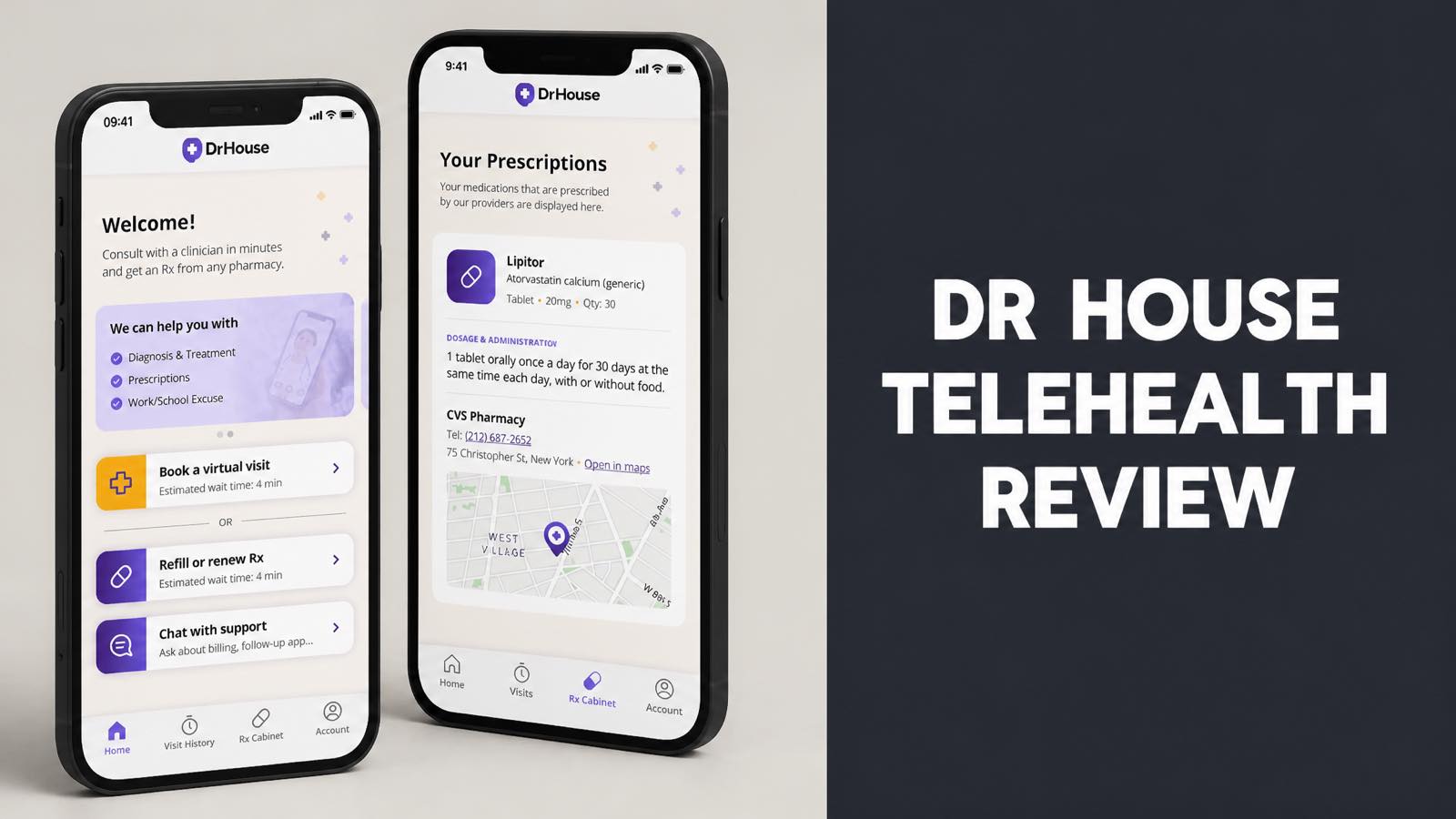
Dr House is an online doctor service run by DrHouse Inc. It connects patients with licensed physicians through video visits in a mobile app and on a website. Our Dr House telehealth review covers how the service works, what it costs, and what real users say about it. Each claim below is sourced.
The service offers visits at any hour in all 50 states and accepts insurance. A one-time visit costs a copay or $129 without coverage. Reviews are split, though. Many patients praise the speed and the app. Others report short calls, billing surprises, and weak support replies. Both views matter here. Our research shows why the picture is mixed overall.
Our team at Eat Proteins weighed both sides. You will see the real prices, the services included, the common complaints, and the limits on prescriptions. By the end, you’ll know whether this telehealth option fits your situation and who should skip it. Let’s start with the basics of the service.
What Is Dr House Telehealth?
Dr House is an on-demand online doctor service that offers video visits with licensed physicians around the clock. The company, DrHouse Inc., runs the service through a mobile app and a website. Patients are seen within minutes in all 50 states. Insurance is accepted but not required for a visit. The app runs on iPhone. The app runs on iPhone and web.
Here’s the thing: the company is privately held and based in New York. Its LinkedIn page lists about 62 employees and a leadership team with a CEO, CTO, and CFO. Is that big? For a telehealth brand, not really. But the structure looks real.
Who Is Dr House Telehealth For?
Dr House telehealth suits adults and children with non-urgent medical needs who want fast access to a physician. The app says its doctors care for patients from birth. Typical users want a quick diagnosis, a refill, or a doctor’s note, and they skip the trip to a clinic. The service is not meant for emergencies. Minor illnesses fit this service best.
Best-fit uses:
- Cold, flu, and sinus infections
- Prescription renewals
- Work or school excuse notes
- Lab orders and referrals
In plain English: it’s built for everyday problems. The service is not an emergency room, and it says so. Patients with severe symptoms need in-person care. Short answer: use it for minor illness, not for a crisis.
How Does Dr House Telehealth Work?
The service works in three steps: choose a doctor, start a video visit, and get a prescription. Patients pick a physician by availability, specialty, and ratings. The visit runs inside the DrHouse app on a secure video call. Prescriptions then go to a pharmacy of choice or to home delivery. Delivery in as little as one hour is offered in select areas.
How a Dr House visit runs:
- Download the DrHouse app or open the website.
- Choose a physician by availability, specialty, or ratings.
- Start a secure video visit with the doctor.
- Pick up the prescription at a pharmacy or request delivery where offered.
Let me explain the speed claim. The company says medication can arrive within one hour in select areas. Is delivery available everywhere? No. The site checks a ZIP code first. Where delivery isn’t offered, the service lists nearby pharmacies for pickup.
What Does a Visit Include?
A single visit includes a diagnosis, treatment advice, prescriptions, labs, referrals, and doctor’s notes. The plan also adds 24/7 chat with a care support team. A 100% treatment guarantee lets patients request a refund when the service cannot provide care after the visit. Visits run on demand at any hour of the day. Patients can book whenever needed.
To be clear, does a visit guarantee a prescription? No. The physician decides. And follow-up care, such as extra labs, may cost more than the visit price. Bottom line: the base visit is broad, but add-ons can raise the final bill.
What Do Dr House Telehealth Reviews Say?
Dr House reviews lean strongly positive in app stores but turn mixed on independent review pages. The App Store shows 4.9 out of 5 from 9.6K ratings. A coupon site lists 4.5 out of 5 from only 18 reviews. And the sample sizes differ a lot, so weigh each score with care. Scores come from very different audiences, so context matters. Both views deserve a look.
Here is the part most people miss: ratings measure the visit, not the aftercare. Why does that matter? Billing and support problems appear after the call ends. Our experts at Eat Proteins read both the praise and the complaints before drawing any conclusion.
What Do Positive Reviews Say?
Positive reviewers praise short waits, easy booking, friendly doctors, and low prices. One user waited 15 minutes instead of weeks. Another said the visit cost less than urgent care. Others noted same-day and Sunday appointments, plus prescriptions sent straight to their own pharmacy. The tone across these reviews is warm. Reviewers often cite kind doctors.
Most praised strengths:
- Short wait before the video visit
- Easy app and scheduling
- Friendly, professional doctors
- Prices below urgent care
- Prescriptions sent to the pharmacy quickly
The good news? Many reviews name the same strengths. Speed shows up again and again. Does that prove quality? Not by itself. Still, the pattern across thousands of ratings suggests most routine visits go smoothly.
What Are the Common Complaints?
Critical reviewers report rushed calls, incomplete referrals, billing errors, and slow support. One patient described a 60-90 second video call and a referral missing two of three scans. Another found a second $15 recurring charge after a single visit and asked for a full refund. Most complaints cluster around support and billing. Most involve support.
Reported problems:
- Very short video calls
- Referrals missing requested scans
- Unexpected recurring charges
- Slow or automated support replies
- No prescription without more testing
Now here is the thing: support seems to be the weak spot. One reviewer said the online comment form failed and the support app answered with automated messages. Another patient said the doctor declined to prescribe without more testing. That’s a doctor’s call, but it frustrated them.
Is Dr House Telehealth Legit?
Yes. Dr House is a real telehealth company with listed credentials and a large user base. Its App Store listing says physicians are board-certified MDs and DOs with more than 20 years of experience on average. The listing also states the service is LegitScript-certified and HIPAA compliant. These claims come from the company itself. Check coverage yourself.
Trust signals listed by the company:
| Signal | Detail |
|---|---|
| Physician credentials | Board-certified MDs and DOs |
| Experience | 20+ years on average |
| Certification | LegitScript-certified |
| Privacy | HIPAA compliant |
| Insurance | Aetna, Anthem, BCBS, UnitedHealthcare, Medicare |
In fact, the company lists in-network status with Aetna, Anthem, BCBS, UnitedHealthcare, and Medicare. Can you verify every claim? Not from the app page alone. These statements come from the company itself, so check your own insurer’s network before booking.
Is Dr House Telehealth Safe?
Yes. The service keeps visits private and limits the drugs it will prescribe. Records and visit details are described as confidential and HIPAA compliant. Physicians do not prescribe controlled substances, gabapentin, or medical marijuana. Federal law also bars controlled substance refills through virtual visits. Safety still depends on each visit.
Here is what no one tells you: safety depends on the visit itself. Can a 60-90 second call miss details? Yes. So give the doctor your full history up front. And if symptoms are severe, skip the app and go to an emergency room.
What Can Dr House Telehealth Treat?
Dr House physicians diagnose and treat a wide range of non-emergency conditions. The app lists UTIs, cold and flu, sinus infections, cough, fever, headaches, allergies, back pain, anxiety, acne, and birth control. The doctors cover 14 specialties, such as family medicine and pediatrics. Treatment covers adults and children alike, from birth. Cases differ.
Conditions the app lists:
- UTIs, cold and flu, sinus infections
- Cough, fever, headaches, nausea
- Allergies, acne, rosacea, sunburn
- Back pain and minor sports injuries
- Stress, anxiety, and depression
- Birth control and menstrual problems
Think of it this way: the list is wide, but each case stays a physician’s decision. So does a listed condition guarantee a prescription? No. The doctor weighs symptoms first. Some visits end with advice, a referral, or a lab order instead.
What Does Dr House Not Prescribe?
Dr House does not prescribe controlled substances, gabapentin, or medical marijuana. The company states this directly in its App Store listing. Federal law prohibits prescribing or refilling controlled substances in virtual visits. Patients who need those drugs must see an in-person provider instead. Doctors also decide each prescription case by case.
What’s more, a visit never promises a medication. The physician makes that professional call. Patients who want a specific drug should not book with that expectation. Our coaches at Eat Proteins suggest asking about the plan before the video call starts.
How Much Does Dr House Telehealth Cost?
A one-time Dr House visit costs your insurance copay or $129 without insurance. The App Store listing states a range of $0 to $129, depending on coverage. The company says it offers no subscriptions or memberships, so every visit is a separate, one-time payment for the patient. Medication costs are paid separately at the pharmacy. Check your plan first.
Dr House pricing at a glance:
| Item | Cost |
|---|---|
| Visit with insurance | Your copay |
| Visit without insurance | $129 |
| Membership or subscription | None |
| Medication | Paid at the pharmacy |
Medication is a separate cost. Patients pay the pharmacy for the drug, or pay for delivery where offered. Extra care, such as additional labs, may not fall under the visit price. Here’s why that matters: the sticker price is only the start.
Is Dr House Telehealth Worth the Price?
Yes. For routine problems, Dr House delivers fast care at a price near or below urgent care. One reviewer called it cheaper than urgent care. The no-subscription model also protects occasional users from monthly fees. Patients with a low copay get the best deal of all. Billing checks after the visit are still wise. Low copays make it a bargain for many.
But the $129 self-pay price is not tiny. Is it worth it? If your visit ends in a short call and a billing dispute, no. One patient reported a second $15 charge. So check your card statement after every visit.
Is Dr House Telehealth Worth It, According to Eat Proteins?
Yes. For simple, non-urgent needs, Dr House is a convenient and fairly priced telehealth option. The app earns a 4.9 from 9.6K ratings. Doctors are board-certified, and prices are clear. Our team at Eat Proteins rates it a good fit for quick, routine visits. Prescriptions stay a physician’s decision, so set realistic hopes before booking. Set modest hopes.
So what does that mean for you? Try it for a cold, a refill, or a doctor’s note. Don’t expect a long consult. Download the app, have your history ready, and check your bill afterward. Miss this option and you may wait weeks for a regular appointment.
Who Should Skip Dr House Telehealth?
Patients with severe symptoms or complex conditions should skip Dr House and see an in-person provider. The service handles non-emergency care only. Anyone who needs controlled substances must look elsewhere. Anyone expecting a long, detailed consult may feel let down by a short call. The company itself says serious symptoms need other care. Plan ahead.
Skip Dr House if you need:
- Emergency or urgent in-person care
- Controlled substances
- A physical exam or imaging
- Ongoing management of a complex condition
Pay attention to this: telehealth works best when the problem is simple. If a case needs a physical exam, imaging, or ongoing management, an in-person doctor is the safer path. Short answer: match the tool to the problem.