
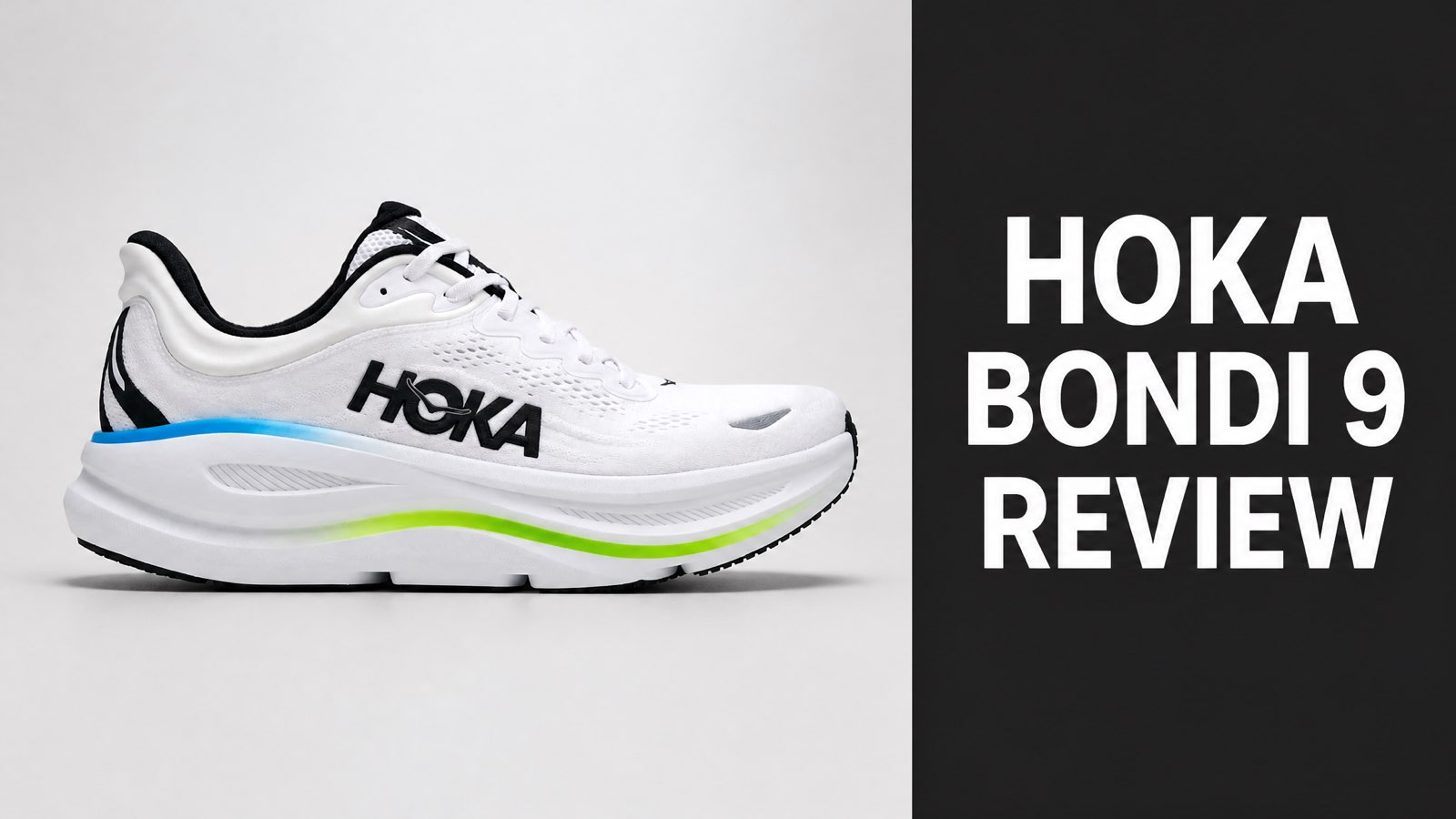
The Hoka Bondi 9 is Hoka’s most cushioned road shoe. It’s a neutral trainer built for easy runs, recovery days, and long hours on your feet. The ninth version arrived about two and a half years after the Bondi 8. It brings a new supercritical EVA midsole and 2 mm (0.08 in) more foam.
Testers agree the new foam is lighter and livelier than the old block of EVA. Lab tests show strong shock absorption and a big jump in energy return. The wide base makes the ride very stable. Nurses and retail workers love it for long shifts. But the toe box runs narrow in the regular width, and the shoe still feels heavy at speed. So who wins here?
Here’s the big picture. The Bondi 9 is a comfort shoe first and a running shoe second. It shines on slow miles and long days on hard floors. Below, you’ll see how it works and how it fits. You’ll also learn what reviewers say, how it compares to rivals, and whether it’s worth $170.
What Is the Hoka Bondi 9?
The Hoka Bondi 9 is a max-cushioned neutral road shoe for recovery runs, easy miles, and all-day standing. It’s the thickest shoe in Hoka’s daily lineup. Brandon Law of Running Shoes Guru scores it 8 out of 10. RunRepeat gives it 86 points. And Mountaineer Journey rates it 8.7 out of 10. That’s a strong start for a ninth version of a classic, right?
Who buys it? Runners use it for slow days between hard workouts. Walkers, nurses, and teachers wear it for long shifts on concrete. CNN Underscored’s reviewer even recommended it to her mom for a first 5K (3.1 miles) walk.
The Bondi also sells well as a work shoe. Brandon Law says all-black and all-white versions make it easy to wear on the job. In fact, RunRepeat ranks it in the top 1% of running shoes for popularity.
Key Facts:
- Brand: Hoka
- Type: neutral max-cushion road shoe
- Midsole: supercritical EVA foam
- Stated drop: 5 mm (0.2 in)
- Weight: 10.5 oz (297 g) for a men’s size
- Launch price: $170
What’s New in the Bondi 9?
The Bondi 9 swaps the old compression-molded EVA for a supercritical EVA midsole with 2 mm of extra stack. Supercritical foam is made with gas, heat, and high pressure. The result is a light foam full of tiny, even bubbles. Believe in the Run says EVA finally had its morning coffee. Does the change matter? It does. The ride feels bouncier and the foam lasts.
The upper also changed. Hoka moved to a knit upper with 55% recycled polyester. The collar got a new 3D molded shape that leans back from the Achilles.
And the shoe lost weight. The Bondi 8 weighed 10.8 oz (307 g). The Bondi 9 weighs 10.5 oz (297 g). So Hoka added foam and still cut weight.
How Does the Hoka Bondi 9 Work?
The Hoka Bondi 9 works by placing a thick, wide layer of foam under the foot to soak up impact. The heel stack is 43 mm (1.7 in) in men’s sizes. The forefoot sits at 38 mm (1.5 in). That’s a lot of foam under every step. Does it feel mushy? No. RunRepeat says the foam leans firm on purpose. That keeps a stack over 40 mm (1.6 in) planted and stable.
Here’s why that matters. A very soft foam at 40 mm (1.6 in) would wobble. Hoka keeps the Bondi firm so the tall platform stays planted. Brandon Law says it feels softer when walking, because your feet sink into the foam.
The Active Foot Frame adds support. Raised midsole sidewalls cup the heel. Your foot sits down inside the foam instead of on top of it. That simple design keeps the stride centered without a heavy plastic post.
What Does the MetaRocker Do?
The MetaRocker is a curved sole shape that rolls the foot forward from heel strike to toe-off. The heel and toe curve upward like a gentle rocking chair. This curve makes up for the stiff, thick midsole. Without it, a shoe this tall would feel clunky. With it? The ride feels smooth and easy, even when your legs are tired from a hard week of training.
Testers felt the benefit on long walks. Mountaineer Journey’s Tyler noticed less calf and ankle fatigue on dog walks. The rolling motion helped him find a steady rhythm faster.
The rocker is moderate, not aggressive. RunRepeat says a stronger rocker would make walking feel awkward. For slow paces and standing, a gentle curve is the right call.
What Are the Key Features of the Bondi 9?
The Bondi 9’s key features include a supercritical EVA midsole, a MetaRocker sole, and an Active Foot Frame. A Durabrasion rubber outsole adds grip. Each part targets comfort and stability. The knit upper adds a soft, padded feel. A 3D molded collar locks the heel in place. And reflective trim helps in low light. That’s a lot of shoe for one model.
The outsole uses rubber in the high-wear zones. Hoka leaves some foam exposed where wear is low. This layout trims weight but keeps the shoe durable.
The tongue is thick and padded but not gusseted. Wide wings and a lace loop keep it from sliding. RunRepeat still lists the loose tongue as a con.
Bondi 9 Specs:
| Spec | Men’s | Women’s |
|---|---|---|
| Weight | 10.5 oz (297 g) | 9.3 oz (263 g) |
| Heel stack | 43 mm (1.7 in) | 42 mm (1.65 in) |
| Forefoot stack | 38 mm (1.5 in) | 37 mm (1.46 in) |
| Stated drop | 5 mm (0.2 in) | 5 mm (0.2 in) |
| Widths | Regular, Wide, X-Wide | Regular, Wide |
How Does the Bondi 9 Fit?
The Bondi 9 fits true to size in length, but the toe box runs narrow in the regular width. RunRepeat polled 888 buyers and found it true to size. Its gel mold measured a 72.5 mm (2.85 in) toe box. The average shoe is 73.2 mm (2.88 in). So what should wide feet do? Order the Wide or X-Wide version instead of the regular one for more room to spread out.
Not everyone agrees. Brandon Law says the shoe runs small and suggests a half size up. Tyler at Mountaineer Journey found the regular width restrictive and moved to a 4E.
Others found plenty of room. Believe in the Run’s Meaghan has wider feet and felt fine. Running Lab’s Joe also says the toe box let his toes spread comfortably.
What Are the Benefits of the Hoka Bondi 9?
The Hoka Bondi 9 delivers deep impact protection, a stable ride, and comfort for long runs and shifts. It also doubles as a walking shoe. RunRepeat picks it as a top shoe for plantar fasciitis and Achilles tendonitis. Testers say it shines when the legs are tired. Is that the whole story? Not quite. The new foam is livelier and bouncier than before.
The new midsole adds bounce. Finlay McAndrew of Run4it ran steady 5K splits near 4:16 per kilometer (6:52 per mile). He says the old Bondi couldn’t handle that effort.
Durability is another plus. Meaghan at Believe in the Run expects the foam to last a long time. Heavy rubber coverage on the outsole helps the shoe go the distance.
How much impact does it absorb? A lot. RunRepeat measured 146 SA of heel shock absorption, against a 131 SA average. Energy return jumped from 51.0% in the Bondi 8 to 60.2%. Here’s the kicker: that gain came from one foam swap.
Joint pain is where this pays off. CNN Underscored’s reviewer and her mom both have arthritis. They say the foam kept their knees and hips happy after long days.
Heavier runners benefit too. Alastair of Alastair Running says the raised sidewalls cradle the foot under load. The tall stack also takes the edge off late in long runs.
RunRepeat Lab Results:
| Test | Bondi 9 | Average |
|---|---|---|
| Heel shock absorption | 146 SA | 131 SA |
| Energy return | 60.2% | 61.5% |
| Heel stack | 41.3 mm (1.63 in) | 35.6 mm (1.4 in) |
| Midsole firmness | 43.0 AC | 35.5 AC |
| Weight | 10.7 oz (303 g) | 9.2 oz (261 g) |
Is the Bondi 9 Good for Standing All Day?
Yes. The Bondi 9 is one of the best shoes for standing on hard floors all day. Tyler at Mountaineer Journey wore it for 12-hour shifts on concrete. His feet felt fine, with no pressure points. He named it his most comfortable walking shoe. Why does it work so well? The thick stack cushions, and the 5 mm drop spreads weight evenly across your whole foot.
Running Lab’s Joe stands on concrete 40 hours a week. He calls the Bondi 9 one of his favorite work shoes.
Grip holds up indoors too. Tyler says he never slipped on polished concrete or hospital floors. A CNN reviewer’s mom, a hospital social worker, had younger nurses asking where to buy her pair.
What Do Hoka Bondi 9 Reviews Say?
Hoka Bondi 9 reviews are mostly positive, with praise for comfort and complaints about width and price. Expert scores sit between 8 and 8.7 out of 10. Running Shoes Guru’s user score is lower, at 6.5. So experts like it more than some buyers do. Why the gap? Fit problems in the regular width explain a lot of the low user marks on big retail sites, sadly.
Bondi fans are the happiest group. Believe in the Run’s Thomas calls the Bondi 9 the best version yet for loyal fans.
Some reviewers are less sold. Thomas still prefers lighter shoes. Ryan, a smaller runner, says he’ll stick with a lower Hoka model.
What Do Happy Buyers Like?
Happy buyers like the plush step-in feel, the steady ride, and the way the shoe protects tired legs. Meaghan at Believe in the Run ran 8 and 10-mile (13 and 16 km) runs in it. She says it shone brightest at cruising pace. Running Lab’s Joe calls it the upgrade fans needed after the Bondi 8. That’s a big turnaround for one single update, isn’t it? We agree.
Style is a quiet win. CNN’s tester wore her teal pair to informal work events. The shoe comes in many colors, including plain options for work.
Pros:
- Deep, protective cushioning
- Very stable for its height
- Lighter than the Bondi 8
- Durable rubber outsole
- Comfortable for walking and standing
- Wide and extra-wide sizes
What Are the Common Complaints?
The most common complaints are the narrow toe box, the heavy feel at speed, and the high price. RunRepeat says it still feels clunky underfoot. Brandon Law says running past 20 km (12.4 miles) feels like a chore. He also calls it overpriced for an EVA trainer. Are these deal breakers? For slow miles and long shifts, mostly not at all, says Brandon.
Heat is another issue. Meaghan expects the padded upper to run hot in summer. Alastair disagrees and says it stayed cool on warm days.
The drop also raises eyebrows. Hoka lists 5 mm. RunRepeat measured 9.1 mm (0.36 in) at standard points.
Cons:
- Narrow toe box in regular width
- Heavy and slow at faster paces
- Pricey for an EVA trainer
- Non-gusseted tongue
- Measured drop higher than stated
How Does the Bondi 9 Compare to Rivals?
The Bondi 9 offers more stability than most rivals, but less bounce than newer max-cushion trainers. Brandon Law says the ASICS Nimbus 27, Brooks Glycerin 22, Saucony Triumph 22, and New Balance More v5 feel livelier. All four cost less. But none are as stable or as rockered as the Bondi. So what’s the real trade here for most buyers? Stability over bounce.
The Brooks Ghost Max 3 is a close rival. Tyler says it suits wide feet and orthotics better. But it firmed up in cold weather, while the Bondi stayed soft.
The Brooks Glycerin Max rides firm like the Bondi. Brandon Law says it feels a bit softer and bouncier. The Bondi 9 feels more stable.
Bondi 9 vs Rivals:
| Shoe | Best For | Strength | Trade-Off |
|---|---|---|---|
| Hoka Bondi 9 | Recovery runs, standing | Stability, 5 mm drop | Narrow toe box |
| Hoka Clifton 10 | Walks and training runs | Lighter for running | 8 mm drop loads forefoot |
| Brooks Ghost Max 3 | Wide feet, orthotics | Roomy toe box | Firms up in cold |
| Brooks Glycerin Max | Easy daily miles | Softer, bouncier | Less stable |
Bondi 9 vs Clifton 10: Which Is Better?
The Bondi 9 is better for standing and recovery days. The Clifton 10 is better as one shoe for walks and faster runs. It has a 42 mm (1.65 in) stack and an 8 mm drop. Tyler felt that higher drop push weight onto his forefoot during long shifts. Which should you pick? It depends on how you spend your day. Standing favors the Bondi. Mixed runs favor Clifton.
The outsoles differ too. Tyler says the Bondi’s outsole handles far more pounding than the Clifton’s.
Foam feel also differs. Alastair says the Clifton 10 uses softer compression-molded EVA. The Bondi’s supercritical foam recovers faster after each step.
Is the Bondi 9 Better Than the Bondi 8?
Yes. The Bondi 9 is better than the Bondi 8 in weight, cushion depth, energy return, and arch comfort. It’s lighter by about 0.3 oz (10 g). It has 2 mm more stack. Energy return rose by over 9 points in RunRepeat’s lab. And the poking arch from the Bondi 8 is gone. What’s the catch? The price went up by $5, to $170 at full retail. Most fans call it worth it.
The Bondi 8 had real fans, but also critics. Running Lab’s Joe calls it a swing and a miss. Brandon Law says its arch felt like a torture device.
The Bondi 9 looks plainer than the Bondi 8, though. Ryan at Believe in the Run misses the old wave design.
Who Should Avoid the Hoka Bondi 9?
The Hoka Bondi 9 is a poor pick for very wide feet, speed-focused runners, and fans of ground feel. Its regular toe box is narrow. Its weight slows you down at tempo pace. And its tall stack blocks feedback from the road. Is there an option for wide feet? RunRepeat suggests the Altra VIA Olympus 2 or the Topo Atmos instead, with much roomier toe boxes.
Budget shoppers are another group. Mountaineer Journey says buyers wanting shoes under $150 should look elsewhere at full price.
Runners wanting one do-it-all shoe can do better. RunRepeat names the Hoka Mach 6 and ASICS Novablast 5 as lighter, cheaper picks.
Skip the Bondi 9 If You:
- Have very wide, high-volume feet
- Want a shoe for tempo or race days
- Prefer low stacks and ground feel
- Need a pair under $150 at full price
- Want a soft, sink-in feel
Is the Bondi 9 Good for Fast Runs?
No. The Bondi 9 is not built for fast runs, because its weight and firm foam limit speed. Thomas at Believe in the Run calls it a one-trick pony, and that trick is comfort. Ryan tried a hilly tempo effort and paid for it the next day. Can it go fast? Briefly, yes. But your legs will notice the extra weight later that week, testers say. Keep it slow.
RunRepeat agrees. The bulk became obvious the moment its testers picked up speed.
The smart move is a rotation. Alastair pairs the Bondi 9 with a separate tempo shoe. He suggests the Hoka Skyward X 2 for max cushion with a carbon plate.
How Much Does the Hoka Bondi 9 Cost?
The Hoka Bondi 9 costs $170 at full retail price, which is $5 more than the Bondi 8. Some stores, like REI, list it at $175. Sales are common, though. Running Shoes Guru found it for about $140, roughly 18% off. Where can you buy it? Hoka, Running Warehouse, Zappos, and Amazon all carry it in both men’s and women’s sizes and widths. Prices vary by color.
Running Warehouse offers free shipping and 90-day returns. That helps if you’re unsure about the fit. Prices change often, so check a few stores before you buy.
Bondi 9 Prices Seen:
| Store | Price | Note |
|---|---|---|
| Hoka (list) | $170 | Full retail price |
| REI | $175 | Listed by Alastair Running |
| Running Warehouse | $139.96 | Men’s, 18% off |
| Amazon | $141.50 | Men’s, 17% off |
Is the Bondi 9 Worth the Price?
Yes. The Bondi 9 is worth the price for recovery runners and people who stand all day. Meaghan at Believe in the Run says the durable foam justifies the extra $5. Mountaineer Journey calls the cost fair for heavy daily use. Still, Brandon Law thinks $170 is a bit high. The fix? Wait for a sale near $140 and save about $30 on a pair. Sales happen often.
Value depends on use. If you want one shoe for every pace, the price is harder to justify.
Should You Try Eat Proteins?
Yes. Eat Proteins gives active people clear, research-backed guidance on gear, recovery, and nutrition. A great shoe protects your legs on easy days. But real recovery also comes from what you eat after the run. Our team at Eat Proteins tests and explains products so you can buy with confidence. You get honest reviews, not hype or paid fluff from brands.
Logging recovery miles or long shifts on your feet? Then you need comfort and fuel. Our experts break down protein needs and recovery meals in plain words.
How Does Eat Proteins Help Your Training?
Eat Proteins helps you pair the right gear with the right nutrition so you recover faster. Our coaches cover protein timing, recovery meals, and smart supplement picks. We also review shoes like the Bondi 9 in depth. So don’t stop here. Explore more Eat Proteins guides now, and your next easy run will feel even better than the last one did. Start today.