
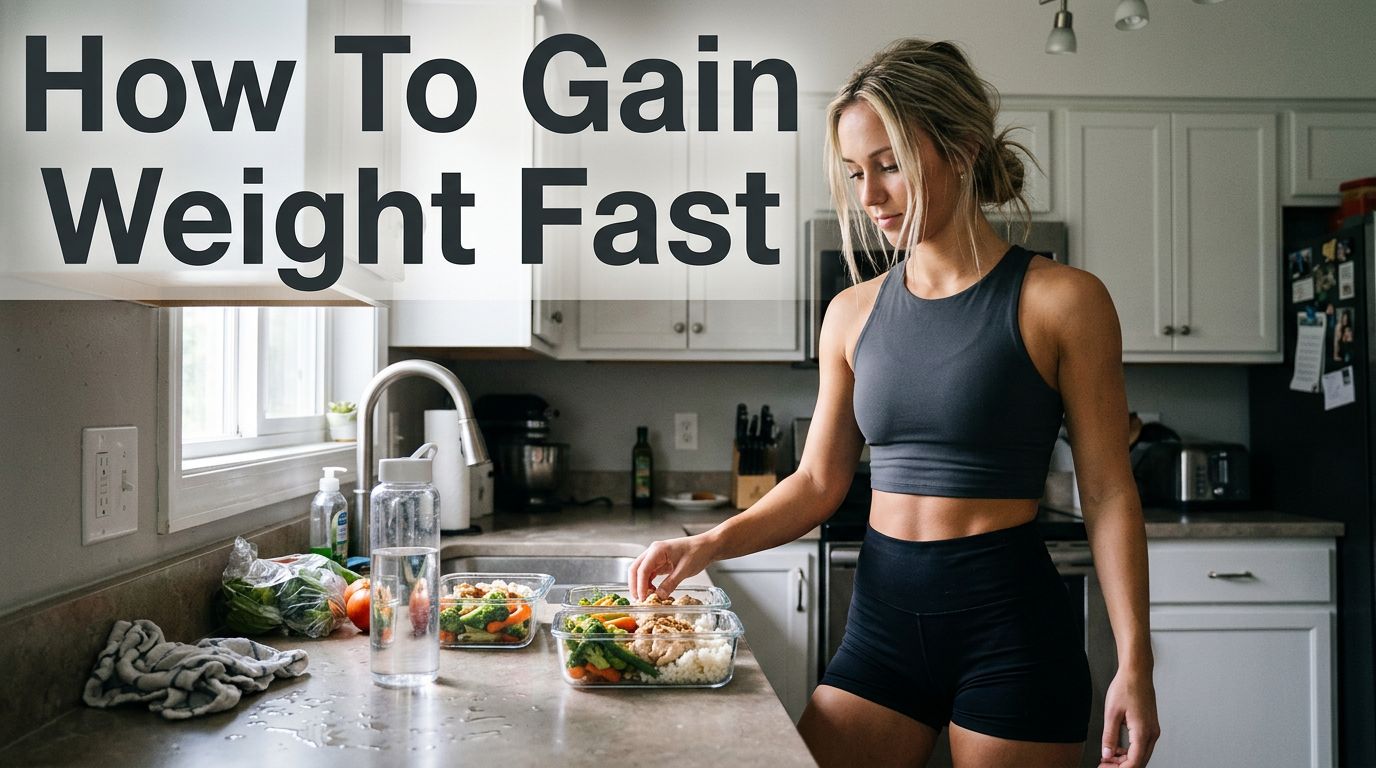
Gaining weight fast requires a consistent caloric surplus, strategic protein intake, and high-calorie nutrient-dense foods. For people with fast metabolisms, small appetites, or underlying health conditions, weight gain can be just as challenging as weight loss. A structured, nutrition-first approach makes the difference between gaining muscle and gaining fat.
Adding 700 to 1,000 calories above daily maintenance is the benchmark for fast weight gain, with a safe rate of 0.5 to 2 pounds (0.2-0.9 kg) per week. Protein intake of 1.2 to 1.3 grams per kilogram (0.55-0.59 grams per pound) of body weight builds lean muscle rather than fat. Meal frequency, food quality, and resistance training all shape the final outcome.
This guide covers why weight gain is difficult for some people, how to calculate the right calorie surplus, the best high-calorie nutrient-dense foods, how to structure meals and snacks, how resistance training supports muscle gain, and the most common mistakes that slow or stall progress.
Why Is It Hard to Gain Weight for Some People?
Gaining weight is difficult for some people because of a combination of genetics, a naturally fast metabolism, low appetite, and in some cases underlying health conditions that increase calorie expenditure or reduce nutrient absorption — all of which create a persistent calorie deficit even when eating regularly.
Here’s the thing: not everyone who struggles to gain weight is simply ‘not eating enough.’ Some individuals have a high basal metabolic rate that burns calories rapidly at rest. Others have a poor appetite that makes consistently eating large amounts physically uncomfortable. Both situations require a deliberate, structured strategy to overcome.
Being underweight carries real health risks that go beyond appearance. It’s linked to a weakened immune system, poor bone density, hormonal imbalances, and nutritional deficiencies. For people who are clinically underweight — defined by a BMI below 18.5 — medical evaluation is an important first step before starting a weight gain program.
What Causes Difficulty Gaining Weight?
Difficulty gaining weight is most commonly caused by a fast metabolism, genetic predisposition to leanness, a small appetite, high physical activity levels, or stress — but can also be caused by underlying conditions including hyperthyroidism, digestive disorders, or cancer that increase caloric needs or impair absorption.
Psychological factors also play a role. Stress, anxiety, and depression reduce appetite significantly. Several medications — including antidepressants, stimulants, and certain antibiotics — suppress hunger as a side effect. Identifying the specific cause is essential because it determines which weight gain strategy will actually work for that individual.
When Should You See a Doctor About Being Underweight?
Yes. A doctor visit is important when weight loss is sudden, unexplained, or happening without changes to diet and exercise — these are warning signs of an underlying medical condition rather than lifestyle factors, and require professional evaluation before any weight gain program begins.
A GP can screen for conditions including hyperthyroidism, celiac disease, inflammatory bowel disease, and diabetes, all of which can prevent weight gain despite adequate calorie intake. A registered dietitian can then build a personalized plan based on individual caloric needs, food preferences, and medical history.
How Many Calories Do You Need to Gain Weight Fast?
To gain weight fast, a person needs to consume 700 to 1,000 calories above their daily maintenance level — the number of calories the body burns at rest plus through daily activity — consistently every day until the target weight is reached.
For slow and steady gain, a surplus of 300 to 500 calories per day is sufficient. Fast weight gain requires the higher 700-1,000 range. To be clear: calorie calculators provide estimates, not exact figures. Individual needs can vary by several hundred calories. Tracking intake for the first 1 to 2 weeks establishes a real baseline before adjusting the surplus.
Consuming 500 extra calories daily can produce approximately 15 pounds (6.8 kg) of weight gain over 6 months. One 8-week study found that participants eating 950 calories above maintenance gained an average of 11.7 pounds (5.3 kg). Of that, 7.7 pounds (3.5 kg) was fat — a reminder that the quality of the surplus matters, not just the quantity.
What Is a Safe Rate of Weight Gain Per Week?
A safe rate of weight gain is 0.5 to 2 pounds (0.2-0.9 kg) per week for most adults, with research suggesting that even higher rates of around 4.4 pounds (2 kg) per week can be achieved safely in cases of severe undernutrition under medical supervision.
Rapid weight gain beyond this range carries side effects including bloating, stomach distress, fluid retention, and elevated triglyceride levels that raise heart disease risk. For athletes, rapid gain can temporarily impair performance by negatively affecting training capacity. A steady, structured surplus is more effective than aggressive overfeeding.
How Do Macronutrients Affect Weight Gain?
Macronutrients directly determine the composition of weight gained — adequate protein builds lean muscle, sufficient carbohydrates provide energy for training and recovery, and healthy fats supply concentrated calories and essential fatty acids that support hormonal function during weight gain.
On a 3,000-calorie weight gain diet, the Institute of Medicine’s Acceptable Macronutrient Distribution Ranges suggest 338 to 488 grams of carbohydrates, 67 to 117 grams of fat, and 75 to 263 grams of protein daily. Protein and carbohydrates provide 4 calories per gram; fat provides 9 calories per gram, making fat-dense foods the most efficient calorie sources.
3,000-Calorie Weight Gain Diet Macros:
| Macronutrient | Calories per Gram | Daily Target (3,000 cal) |
|---|---|---|
| Carbohydrates | 4 calories | 338-488 grams |
| Protein | 4 calories | 75-263 grams |
| Fat | 9 calories | 67-117 grams |
How Much Protein Do You Need to Gain Weight?
To gain weight as lean muscle rather than fat, research recommends consuming 1.2 to 1.3 grams of protein per kilogram (0.55-0.59 grams per pound) of body weight daily — higher than the standard 0.8 grams per kilogram recommendation — spread across 3 to 4 meals of 25 to 50 grams each.
Spacing protein intake matters as much as total quantity. The body can only absorb and utilize a limited amount of protein at one time. Eating 25 to 50 grams per meal, 3 to 4 times daily, maximizes muscle protein synthesis. Concentrating protein in one or two large meals reduces absorption efficiency and limits muscle growth response.
Protein needs also increase with age. People absorb protein less effectively as they get older, making adequate intake even more important for maintaining and building muscle mass. Strength training amplifies the muscle-building response to dietary protein — both components are required together for optimal lean mass gain.
Does Protein Help Build Muscle Instead of Fat?
Yes. Adequate protein intake is the primary dietary factor that determines whether a calorie surplus is converted into lean muscle mass or stored as body fat — without sufficient protein, extra calories are predominantly stored as fat rather than used to build new muscle tissue.
A 2022 review of 74 research studies found that protein supplementation at or above 1.6 grams per kilogram (0.73 grams per pound) of body weight per day, combined with resistance exercise, significantly improved lean body mass and lower body strength. Protein alone doesn’t build muscle — resistance training provides the stimulus; protein provides the building blocks.
What Are the Best Foods to Gain Weight Fast?
The best foods to gain weight fast are calorie-dense, nutrient-rich options that pack large amounts of protein, healthy fats, and complex carbohydrates into moderate serving sizes — making it possible to hit a high daily calorie target without needing to eat uncomfortably large volumes of food at every meal.
In plain English: choose foods where the calories are concentrated. A quarter cup of almonds delivers 170 calories, 6 grams of protein, and 15 grams of healthy fat in a small handful. Two tablespoons of nut butter add around 190 calories. Avocado, salmon, whole eggs, and full-fat dairy all provide dense nutrition in compact portions.
Avoid over-relying on high-fiber fruits and vegetables for calorie volume. Fiber promotes satiety and fills the stomach quickly, leaving less room for energy-dense foods. Include vegetables for nutrients, but keep the volume modest during the weight gain phase and prioritize calorie-dense options at every meal.
Best High-Calorie Foods for Weight Gain:
- Nuts and nut butter — 170-190 calories per quarter-cup serving
- Avocado — approximately 240 calories per whole fruit, rich in healthy fats
- Whole eggs — 70-80 calories each, complete protein and fat
- Salmon and oily fish — 250 calories per 170 grams (6 oz), 37g protein
- Red meat — high in protein, creatine, and concentrated calories
- Whole-milk dairy (cheese, yogurt, milk) — fat and protein combined
- Rice and potatoes — dense carbohydrates that support frequent meals
- Dried fruit — high natural sugar and calorie density with antioxidants
- Dark chocolate and avocado oil — calorie-dense fat additions to any meal
What High-Calorie Foods Are Best for Healthy Weight Gain?
The most effective high-calorie foods for healthy weight gain combine protein and fat in a single source — red meats, whole eggs, salmon, full-fat dairy, nuts, and avocados deliver both macronutrients simultaneously, making them more efficient for reaching a calorie surplus than carbohydrate-only foods.
Rice and complex carbohydrates serve a supporting role. A cup of cooked rice adds around 200 calories and digests easily, making it a practical base for frequent meals. Sweet potatoes, quinoa, and whole grain bread add calorie density without spiking blood sugar as sharply as refined grains. Preparing large batches and pairing them with proteins and fats creates efficient meal prep for the week.
Do Protein Smoothies Help with Weight Gain?
Yes. Protein smoothies are one of the most effective tools for weight gain because liquid calories absorb faster and more completely than solid food — the digestive system expends minimal energy breaking them down, meaning nearly all the calories are absorbed and available for muscle building or fat storage.
Blending nuts into a smoothie rather than eating them whole increases calorie absorption. The body only absorbs 50 to 75% of the calories from whole nuts due to their intact cell structure. Ground or blended, the full calorie content becomes available. A smoothie made with whole-milk Greek yogurt, banana, nut butter, and whey protein can deliver 600 to 800 calories in one drink.
How Should You Structure Meals to Gain Weight?
Meal structure for weight gain should follow a schedule of 3 balanced meals plus 2 to 3 hearty snacks daily — spaced every 3 to 5 hours — starting with a high-calorie breakfast and ending with a protein-rich bedtime snack to keep the body in a consistent anabolic state throughout the day.
What’s more, meal timing prevents the body from running on empty. Skipping meals creates an unintended calorie deficit that stalls progress. A hearty snack 3 hours after breakfast, another after lunch, and one before bed adds 300 to 600 additional calories without requiring larger main meals — which helps people with smaller appetites hit their daily targets more comfortably.
Breakfast is especially important. Starting the day with high-calorie foods including granola, nuts, nut butter, dried fruit, Greek yogurt, whole eggs, avocado, or a protein smoothie sets a strong caloric foundation. People who skip breakfast rarely compensate adequately at later meals, making the morning the most important calorie window of the day.
How Often Should You Eat to Gain Weight?
Eating frequency for weight gain should increase from the standard 3 meals per day to 3 meals plus 2 to 3 snacks — consuming food every 3 to 5 hours — to ensure the body has a continuous supply of calories and protein for muscle synthesis rather than drawing on existing tissue for energy.
Smart snack choices include trail mix with dried fruit and nuts, peanut butter and whole-grain toast, Greek yogurt with fruit, banana with nut butter, full-fat cheese with crackers, or a protein bar. These options deliver concentrated calories without requiring significant preparation time — essential for consistent daily compliance.
Sample Daily Meal Schedule for Weight Gain:
- Breakfast (high-calorie): eggs, avocado toast, Greek yogurt, granola
- Mid-morning snack: nut butter on whole-grain bread or a protein smoothie
- Lunch (protein + carb + fat): salmon or red meat with rice and olive oil
- Afternoon snack: trail mix with dried fruit, nuts, and dark chocolate
- Dinner (large, nutrient-dense): steak or chicken thighs with potatoes and cheese
- Bedtime snack: Greek yogurt with fruit or a casein protein smoothie
What Should You Eat Before Bed to Gain Weight?
A bedtime snack supports overnight muscle recovery and prevents the body from entering a prolonged fasting state during sleep — the best options are protein-rich foods like Greek yogurt with fruit, string cheese with whole-grain crackers, a milk-based smoothie, or a bowl of whole-grain cereal with full-fat milk.
The bedtime snack serves a specific physiological function. During sleep, the body repairs and builds muscle tissue using the amino acids available from the last meal. Consuming 25 to 40 grams of slow-digesting protein (casein-rich dairy is ideal) before bed extends the anabolic window and supports greater overnight muscle protein synthesis compared to fasting through the night.
Does Exercise Help You Gain Weight Faster?
Yes. Exercise — specifically resistance training — is essential for ensuring that a calorie surplus is converted into lean muscle mass rather than stored primarily as body fat, while also stimulating appetite and improving the body’s ability to utilize the extra calories consumed.
Exercise also improves appetite directly. Physical activity stimulates hunger hormones, making it easier to eat the large amounts of food required for fast weight gain. For people with naturally low appetites, training before meals can meaningfully increase food intake at the following meal — making both the exercise and the nutrition more effective.
What Type of Exercise Builds Muscle for Weight Gain?
Resistance training is the most effective exercise type for building lean muscle mass during weight gain — compound movements including squats, deadlifts, bench press, and rows recruit the most muscle fibers and trigger the greatest hormonal response for muscle protein synthesis.
Light cardiovascular exercise supports appetite without burning excessive calories. Swimming in cold water is particularly effective at stimulating appetite because the body must generate additional heat — research shows it increases hunger more than land-based exercise of equal intensity. An after-dinner walk aids digestion without undoing the calorie surplus. Avoid high-volume cardio that burns more calories than the surplus can support.
What Mistakes Should You Avoid When Trying to Gain Weight?
The most common weight gain mistakes are relying on junk food for calories, drinking too much liquid before meals (which reduces appetite for food), eating too much dietary fiber that promotes fullness without adequate caloric density, and failing to include resistance training to direct the surplus toward muscle rather than fat.
Drinking plain water, diet beverages, or low-calorie drinks before meals fills the stomach without contributing to the calorie surplus. Replace pre-meal drinks with calorie-containing options: chocolate milk, whole milk, 100% fruit juice, or a small protein shake. Every drink is an opportunity to add calories — not to fill space with zero-calorie liquid.
Relying on processed junk food is another significant mistake. Chips, sweets, fast food, and sugary drinks add calories but deliver minimal protein, vitamins, and minerals. Rapid weight gain from junk food increases unhealthy visceral belly fat and raises triglyceride levels. The goal is balanced muscle and subcutaneous fat — not metabolic markers heading in the wrong direction.
Is Eating Junk Food a Good Way to Gain Weight?
No. Eating junk food to gain weight adds excess calories through saturated fat, added sugar, and sodium without the protein, fiber, or micronutrients needed for lean muscle growth — the result is predominantly unhealthy fat gain, elevated triglycerides, and poor overall health markers despite the higher body weight.
A healthy weight gain approach builds muscle mass and subcutaneous fat through nutrient-dense calorie-dense foods. Protein smoothies, nuts, whole eggs, oily fish, whole grains, and full-fat dairy deliver the calorie surplus without degrading health. Short answer: the scale goes up with junk food, but so do the metabolic risks. Nutrient-dense surplus eating achieves weight gain without those downsides.
Want Your Free Weight Gain Meal Plan from Eat Proteins?
You have the strategy. Now you need the exact numbers. Knowing that protein matters or that calorie surplus drives gain is one thing — having a week-by-week meal plan built around your body weight, calorie target, and food preferences is another thing entirely. That’s where most people get stuck.
Our nutritionists at Eat Proteins built a free Weight Gain Meal Plan designed for people who struggle to eat enough: a 7-day high-calorie menu, snack schedules, smoothie formulas, and protein targets calibrated to your body weight. Don’t guess — get the exact plan sent straight to your inbox.