
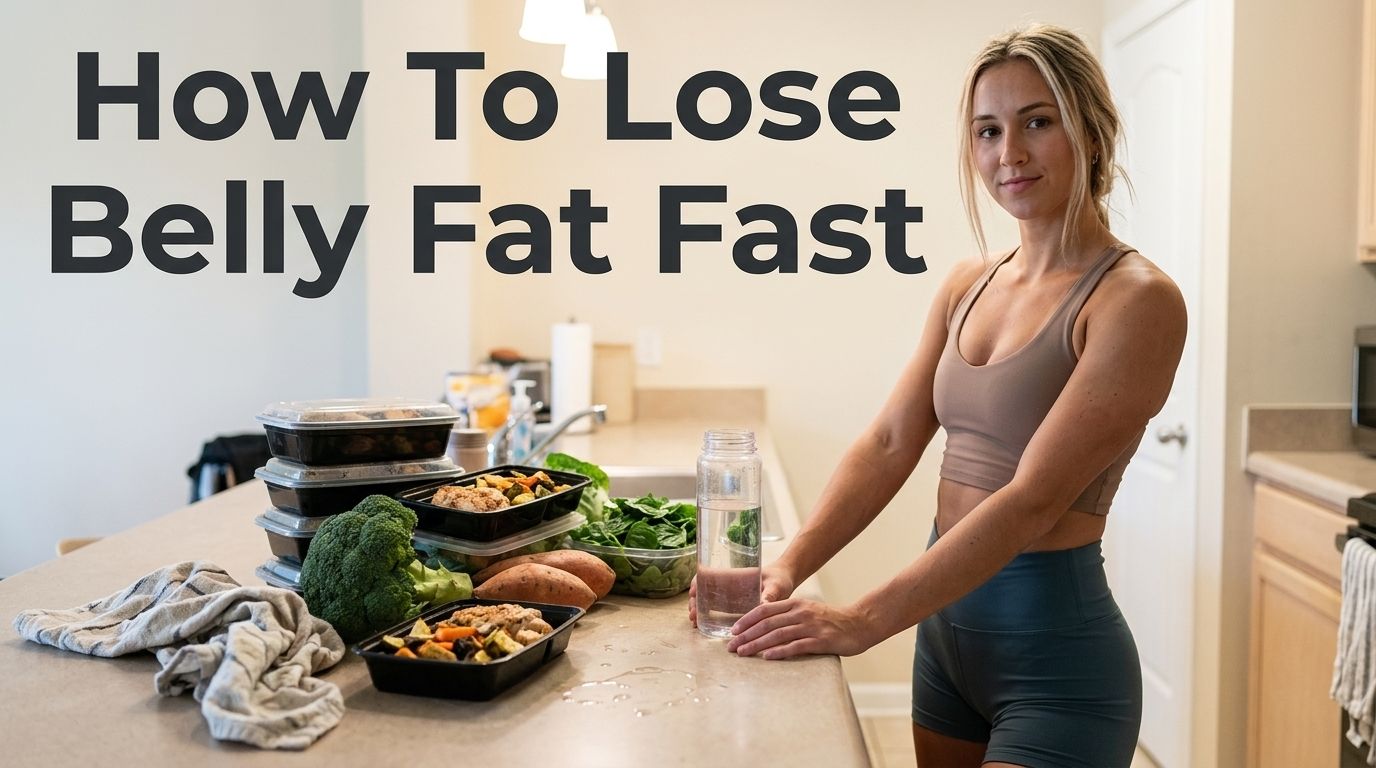
Belly fat is one of the most stubborn health challenges people face. It is linked to serious conditions including type 2 diabetes, heart disease, and metabolic syndrome. Understanding what drives it is the first step to getting rid of it.
Visceral fat responds faster to lifestyle changes than subcutaneous fat. Combining a calorie deficit with regular exercise, high protein intake, and adequate sleep drives the fastest results. No single supplement or shortcut replaces this combination.
This guide covers what belly fat is, why it accumulates, which diet and exercise strategies work best, and how long to expect results. Read on for a clear, science-backed roadmap to a slimmer waistline.
What Is Belly Fat?
Belly fat refers to adipose tissue stored around the abdominal region, divided into two primary types: subcutaneous fat sitting directly under the skin and visceral fat stored deep inside the cavity surrounding vital organs. Both types contribute to waist size, but they differ dramatically in how dangerous they are and how fast they respond to change.
Research shows belly fat carries serious health risks beyond appearance. Visceral fat releases inflammatory compounds directly into the bloodstream. These compounds raise the risk of type 2 diabetes, cardiovascular disease, and metabolic syndrome.
Waist circumference is the standard measure of abdominal fat risk. In men, a waist of 40 inches (101 centimeters) or more signals excess visceral fat. For women, a waist above 35 inches (89 centimeters) indicates elevated health risk.
What Are the Two Main Types of Belly Fat?
Subcutaneous fat is the visible, pinchable fat sitting directly beneath the skin of the abdomen. It mostly affects appearance and responds best to long-term lifestyle changes including regular physical activity and strength training. This type decreases slowly but steadily with consistent effort.
Visceral fat is stored deep inside the abdominal cavity, wrapping around organs including the liver, pancreas, and intestines. It is more metabolically active than subcutaneous fat. Visceral fat responds more quickly to diet and exercise changes than subcutaneous fat does.
Intramuscular fat is a third type stored within muscle tissue. It is a smaller contributor to overall belly fat concerns. Excessive intramuscular fat can impair muscle function, but it is rarely the primary target of belly fat reduction efforts.
Types of Belly Fat at a Glance:
| Type | Location | Health Risk | Response Speed |
| Subcutaneous | Under the skin | Lower (cosmetic) | Slower |
| Visceral | Around organs | High (metabolic) | Faster |
| Intramuscular | Inside muscles | Low-moderate | Varies |
Why Is Visceral Fat More Dangerous Than Subcutaneous Fat?
Visceral fat is metabolically active tissue that releases inflammatory cytokines and free fatty acids directly into the portal bloodstream, driving insulin resistance, elevated blood lipids, and systemic inflammation at a far greater rate than subcutaneous fat. This direct metabolic pathway to the liver is what makes visceral fat uniquely harmful.
Here is the good news. Visceral fat responds faster to diet and exercise than subcutaneous fat. Aerobic exercise directly targets visceral stores. Studies show measurable reductions in visceral fat within weeks of consistent training, well before visible changes appear on the surface.
Why Is Belly Fat Hard to Lose?
Belly fat is particularly stubborn because the body draws on fat stores from multiple areas simultaneously during a calorie deficit, not exclusively from the abdomen. Age, genetics, hormones, chronic stress, and poor sleep all contribute to fat accumulating and persisting in the midsection regardless of overall weight loss efforts.
Age plays a major role. As people get older, muscle mass declines and metabolism slows. In women, estrogen drops after menopause, shifting fat storage from hips and thighs directly to the abdomen. Both men and women accumulate more visceral fat with age even without gaining total body weight.
Does Stress Make Belly Fat Worse?
Chronic stress elevates cortisol, a hormone that specifically promotes fat storage in the abdominal region and simultaneously increases appetite and cravings for high-calorie foods, compounding belly fat accumulation from two directions at once. Prolonged high cortisol makes it significantly harder to lose belly fat even with regular exercise.
Managing stress actively supports fat reduction. Activities like yoga, tai chi, and moderate-intensity exercise lower cortisol levels consistently. Reduced cortisol allows the body to access stored abdominal fat for energy more effectively during training and rest.
Can Poor Sleep Increase Belly Fat?
Poor sleep directly contributes to belly fat accumulation by disrupting leptin and ghrelin, the hormones that control hunger and fullness, which increases appetite and promotes abdominal fat storage through hormonal pathways that exercise alone cannot overcome. Even a few nights of short sleep triggers measurable hormonal changes.
A study of 70,000 individuals found that people sleeping fewer than 5 hours per night were significantly more likely to gain 30 or more pounds (13.6 or more kilograms). Consistent sleep of 7-8 hours per night supports optimal fat metabolism and hormonal balance.
What Diet Changes Help Lose Belly Fat?
No single food or diet targets belly fat alone. Reducing overall body fat through balanced, nutritious eating is the most consistent dietary strategy for abdominal fat loss, with whole minimally processed foods and limited added sugars forming the foundation of every effective plan. Calorie reduction combined with exercise that burns about 1,000 calories per week produces the most significant reductions.
Soluble fiber is particularly powerful for belly fat. An observational study of over 1,100 adults found that every 10-gram (0.35-ounce) increase in soluble fiber intake reduced belly fat gain by 3.7% over 5 years. That is a measurable, sustained effect from a simple dietary addition.
Trans fats and added sugars are the dietary drivers of belly fat. Cutting sugary drinks, processed snacks, and refined carbohydrates significantly reduces visceral fat over time. The combination of high fat and high sugar intake is particularly problematic for abdominal fat accumulation.
High Soluble Fiber Foods:
- Oats and oat bran
- Flaxseeds
- Legumes (lentils, black beans, chickpeas)
- Avocados
- Apples and pears
- Broccoli and Brussels sprouts
How Much Protein Do You Need to Burn Belly Fat?
Dietary protein supports belly fat loss by increasing satiety, preserving muscle mass during a calorie deficit, and raising the body’s calorie-burning rate through a higher thermic effect compared to carbohydrates and fats. Protein intake is one of the most powerful dietary levers for abdominal fat reduction.
Research supports consuming 1.6 grams of protein per kilogram (0.7 grams per pound) of body weight daily for fat loss. Aiming for 30 grams of protein per meal provides a practical way to hit this target consistently. Fish, poultry, eggs, beans, and Greek yogurt are strong sources.
The body burns more calories digesting protein than it does processing carbohydrates or fats. This is the thermic effect of food. Protein also suppresses hunger hormones, reducing total calorie intake naturally and helping sustain a calorie deficit without extreme restriction.
Best Protein Sources for Belly Fat Loss:
- Eggs (linked to less abdominal fat in multiple studies)
- Greek yogurt (double the protein of regular yogurt)
- Fatty fish such as salmon and sardines
- Chicken and turkey breast
- Legumes: lentils, black beans, chickpeas
- Quinoa (8 grams of protein per cooked cup, 240 milliliters)
Which Foods Help Reduce Belly Fat?
Several specific foods have evidence-backed associations with reduced belly fat, including green tea, whole grains, nuts, fatty fish, and probiotic-rich foods that collectively support fat metabolism, reduce inflammation, and improve the insulin sensitivity that controls abdominal fat storage. Including these foods regularly amplifies the effects of an overall calorie deficit.
Green tea contains compounds that stimulate abdominal fat burning. Its combination of antioxidants and caffeine supports fat oxidation. People who ate at least 3 servings of whole grains daily gained significantly less belly fat over 3 years compared to those eating fewer whole grain servings.
Eating nuts regularly associates with decreased waist circumference and lower metabolic syndrome risk. Avocados and extra virgin olive oil provide healthy unsaturated fats that promote satiety. Fatty fish consumed twice weekly delivers anti-inflammatory omega-3 fatty acids that support fat metabolism.
Foods That Support Belly Fat Reduction:
- Green tea (drink several cups daily)
- Whole grains: oats, brown rice, quinoa
- Nuts: walnuts, almonds, pistachios
- Fatty fish: salmon, sardines, mackerel, herring
- Avocado and olive oil
- Probiotic foods: Greek yogurt, kefir, sauerkraut
What Exercises Burn Belly Fat Fastest?
Exercise burns belly fat most effectively when aerobic activity and resistance training are combined, because cardio burns calories directly from fat stores while strength training builds metabolically active muscle tissue that increases the body’s resting calorie burn 24 hours a day. For both men and women, visceral fat is the first type of fat lost when regular exercise begins.
Health guidelines recommend at least 150 minutes of moderate aerobic activity per week. More intensive protocols of 300 minutes per week produce significantly greater fat loss. The type of activity matters less than consistency. Walking, cycling, swimming, and group fitness classes all qualify.
Does Cardio or Strength Training Work Better for Belly Fat?
Aerobic exercise directly burns visceral fat by increasing the body’s energy demand, drawing on fat stores throughout the body including the abdomen. At least 30 minutes of cardio daily reduces both belly fat and liver fat according to multiple studies. Any cardio you enjoy doing consistently is the right cardio.
Strength training builds muscle mass, which is more metabolically active than fat tissue. More muscle means more calories burned at rest. Resistance training at least 2 days per week amplifies the fat-burning effects of cardio and protects against muscle loss during a calorie deficit.
HIIT is the most time-efficient option. And it gets better: research shows HIIT reduces visceral fat in shorter sessions than steady-state cardio. HIIT uses 30 seconds of intense effort followed by 30 seconds of rest, repeated in cycles of 20-30 minutes.
Effective HIIT Exercises for Belly Fat:
- Jumping jacks
- Burpees
- Jump squats
- High knees
- Push-ups
- Mountain climbers
Can You Spot Reduce Belly Fat With Crunches?
No. Spot reduction is not physiologically possible. Sit-ups, crunches, and planks strengthen abdominal muscles effectively but do not significantly reduce the layer of fat sitting on top of those muscles. The body draws on fat stores from across the entire body during any exercise, not just from the area being trained.
Ab exercises do have a place in a belly fat program. Think of it this way: crunches, leg raises, and planks burn calories and build core strength. When combined with aerobic exercise and a calorie deficit, they improve overall body composition as total body fat decreases.
What Does Science Say About Belly Fat Loss?
Science consistently identifies combining calorie reduction with exercise burning approximately 1,000 calories per week as the optimal belly fat loss strategy, outperforming any supplement, drug, or targeted dietary intervention tested in clinical research to date. The combination approach works because it addresses both energy intake and energy expenditure simultaneously.
The reason long-term maintenance matters is simple: when an effective approach stops, fat returns. Research confirms this pattern repeatedly. Building consistent exercise, balanced nutrition, adequate sleep, and stress management into daily life is the only reliable path to permanent abdominal fat reduction.
Ready to speed things up? Get a proven weight loss plan built around these exact principles.
Does Intermittent Fasting Reduce Belly Fat?
Intermittent fasting reduces belly fat by creating a natural calorie deficit through time-restricted eating windows, which lowers insulin levels and improves insulin sensitivity, two direct mechanisms that reduce visceral fat storage and metabolic disease risk. Multiple studies support its effectiveness for abdominal fat specifically.
The 16:8 method restricts eating to an 8-hour daily window. The 5:2 method involves 5 normal eating days and 2 low-calorie days per week. Both approaches reduce belly fat effectively when followed consistently over 8-12 weeks. Short answer: yes, intermittent fasting works for belly fat.
What Are Common Mistakes When Trying to Lose Belly Fat?
The most common belly fat loss mistakes include expecting rapid results, relying on supplements, attempting spot reduction with ab exercises, and eliminating all carbohydrates, each of which fails to address the metabolic and hormonal drivers of abdominal fat accumulation. Here is what no one tells you: fixing one thing rarely moves the needle significantly.
The quick-fix mindset is the biggest obstacle. There is no fast way to lose belly fat and keep it off. Lasting fat loss comes from consistency and patience. Any approach that stops being followed results in fat returning. Sustainability is the goal, not speed.
Common Belly Fat Loss Mistakes:
- Expecting results in days instead of weeks
- Relying on fat burner supplements
- Doing only crunches and sit-ups (spot reduction myth)
- Eliminating all carbohydrates unnecessarily
- Ignoring sleep and stress management
- Not tracking food intake and exercise
Are Fat Burner Supplements Effective?
Fat burner supplements have no proven ability to specifically target or reduce belly fat. When advertisements claim a ‘one trick’ solution to abdominal fat, their objective is to sell a product. The scientific consensus is unambiguous: no supplement replaces consistent lifestyle change.
Green tea and black coffee offer mild metabolic support through caffeine and antioxidants. But here is the kicker: adding cream and sugar to either drink cancels out these benefits entirely. Both beverages support fat loss only as part of an overall healthy diet and exercise program, not as standalone solutions.
Is Cutting All Carbs Necessary?
No. Cutting all carbohydrates is not necessary to lose belly fat. Choosing healthier carbohydrate sources including whole grains, legumes, and vegetables while watching portion sizes supports belly fat loss without the metabolic downsides of extreme restriction.
Refined carbohydrates, including white bread, white rice, and sugary beverages, spike insulin and promote abdominal fat storage. Replacing these with whole grain and fiber-rich alternatives improves metabolic health and reduces visceral fat over time. Carbs work best consumed in moderation from whole food sources.
Refined Carbs to Replace vs. Better Alternatives:
| Replace This | With This |
| White bread | Whole grain bread or sourdough |
| White rice | Brown rice or quinoa |
| Sugary drinks | Water, green tea, black coffee |
| Pastries and cookies | Oats with fruit |
| Potato chips | Air-popped popcorn or nuts |
How Long Does It Take to Lose Belly Fat?
Belly fat loss follows no single timeline, but most people see measurable reductions in visceral fat within 4-8 weeks of consistent diet and exercise, while subcutaneous fat becomes visually noticeable after several months of sustained effort. Patience and consistency determine the outcome far more than any individual strategy.
The medically recommended rate of weight loss is 0.5-1 kilogram (1-2 pounds) per week. Losing fat faster than this increases muscle loss risk and raises the likelihood of regaining the weight. Slow, steady progress creates the metabolic conditions that keep abdominal fat off permanently.
What Results Can You Expect in the First 30 Days?
In the first 30 days of consistent exercise and dietary changes, most people lose 2-4 kilograms (4-9 pounds) of total body weight, with visceral fat beginning to decrease early as it responds faster to lifestyle changes than subcutaneous fat does. Waist measurements typically start shifting after 3-4 weeks of consistent effort.
Results compound over time. People maintaining diet and exercise habits for 3-6 months see substantially greater belly fat reductions than those who stop after one month. Programs combining cardio and strength training totaling 300 minutes per week show the strongest documented outcomes in research.
Belly Fat Loss Timeline:
| Timeframe | Typical Outcome |
| Week 1-2 | Hormonal improvements, early visceral fat decrease, reduced bloating |
| Week 3-4 | Waist measurement shifts, 1-2 kg (2-4 lbs) fat loss |
| Month 1 | 2-4 kg (4-9 lbs) total weight, noticeable visceral fat reduction |
| Month 2-3 | Visible waistline change, subcutaneous fat decreasing |
| Month 3-6 | Substantial belly fat reduction with consistent habits |
Want Your Free Belly Fat Loss Plan?
Most people fail to lose belly fat not from lack of effort but from lack of a clear, structured plan. The free belly fat loss guide from Eat Proteins delivers a step-by-step nutrition plan, weekly exercise schedule, and meal framework built by our nutritionists to target visceral fat directly without extreme diets or supplements.
You have the science. Now you need the plan that puts it into action. Our coaches at Eat Proteins built this free guide around the exact strategies research confirms work, and it is yours to start immediately. Do not leave without it.