
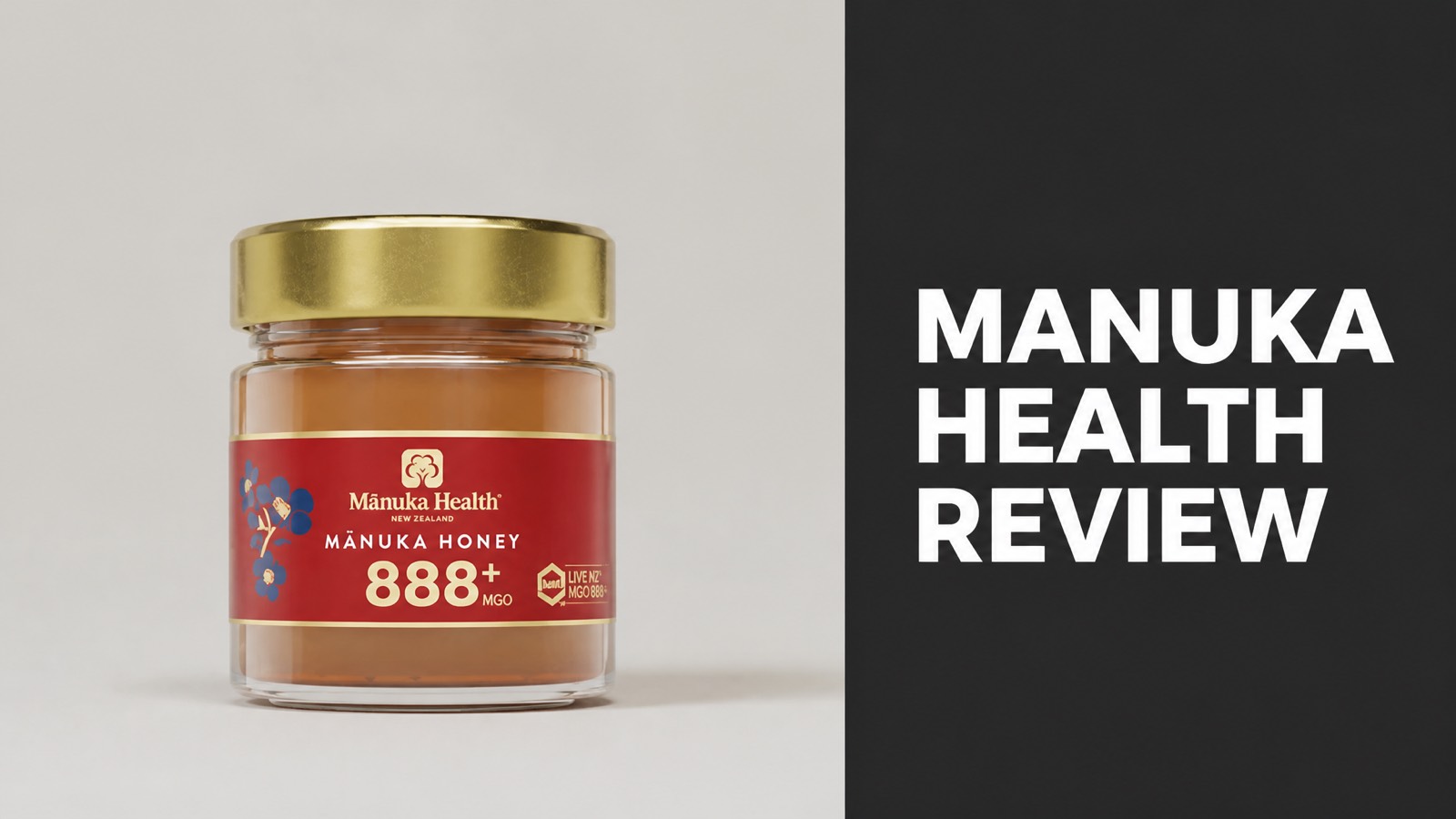
Manuka Health is a New Zealand honey brand founded in 2006 in Te Awamutu. The brand sells manuka honey in eight grades, from UMF 5+ to UMF 22+. Our team at Eat Proteins reviewed its testing, price and safety to see if each jar earns its cost. Here’s what our experts found after checking the lab data.
The brand is real and well documented. Each batch gets lab testing, and every jar carries a QR code for traceability. The grades measure methylglyoxal, so higher numbers mean stronger honey. Evidence is best for wounds and sore throats. Reviewers praise purity and taste. Price and graininess draw the complaints. Our experts found the claims credible.
The big picture is simple. Manuka Health sells verified honey at a premium, and the right grade depends on your goal. Below, you’ll learn what the grades mean, what the evidence shows, who should avoid it, what it costs and where to buy. Read on and make a confident, informed choice.
What Is Manuka Health?
Manuka Health is a New Zealand honey brand founded in 2006 in Te Awamutu. The company sells monofloral manuka honey, lozenges, propolis spray, royal jelly and lip balm. Our team at Eat Proteins checked the claims against lab data. Here’s the short version: the brand is real. The firm describes itself as 1.5 billion bees and 200 humans. It’s a proper brand.
Honey Critique rates the brand 8 out of 10. That’s a strong score. Why does it earn it? The lab testing and traceability are unusually open.
Quick Facts:
- Founded in 2006 in Te Awamutu, New Zealand
- UMF license number 1074
- Vegan, kosher, halal and gluten-free
- Glyphosate residue free and BRCGS certified
- Eight grades from UMF 5+ to UMF 22+
Who Makes Manuka Health Honey?
Manuka Health makes, tests and seals every jar in New Zealand. The brand is an MPI registered exporter. Each batch gets a Certificate of Analysis. Does that matter? Yes, because independent labs confirm the numbers on the label. Testing happens in MPI-recognised laboratories, which operate independently of the honey sector. Nothing is bottled offshore.
The company also built its MGO grading system with Prof. Dr. Thomas Henle and his team. Methylglyoxal (MGO) is a key compound in manuka honey. Manuka Health was the first brand to print it on labels.
What Do the Manuka Health Grades Mean?
The grades show how much methylglyoxal each jar contains. A rating of MGO 100+ means 100 mg of methylglyoxal per kilogram (2.2 pounds) of honey. In plain English: a bigger number means a stronger honey. And a stronger honey costs more. Manuka Health sells eight grades, so shoppers can match strength to budget. Higher grades cost more because MGO is rarer.
Grade Comparison:
| Grade | MGO Level | Best Use |
|---|---|---|
| UMF 5+ | 83+ mg/kg | Everyday sweetener |
| UMF 10+ | 263+ mg/kg | Daily wellness |
| UMF 16+ | 573+ mg/kg | Higher potency needs |
| UMF 22+ | 950+ mg/kg | Premium potency |
What Do MGO and UMF Measure?
MGO measures the antibacterial compound methylglyoxal in the honey. UMF is broader. The UMF system tracks MGO for potency, leptosperin for authenticity, HMF for freshness and DHA for shelf life. Manuka Health now uses both systems. Together, the two systems give buyers a clear, checkable picture of quality. Buyers can check both numbers on the label before buying a jar.
Here’s the part most people miss. WebMD notes that doctors aren’t sure the UMF rating means anything medically. The numbers prove authenticity and potency. They don’t prove a health outcome.
What Are the Benefits of Manuka Health Honey?
Manuka honey offers antibacterial, anti-inflammatory and antioxidant effects, according to WebMD. Evidence is strongest for wound care and sore throats. For other uses, studies are small. To be clear, a jar isn’t a medicine. WebMD also lists acne and ulcers as possible targets, though proof is limited. Strong claims need strong evidence, and few exist.
Main Benefits:
- Supports minor wound and burn care
- Soothes sore throats and coughs
- Supports oral health
- Calms troubled skin
- Works as a richer sweetener
Does Manuka Health Honey Heal Wounds?
Yes. Medical-grade manuka honey helps heal minor wounds and burns. A Cochrane Review found honey may shorten healing times in mild burns. But the pantry jar isn’t a first aid product. Medical-grade honey is sterilized and prepared as a dressing. Medical-grade honey is the version doctors use, and it differs from jarred honey. Doctors still advise care.
The good news? Honey doesn’t appear to create resistant bacteria. Doctors still want infected wounds seen by a professional.
Does Manuka Health Honey Soothe Sore Throats?
Yes. Manuka honey coats the throat and eases irritation from upper respiratory infections. Studies suggest honey can relieve cough frequency and severity. Some studies show it beating common cough medicines. Look, the evidence is modest, but a spoonful is low risk. Honey Critique also reports using it daily in tea. Warm tea with a spoonful works well.
What Do Manuka Health Reviews Say?
Reviewers praise the purity, the traceability and the complex floral taste. The brand has over 20,000 Amazon reviews. Honey Critique describes a caramel color, a medicinal scent and a thick texture. That’s what real manuka honey is supposed to deliver. Honey Critique calls the taste complex and floral, with mild sweetness. Texture is thick and rich.
Each lid carries a QR code that shows the honey’s origin and potency. What’s more, buyers can see the credentials for their exact batch.
What Do Buyers Like About It?
Buyers like the range of strengths and the certified authenticity. The honey is kosher, halal and vegan. Many buyers use it on skin as a mask. Others stir it into tea. And the brand sells in most big box stores. Honey Critique also praises the sustainable beekeeping approach, including no antibiotics in hives. Many also like the handy sachet sizes.
Common Praise:
- Great for troubled skin
- Available in many MGO strengths
- Traceable by QR code
- Environmentally responsible packaging
What Do Buyers Dislike About It?
Buyers dislike the high price, the grainy texture and a faint bitterness. Honey Critique notes that other brands cost nearly half as much. Is the grain a flaw? Not really. The grain signals raw honey with bits of wax. The brand doesn’t offer large bundle sizes. Several buyers also want larger jars and bundle options for regular use. That’s the honest trade-off.
Is Manuka Health Honey Safe?
Yes. Manuka Health honey is safe for most healthy adults in normal amounts. ConsumerLab found no heavy metal contamination in the manuka honeys it tested. The brand also batch tests for pesticides, antibiotics and heavy metals. Bottom line: the main risks are sugar and allergies. The brand also tests for glyphosate and antibiotic residues in every batch.
Safety Warnings:
- Never give honey to babies under 12 months
- Large amounts of 50-100 grams (1.8-3.5 ounces) may act as a laxative
- High sugar content raises blood sugar
- Bee allergies may trigger a reaction
Who Should Avoid Manuka Health Honey?
People with diabetes, bee allergies or weak immune systems should talk to a doctor before using it. ConsumerLab advises immunosuppressed people to avoid raw honey. Cancer patients face higher infection risk. Honey may also interact with some medicines, including chemotherapy drugs. Honey is high in sugar, which matters for anyone managing blood glucose.
How Much Does Manuka Health Cost?
Manuka Health costs about $54.49 online for an 8.8 ounce (250 gram) jar of UMF 16+. Stores charge around $64.49 for the same jar. Discounts of up to 30% appear now and then. A subscribe and save option takes 20% off. The jar works out to roughly $6.19 per ounce. Prices vary by grade, and bigger jars cost more overall, so check the label before ordering.
Price Snapshot:
| Option | Typical Price | Notes |
|---|---|---|
| UMF 16+ online, 8.8 oz | $54.49 | Best everyday deal |
| UMF 16+ in store, 8.8 oz | $64.49 | Convenience premium |
| Subscribe and save | 20% off | Ongoing orders |
Is Manuka Health Honey Worth the Price?
Yes. For buyers who want verified potency, manuka honey costs 6 to 25 times more than regular honey. ConsumerLab found the cost of a 20 mg MGO dose ranged from under $5 to over $16. So what does that mean for you? Compare price per MGO, not price per jar. ConsumerLab also notes that most products tested met their labeled UMF and MGO claims. Often, yes.
Where Can You Buy Manuka Health Honey?
Buyers can order from the brand’s website, Amazon and most big box stores. Online prices run lower than store prices. Start with a smaller jar to test taste and tolerance. Then move up to the larger size if it works for you. Honey Critique also notes the brand ships sachets and 13.2 ounce squeeze bottles for travel. Delivery to the US is straightforward.
Should You Try Manuka Health With Eat Proteins?
Yes. Manuka Health is a legitimate, well tested brand that fits a clean wellness routine. Our experts at Eat Proteins like the transparency and the range of grades. Pick a grade that matches your goal and your budget. Pay attention to this: skip the pricey grades if you only want a sweetener. Batch level testing and QR code traceability back that up.
Is Manuka Health Honey Worth Buying?
Yes. Manuka Health delivers verified New Zealand honey with batch level proof. That’s rare. The Eat Proteins approach is simple: buy the lowest grade that fits your need. Don’t wait. Grab a small jar, taste it and see how your body responds. Our experts back that approach. Check the grade on the label and the batch data before every purchase.