
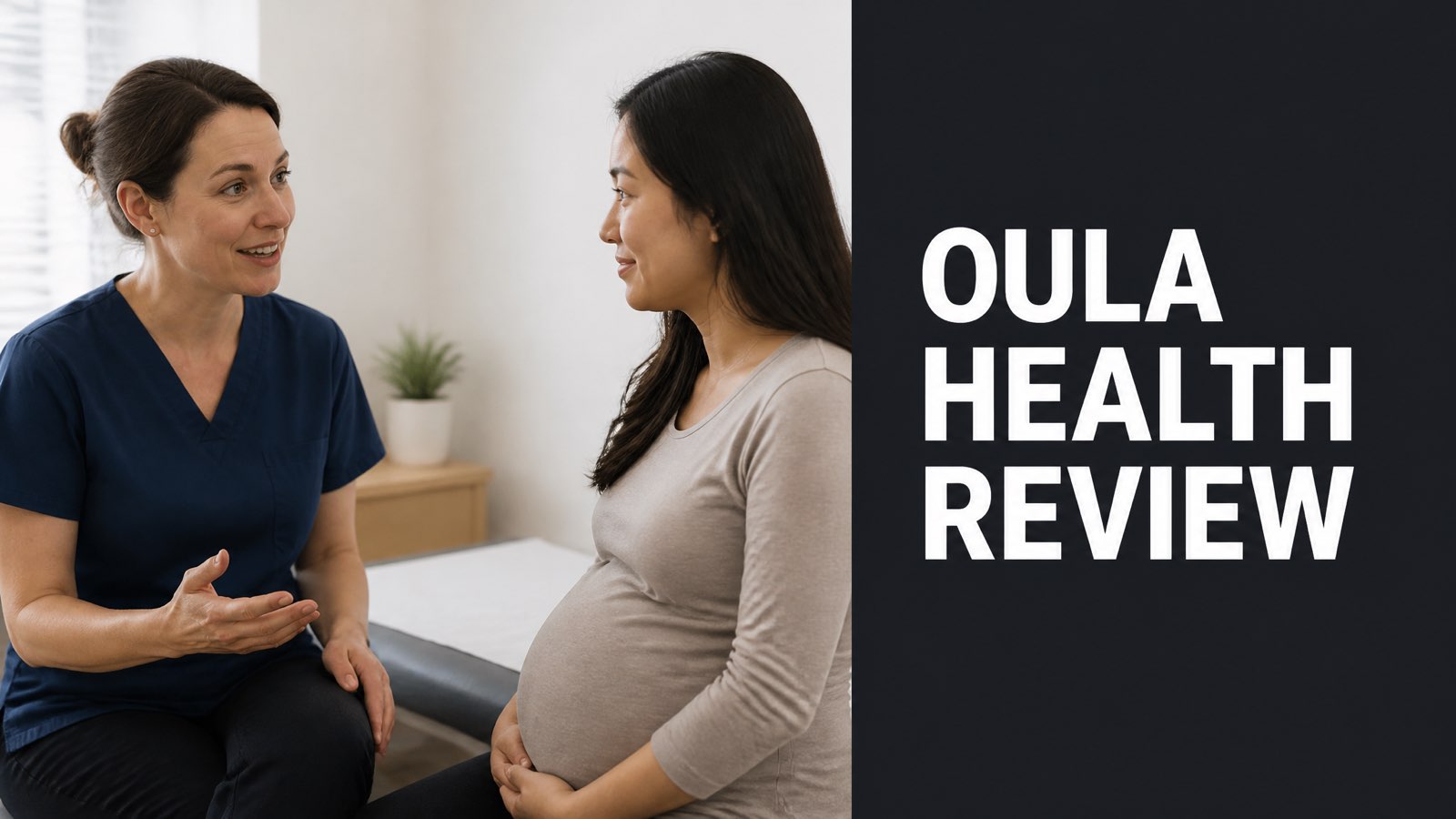
Oula Health is a maternity and gynecology practice founded in 2019 and based in Brooklyn, New York. The practice pairs certified midwives with board-certified OBGYNs. Oula supports births at partner hospitals and also offers routine gynecology care for patients who are not pregnant.
Our Oula Health review covers how the model works, what patients say, and what the published numbers claim. The practice reports fewer c-sections and a high VBAC rate. Reviewers praise the listening. Staff explain each step clearly and in plain language. Costs depend on insurance, and the company lists several accepted plans from major insurers.
The big picture is simple. Oula sells a team approach to pregnancy that many patients describe as unrushed. Read on to learn who the care suits, where it operates, what it costs, and whether the claims hold up before you book. Our team at Eat Proteins also adds a short guide to protein needs during pregnancy.
What Is Oula Health?
Oula Health is a maternity and gynecology care practice that combines midwives with board-certified OBGYNs. The practice covers prenatal support, hospital birth, postpartum care, and gynecology. Its slogan promises care from pap smear to postpartum, so one team follows a patient through every stage. Patients book online, then see the team in clinic.
To be clear, Oula is not a supplement or a gadget. Oula is a care provider that bills insurance. Our team at Eat Proteins reviewed it because readers keep asking whether the practice lives up to its marketing.
Key Facts:
- Founded in 2019
- Headquartered in Brooklyn, New York
- Midwives and OBGYNs share each patient
- Hospital births with partner hospitals
- Gynecology and preconception visits included
Who Runs Oula Health?
Oula Health is a venture-backed company with roots in Brooklyn. CB Insights lists the firm as Series B, with $50.3M raised overall and a $28M round about three years ago. The firm began operating in 2019 and keeps its headquarters at Montague Street in Brooklyn. Dr. Ashley Comfort serves as medical director for the growing practice and its clinic network.
Here’s the thing: money alone proves nothing about care quality. Does funding matter at all? Somewhat, because it signals staying power. CB Insights also names Oula a leader among hybrid maternity care firms.
How Does Oula Health Work?
Oula Health works by splitting each pregnancy between a midwife and an OBGYN. Patients book online, then see both types of clinician across prenatal visits. Births happen at partner hospitals, where an Oula clinician attends the delivery. Postpartum visits then continue with the same practice. One coordinated team stays with the patient throughout.
In practice, the hybrid design matters. A midwife handles longer, education-heavy visits. An OBGYN steps in for higher-risk needs and surgery. Does that mean a handoff gap? Reviewers describe a smooth team approach instead.
Who Is on the Oula Care Team?
The Oula care team has three roles: OBGYNs, midwives, and care navigators. The OBGYNs bring expertise in higher-risk pregnancy and surgical care. The midwives support physical, mental, and emotional needs. Care navigators answer questions, coordinate logistics, and offer emotional support between visits. Together, the roles cover routine care and risks.
Named leaders include Dr. Ashley Comfort, medical director, and Amanda Segilia, director of midwifery. Every midwife listed carries certified nurse midwife or certified midwife credentials. The credential check is a good sign.
Care Team Roles:
| Role | What They Do |
|---|---|
| OBGYN | Higher-risk care and surgery |
| Midwife | Whole-person prenatal and birth care |
| Care navigator | Questions, logistics, emotional support |
What Are the Benefits of Oula Health?
Oula Health reports better birth outcomes than the national picture. The practice cites a 25% lower chance of c-section, 51% fewer premature births, and an 85% VBAC success rate. Marks on those figures show footnotes, so patients should read the fine print before treating them as guarantees. Visits run longer than usual, and one team follows each patient.
Beyond numbers, patients mention time. Visits feel unhurried, and clinicians explain the data behind each recommendation. Why does that matter? Informed patients make calmer decisions, and calmer decisions often improve the birth experience.
Does Oula Health Lower C-Section Risk?
Yes. Oula states that its patients are 25% less likely to need a c-section. The website marks the figure with an asterisk, which signals a qualifying footnote. The company has not published the full study on its homepage, so independent confirmation is missing. Ask for the study behind the number and the comparison group it used before booking a visit.
Short answer: promising, but unproven here. Midwife-led models are known for lower intervention rates in general. Still, treat the 25% number as the practice’s own claim, not a clinical guarantee.
Does Oula Health Support VBAC Births?
Yes. Oula reports an 85% VBAC success rate against a 69% national average. VBAC means vaginal birth after cesarean. One patient on the Oula site credits trauma-informed care for a restorative second labor after an unplanned c-section. The claimed gap is wide, so patients who want a VBAC should raise it early. Ask how the practice tracks all attempts.
The gap is large. Is it real? The practice does not publish its methods on the homepage, so ask your provider how Oula counts VBAC attempts. And the answer should be clear and specific.
VBAC Success Rate:
| Source | Rate |
|---|---|
| Oula Health | 85% |
| National average | 69% |
| Difference | 16 points |
What Do Oula Health Reviews Say?
Oula Health reviews are strongly positive across Yelp, Zocdoc, TikTok, and the practice website. The homepage shows a 4.5 Google rating. Patients describe feeling heard, respected, and informed. Patients on social media often mention that Medicaid is accepted. Reviewers on independent platforms echo that tone. Few describe any billing problems at all.
In fact, the praise sounds consistent. Still, the practice picks the testimonials on its own site. Independent platforms add balance, and those lean positive too. Our team at Eat Proteins weighs both sources.
What Do Patients Praise?
Patients praise the listening, the clear explanations, and the mix of midwife and OBGYN care. One reviewer says traditional OBGYN-only care felt rushed, while Oula felt never rushed and never judged. Another says the team treats patients like a whole person. Reviewers also credit clinicians for clear next steps and kind follow through at every visit.
Yelp reviewers add practical points. Bloodwork went smoothly, and ultrasound staff explained each image live. Sound simple? It is, and it’s rare. Patients remember small courtesies for years.
Most Common Praise:
- Clinicians listen and do not rush
- Recommendations come with evidence
- Midwife and OBGYN team feels coordinated
- Staff explain exams and scans in real time
- Care feels respectful and judgment-free
What Are the Common Complaints?
The research found no pattern of serious complaints about Oula Health. Most sources lean positive, and the sample here is limited. The honest gaps are about information, not care. Pricing is not listed, and the outcome statistics carry footnotes. Recent ratings may reveal more, so read them before booking an appointment with any Oula clinic nearby.
The bad news? Reviews skew toward the newest markets and the largest cities. Charlotte opened only in 2026. Is there enough feedback yet? Not really, so early reviews are thin.
How Does Oula Health Compare to Maven Clinic and Pomelo Care?
Oula Health stands apart as an in-person practice with hospital delivery. Maven Clinic and Pomelo Care sit in the same CB Insights category of virtual and hybrid maternity care. Oula’s strength is hands-on clinicians who attend the birth itself. The better fit depends on whether a patient wants a local clinic or a remote service for the whole pregnancy.
By comparison, virtual-first services shine at convenience and scale. Oula shines at continuity of care. Which wins? The answer depends on what you value most: a screen-based check-in or a clinician at the delivery.
Care Models:
| Feature | Oula Health | Virtual-First Services |
|---|---|---|
| Primary format | In-person clinics | Telehealth and apps |
| Delivery support | Attended by Oula clinicians | Coordinated with outside providers |
| Gynecology care | Included | Varies by service |
Is Oula Health Better Than Traditional OBGYN Care?
No. Oula is not automatically better than traditional OBGYN care. The model suits patients who want midwifery plus surgical backup. Patients who prefer one familiar doctor may still choose a traditional practice. Patients with strong ties to a current doctor may prefer to stay put. Both paths can deliver safe, caring births when the team listens closely.
Here is the part most people miss: fit beats hype. A rushed visit is common in busy practices. Oula pitches longer, relational care. Match the style to your own comfort and risk level, then decide.
Is Oula Health Legit?
Yes. Oula Health is a legitimate, licensed maternity practice with named clinicians and a verifiable track record. Oula lists certified midwives, board-certified OBGYNs, partner health systems, and more than 3,000 babies delivered. A national health system, Novant Health, partnered with Oula in 2026. The homepage also shows a 4.5 Google rating from patients.
What’s more, major insurers are on the accepted list. Do scams publish clinician credentials? Rarely. Still, legitimacy is not the same as perfection. Ask direct questions at your first visit.
Are the Oula Health Statistics Verified?
No. Oula publishes bold outcome statistics, but the homepage footnotes them without a visible study. The figures cover c-sections, premature births, and VBAC rates. Patients should ask for the source data before relying on the numbers. Even so, without methods, readers cannot judge the comparison group. Ask Oula for those details at the first consultation.
Pay attention to this: the 3,000 babies delivered figure is a simple count, while the percentages are comparisons. Comparisons need methods. Without methods, they stay marketing.
Verification Checklist:
- Ask which study backs each percentage
- Ask how VBAC attempts are counted
- Check clinician credentials on the team pages
- Confirm your hospital partner before booking
How Much Does Oula Health Cost?
Oula Health bills insurance and does not list flat prices in the sources reviewed. Out-of-pocket costs depend on the plan, the deductible, and the delivery hospital. Patients should call 718-400-8339 for plan-specific answers before the first appointment. Ask for a written estimate in advance, and ask which hospital hosts the birth and the delivery room.
Think of it this way: maternity care rarely has a sticker price. The hospital stay, the clinician fee, and lab work bill separately. So verify each piece with your insurer.
Does Oula Health Take Insurance?
Yes. Oula accepts several major insurance plans, with Medicaid noted in patient posts. The homepage shows logos for United, Empire, Oxford, Aetna, Anthem, Oscar, and Cigna. Coverage can vary, so confirm your exact plan online first. Patients on Medicaid should verify eligibility with the specific clinic before the first visit, because plan rules differ.
Good news? Medicaid acceptance widens access. Does every location take every plan? Not necessarily, so check before you book.
Insurers Shown:
- United
- Empire
- Oxford
- Aetna
- Anthem
- Oscar
- Cigna
Where Can You Get Oula Health Care?
Oula Health operates clinics in the New York area and in Charlotte. The site lists Norwalk, Cotswold, Downtown Manhattan, Upper West, and Brooklyn. Charlotte bookings opened in 2026 through a partnership with Novant Health. Each clinic page lists its own team. New patients can meet the local midwives and OBGYNs online before they book a first visit.
In plain English: the footprint is still regional. Patients outside these areas cannot use in-person care yet. Online booking runs through the Oula patient portal.
Locations Listed:
- Norwalk
- Cotswold
- Downtown Manhattan
- Upper West
- Brooklyn
- Charlotte
Is Oula Health Available in Charlotte?
Yes. Oula opened in Charlotte in 2026 through a collaboration with Novant Health. The June 2026 announcement calls it the practice’s first presence in the Southeast. Katrina George, a certified nurse midwife, serves as lead midwife there. Patients book through the same online system used at other clinics, so the steps stay familiar to returning users.
Pretty significant? Yes, because Novant Health runs a large network across the Carolinas. Still, the Charlotte clinic is new, so expect limited review history for now.
Should You Try Eat Proteins?
Yes. Pregnancy raises protein needs, and Eat Proteins helps you plan meals that meet them. Our coaches at Eat Proteins turn a clinician’s advice into simple food swaps. Pair great maternity care with great nutrition. Start with our guides today, because every week of pregnancy counts. Check your plan with your care team before you change any diet plan.
How Does Eat Proteins Support Pregnancy Nutrition?
Eat Proteins explains daily protein targets in plain language. The standard pregnancy figure is 71 grams (2.5 ounces) per day. Always confirm your target with your Oula midwife or OBGYN first. Our team builds guides around real foods, simple portions, honest limits, and clear sources. Every guide reminds readers that medical advice always comes first.
Here’s why that matters. Protein supports tissue growth and recovery. The Eat Proteins approach keeps it practical: eggs, yogurt, beans, and lean meat. Pick what you like, then ask your care team. Is that enough? For most healthy pregnancies, a clear plan plus clinical advice is the right start.