
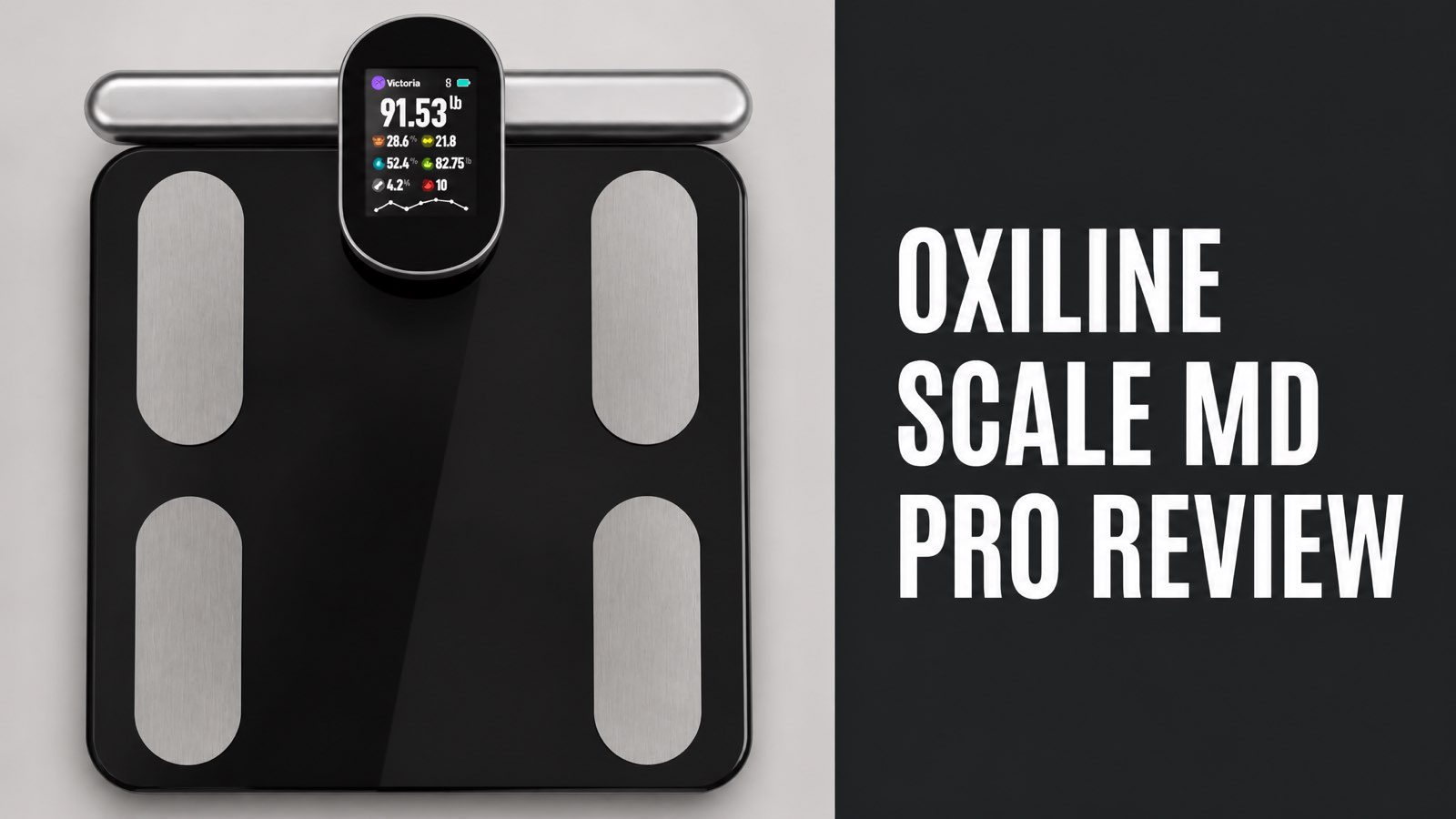
The Oxiline Scale MD Pro is a body scale with eight electrodes, an OLED handle display, and a free app. The device estimates body fat, muscle mass, and water through bioelectrical impedance analysis. A newer Gen 2 model adds Wi-Fi and 57 metrics, and Oxiline sells both models online.
The scale pairs a handheld display with eight electrodes. Setup takes seven short steps. Readings hold up for trend tracking, though no home scale replaces a DEXA scan. Buyers praise the build and the missing subscription. They criticize Bluetooth syncing and slow support. Prices swing between $179 and $399 depending on the offer and the retailer.
Reviews split between the hardware and the company behind it. Here, accuracy, rivals, cost, and legitimacy all land in one place. Does the Oxiline Scale MD Pro earn a spot on the bathroom floor? Read on to learn which shoppers need to skip it. The verdict comes with clear numbers.
What Is the Oxiline Scale MD Pro?
The Oxiline Scale MD Pro is a smart body composition scale built around eight electrodes and a handheld display. The device uses bioelectrical impedance analysis (BIA) to estimate body fat, muscle mass, water, and bone mass. A free app stores every reading, so trends stay visible across weeks and months. Reviewers call it a medical-style tool for home use.
The original model tracks 31 metrics. Its successor, Gen 2, lists 57 and adds Wi-Fi. Both pair with the Oxiline Health app on Android and iOS. Neither model needs a subscription. Why does the handle matter? Its hand electrodes let the scale read arms and torso, not only legs.
Key Specs:
- Platform of 12 by 11 inches (30 by 28 cm) in tempered glass
- Stainless steel retractable handle with an OLED color display
- 500mAh rechargeable battery with USB-C charging
- Eight-electrode BIA sensing with dual-frequency technology
- Capacity of almost 400 pounds (180 kg)
Which Oxiline Scale Does This Review Cover?
Oxiline sells several scales under similar names, so the exact model matters before any purchase. Our review covers the Scale MD Pro and its Gen 2 update. The Scale XS Pro and Scale X Pro carry different sensors and output counts. GainFrame draws this from Oxiline’s own comparison page. Mixing up the names leads to wrong expectations and wasted money.
Here’s the thing: an older X Pro review does not describe the MD Pro. Always match the model name in the cart to the name on the review. Our team at Eat Proteins checks that detail first on every product it covers.
How Does the Oxiline Scale MD Pro Work?
The scale sends a weak electrical current through the body and measures the resistance it meets. Eight electrodes in the platform and handle read that signal. Mathematical models then convert the resistance into estimates of fat, muscle, and water. Cybernews adds that dual-frequency sensing limits the effect of daily bloating and water weight on the scale.
A measurement takes 15 to 20 seconds. The user stands barefoot and holds the handle with straight arms, parallel to the floor. Moisture matters, so damp soles and palms help when readings fail. Does the app have to be open? Not for the basics. The OLED display shows results at once.
How Do You Set Up the Scale?
Setup takes seven short steps and no special tools. The user installs the app, creates an account with an email, and turns Bluetooth on. The app then finds the scale and pairs on its own. A full first measurement follows within minutes. Cybernews lays out the same sequence in its own setup guide for new buyers of the scale. Most owners finish quickly.
Setup Steps:
- Download the Oxiline app from the App Store or Google Play.
- Create an account with an email and a password.
- Turn Bluetooth on in the phone settings.
- Tap Add Device and select the Scale MD Pro.
- Wake the scale so the app can detect it.
- Confirm the pairing once the app connects.
- Step on the scale and hold the handle for the first reading.
Bottom line: setup is easy, and connection drops are the main risk. Is that a dealbreaker? Rarely. Keeping the phone close to the scale during syncing avoids most trouble, since the original model relies on Bluetooth alone.
What Features Does the Oxiline Scale MD Pro Have?
The scale combines a medical-style build with a deep body composition report. A tempered glass platform and stainless steel handle give the device a sturdy feel. The OLED display shows many metrics without a phone. A 500mAh battery lasts around a month between charges, per CoolTechZone’s hands-on video review. The unit charges through a regular USB-C cable.
Multi-user support suits families, roommates, and fitness studios. The app recognizes each profile automatically. Data syncs to Apple Health and Google Health. What’s more, the app exports professional-looking PDF reports. Why does that matter? A user can hand a doctor a clean record of progress.
The Gen 2 model goes further. Transparent ITO electrodes sit under the glass, so no metal footplates show. Wi-Fi joins Bluetooth, and an AI health assistant explains changes in the numbers. In fact, Oxiline now sells a companion band that feeds sleep and heart data into the same app.
What Does the Oxiline App Track?
The Oxiline Health app tracks up to 31 metrics on the original model and 57 on Gen 2. Core numbers include weight, BMI, body fat, and muscle mass. Deeper readings cover visceral fat, protein mass, and basal metabolic rate. Segmental data splits fat and muscle across each arm, each leg, and the core. All of it sits inside one detailed report on the phone.
Main Metrics:
- Weight and BMI
- Body fat, visceral fat, and subcutaneous fat
- Muscle mass and skeletal muscle
- Body water percentage and weight
- Bone mass and protein mass
- Basal metabolic rate
- Waist-hip ratio
- Segmental arm, leg, and core readings
The app shows numbers, charts, and a human body model. The app also stores history for trend lines. Does a longer metric list mean better insight? Not automatically. Wareable found that most testers needed only a handful of numbers to track real progress.
Is the Oxiline Scale MD Pro Accurate?
Yes. The scale delivers consistent readings that suit body composition trend tracking. Wareable found it no less accurate than the Hume Body Pod, and Cybernews rates its accuracy highly. Still, home BIA scales estimate composition rather than measure it directly. Single readings carry real error, so trends matter more than any one number on a given morning.
Here’s why: hydration, recent exercise, meals, skin temperature, and time of day all shift BIA readings. A body fat figure after a hard workout can differ from a morning figure. Weighing at the same time each day gives the cleanest trend line.
Factors That Shift Readings:
- Hydration level
- Recent exercise
- Recent meals
- Skin temperature
- Time of day
Does It Match DEXA Scans?
No. The scale estimates composition with math, so it can’t replicate a DEXA scan. Cybernews reports results within 5% of DEXA. The source is the company and unnamed third parties. GainFrame notes that published specifications alone can’t confirm an individual error range. GainFrame ran no controlled comparison of its own, so outsiders can’t verify it.
To be clear, DEXA is a hospital imaging test that uses X-rays to map the body. BIA relies on electrical resistance and population models. Does that make the scale useless? Not at all. A steady trend line still shows real change over time.
Our experts at Eat Proteins treat any single body fat number as a rough estimate. They compare week to week under identical conditions. Day-to-day swings in water weight get ignored.
What Do Oxiline Scale MD Pro Reviews Say?
Reviews split sharply between the device itself and the company behind it. The Oxiline store shows 4.5 stars across 4,724 reviews for Gen 2. Cybernews gives the original model 4.7 out of 5. Trustpilot rates the oxiline.shop store only 2.8 out of 5 across 580 reviews. Praise and anger land in the same feed, often about very different things altogether.
Why the gap? Buyers mostly like the scale. Complaints cluster around shipping, support, and app syncing. In plain English: the hardware earns praise, and the service experience loses points.
What Do Buyers Like?
Buyers praise the scale’s accuracy, ease of use, and clean display. Many say their doctors were impressed by the data. Setup rarely causes trouble. The OLED screen shows plenty of metrics, so a phone is optional for a quick check. The build feels solid. The lifetime warranty adds confidence for owners who plan to keep it for many years of daily use.
The missing subscription draws steady praise. Wareable agrees that core tracking works without a mandatory fee. By comparison, Hume’s premium plan costs around $9.99 per month. Over a few years, that saving adds up.
What Are the Common Complaints?
Common complaints center on Bluetooth syncing, screen brightness, delayed shipping, and support. Cybernews links the sync trouble to the original model’s Bluetooth-only design. Shipping delays and bot-heavy customer service also appear often in buyer feedback. Some users call the OLED screen too dim in bright rooms and sunlit bathrooms and windowed rooms.
Common Complaints:
- Bluetooth connection and syncing drops
- Low OLED screen brightness
- Shipping delays after ordering
- Customer service that leans on bots
- Odd readings for some users
One Trustpilot reviewer reported 235% arm fat on an athletic build. Another saw the scale switch from pounds to kilograms after the first sync. Are these lab findings? No. They are individual reports. But they show where the app can slip.
Is Oxiline Legit?
Yes. Oxiline sells real devices that independent outlets have reviewed. Cybernews and Wareable both evaluated the MD Pro. The company offers a lifetime warranty and a 30-day money-back guarantee, with free shipping on its own store. Trustpilot’s 2.8 average still flags real service risk for buyers who order online, so caution still applies before checkout.
Here’s the catch. Several Trustpilot reviewers describe long waits, and a few call the store a scam over late orders. Others report full refunds after contacting support. Is that a red flag? Partly. Buyers protect themselves by saving the order confirmation and tracking the delivery date.
How Does the Oxiline Scale MD Pro Compare to Rivals?
The scale sits in the middle of the premium smart scale field on metrics and price. Cybernews compares it with the Hume Body Pod, Withings Body Comp, and Renpho MorphoScan. Oxiline tracks 31 metrics, Hume 45, Withings 8, and Renpho 50. None of the four demands a subscription for core use, though Hume sells an optional plan. Prices below come from Cybernews.
Smart Scale Comparison:
| Device | Metrics | Subscription | Cybernews Price |
|---|---|---|---|
| Oxiline Scale MD Pro | 31 | No | $400 |
| Hume Body Pod | 45 | Optional premium | $350 |
| Withings Body Comp | 8 | No | $230 |
| Renpho MorphoScan | 50 | No | $190 |
Who wins? Answers depend on the buyer. Withings earns praise for app polish and integrations. Renpho tracks more metrics at a lower price but isn’t positioned as medical-grade. Oxiline leads on its lifetime warranty and DEXA-comparison claims.
How Does Oxiline Compare to Hume Body Pod?
Oxiline wins on simplicity and long-term cost, while Hume wins on polish and coaching. Wareable picked Hume for design, features, and app experience. Wareable picked Oxiline for subscription value. The two tied on accuracy. Both use multi-frequency BIA and need consistent weigh-ins for clean trend lines. Neither is perfect. Taste decides the rest here.
Think of it this way: Hume coaches, and Oxiline records. Hume’s premium tier costs around $9.99 per month. Oxiline’s core tracking costs nothing after purchase. Which suits better? The answer depends on how much guidance a buyer wants.
How Much Does the Oxiline Scale MD Pro Cost?
The scale lists at $399 but sells for far less during frequent promotions. Wareable and GainFrame both recorded a $179 sale price in 2026. The Gen 2 model showed $219 against the same $399 reference price. Prices change often, so buyers confirm the model and the delivered total before ordering from any store. Sale banners can hide the delivered cost.
Price Snapshot:
| Source | Model | Price |
|---|---|---|
| Cybernews list price | MD Pro | $399 |
| Wareable, June 2026 | MD Pro | $179 |
| GainFrame, September 2026 | MD Pro | $179 |
| Oxiline store | MD Pro Gen 2 | $219 |
Is the sale price the real price? In practice, yes. The $399 figure works as a reference number. Oxiline includes free shipping, a 30-day money-back guarantee, and a lifetime warranty. The store also accepts FSA and HSA payments, and the app carries no ongoing fee.
Is the Oxiline Scale MD Pro Worth the Price?
Yes. At $179 to $219, the scale offers strong value for buyers who want body composition data without a subscription. Cybernews calls it well worth the money. The case weakens at the $399 list price, where cheaper rivals compete. Short answer: buy on sale, never at list price. Keep the return window open for the full 30 days of the money-back guarantee.
GainFrame adds a fair warning. A new scale only makes sense when a specific feature solves a problem. Someone who needs only a weight trend may already own a scale that works. The good news? The 30-day return window limits the risk.
Should You Try Eat Proteins Before Buying?
Yes. Eat Proteins helps buyers cut through smart scale hype before spending $179 or more. Our team at Eat Proteins compares each claim against independent reviews and flags what the data can’t prove. You get the facts on accuracy, price, and service risk in one place. Read first, then buy with confidence. Skip the guesswork and the buyer’s remorse.
Don’t guess with your health data. Browse more Eat Proteins reviews today and spot the gaps before a checkout page hides them.
Who Should Buy the Oxiline Scale MD Pro?
Cybernews names athletes, bodybuilders, biohackers, and buy-once shoppers as the best fit. People who track visceral fat or chronic health markers also benefit. Households that share one scale gain from the automatic profiles. Pay attention to this: the scale suits body composition tracking, not heart health. Cardiac goals need a different type of device.
Best Fit:
- Athletes and bodybuilders
- Biohackers who track many metrics
- Households sharing one scale
- Shoppers who dislike subscriptions
- People monitoring visceral fat
Heart-health buyers and app-polish seekers fit worse. The scale has no diagnostic ECG, and Withings or Hume offer richer app experiences. To put it simply: buy it for body composition, not cardiac checks.