
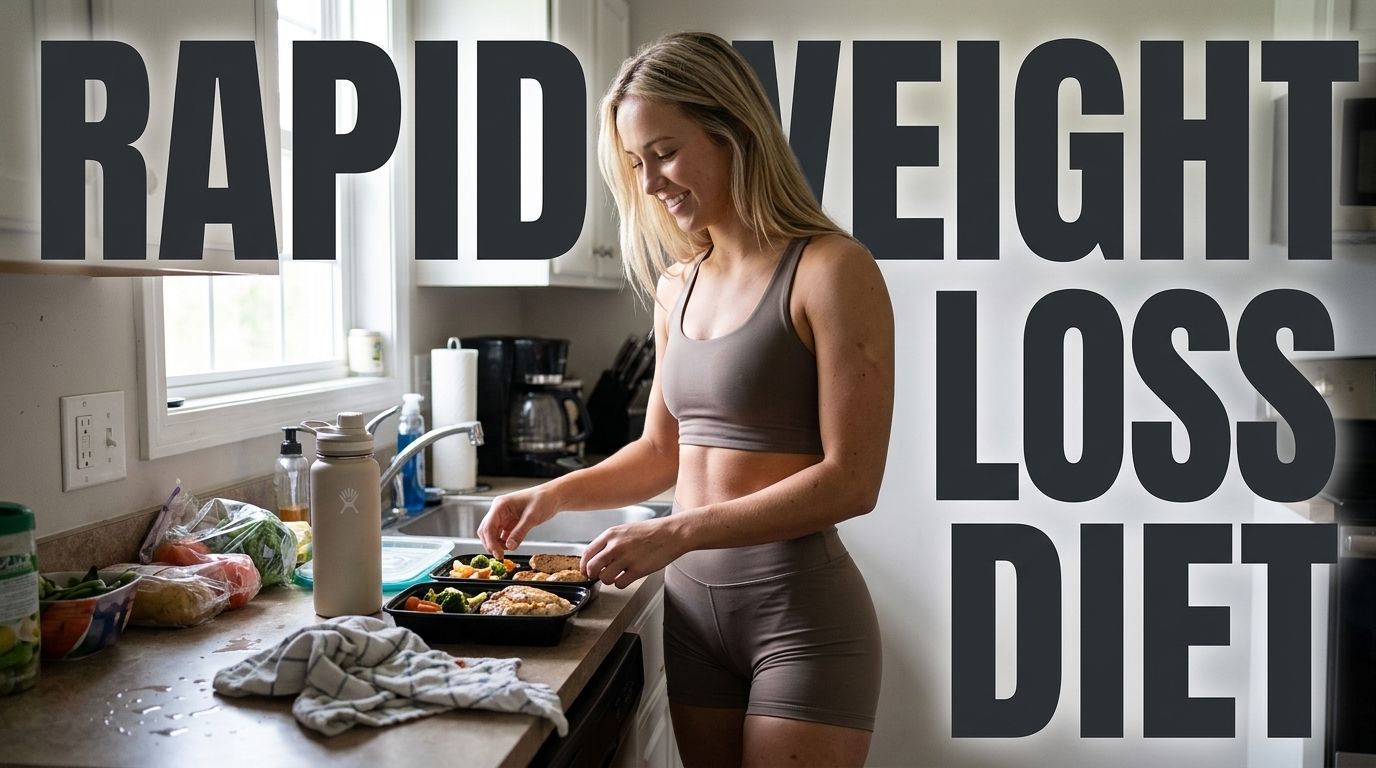
A rapid weight loss diet aims to shed more than 2 pounds (1 kilogram) per week through aggressive calorie restriction. These plans range from very low calorie diets under 800 calories to high-protein programs and ketogenic approaches. Medical supervision is critical for safety.
VLCDs produce 3-5 pounds of weekly loss by restricting intake to meal replacement shakes and supplements. High-protein diets boost metabolism and cut appetite by 400-500 calories per day. The calorie deficit itself drives results, not the specific macronutrient ratio. Fast weight loss also improves blood sugar and blood pressure within weeks.
This guide breaks down how each rapid diet works, the real risks of losing weight too fast, who should avoid these plans entirely, and how to transition from an aggressive calorie cut into sustainable eating habits. It also covers when prescription-level intervention makes more sense than going it alone.
What Is a Rapid Weight Loss Diet?
A rapid weight loss diet is any eating plan that produces more than 2 pounds (1 kilogram) of weight loss per week over several weeks. These diets require very low calorie intake, typically under 1,500 calories per day. Some programs drop as low as 800 calories daily.
These diets are most often chosen by people with obesity who need to lose weight quickly. Healthcare providers sometimes prescribe them before surgery to reduce surgical risk. But here’s the thing: most plans are intended for short-term use only.
Major medical organizations define safe, sustainable weight loss as 0.5 to 1 kilogram (1-2 pounds) per week. The National Institutes of Health recommends this rate over a minimum six-month period for lasting results.
How Much Weight Can You Lose Per Week Safely?
Most medical guidelines recommend losing 0.5 to 1 kilogram (1-2 pounds) per week for safe, sustainable results. A calorie deficit of 500-600 calories per day produces this rate of loss consistently across clinical studies.
Losing more than 1 kilogram per week increases the risk of muscle loss, bone density reduction, and metabolic slowdown. Why does that matter? The body responds to rapid calorie restriction by lowering its basal metabolic rate, and that makes keeping weight off harder.
What Counts as Rapid Weight Loss?
Doctors classify anything above 2 pounds (1 kilogram) per week as rapid weight loss. A focused 1-4 week phase with a large calorie deficit drives this accelerated rate. Most rapid diets aim for 3-5 pounds of loss weekly.
Here’s what no one tells you: the first 3-5 pounds lost in the opening week are primarily water weight from glycogen depletion. Each gram of glycogen binds 3-4 grams of water. Carbohydrate restriction triggers fast fluid loss before actual fat burning begins.
How Do Rapid Weight Loss Diets Work?
All rapid weight loss diets work by creating a large calorie deficit between energy consumed and energy burned. Losing 1 kilogram of body fat requires a total energy deficit of approximately 7,700 kilocalories. Larger daily deficits of 500-1,000 kilocalories accelerate the timeline.
And this is where it gets interesting: the body responds to severe calorie restriction by lowering its metabolic rate. Muscle tissue burns more calories than fat at rest. Losing muscle during rapid dieting further reduces daily energy expenditure over time.
What Role Does a Calorie Deficit Play in Fast Weight Loss?
The calorie deficit is the sole driver of weight loss regardless of the macronutrient ratio. A 2018 DIETFITS study found no significant differences in weight loss between low-fat and low-carbohydrate diets when the calorie deficit was equal.
In plain English: it doesn’t matter whether you cut carbs or cut fat. A deficit of 500-600 calories per day produces 0.5 kilograms (1.1 pounds) per week and is considered sustainable. VLCDs create deficits of 1,000-1,500 calories per day for faster but riskier results.
Does Your Body Enter Ketosis on a Very Low Calorie Diet?
Yes. The body enters nutritional ketosis when carbohydrate intake drops below 20-50 grams per day. The liver converts stored fat into ketone bodies for energy. VLCDs typically restrict carbohydrates enough to trigger this metabolic shift.
Ketosis shifts the primary fuel source from glucose to fatty acids and ketone bodies. This state increases the rate of fat oxidation. Adequate protein intake (0.8-1.5 grams per kilogram of ideal body weight) helps preserve lean muscle mass during ketosis.
What Are the Most Popular Rapid Weight Loss Diets?
The most common rapid weight loss approaches include very low calorie diets (VLCDs), low-carbohydrate/ketogenic diets, high-protein diets, meal replacement programs, and intermittent fasting protocols. Each uses a different strategy to create the required calorie deficit.
Rapid Weight Loss Diet Comparison:
| Diet Type | Daily Calories | Weekly Loss | Max Duration |
|---|---|---|---|
| VLCD | Under 800 | 3-5 lbs (1.4-2.3 kg) | 12 weeks |
| Low Calorie Diet | 1,000-1,500 | 1-2 lbs (0.5-1 kg) | Ongoing |
| Ketogenic Diet | 1,200-1,800 | 2-4 lbs (0.9-1.8 kg) | 3-6 months |
| High Protein Diet | 1,200-1,600 | 2-3 lbs (0.9-1.4 kg) | Ongoing |
| Meal Replacement | 850-1,000 | 3-4 lbs (1.4-1.8 kg) | 12 weeks |
Here’s the part most people miss: a systematic review of 14 dietary macronutrient patterns showed most diets produce modest weight loss at 6 months. Weight reduction and cardiometabolic improvements largely disappear by 12 months without accompanying lifestyle changes.
How Does the Very Low Calorie Diet (VLCD) Work?
A VLCD provides fewer than 800 kilocalories per day using protein-based meal replacements mixed with water. The standard structure includes 80 grams of carbohydrate, 15 grams of fat, and adequate protein from milk, soy, or egg sources. Daily multivitamins and 2-3 grams of potassium are required.
Standard VLCD Daily Macronutrients:
| Nutrient | Daily Amount | Source |
|---|---|---|
| Calories | Under 800 kcal | Meal replacement shakes/bars |
| Carbohydrates | 80 g | Included in formula |
| Fat | 15 g | Included in formula |
| Protein | 70-100 g | Milk, soy, or egg powder |
| Potassium | 2-3 g | Supplement required |
Patients on medically supervised VLCDs lose 3-5 pounds (1.4-2.3 kilograms) per week. These diets aren’t recommended for longer than 12 weeks. Medical supervision is required throughout the entire program duration.
Can a High Protein Diet Speed Up Weight Loss?
Yes. High protein intake boosts metabolism through the thermic effect of food. Protein requires 20-30% of its calorie content for digestion. Carbohydrates require only 5-10%, and fat requires 0-3% for the same process.
So what does that mean for you? Protein increases satiety hormones (GLP-1, peptide YY) and reduces the hunger hormone ghrelin. Research shows high-protein diets reduce overall calorie intake by 400-500 calories per day through reduced appetite alone.
What Are the Health Benefits of Rapid Weight Loss?
Rapid weight loss in people with obesity can improve diabetes management, lower high cholesterol, and reduce elevated blood pressure. These metabolic improvements often appear within the first few weeks of significant calorie restriction.
Health Conditions Improved by Rapid Weight Loss:
- Type 2 diabetes (improved insulin sensitivity)
- High blood pressure (reduced systolic and diastolic readings)
- High cholesterol (lowered LDL and triglycerides)
- Sleep apnea (reduced airway obstruction)
- Joint pain (decreased load on knees and hips)
Doctors sometimes prescribe rapid weight loss before bariatric or orthopedic surgery. Reducing body weight by 5-10% before a procedure lowers anesthesia complications, surgical bleeding, and post-operative infection rates.
Does Fast Weight Loss Improve Blood Sugar and Blood Pressure?
Yes. Calorie restriction improves insulin sensitivity within days of starting a very low calorie diet. Patients with type 2 diabetes often see fasting blood glucose levels drop within the first 1-2 weeks of a rapid weight loss program.
Is that fast? For a metabolic change, yes. Weight loss of 5% or more produces measurable reductions in systolic and diastolic blood pressure. The reduction occurs partly from decreased sodium and fluid retention associated with lower calorie and carbohydrate intake.
What Are the Risks of Losing Weight Too Fast?
Common side effects of losing weight too fast include gallstones, gout, fatigue, constipation, diarrhea, and nausea. Severe calorie restriction can also cause headaches, dizziness, hair loss, and menstrual irregularities in women.
Side Effects of Rapid Weight Loss:
- Gallstones (cholesterol buildup in bile)
- Gout (uric acid spike from tissue breakdown)
- Fatigue and weakness
- Constipation or diarrhea
- Nausea and headaches
- Hair loss and menstrual irregularities
- Muscle loss and bone density reduction
The bad news? The body responds to semi-starvation by lowering its metabolic rate. When dieting stops and normal eating resumes, the body burns fewer calories than before. Relative muscle mass has decreased, and this creates a vicious cycle of weight regain.
Ready to lose weight without the crash diet risks? Get a proven weight loss plan built around safe, sustainable calorie targets.
Can Rapid Weight Loss Cause Muscle Loss and Gallstones?
Yes. Losing more than 1 kilogram per week causes the body to break down muscle tissue for energy alongside fat stores. Muscle burns more calories at rest than fat. Losing muscle reduces daily energy expenditure and makes weight regain more likely.
And it gets worse: rapid weight loss increases cholesterol concentration in bile. The gallbladder empties less frequently during severe calorie restriction. These two factors combine to form cholesterol gallstones in up to 25% of people on VLCDs.
Why Do Most People Regain Weight After a Crash Diet?
Crash diets lower the basal metabolic rate so the body stores more calories as fat when normal eating resumes. The body burns fewer calories than it did before the diet started. One cycle of weight loss and regain increases coronary heart disease risk.
Here’s why: extreme diets don’t teach sustainable eating habits. A 2017 review found that moderate, continuous calorie restriction is just as effective for total weight loss as intermittent extreme restriction but produces more lasting behavioral changes.
Who Should Avoid Rapid Weight Loss Diets?
Rapid weight loss diets are not safe for children under any circumstances. Teens, pregnant women, and older adults should not follow these diets unless a healthcare provider specifically recommends and supervises the program.
Groups Who Should Avoid Rapid Weight Loss Diets:
- Children (all ages)
- Pregnant and breastfeeding women
- Teens without medical supervision
- Adults over 65 (sarcopenia risk)
- People with eating disorder history
- Patients with heart disease or kidney disease
This is important: people with diabetes, heart disease, kidney disease, or eating disorder history face amplified risks on VLCDs. Electrolyte imbalances from extreme calorie restriction can trigger cardiac arrhythmias in vulnerable patients.
Is Rapid Weight Loss Safe for Teens and Older Adults?
No. Adolescents require adequate calories for bone growth, brain development, and hormonal maturation. VLCDs can stunt growth, delay puberty, and trigger disordered eating patterns that persist into adulthood.
Adults over 65 already lose muscle mass naturally through sarcopenia. Rapid weight loss accelerates this muscle depletion. Our nutritionists at Eat Proteins recommend that people over 65 maintain a slightly higher BMI to preserve bone density and functional strength.
How Do You Transition From Rapid to Sustainable Weight Loss?
After a rapid weight loss phase, calories should increase gradually by 100-200 per week until reaching a sustainable maintenance level. A sudden jump back to pre-diet calorie levels triggers rapid weight regain and fat storage.
Steps to Transition Safely:
- Increase daily calories by 100-200 each week
- Add whole food meals to replace liquid meal replacements
- Introduce strength training to rebuild lost muscle tissue
- Monitor body weight weekly and adjust intake accordingly
- Shift to a 500-600 calorie daily deficit for steady 0.5 kg/week loss
A 2018 review confirms that a calorie deficit of 500-600 calories per day is sustainable for losing 0.5 kilograms (1.1 pounds) per week. This moderate approach produces equal total weight loss over 12 months compared to extreme restriction.
What Eating Habits Help You Keep Weight Off Long Term?
Mediterranean diet patterns provide the strongest and most consistent benefits for both weight maintenance and cardiometabolic health. Regular meal timing, adequate protein at each meal, and high vegetable intake prevent weight regain after a rapid loss phase.
Bottom line: managing weight is a lifelong commitment. Strategies that can’t be maintained indefinitely produce temporary results. Food journaling, portion control, stress management, and adequate sleep all support long-term weight maintenance.
What Role Does Exercise Play in Rapid Weight Loss?
Rapid weight loss is primarily driven by calorie restriction, not exercise. Some healthcare providers recommend waiting until patients transition to a long-term eating plan before adding structured exercise programs to the routine.
But here’s the kicker: exercise becomes essential during the maintenance phase. Research shows it’s nearly impossible to maintain weight loss without regular physical activity. Exercise preserves muscle mass and offsets the metabolic slowdown caused by dieting.
Should You Work Out While on a Very Low Calorie Diet?
No. Intense exercise on fewer than 800 calories per day increases the risk of fatigue, dizziness, and muscle breakdown. Light walking (20-30 minutes per day) is generally safe and helps maintain joint mobility during severe calorie restriction.
Healthcare providers typically advise against high-intensity or resistance training during the VLCD phase. Once calorie intake increases to 1,200 or more calories per day, progressive strength training can begin to rebuild lost muscle tissue.
Want Your Free Rapid Weight Loss Meal Plan From Eat Proteins?
You’ve got the science. Now you need the roadmap. Our coaches at Eat Proteins built a free rapid weight loss meal plan that protects muscle mass while cutting calories aggressively. The plan balances a fast initial phase with adequate protein targets for every single meal.
The guide includes both a rapid phase and a maintenance phase with weekly menus, protein targets, grocery lists, and a calorie increase schedule. No guesswork. No crash diet rebound. Just a system that gets you results and helps you keep them. Don’t miss out.