
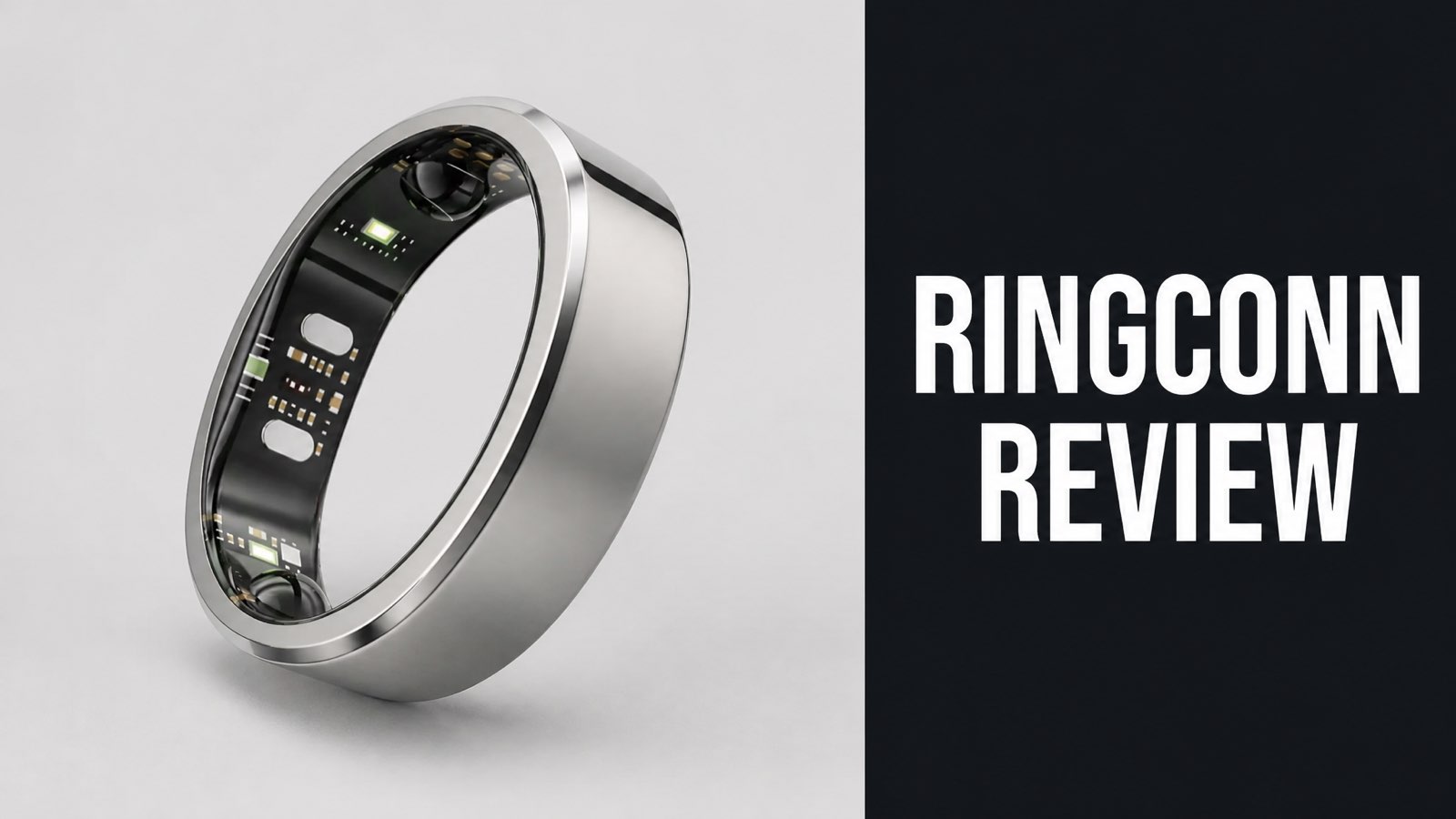
RingConn is a subscription-free smart ring that tracks sleep, heart rate, stress and activity from the finger. The company launched its first ring in 2023 and now sells a third generation. This RingConn review covers features, accuracy, price and customer feedback. Read on for the full verdict.
The ring lasts 10 to 14 days per charge and weighs only a few grams. It flags sleep apnea patterns and syncs with Apple Health and Google Fit. Buyers pay $426 once for Gen 3. Oura charges about $70 more each year. Complaints center on battery wear after a year and basic workout tracking. Even so, reviewers still call it a smart value buy for most people.
The big picture is clear. RingConn trades a little polish for a lot of value. Read on to learn how the sensors work. You will also see what users report and who should skip the ring. Then comes the price, and whether it is fair for your budget. Our team keeps every verdict honest.
What Is RingConn?
RingConn is a subscription-free smart ring that tracks sleep, heart rate, stress and activity from your finger. Smart rings promise a lot. Do they deliver? Mostly, yes. Our team at Eat Proteins sees it as a screenless watch alternative with a lower long-term cost. The ring weighs only a few grams and needs no charging stand. Apps run on iOS and Android.
Here’s the thing: the ring sits in the same class as Oura. The ring scores sleep stages, readiness and stress without any screen. The app is free. Buyers pay once, then own every core feature.
Three generations exist so far. Gen 1 launched in 2023 at $279. Gen 2 added sleep apnea monitoring at $299. Gen 3 raised the price to $426 and added haptic alerts.
RingConn Generations:
| Model | Launch Price | Key Addition |
|---|---|---|
| Gen 1 | $279 | Sleep and activity tracking |
| Gen 2 | $299 | Sleep apnea monitoring |
| Gen 3 | $426 | Haptic motor, vascular trends |
Who Makes RingConn?
RingConn was founded in 2021 by three doctors who wanted a simpler way to track health. The company released its first ring in 2023. Co-founder Dr. Guoxing Wang called Gen 1 one of the best in the market. A crowdfunding campaign also drew over 14,000 backers and $3 million. The backing shows real early demand for a cheaper Oura rival. Trust grows with time.
And that backing matters. Why? Early supporters bet on a startup, not a giant. To be clear, the company’s still young. Support quality and long-term durability remain the open questions.
How Does RingConn Work?
RingConn reads body signals through sensors on the inside of the band and sends them to a free app. Light, motion and temperature data flow in around the clock. The app turns that raw data into sleep scores, stress levels and daily readiness insights. No screen or subscription sits in between. Syncing happens when you open the app, so the habit matters.
In plain English: the ring collects data all day and night. You open the app to sync it. Reviewers note that data doesn’t always sync in the background. Open the app once a day.
What Sensors Does RingConn Use?
RingConn uses four core sensors to measure body signals. A PPG sensor reads heart rate with light. A temperature sensor tracks skin temperature. A 3D accelerometer tracks movement. An SpO2 reading estimates blood oxygen during sleep, which feeds the apnea feature. Each sensor sits on the inner side of the band, behind a clear cover. Both rest and motion.
Core Sensors:
- PPG sensor for heart rate and HRV
- Temperature sensor for skin temperature
- 3D accelerometer for movement and steps
- SpO2 reading for blood oxygen
Gen 3 adds a vibration motor. The motor delivers haptic alerts and reminders. Wearers also get new vascular health trend insights over time.
What Are the Benefits of RingConn?
RingConn delivers continuous health tracking without a monthly fee, which is its biggest selling point. Reviewers praise the light titanium body, the long battery and the clean app. The ring also syncs with Apple Health and Google Fit. In fact, few rivals match that mix at this price. Comfort helps too, since a ring is easy to wear in bed. Costs stay low.
Main Benefits:
- No subscription for any core feature
- 10 to 14 days of battery life
- Sleep apnea monitoring
- Light titanium design
- IP68 water resistance
Does RingConn Detect Sleep Apnea?
Yes. RingConn flags patterns consistent with sleep apnea, but it does not diagnose the condition. Gen 2 and Gen 3 both include the feature, and few rivals offer it. One reviewer shared the flagged patterns with a doctor. Further tests followed. The ring isn’t a medical device. TechRadar notes it is still not standard in smart rings today. Follow up.
Think of it this way: the ring is an early warning light. Does that replace a sleep study? No. Treat any alert as a reason to book a doctor visit.
Does RingConn Have Good Battery Life?
Yes. RingConn lasts 10 to 14 days per charge on Gen 3, which beats most rivals. Vibration alerts trim that figure to 10 to 12 days. The charging case also works as a power bank. Cybernews reports up to 150 days of total runtime with the Gen 2 case. Runtime means a charge roughly every two weeks, not every night. Travel needs no cable, which helps trips.
Now here’s the catch. Battery wear is a recurring complaint. Why does that matter? A ring only helps while it stays charged and worn. Some buyers report heavy drain after about a year.
What Do RingConn Reviews Say?
RingConn reviews are mostly positive on value, comfort and battery life. TechRadar calls the Gen 3 a smart buy for value seekers. Garage Gym Reviews calls it a decent and inexpensive tracker. Complaints focus on app polish, basic activity tracking and warranty service. Overall, the verdict leans positive, with clear caveats for athletes. Fair summary.
Reviews run mixed on polish. Is that a red flag? Not really. The app is clean and easy to navigate. The app just lacks the refinement of Oura’s app.
What Are the Positive Experiences?
Users praise comfort, sleep tracking and the no-subscription model. One tester wore the ring day and night for over a month. That tester found it easier to wear than an Apple Watch. Another reviewer found sleep and nap tracking quite accurate. Both liked the missing screen. Light weight and a quiet design drive most of the praise. Sizing help earns praise.
The good news? Customers also describe fast delivery and helpful sizing support. A free sizing kit ships first. One buyer got a free full set when the ring was out of stock.
What Are the Common Complaints?
Common complaints center on battery wear, sleep accuracy and sizing. One Trustpilot reviewer reported battery drain after a year and only a 30 percent discount on a replacement. Another said awake periods were missed overnight. Some find the smallest size too large. Each issue is fixable, yet each affects long-term trust in the product. Most are minor.
Common Complaints:
- Battery drain after about a year
- Awake times missed during sleep
- Smallest size too large for some
- Basic activity tracking
- FSA reimbursement denied for some buyers
To be clear, support experiences vary. Other buyers praise quick, generous out-of-warranty replacements. Our experts read that mix as a normal startup pattern.
RingConn vs Oura: Which Is Better?
RingConn wins on price and battery, while Oura wins on app polish and refinement. The Oura Ring 5 starts at £399 and needs a $5.99 monthly plan for full features. RingConn Gen 3 costs $426 once. Both rings track sleep, heart rate and stress with similar accuracy. The right pick depends on budget and tolerance for fees. Neither ring is perfect for casual use.
RingConn Gen 3 vs Oura Ring 5:
| Category | Winner | Reason |
|---|---|---|
| Ongoing cost | RingConn | No monthly fee |
| Battery life | RingConn | 10 to 14 days per charge |
| App polish | Oura | More refined insights |
Gen 3 looks a lot like Gen 2. Is it still an upgrade? Slightly. Haptic alerts and vascular trends are the real changes. The design and app stay largely the same.
Does RingConn Charge a Subscription?
No. RingConn charges no subscription for any core feature, and the app is free. Buyers pay once and unlock everything. Oura’s plan adds about $70 per year (£70). Over three years, that gap grows to roughly $210 (£210). The savings offset much of the price. That difference is the clearest edge over Oura. Oura locks some insights behind its paid plan.
And it gets better: updates arrive over the air. The app keeps improving without extra fees. Fees add up fast. How fast? About $70 a year with Oura. Fees are the main reason RingConn wins on value.
Is RingConn Safe?
Yes. RingConn uses a titanium body with a medical-grade epoxy interior that is safe for daily wear. Reviewers describe the inner molding as non-allergenic. The ring is IP68 rated and waterproof to 100 meters (328 feet). The ring isn’t a medical diagnostic device. Skin contact stays comfortable during long wear and sleep. Wear it with total confidence.
Short answer: the hardware is low risk. The data is the weak spot. SpO2 readings ran lower than expected in one test. Should that worry you? Treat it as a trend, not a diagnosis.
Who Should Avoid RingConn?
Heavy lifters and interval athletes should skip RingConn as a primary workout tracker. Reviewers found that smart rings struggle with vigorous exercise. One test showed overestimated workout calories. Garmin data stayed more reliable during intervals. Casual users face no such problem. The ring suits resting data far better than hard training data.
Who Should Skip It:
- Athletes who need exact workout data
- People who dislike wearing rings
- Anyone expecting a medical diagnosis
- Buyers who want a screen or notifications
Sizing is critical too. Why? A wrong size ruins sleep tracking. Gen 3 sizes differ from jewelry sizes and older rings. Use the free kit and wear the sample for a full day and night.
How Much Does RingConn Cost?
RingConn Gen 3 costs $426 for the silver, gold and matte black finishes, and $454 for brushed ones. The brushed silver and brushed rose gold versions carry the higher price. Every order includes a charging case and USB-C cable. No subscription is added later. Earlier models launched at lower prices of $279 and $299 each. Check current offers first.
Gen 3 Pricing by Finish:
| Finish | Price |
|---|---|
| Silver, gold, matte black | $426 |
| Brushed silver | $454 |
| Brushed rose gold | $454 |
Is RingConn Worth the Price?
Yes. RingConn is worth the price for buyers who want subscription-free health tracking. TechRadar calls it one of the smartest purchases for value. Oura’s upfront price is close, but its fees add up. Over a few years, RingConn comes out cheaper overall. Value also depends on how long the battery stays healthy. Most casual buyers get fair value overall.
Does the value hold up? Mostly. Battery wear after a year is the main risk. Bottom line: check the warranty terms before buying.
Is Eat Proteins Worth It?
Yes. Eat Proteins gives you straight answers before you spend a single dollar on a wearable. Our team reads the reviews, checks the specs and flags the catches. You get the full picture on RingConn and every other product we cover. Skip the guesswork today. Our experts do the research so you can buy with confidence. Start with our full RingConn guide above.
Don’t miss out on the next breakdown. Join Eat Proteins today and shop smarter.
Why Trust Eat Proteins on Wearables?
Our coaches at Eat Proteins compare tested reviews and real customer feedback, not sales pages. Every claim traces back to a named source. That approach keeps the verdict honest. You decide with facts, not hype. Subscribe below so you never miss the next review. We name every source we rely on in each review. Honest scoring is the rule, whatever the brand.