
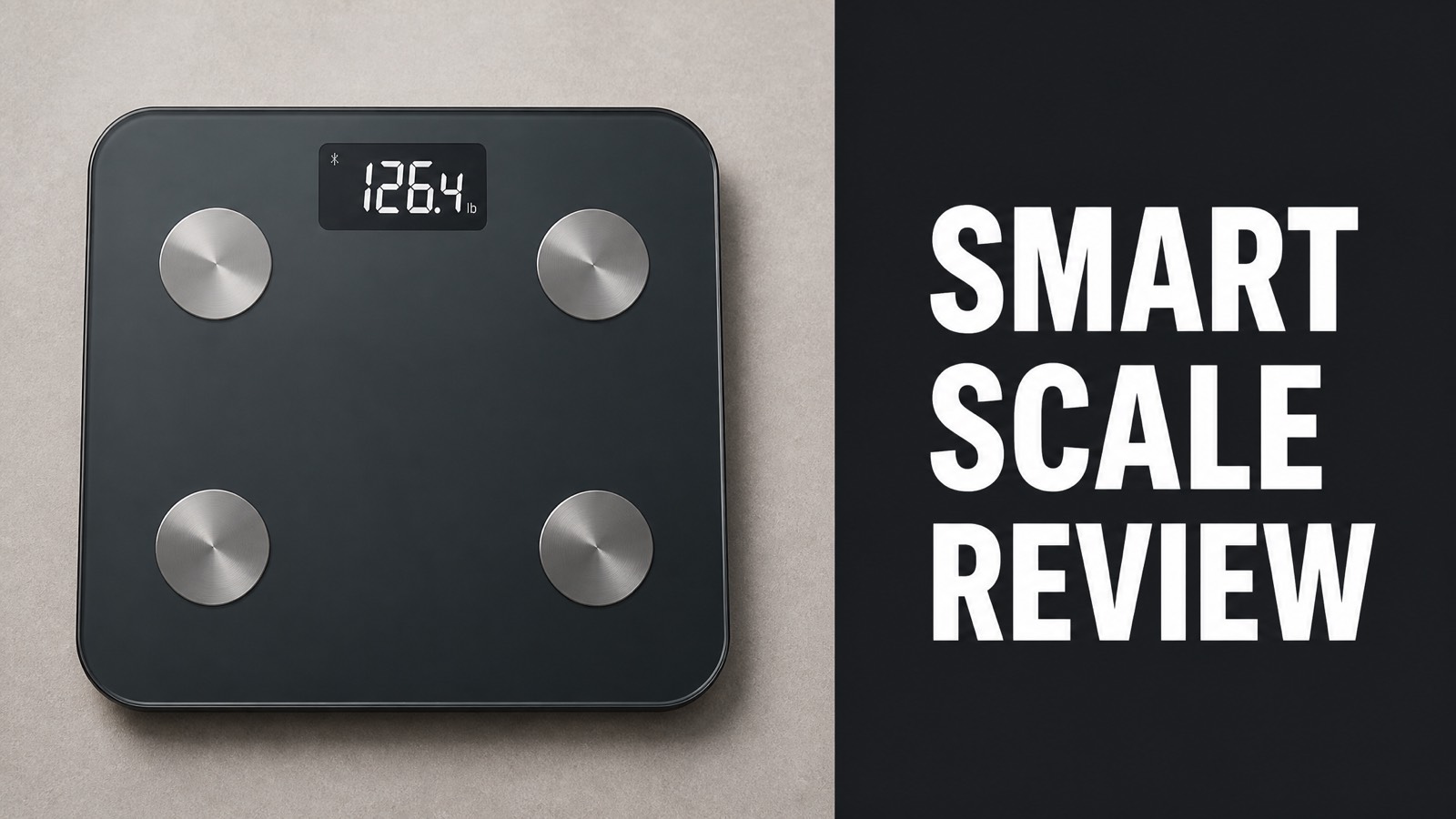
A smart scale is a connected bathroom scale that logs each weigh-in to a phone app over Bluetooth or Wi-Fi. Top models from Wyze, Withings, Etekcity, and Renpho cost $30 to $400 in 2026. Most models today also estimate body fat, muscle mass, and water weight using bioelectrical impedance.
Smart scales weigh accurately, often within 0.3 pounds (0.14 kilograms) of a medical scale. Body fat readings are estimates with a steady offset. BIA modes aren’t advised during pregnancy or with pacemakers. Wirecutter favors the Wyze Scale X for value. The Withings Body Smart adds Wi-Fi and a two-year warranty at a noticeably higher price.
The real payoff is the trend line, not any single number. Consistent weigh-ins under the same conditions reveal true progress. This review covers how smart scales work and what reviewers found. It also compares top models, prices, and whether one deserves a spot in your bathroom.
What Is a Smart Scale?
A smart scale is a digital bathroom scale that sends each weigh-in to a phone app over Bluetooth or Wi-Fi. The app stores every reading and charts long-term trends. Most models also estimate body fat, muscle mass, and water weight. Top-rated picks run from $39 to $400 in 2026, per hands-on testing by the National Council on Aging (NCOA). Prices vary.
Wirecutter writer Nancy Redd has tested over 50 smart scales since 2017. Her verdict? The app matters as much as the hardware. In fact, a clunky app kills the weigh-in habit fast. And a scale nobody steps on tracks nothing at all.
Here’s the key difference from a basic digital scale. A basic model shows one number and forgets it. A smart model saves every reading to a user profile. Most support up to eight users, and the Hume Health Body Pod app handles 24.
Who Is a Smart Scale For?
A smart scale suits people who want to track weight trends over weeks and months, not single readings. Experts interviewed by Wirecutter agree that trends reveal far more than one weigh-in. Cornell University researcher David Levitsky has studied body-weight regulation for four decades. He even suggests weighing in daily for the clearest long-term picture.
Best Fit For:
- People tracking weight loss or weight gain
- Older adults watching for age-related muscle loss (sarcopenia)
- Lifters tracking muscle mass and body fat
- Fitbit, Garmin, and Apple Health users who want synced data
But daily weigh-ins don’t suit everyone. Several experts told Wirecutter they wouldn’t encourage the habit for anyone with an eating disorder. NCOA adds that scales estimating bone mass give an early signal for osteoporosis risk. To be clear, no scale diagnoses anything.
How Does a Smart Scale Work?
A smart scale measures weight with strain gauges, then estimates body composition with a tiny electrical current. The weight reading is the reliable part. The composition numbers come from an algorithm. That algorithm blends the current’s resistance with each user’s height, age, and sex. Users enter those personal details in the companion app during setup.
After each weigh-in, the scale pushes data to its app. Bluetooth models need the phone nearby. Wi-Fi models upload straight to the cloud. The good news? The Wyze Scale X stores readings until the phone returns to range, so nothing gets lost.
What Is Bioelectrical Impedance Analysis?
Bioelectrical impedance analysis (BIA) sends a small, unfelt current through bare feet to estimate fat, muscle, and water. Muscle holds more water than fat, and water conducts electricity well. So the current moves faster through muscle. NCOA’s testing explains the result. A slower return signal produces a higher body fat reading on the final report.
How a BIA Reading Works:
- The user steps barefoot onto the metal electrodes.
- The scale sends a weak current up one leg and down the other.
- The scale measures how strongly the body resists that current.
- The app combines that resistance with height, age, and sex to estimate composition.
Socks block the current completely, notes Levitsky. Handlebar scales like the Oxiline Scale MD Pro add hand electrodes. Those extra electrodes read the upper body too. The trade-off? More parts that can break and a noticeably higher price.
What Does a Smart Scale Measure?
A smart scale measures body weight directly and estimates up to 45 other metrics, based on the model. The A&D Medical scale tracks 7 metrics. The Etekcity HR Smart Fitness Scale tracks 14. The Hume Health Body Pod tops NCOA’s list with 45. Its list covers bone mineral content, intracellular water, metabolic age, and upper-body readings from a handlebar.
Common Smart Scale Metrics:
- Body weight
- Body mass index (BMI)
- Body fat percentage
- Muscle mass
- Body water percentage
- Visceral fat
- Basal metabolic rate (BMR)
- Bone mass
Weight is the metric experts trust most. What about the extras? Levitsky calls them ‘a nice selling point’ but a poor measure of composition. Here’s the proof: one app put a 41-year-old tester’s metabolic age at 43. Another said 38.
Is Bluetooth Enough, or Do You Need Wi-Fi?
Yes. Bluetooth is enough for most people, since a reliable connection matters more than Wi-Fi. Wirecutter reached that conclusion after years of careful hands-on testing at home. Bluetooth scales sync only when the phone sits close by. Wi-Fi scales like the Withings Body Smart upload each reading automatically, even when the phone stays in another room.
Is Wi-Fi pointless, then? No. PCMag’s top pick, the Etekcity HR Smart Fitness Scale, pairs Wi-Fi with a 500 mAh rechargeable battery. What’s more, owners skip the phone entirely. And there’s no stack of spare AAA batteries either.
Are Smart Scales Accurate?
Yes. Smart scales are accurate for body weight, often within 0.3 pounds (0.14 kilograms) of a medical scale. Wirecutter measured that margin on the Wyze Scale X. Body composition numbers are less precise. Experts agree that steady consistency matters more than pinpoint accuracy. Consistency is what reveals real weight trends at home over many months.
Weight Accuracy in Testing:
| Scale | Test | Result |
|---|---|---|
| Wyze Scale X | 30 lb (13.6 kg) dumbbell | Exact match |
| Wyze Scale X | 50 lb (22.7 kg) dumbbell | 0.1 lb (0.05 kg) off |
| Renpho Smart Scale | 10 lb (4.54 kg) dumbbell | 10.01 lb (4.55 kg) |
| Wyze Smart Scale | Body weight vs. home scale | Within 0.5 lb (0.23 kg) |
Does placement matter? Absolutely. A Garage Gym Reviews tester saw a Withings reading shift with each small move. Another tester stored a Garmin Index S2 upright. Garmin warns that vertical storage hurts accuracy, and flat storage fixed the problem.
Is Smart Scale Body Fat Accurate?
No. Smart scale body fat readings are estimates with a systematic offset, not lab-grade measurements. A 2022 study in BMJ Nutrition, Prevention and Health compared standing BIA with DXA scans. The authors found high precision but a consistent offset. Garage Gym Reviews reports that BIA readings landed within 3% of the DXA results in that 2022 study.
Some readings are clearly off. How far off? Tester Caine Wilkes saw the Eufy Smart Scale P2 put his bones at 11 pounds (5 kilograms). Bones average about 15% of body weight. So that figure made no sense for him.
Other results come closer. PCMag found the Etekcity scale matched the Omron HBF-306C handheld body fat monitor exactly. Gyms use that Omron device widely. Bottom line: trends beat single readings for body fat.
How Do You Get Consistent Readings?
Consistent readings come from weighing under the same conditions every single time. Hydration, food, clothes, and time of day all shift the number on the display. University of Connecticut professor Tricia Leahey has a simple routine. The weigh-in happens first thing in the morning, right after the bathroom. No food, no drink, and ideally no clothes.
Location matters just as much. The scale belongs in one spot on a hard, flat floor. Why? Carpet and frequent moves throw off results. And bare feet matter too, since socks block the BIA current.
What Do Smart Scale Reviews Say?
Smart scale reviews praise weight accuracy and app tracking but question the body composition extras. Garage Gym Reviews gave the Renpho Smart Scale 5 of 5 stars for accuracy. The same testers docked Withings and Eufy one point each. Their reason was shaky readings for metrics beyond weight and body fat percentage, such as bone mass and metabolic age.
Budget models share a common pattern. Do they weigh accurately? Yes. Body fat numbers, though, tend to wander. Renpho Elis customers flagged inaccurate body fat readings and dropped Bluetooth connections.
What Do Users Like?
Users like the low price, accurate weight readings, and simple trend charts in the companion apps. The Renpho Smart Scale lists at $49.99 but often drops to $29.99. Garage Gym Reviews tester Kate Meier said the scale measured a 10-pound dumbbell at 10.01 pounds. Her verdict on the budget scale was simple and direct: ‘incredibly accurate’ for the low price.
Multi-user features earn praise too. Tester Frieda liked that the Wyze Smart Scale recognizes up to eight people and offers a guest mode. And here’s the kicker: its heart rate reading landed within 2 to 3 beats per minute of her Fitbit.
What Are Common Complaints?
Common complaints center on unreliable body composition data, finicky connections, and scales that refuse to wake up. One Garage Gym Reviews tester stepped on a Garmin Index S2 four or five times to turn it on. Another tester couldn’t connect a Xiaomi Mi Body Composition Scale to its app at all. The Bluetooth setup button simply didn’t exist on that scale.
Top Complaints:
- Inaccurate body fat and bone mass estimates
- Bluetooth drops during syncing
- Readings that shift when the scale moves
- Frustrating setup for extra household users
- Apps locked to one ecosystem, like the Fitbit Aria Air
Ecosystem lock-in frustrates buyers too. The Fitbit Aria Air costs $49.95 and syncs only with the Fitbit app. A Garage Gym Reviews tester found it tracked weight and BMI. But she couldn’t get a body fat reading.
How Do Top Smart Scales Compare?
Top smart scales differ most in connectivity, weight capacity, warranty, and the number of tracked metrics. Wirecutter picks the Wyze Scale X. PCMag picks the Etekcity HR Smart Fitness Scale. Garage Gym Reviews prefers the Eufy Smart Scale P2. NCOA names the Hume Health Body Pod its best overall scale after more than 50 hours of research and testing.
Smart Scale Comparison:
| Scale | Capacity | Connection | Warranty |
|---|---|---|---|
| Wyze Scale X | 400 lb (181 kg) | Bluetooth | 1 year |
| Withings Body Smart | 440 lb (200 kg) | Bluetooth + Wi-Fi | 2 years |
| Hume Health Body Pod | 400 lb (181 kg) | Bluetooth | 1 year |
| Renpho Elis Nova | 400 lb (181 kg) | Bluetooth | 18 months |
| Oxiline Scale MD Pro | 396 lb (180 kg) | Bluetooth | Lifetime |
| A&D Medical Body Composition | 397 lb (180 kg) | Bluetooth | 2 years |
Handlebar models cost more but read the upper body. PCMag says the Wyze Scale Ultra BodyScan delivers segmental data for arms, legs, and torso. The price? Roughly half that of competing handlebar scales.
Is Wyze Scale X Better Than Withings Body Smart?
Yes. The Wyze Scale X is the better value, while the Withings Body Smart is the better premium choice. Wirecutter rates both as equally accurate for weight. The Withings model adds Wi-Fi, a wider platform, a richer display, and a two-year warranty. By comparison, the Withings price typically runs more than double the cost of the budget-friendly Wyze model.
The Wyze Scale X runs on four AAA batteries for up to 22 months in Power Saver mode. Meanwhile, the Withings Body Smart offers an Eyes-Closed Mode. That feature lets users weigh in without seeing the number.
Are Smart Scales Safe?
Yes. Smart scales are safe for most adults, but BIA mode is not advised during pregnancy or with implanted heart devices. Most makers warn against BIA use with a pacemaker or defibrillator. The Wyze Scale X and Etekcity HR both offer a safe mode that switches the current off. That mode still delivers accurate weight-only readings for every household member.
Who Should Skip BIA Mode:
- Pregnant people
- People with pacemakers
- People with implanted defibrillators
- Anyone with other implanted electronic medical devices
Here’s the part most people miss: some scales have no safe mode at all. PCMag flags the Renpho MorphoScan Nova and FitTrack Dara for that gap. Analog spring scales stay safe for pacemaker users. NCOA advises asking a cardiologist first.
Is Your Smart Scale Data Private?
No. Smart scale data isn’t protected by HIPAA the way records held by a doctor are. Wirecutter checked the privacy policies for every one of its picks in close detail. Wyze says health data is encrypted. Its 2026 policy says the company doesn’t sell biometric data. Yet Wyze may share other personal information with analytics and advertising partners.
Does syncing add risk? Yes. Linking a scale to Apple Health, Fitbit, or Google Health Connect means trusting those companies too. And the Wyze app also collects email, age, height, and biological sex.
How Much Does a Smart Scale Cost?
A smart scale costs from about $17 on sale up to $400, with most solid models between $30 and $150. Garage Gym Reviews testers treat $50 to $150 as the typical range for a quality model with a good app. NCOA’s top picks span $39 to $400. Handlebar models with segmental body analysis for arms, legs, and torso sit at the very top of that price range.
Sample Smart Scale Prices:
| Scale | Price |
|---|---|
| Renpho Bluetooth Smart Scale | $17 on sale ($34 list) |
| Wyze Smart Scale | About $30 |
| Eufy Smart Scale P2 | $32 on sale ($49 list) |
| Renpho Smart Scale | $29.99 on sale ($49.99 list) |
| Fitbit Aria Air | $49.95 |
Do cheap scales hold up? On weight alone, yes. Wirecutter calls the Wyze Scale X one of the least expensive scales it tested. Yet the Scale X ranks among the most accurate. The Wyze Scale S costs about $10 less but proved less consistent.
Is a Smart Scale Worth It?
Yes. A smart scale is worth it for anyone who tracks weight trends and wants every reading logged automatically. The value comes from long-term charts, not single readings. Ross A. Clark has studied bathroom scales for nearly two decades. He says ease of use beats a small accuracy gain every time. Simple tools get used every single day at home for years.
Chasing precise body fat numbers? A smart scale will disappoint. A DXA scan remains the reference standard. In plain English: for weight, BMI, and broad trends, a $30 to $50 scale does the job.
Should You Try Eat Proteins?
Yes. Eat Proteins gives you the nutrition side of the equation that a smart scale can only measure. A scale shows the trend. Your food choices drive it. Our team at Eat Proteins builds protein-focused guidance for real people. That guidance helps you protect muscle while you lose fat. Then your scale trend finally moves the right way, week after week.
Here’s the thing: a scale without a plan is just a number. Pair your weigh-ins with real protein targets. Start with the Eat Proteins guides today and give your next trend line something worth showing.
How Does Eat Proteins Help You Track Progress?
Eat Proteins helps you read smart scale trends through the lens of muscle, protein, and body composition. Our coaches explain why a stable weight with falling body fat still signals real progress. That context keeps you from quitting when the scale stalls. And the stall often comes right before results start to show on the scale and in the mirror too.
So don’t let one odd reading derail you. Track the trend, hit your protein, and check in with Eat Proteins for your next step. Your best progress starts now.