
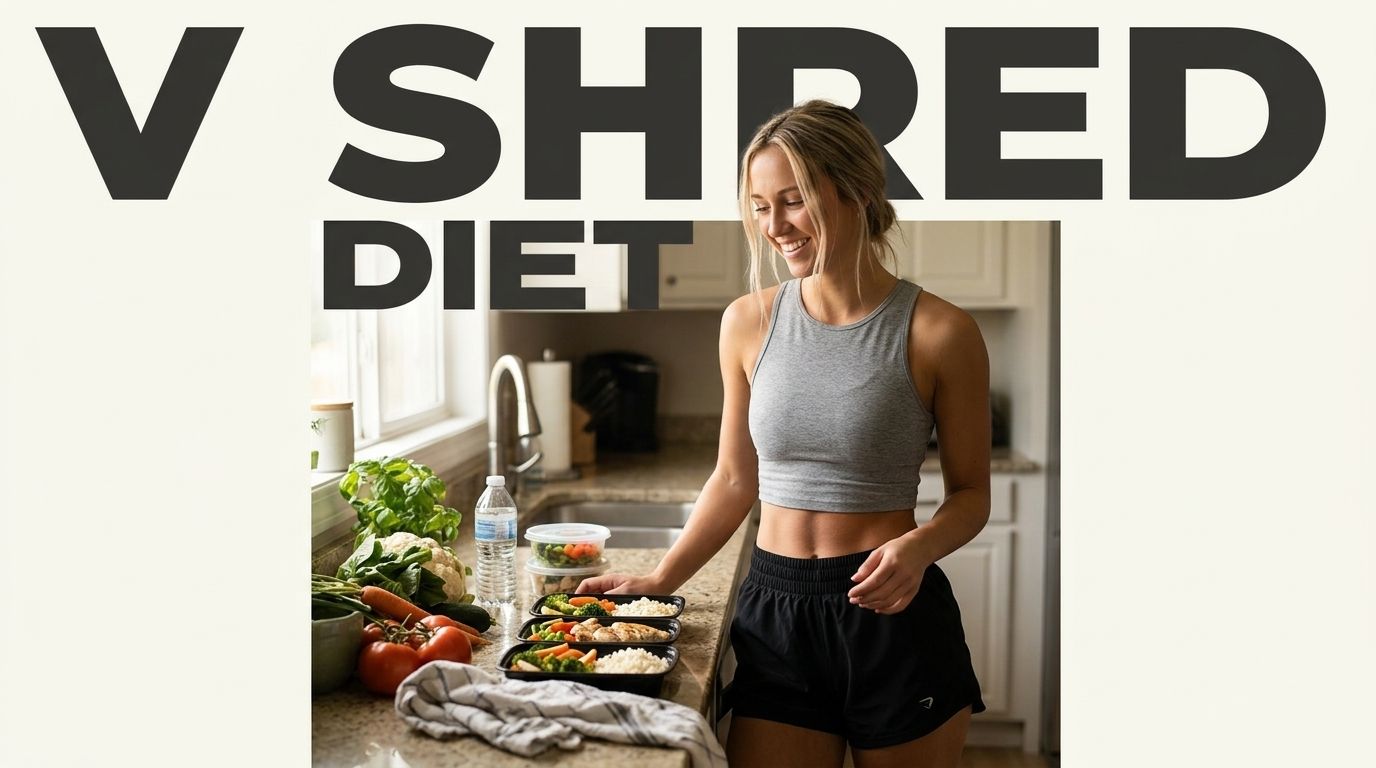
The V Shred diet is a fitness and nutrition program that assigns meal plans based on body type. Founded in 2016, it combines carb cycling, calorie tracking, and supplement sales to promise rapid fat loss. Over 3 million members have signed up through its viral social media ads.
V Shred users report losing 14 to 53 pounds over 6 weeks to 6 months. But here’s the thing. Experts confirm the results come from a basic calorie deficit, not body type science. Dr. Layne Norton calls the somatotype eating approach completely fabricated. Registered dietitians classify the meal plans as generic templates, not personalized strategies.
The program delivers structure that helps beginners start. It also carries risks of nutrient gaps, metabolic slowdown, and supplement dependency. This guide breaks down how V Shred works, what experts actually think, and whether cheaper alternatives deliver the same results.
What Is the V Shred Diet?
The V Shred diet is a fitness and nutrition program founded in 2016 by Vince Sant that assigns meal plans based on somatotype classification. The program sorts users into ectomorph, mesomorph, or endomorph categories through an online quiz. Each body type receives different macronutrient ratios and calorie targets. V Shred combines this classification with carb cycling and Sculpt Nation supplements.
V Shred claims over 3 million members worldwide. The program markets through social media ads featuring body transformation testimonials and a free body type quiz. Celebrity endorsements from figures like Dr. Drew Pinsky appear in promotional materials.
Three core pillars define the V Shred structure. Body-type-based meal plans set daily macros. Carb cycling schedules alternate between high-carb and low-carb days. Sculpt Nation supplement integration adds fat burners, greens powders, and pre-workouts to the regimen.
V Shred Program Components:
- Body type quiz that assigns ectomorph, mesomorph, or endomorph classification
- Carb cycling meal plans with alternating high-carb and low-carb days
- Calorie tracking templates between 1200 and 1800 calories daily
- Sculpt Nation supplement line including fat burners and greens powders
- HIIT and circuit-based workout programs
How Does V Shred Classify Body Types?
The V Shred body type quiz sorts users into three somatotype categories that determine their entire nutrition and workout prescription. Ectomorphs receive higher carb ratios for their fast metabolism. Mesomorphs get balanced macros for their muscular frame. Endomorphs are assigned lower carb targets based on their slower metabolic profile.
Nutrition researcher Dr. Layne Norton confirms that eating based on body type has zero scientific evidence. Registered dietitians classify V Shred plans as broad templates rather than personalized strategies. No peer-reviewed study supports different macro ratios for different somatotypes.
What Does a V Shred Meal Plan Include?
A V Shred meal plan includes daily breakdowns with portion-controlled breakfast, lunch, dinner, and two snacks built around lean proteins and complex carbs. Typical meals feature 100 grams (3.5 ounces) of grilled chicken breast, half a cup of quinoa, and mixed vegetables. Greek yogurt, turkey wraps, and berry smoothies rotate through the weekly schedule.
Registered dietitians report that these meal plans lack flexibility for individual health conditions and cultural dietary needs. The marketed customization amounts to selecting one of three generic templates. Long-term sustainability suffers because the plans don’t teach users how to manage food choices independently.
How Does the V Shred Diet Work?
The V Shred diet works by creating a calorie deficit where users consume fewer calories than they burn each day. Reduced food intake forces the body to tap into stored fat for energy. High-intensity workouts increase daily calorie expenditure. These two elements form the foundation of every V Shred program regardless of assigned body type.
V Shred advertises a ‘Harvard-discovered secret loophole’ for effortless weight loss. Nutrition professionals confirm no such mechanism exists beyond standard calorie deficit principles. The marketing creates urgency by claiming this loophole is unknown to the rest of the world. In reality, the program applies the same energy balance equation used in every effective fat-loss plan.
What Is Carb Cycling in V Shred?
Carb cycling in V Shred alternates between high-carb days at 150 to 200 grams and low-carb days at 50 to 75 grams to manipulate insulin and glycogen stores. High-carb days refuel muscle glycogen and temporarily boost leptin levels. Low-carb days push the body toward greater fat oxidation. The cycle typically runs on a 3-day rotation matched to workout intensity.
Research shows carb cycling can temporarily increase leptin and thyroid hormone output during high-carb refeeds. But does carb timing actually matter? Total weekly calorie intake remains the primary driver of fat loss, not when you eat your carbs. The cycling structure adds complexity without changing the underlying energy balance equation.
Carb Cycling Schedule Overview:
| Day Type | Carb Intake | Purpose |
|---|---|---|
| High-Carb Day | 150-200 g | Refuel glycogen, boost leptin |
| Low-Carb Day | 50-75 g | Increase fat oxidation |
| Moderate Day | 100-125 g | Transition between phases |
Does V Shred Require Calorie Tracking?
Yes. V Shred requires daily calorie tracking with targets typically set between 1200 and 1800 calories depending on the body type assignment. Users follow portion-controlled meal templates and weigh food to stay within prescribed ranges. The program provides meal breakdowns but expects consistent tracking throughout the plan duration.
Here’s the thing. Nutrition professionals note a critical flaw in this approach. V Shred meal plans don’t teach users how to self-manage food choices. The rigid templates create dependency on the program structure. Once users stop following the prescribed meals, they lack the skills to maintain their calorie targets independently.
Does the V Shred Diet Help You Lose Weight?
Yes. V Shred users report losing 14 to 53 pounds (6.3 to 24 kilograms) over program periods ranging from 6 weeks to 6 months. Results vary widely based on starting weight, adherence level, and baseline activity. The structured meal plans and scheduled workouts reduce guesswork that often causes beginners to quit during the first month.
So what’s really driving those results? Experts confirm that anyone who eats fewer calories than they burn loses weight. V Shred results come from calorie restriction and increased exercise, not from body-type-specific meal plans. The program delivers a framework, but the underlying mechanism is identical to any calorie-controlled approach.
Is V Shred Just a Calorie Deficit?
Yes. V Shred operates on the same calorie deficit principle that drives every effective weight loss program on the market. Reduced food intake paired with high-intensity workouts creates a daily energy gap. The body fills this gap by burning stored fat. Carb cycling and body type elements add structure but don’t alter the fundamental energy balance equation.
Dr. Layne Norton and registered dietitians confirm that V Shred’s body type eating approach is fabricated. The weight loss comes from eating less and moving more. To be clear, these principles are available in any free calorie tracking app without the premium price tag or supplement upsells that V Shred layers on top.
Can You Keep the Weight Off After V Shred?
No. Most V Shred users struggle to maintain results because the strict carb cycling, low-calorie intake, and supplement dependency contribute to burnout within 30 to 60 days. Nutrition professionals emphasize that short-term restrictive fixes are unsustainable and potentially harmful for most people. The program prioritizes rapid results over habit formation.
Users report that weight returns once they resume normal eating patterns. Why does this happen? V Shred doesn’t teach independent food management skills. Balanced, adaptable habits built around whole foods and flexible macro targets produce lasting results that rigid program structures can’t match.
What Do Experts Say About V Shred?
Certified personal trainers and dietitians classify V Shred as a slickly marketed program that relies on standard fitness principles available for free online. The workouts use familiar circuit training, weightlifting basics, and HIIT structures. The nutrition plans function as broad templates rather than the personalized strategies the marketing promises.
And here’s the part most people miss. V Shred isn’t a scam. The program delivers structure that helps beginners start exercising and eating cleaner. But results come from basic calorie deficit principles, not from proprietary body type science. The supplement upsells and marketing claims inflate the perceived value beyond what the content actually delivers.
Expert Assessments of V Shred:
- Dr. Layne Norton: body type eating is ‘completely fabricated’ with no scientific evidence
- Registered dietitians: meal plans are broad templates, not truly personalized
- Certified trainers: workouts use standard HIIT and circuit training available free online
- Independent researchers: Sculpt Nation supplements offer no benefits beyond a balanced diet
Is the Body Type Quiz Backed by Science?
No. Dr. Layne Norton, a nutritional sciences researcher, confirms that eating for your body type is completely fabricated with no scientific evidence backing it up. The somatotype classification system was developed in the 1940s for psychological profiling, not nutrition planning. Modern exercise science has moved past body type categories for dietary recommendations.
Registered dietitians classify V Shred’s body type approach as a marketing gimmick. Does body type really determine what you should eat? No peer-reviewed research supports the idea that ectomorphs, mesomorphs, and endomorphs require different macronutrient ratios for fat loss. Calorie balance and protein intake drive body composition changes regardless of body type classification.
Are V Shred Supplements Worth the Money?
No. V Shred’s Sculpt Nation supplement line includes fat burners, pre-workouts, greens powders, and sleep aids that independent research shows offer no benefits beyond a balanced diet. Less expensive alternatives from standard supplement brands deliver the same active ingredients at a fraction of the cost. The ‘essential’ label V Shred applies to these products is a sales tactic.
Trainers and dietitians stress that fitness results come from consistency in exercise and nutrition, not from supplement bottles. The upsells add significant cost to the program. Users who skip the supplements and focus on whole food nutrition report comparable or better results than those who purchase the full Sculpt Nation stack.
Sculpt Nation Supplement Lineup:
| Supplement | Claimed Benefit | Expert Verdict |
|---|---|---|
| Fat Burner | Accelerates fat loss | No independent evidence of effectiveness |
| Pre-Workout | Boosts energy and performance | Standard caffeine blend, cheaper options exist |
| Greens Powder | Fills nutrient gaps | Whole vegetables provide more bioavailable nutrients |
| Sleep Aid | Improves recovery | Generic melatonin formulation at premium price |
What Are the Risks of the V Shred Diet?
The V Shred diet carries risks of nutrient deficiencies, muscle loss, metabolic slowdown, and disordered eating patterns when calorie intake drops below 1500 calories daily. Restrictive plans at 1200 calories make it difficult to meet daily requirements for iron, calcium, vitamin D, and B vitamins. Prolonged restriction triggers adaptive thermogenesis that slows resting metabolic rate by 10 to 15 percent.
The program lacks screening for medical conditions. Its one-size-fits-all approach ignores individual health factors that require professional dietary guidance. Users with pre-existing conditions risk worsening their health by following generic calorie targets without medical supervision.
Can Low Calorie Intake Cause Nutrient Gaps?
Yes. Diets below 1500 calories daily make it difficult to meet recommended intakes of iron, calcium, vitamin D, and B vitamins without supplementation. V Shred plans at 1200 calories are particularly prone to these gaps because the restricted food volume limits micronutrient diversity. Women of reproductive age face higher risk for iron and folate deficiency on these protocols.
Here’s what that actually means for your body. Prolonged caloric restriction triggers adaptive thermogenesis. The body reduces resting metabolic rate by 10 to 15 percent as a survival mechanism. Fewer calories burn at rest, and continued weight loss becomes progressively harder. This metabolic adaptation persists for months after returning to normal intake levels.
Nutrients at Risk on Low-Calorie Diets:
- Iron: reduced intake increases fatigue and anemia risk, especially in women
- Calcium: inadequate intake weakens bone density over time
- Vitamin D: restricted food variety limits dietary sources
- B vitamins: lower calorie intake reduces B12 and folate from whole grains and proteins
- Magnesium: common deficiency on plans below 1500 calories
Is V Shred Safe for Everyone?
No. V Shred is not appropriate for pregnant or nursing women, individuals with diabetes or thyroid conditions, those with a history of eating disorders, or anyone on prescription medications affecting metabolism. The program doesn’t include medical screening or practitioner oversight. Users with these conditions risk serious health complications from unsupervised calorie restriction.
Customer reviews report that HIIT workouts are too intense for older adults, post-surgical patients, and exercise beginners. The program lacks adequate modifications for physical limitations. A certified trainer or physician consultation before starting V Shred reduces injury risk and ensures the calorie targets align with individual health needs.
What Are Common Mistakes on V Shred?
V Shred users make their biggest mistake when they rely on Sculpt Nation supplements as shortcuts instead of building consistent meal prep and exercise habits. Supplement dependency drains money without delivering results that proper nutrition provides. Users who skip the supplement stack and invest time in learning basic cooking and macro tracking report better outcomes and lower costs.
Following the meal plan too rigidly without adjusting for hunger signals, energy levels, and schedule changes causes burnout. Think of it this way. Successful dieters modify plans to fit real life rather than forcing daily routines around rigid meal templates. Flexibility within a calorie target produces better adherence than perfect plan execution.
Top V Shred Mistakes to Avoid:
- Buying the full Sculpt Nation supplement stack instead of investing in whole food groceries
- Following meal templates rigidly without adjusting for hunger and energy signals
- Expecting the body type quiz to deliver a truly personalized nutrition plan
- Skipping the transition to independent eating habits after the program ends
- Ignoring signs of fatigue and nutrient deficiency from low-calorie intake
Why Do People Quit V Shred Early?
V Shred users quit primarily because of constant hunger from low-calorie plans, the financial burden of supplement upsells, and the realization that results require standard discipline. The gap between marketing promises and daily reality creates frustration. Users expecting effortless results from the ‘Harvard loophole’ discover the program demands the same consistency as any free calorie-tracking approach.
The strict carb cycling schedule and repetitive meal structures lead to diet fatigue within 30 to 60 days. Is that timeline surprising? For restrictive programs, it’s actually common. Customer reviews describe the program as unsustainable beyond the initial commitment period. Without variety and flexibility, the monotony of rotating the same meals erodes motivation faster than the initial excitement can sustain it.
Ready to try a smarter approach? Get a proven weight loss plan built around sustainable habits and flexible nutrition.
Want Your Free Personalized Diet Plan?
You’ve seen the science. You know body type diets don’t work. Now here’s the good news. The team at Eat Proteins built a free diet plan that includes personalized macro targets, weekly meal templates from registered nutritionists, and a 7-day starter guide sent straight to your inbox. No supplement purchases. No body type quiz gimmicks. Just real nutrition coaching that teaches you to manage food choices on your own.
Unlike V Shred’s supplement-heavy model, our nutritionists at Eat Proteins focus on science-backed coaching at zero cost. You get flexible scheduling, whole food meal plans, and sustainable calorie targets that actually stick. Don’t wait for another marketing promise to let you down. Grab your free plan and start building habits that last.