
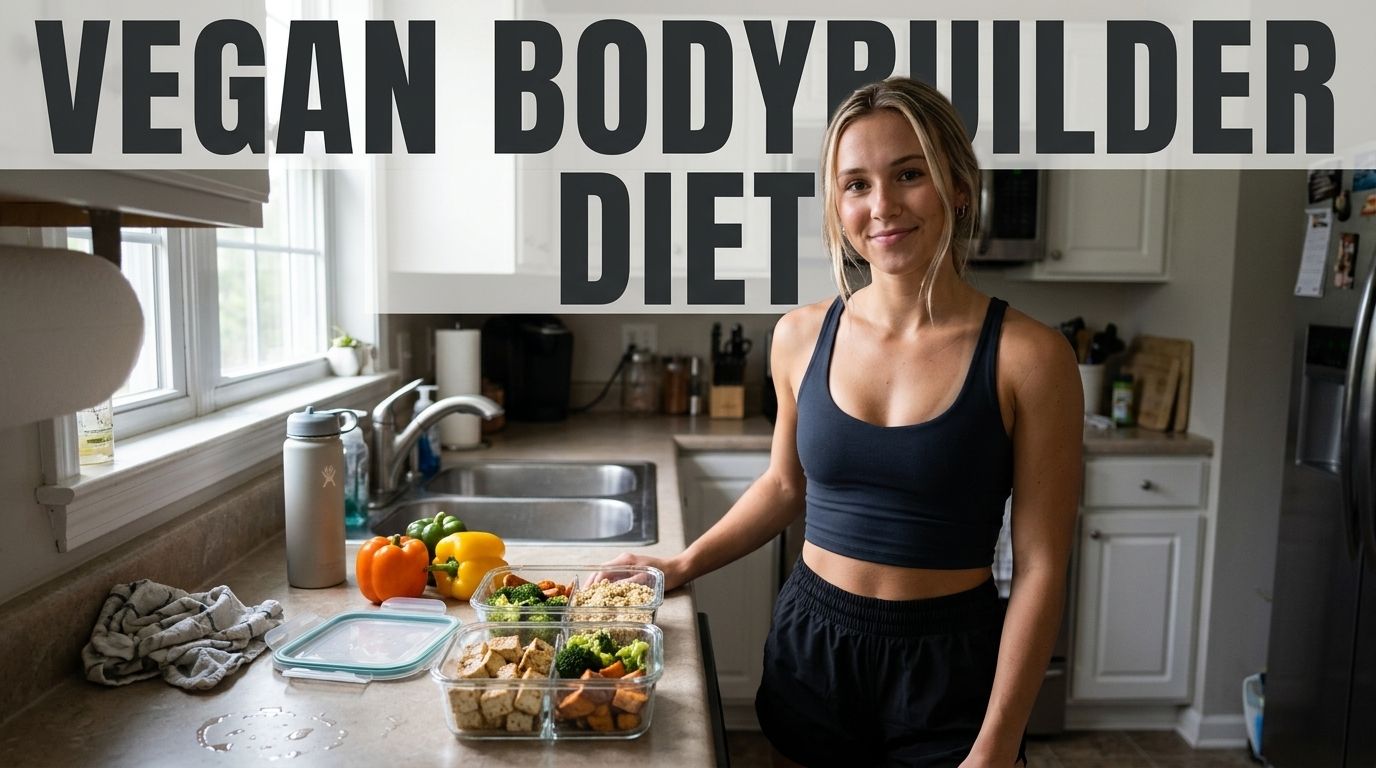
A vegan bodybuilding diet eliminates all animal products while providing the high protein and calorie intake required to build and maintain muscle mass. The approach relies on plant-based proteins like tofu, tempeh, seitan, legumes, and protein powders to hit the 1.6 to 2.2 grams of protein per kilogram of body weight that muscle growth demands. It works, but it requires more planning than any other bodybuilding nutrition approach.
Plant-based proteins tend to be lower in leucine and have incomplete amino acid profiles compared to animal sources. This means vegan bodybuilders must combine multiple protein sources throughout the day and eat a higher total protein volume to trigger the same muscle protein synthesis response. Supplements like B12, creatine, and algae-based omega-3s fill the gaps that whole food alone cannot cover.
This guide explains how vegan bodybuilding works, the best protein sources ranked by amino acid quality, a practical meal framework, the supplements you actually need, and the common mistakes that limit muscle growth on a plant-based diet.
What Is a Vegan Bodybuilding Diet?
A vegan bodybuilding diet is a high-protein, calorie-sufficient eating pattern that excludes all animal products while providing the macronutrients and micronutrients needed for muscle hypertrophy, strength gains, and body composition improvement. The diet replaces traditional bodybuilding staples like chicken, eggs, and whey protein with plant-based alternatives including tofu, tempeh, seitan, lentils, and pea protein powder.
The approach has gained mainstream attention as professional vegan bodybuilders demonstrate that plant-based eating can support competitive physiques. The vegan bodybuilding diet changes between phases. Off-season bulking requires a calorie surplus with high protein intake. Contest preparation shifts to calorie restriction while maintaining protein to preserve muscle during fat loss.
The core challenge is protein quality. Plant proteins contain lower concentrations of essential amino acids, particularly leucine, which triggers muscle protein synthesis. Vegan bodybuilders compensate by eating higher total protein volumes and combining complementary sources like rice and beans that together provide a complete amino acid profile.
How Is It Different From a Standard Vegan Diet?
A vegan bodybuilding diet differs from standard vegan eating by requiring significantly higher protein intake, deliberate calorie surplus during bulking phases, and strategic meal timing around training sessions. Standard vegan diets typically provide 50 to 70 grams of protein daily. Vegan bodybuilders need 120 to 180 grams depending on body weight, nearly double to triple the standard intake.
Calorie targets also diverge substantially. A standard vegan diet may provide 1800 to 2200 calories for general health. Off-season vegan bodybuilders consume 2800 to 4000 calories to support muscle growth. This volume of food from plant sources requires eating 5 to 7 meals daily because plant foods are less calorie-dense than animal products. The fiber content also increases dramatically, which affects digestion and satiety management.
Can You Build Muscle Without Animal Protein?
Yes. Research confirms that plant-based protein supports muscle hypertrophy at comparable rates to animal protein when total daily protein intake and leucine thresholds are met. A 2021 meta-analysis found no significant difference in muscle mass or strength gains between plant and animal protein groups when protein intake was matched. The key variable is total intake, not the source.
The leucine threshold for muscle protein synthesis sits at roughly 2.5 to 3 grams per meal. Most plant proteins deliver less leucine per serving than whey or eggs, so vegan bodybuilders need larger portions or supplemental leucine. Combining pea protein with rice protein creates an amino acid profile that closely mirrors whey. Professional vegan bodybuilders like Nimai Delgado and Patrik Baboumian prove that elite-level muscle development is achievable on a fully plant-based diet.
How Do You Get Enough Protein on Vegan Bodybuilding?
Getting enough protein on a vegan bodybuilding diet requires eating multiple plant protein sources at every meal, using protein powders to bridge gaps, and tracking daily intake to ensure the 1.6 to 2.2 grams per kilogram target is consistently hit. No single plant food matches the protein density of chicken or eggs, so combining sources is non-negotiable. A meal of tofu, quinoa, and edamame delivers a more complete amino acid profile than any one of those foods alone.
Protein timing matters for muscle growth. Distributing 30 to 40 grams of protein across 4 to 5 meals throughout the day maximizes muscle protein synthesis windows. A post-workout shake combining pea and rice protein with a banana and oat milk delivers 35 grams of protein with fast absorption. Pre-bed casein alternatives like soy protein or a high-protein tofu scramble provide slow-digesting amino acids for overnight recovery.
What Are the Best Plant-Based Protein Sources?
Seitan, tofu, tempeh, and lentils rank as the top whole food protein sources for vegan bodybuilders based on protein density, amino acid profile, and versatility in meal preparation. Seitan leads at 75 grams of protein per 100 grams, making it the most protein-dense plant food available. Tempeh delivers 19 grams per 100 grams with the added benefit of fermentation that improves nutrient absorption.
Pea protein powder provides 24 grams of protein per 30-gram scoop with a strong leucine content of 2 grams per serving. Rice protein complements pea protein by supplying the methionine that pea protein lacks. Combining both in a 70:30 pea-to-rice ratio creates an amino acid profile that research shows rivals whey for muscle building. Edamame, black beans, chickpeas, and hemp seeds round out the daily rotation for whole food variety.
Top Vegan Protein Sources for Bodybuilding:
| Food | Protein per 100g | Leucine per Serving |
|---|---|---|
| Seitan | 75 g | 2.5 g |
| Pea protein powder (1 scoop) | 80 g | 2.0 g |
| Tempeh | 19 g | 1.1 g |
| Firm tofu | 17 g | 1.0 g |
| Lentils (cooked) | 9 g | 0.6 g |
| Edamame | 11 g | 0.7 g |
How Much Protein Do Vegan Bodybuilders Need?
Vegan bodybuilders need 1.6 to 2.2 grams of protein per kilogram (0.73 to 1.0 grams per pound) of body weight daily, with the higher end recommended during cutting phases to preserve muscle mass during calorie restriction. An 80-kilogram (176-pound) bodybuilder targets 128 to 176 grams of protein daily. This range accounts for the slightly lower digestibility and amino acid quality of plant proteins compared to animal sources.
Some researchers recommend vegan athletes aim 10 to 20 percent higher than omnivore protein guidelines to compensate for lower plant protein bioavailability. Does that mean 2.4 grams per kilogram? For most recreational lifters, 1.8 to 2.0 grams per kilogram provides sufficient margin. Competitive bodybuilders in contest prep may push to 2.2 to 2.4 grams per kilogram when calorie restriction limits total food volume and every gram of muscle preservation matters.
What Should You Eat on a Vegan Bodybuilding Diet?
A vegan bodybuilding diet should center on high-protein plant foods, complex carbohydrates, healthy fats, and a wide variety of vegetables that deliver the micronutrients needed for training performance and recovery. Beans, lentils, tofu, tempeh, seitan, and protein powders form the protein foundation. Brown rice, sweet potatoes, oats, and quinoa provide the carbohydrates that fuel intense training sessions.
Healthy fats come from avocados, nuts, seeds, olive oil, and coconut oil. The general recommendation for fat intake for off-season bodybuilders is 1 gram per kilogram of body weight daily. An 80-kilogram bodybuilder needs roughly 80 grams of fat, providing 720 calories from fat alone. Vegetables at every meal supply vitamins, minerals, and fiber. Eating 5 to 7 meals daily makes it possible to consume the 2800 to 4000 calories that bulking phases demand from plant sources.
Vegan Bodybuilding Food Categories:
- Proteins: seitan, tofu, tempeh, lentils, chickpeas, edamame, pea/rice protein powder
- Carbohydrates: brown rice, sweet potatoes, oats, quinoa, whole grain bread, bananas
- Fats: avocados, almonds, walnuts, chia seeds, flaxseed, olive oil, coconut oil
- Vegetables: broccoli, spinach, kale, bell peppers, asparagus, mushrooms
- Fruits: berries, bananas, oranges, apples for micronutrients and training fuel
What Does a Typical Meal Plan Look Like?
A typical vegan bodybuilding day includes 5 to 6 meals spaced 3 hours apart, each delivering 30 to 40 grams of protein from combined plant sources to maximize muscle protein synthesis across the day. The total targets roughly 3000 calories, 160 grams of protein, 350 grams of carbohydrates, and 80 grams of fat for an 80-kilogram off-season bodybuilder.
Meal 1: oats with pea protein, banana, and almond butter. Meal 2: tofu scramble with spinach, peppers, and whole grain toast. Meal 3: lentil curry with brown rice and broccoli. Meal 4 (post-workout): pea-rice protein shake with oat milk and berries. Meal 5: seitan stir-fry with sweet potato and mixed vegetables. Meal 6: tempeh with quinoa, avocado, and leafy greens. This rotation hits protein targets while providing the carbohydrate volume that fuels training and recovery.
Sample Vegan Bodybuilding Day (80 kg off-season):
| Meal | Foods | Protein | Calories |
|---|---|---|---|
| Meal 1 | Oats, pea protein, banana, almond butter | 35 g | 550 |
| Meal 2 | Tofu scramble, spinach, whole grain toast | 28 g | 450 |
| Meal 3 | Lentil curry, brown rice, broccoli | 25 g | 520 |
| Meal 4 | Pea-rice protein shake, oat milk, berries | 35 g | 350 |
| Meal 5 | Seitan stir-fry, sweet potato, vegetables | 40 g | 580 |
| Meal 6 | Tempeh, quinoa, avocado, greens | 22 g | 480 |
| Total | 185 g | 2930 |
Which Supplements Do Vegan Bodybuilders Need?
Vegan bodybuilders need vitamin B12, creatine, algae-based omega-3s, vitamin D, and zinc as non-negotiable supplements because plant-based diets cannot reliably provide adequate amounts of these nutrients for high-performance training. B12 is absent from all unfortified plant foods and is essential for red blood cell production and neurological function. Creatine stores are 20 to 30 percent lower in vegans than omnivores because creatine occurs naturally only in meat.
Creatine supplementation at 3 to 5 grams daily improves strength, power output, and lean mass gains in vegan athletes. Does it make a real difference? Research shows vegans experience larger performance improvements from creatine supplementation than omnivores because they start from a lower baseline. Algae-based DHA and EPA at 250 to 500 milligrams daily support the anti-inflammatory recovery that intense training demands. Vitamin D at 2000 IU daily and zinc at 15 milligrams daily round out the essential stack.
Essential Supplements for Vegan Bodybuilders:
- Vitamin B12: 250-1000 mcg daily (methylcobalamin form preferred)
- Creatine monohydrate: 3-5 g daily for strength and lean mass
- Algae-based omega-3: 250-500 mg combined DHA and EPA
- Vitamin D3 (vegan): 2000 IU daily
- Zinc: 15 mg daily from zinc picolinate or citrate
- Iron: only if blood work confirms deficiency
What Are the Benefits of Vegan Bodybuilding?
A vegan bodybuilding diet delivers higher fiber intake, more antioxidants, greater micronutrient density from vegetables and fruits, and lower saturated fat consumption than traditional meat-based bodybuilding diets. The anti-inflammatory compounds in plant foods, including polyphenols, flavonoids, and plant-based omega-3s from chia and flaxseed, support faster recovery between training sessions.
Vegans tend to have lower body mass index, lower LDL cholesterol, and lower blood pressure than omnivores. For bodybuilders, the lower baseline body fat makes cutting phases more efficient. The high fiber content supports gut health and nutrient absorption. And here’s what most people don’t expect. Many vegan bodybuilders report improved training endurance and reduced joint inflammation after switching from animal-based diets.
Does a Plant-Based Diet Improve Recovery?
Yes. Plant-based diets improve recovery through higher antioxidant and anti-inflammatory compound intake that reduces exercise-induced oxidative stress and muscle inflammation. Polyphenols in berries, cherries, and leafy greens neutralize free radicals produced during intense training. The nitrates in beets and spinach improve blood flow, delivering more oxygen and nutrients to damaged muscle tissue.
The fiber in plant foods also supports gut microbiome diversity, which influences systemic inflammation levels. Think of it this way. A healthier gut produces fewer inflammatory cytokines that slow muscle repair. Vegan bodybuilders who eat a diverse range of vegetables, fruits, and fermented foods like tempeh and sauerkraut often report less delayed-onset muscle soreness than they experienced on omnivore diets.
Can Vegan Bodybuilding Lower Heart Disease Risk?
Yes. Vegan bodybuilding diets lower heart disease risk by reducing saturated fat and cholesterol intake while increasing fiber, potassium, and plant sterols that actively lower LDL cholesterol levels. Traditional bodybuilding diets heavy in eggs, red meat, and whey contribute to elevated LDL over time. Vegans replace these with plant fats that support rather than damage cardiovascular function.
High fiber intake from the volume of vegetables, legumes, and whole grains in vegan bodybuilding diets has been associated with lower incidence of stroke and heart disease. A vegan bodybuilder consuming 40 to 60 grams of fiber daily, double the average American intake, gets consistent cardiovascular protection alongside the muscle-building benefits. So what does that mean long term? Lower heart disease risk without sacrificing physique goals.
What Are the Risks and Downsides?
The vegan bodybuilding diet carries risks of protein inadequacy, B12 deficiency, low creatine stores, omega-3 insufficiency, and the digestive burden of extremely high fiber intake from the food volume required to meet calorie targets. Plant proteins have lower bioavailability than animal proteins, meaning the body absorbs and uses a smaller percentage of the protein consumed. This gap requires eating 10 to 20 percent more total protein to achieve the same net effect.
The sheer food volume presents a practical challenge. Consuming 3000 to 4000 calories from plant sources means eating large portions of relatively low-calorie-density foods. Bloating, gas, and digestive discomfort are common, especially during the first 4 to 6 weeks of transitioning from an omnivore bodybuilding diet. The high fiber intake, often exceeding 60 grams daily, can interfere with mineral absorption if not managed properly.
Which Nutrient Deficiencies Are Most Common?
Vitamin B12, creatine, omega-3 DHA/EPA, zinc, and iron represent the most common deficiency risks because these nutrients either do not exist in plant foods or have significantly lower bioavailability from plant sources. B12 deficiency develops over 2 to 5 years without supplementation and causes irreversible nerve damage if left untreated. Creatine stores drop 20 to 30 percent below omnivore levels within weeks of eliminating meat.
Iron from plant sources has an absorption rate of 2 to 20 percent compared to 15 to 35 percent from meat. Zinc absorption is similarly reduced by the phytates present in legumes and whole grains. Here’s the bottom line. Annual blood work is non-negotiable for vegan bodybuilders. Testing B12, ferritin, zinc, vitamin D, and omega-3 index identifies deficiencies before symptoms appear and allows targeted supplementation rather than guesswork.
Is It Hard to Meet Calorie Needs?
Yes. Meeting calorie needs on a vegan bodybuilding diet is significantly harder than on an omnivore diet because plant foods deliver fewer calories per unit of volume, requiring larger and more frequent meals to hit bulking targets. A 100-gram chicken breast provides 165 calories and 31 grams of protein. A 100-gram serving of lentils provides only 116 calories and 9 grams of protein. The volume difference means eating roughly 3 times more food to match the same macros.
Calorie-dense plant foods become essential tools. Nut butters at 190 calories per 2 tablespoons, avocados at 320 calories each, coconut oil at 121 calories per tablespoon, and dried fruits provide concentrated energy. Smoothies that combine protein powder, oats, banana, nut butter, and plant milk can deliver 600 to 800 calories in a single shake. Without these calorie-dense additions, most vegan bodybuilders struggle to maintain the surplus needed for muscle growth.
What Foods Should Vegan Bodybuilders Avoid?
Vegan bodybuilders should avoid highly processed meat substitutes, refined carbohydrates, sugary drinks, excessive soy-based products, and alcohol that waste calories without supporting muscle growth or recovery. Processed vegan burgers, sausages, and deli slices often contain high sodium, preservatives, and seed oils that contribute to inflammation rather than reducing it.
Refined carbohydrates like white bread, sugary cereals, and candy bars spike insulin without providing the sustained energy that training demands. Alcohol directly inhibits muscle protein synthesis and disrupts sleep quality, both of which compromise recovery. Moderate soy consumption is safe and beneficial, but relying exclusively on soy for all protein needs may affect thyroid function in susceptible individuals. Variety across protein sources prevents overexposure to any single food group.
Foods to Avoid on Vegan Bodybuilding:
- Processed vegan meats high in sodium and preservatives
- Refined grains: white bread, white pasta, sugary cereals
- Sugary beverages: soda, fruit juice, sweetened coffee drinks
- Deep-fried foods: even if plant-based, they add inflammatory oils
- Alcohol: inhibits muscle protein synthesis and impairs recovery
- Excess soy: diversify protein sources rather than relying on soy alone
Do Processed Vegan Foods Hurt Muscle Growth?
Yes. Processed vegan foods hurt muscle growth by delivering high sodium, low-quality protein, inflammatory seed oils, and chemical additives that increase systemic inflammation and impair nutrient absorption. A frozen vegan burger patty may contain 15 grams of protein but also 500 milligrams of sodium and several grams of added sugar. The same 15 grams from tempeh comes with fermented probiotics, fiber, and zero additives.
Sodium-heavy processed foods increase water retention that masks body composition progress and elevates blood pressure during heavy training. The inflammatory oils used in processed vegan products counteract the anti-inflammatory benefits that make plant-based bodybuilding attractive in the first place. In plain English, eating processed vegan junk food defeats the purpose. Our coaches at Eat Proteins recommend building 90 percent of meals around whole plant foods and using processed options only when whole food alternatives are genuinely unavailable.
Ready to build muscle the smart way? Get a proven weight loss plan designed for plant-based athletes who want real results.
Want Your Free Vegan Muscle-Building Meal Plan?
You’ve got the protein sources, the supplement stack, and the mistakes to dodge. Now here’s the good news. The team at Eat Proteins built a free vegan bodybuilding meal plan with macro-calculated daily templates, a complete supplement guide, and a 7-day starter framework from registered nutritionists who specialize in plant-based athletic performance. No guesswork on protein combining. No deficiency surprises. Just structured meals that fuel muscle growth without animal products.
Our nutritionists at Eat Proteins designed this plan to solve the exact problems that hold back vegan lifters: insufficient leucine, missed calorie targets, and supplement confusion. Science-backed coaching at zero cost. Don’t wing it and wonder why gains stall. Grab your free plan and start building muscle on plants the right way.