
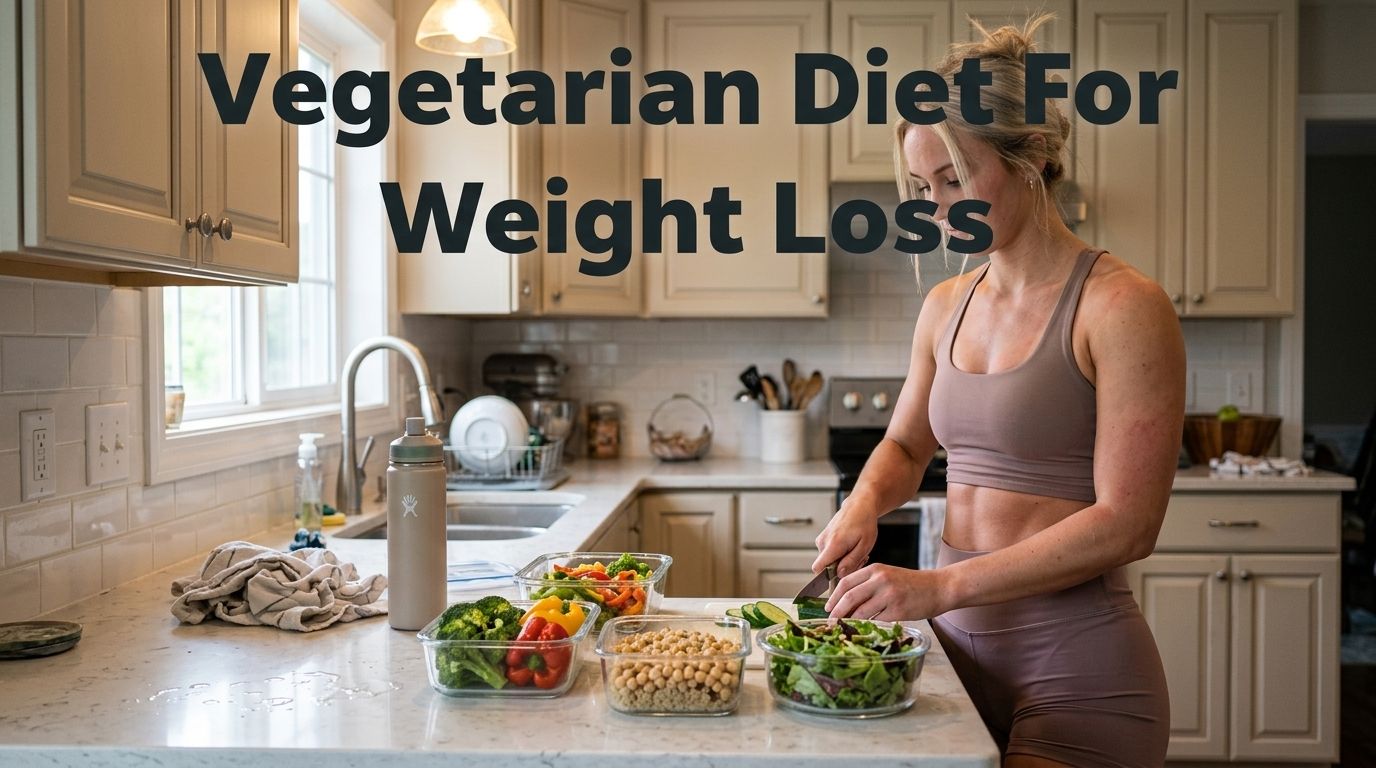
A vegetarian diet for weight loss centers on whole, minimally processed plant foods like vegetables, legumes, whole grains, nuts, and seeds while eliminating meat, poultry, and fish. The high fiber and water content of these foods creates natural calorie reduction without portion restriction. Studies show vegetarians maintain lower body weight and BMI than omnivores when the diet emphasizes whole foods over processed alternatives.
The approach works because plant foods deliver more volume per calorie than animal products. A cup of lentils provides 18 grams of protein and 15 grams of fiber at only 230 calories. But here’s where most people go wrong. Processed vegetarian foods, oversized portions of nut butter, and refined carbs can stall weight loss or cause gain. The label ‘vegetarian’ does not guarantee a calorie deficit.
This guide covers which vegetarian foods accelerate fat loss, the protein targets that prevent muscle loss, the common mistakes that stall results, and a practical meal framework you can start this week. It also explains how long realistic results take and who should modify the approach.
What Is a Vegetarian Diet for Weight Loss?
A vegetarian diet for weight loss is a plant-based eating pattern that eliminates meat, poultry, and fish while emphasizing whole vegetables, legumes, whole grains, nuts, seeds, and fruit to create a natural calorie deficit. The diet works through the lower calorie density of plant foods compared to animal products. A plate of roasted vegetables and lentils delivers more fiber and volume than a comparable calorie amount of meat, keeping hunger controlled for longer periods.
Vegetarian diets have been practiced for thousands of years across religious, ethical, and health-motivated populations. Modern research confirms that well-planned vegetarian eating patterns produce consistent weight loss without calorie counting for many people. The fiber and water content of whole plant foods naturally regulate intake when processed alternatives stay off the plate.
The key word is ‘whole.’ A vegetarian diet built on pizza, pasta, and cheese creates a calorie surplus as easily as any omnivore diet. Weight loss requires centering meals on non-starchy vegetables, legumes, and measured portions of calorie-dense plant fats like nuts and avocados.
How Does a Vegetarian Diet Help You Lose Weight?
A vegetarian diet helps with weight loss by delivering high fiber and water content per calorie, which increases satiety and reduces total daily food intake without deliberate restriction. Fiber slows gastric emptying, keeping food in the stomach longer and delaying hunger signals. A single cup of black beans provides 15 grams of fiber, over half the daily recommended intake, at only 227 calories.
Research from the Adventist Health Study found average BMI decreased progressively from omnivores at 28.3 to semi-vegetarians at 27.3, lacto-ovo vegetarians at 26.1, and vegans at 24.1. Clinical trials confirm that participants randomized to vegetarian diets lose more weight than those on standard Western diets. The mechanism is straightforward. Plant foods fill more stomach volume per calorie, and fiber feeds beneficial gut bacteria that regulate appetite hormones.
What Types of Vegetarian Diets Work Best?
Lacto-ovo vegetarian diets work best for weight loss because they provide complete proteins from eggs and dairy while maintaining the high fiber benefits of plant-based eating. The inclusion of eggs and Greek yogurt makes it easier to hit protein targets that preserve lean muscle during calorie restriction. Muscle mass drives resting metabolic rate, and losing it slows weight loss over time.
Vegan diets produce slightly lower BMI on average but require more careful planning to prevent protein and B12 shortfalls. Pescatarian diets add omega-3-rich fish to the vegetarian base, supporting both cardiovascular health and satiety. The best type depends on individual preferences and willingness to plan. Any vegetarian pattern that centers on whole foods and adequate protein produces comparable weight loss results.
What Should You Eat on a Vegetarian Weight Loss Plan?
A vegetarian weight loss plan should center on non-starchy vegetables, legumes, whole grains, eggs, low-fat dairy, nuts, seeds, and fruit that deliver maximum nutrients per calorie. Non-starchy vegetables like broccoli, spinach, cauliflower, and bell peppers provide bulk and micronutrients at minimal calorie cost. Legumes deliver the protein-fiber combination that sustains fullness between meals better than almost any other food group.
Building each meal around a protein source, a fiber-rich carbohydrate, and a measured portion of healthy fat creates balanced macronutrient intake. A lunch of quinoa, roasted chickpeas, mixed greens, and a tablespoon of olive oil delivers roughly 450 calories with 20 grams of protein, 12 grams of fiber, and 15 grams of healthy fat. This combination prevents blood sugar spikes that trigger hunger within hours of eating.
Which Vegetarian Foods Burn the Most Fat?
Legumes, non-starchy vegetables, and high-protein dairy drive the most fat loss on a vegetarian diet because they combine high thermic effect, strong satiety, and low calorie density in every serving. Lentils, chickpeas, and black beans require more energy to digest than refined carbohydrates. The body burns roughly 20 to 30 percent of protein calories during digestion compared to only 5 to 10 percent for carbs and 0 to 3 percent for fat.
Greek yogurt delivers 15 to 20 grams of protein per 170-gram (6-ounce) serving at roughly 100 calories for the non-fat variety. Eggs provide 6 grams of protein each at only 70 calories. Cruciferous vegetables like broccoli and cauliflower supply fiber and volume at under 50 calories per cup. So what’s the takeaway? Prioritizing these high-protein, high-fiber foods at every meal accelerates fat loss without requiring calorie counting.
Top Fat-Burning Vegetarian Foods:
| Food | Calories per Serving | Protein | Fiber |
|---|---|---|---|
| Lentils (1 cup cooked) | 230 | 18 g | 15 g |
| Greek yogurt, non-fat (170 g) | 100 | 17 g | 0 g |
| Black beans (1 cup cooked) | 227 | 15 g | 15 g |
| Eggs (2 large) | 140 | 12 g | 0 g |
| Broccoli (1 cup) | 55 | 4 g | 5 g |
| Chickpeas (1 cup cooked) | 269 | 15 g | 12 g |
How Much Protein Do You Need?
Vegetarians aiming for weight loss need 1.2 to 1.6 grams of protein per kilogram (0.54 to 0.73 grams per pound) of body weight daily to preserve lean muscle mass during calorie restriction. A 70-kilogram (154-pound) person needs 84 to 112 grams of protein daily. Falling below this range accelerates muscle loss, which reduces resting metabolic rate and makes continued weight loss progressively harder.
Meeting this target on a vegetarian diet requires deliberate protein inclusion at every meal. Two eggs at breakfast (12 grams), a cup of lentils at lunch (18 grams), Greek yogurt as a snack (17 grams), and tofu stir-fry at dinner (20 grams) totals 67 grams before adding incidental protein from grains and vegetables. Does that sound like a lot of planning? It’s less than it seems once the habit forms. The goal is automatic protein inclusion, not daily calculations.
What Foods Should You Avoid?
A vegetarian weight loss diet requires avoiding processed vegetarian foods, refined carbohydrates, sugary beverages, and excessive portions of calorie-dense plant fats that undermine the natural calorie deficit plant-based eating creates. Veggie burgers, meat substitutes, frozen vegetarian meals, and vegan cheese often contain added sugars, sodium, preservatives, and calorie counts that rival or exceed their meat-based counterparts.
Refined carbohydrates like white bread, white pasta, pastries, and sugary cereals spike blood sugar and insulin, triggering hunger within 2 to 3 hours of eating. One study including roughly 500,000 adults found a strong association between higher insulin levels after carb intake and greater BMI. Replacing refined grains with whole grains, legumes, and vegetables eliminates this insulin cycle and supports steadier energy throughout the day.
Do Processed Vegetarian Foods Cause Weight Gain?
Yes. Processed vegetarian foods cause weight gain because they pack high sodium, added sugars, preservatives, and calorie density into products that carry a misleading health halo. A frozen veggie burger can contain 250 to 350 calories with 15 to 20 grams of fat and significant sodium. Vegan ice cream, cookies, and chips are technically plant-based but deliver the same empty calories as conventional junk food.
The ‘vegetarian’ label creates a psychological trap. People assume meatless means healthy and eat larger portions or more frequently. In plain English, a bag of vegetarian potato chips has the same calorie and sodium content as regular chips. The distinction between whole food vegetarian eating and processed vegetarian eating determines whether the diet produces weight loss or weight gain.
Can You Overeat Healthy Fats on a Vegetarian Diet?
Yes. Healthy fats like nuts, seeds, nut butters, avocados, and coconut deliver 9 calories per gram compared to 4 calories per gram from protein and carbohydrates, making portion control essential for weight loss. Two tablespoons of peanut butter contain 191 calories, with 148 of those calories coming from fat. A single avocado adds roughly 320 calories to a meal.
Vegetarians transitioning from omnivore diets often increase healthy fat intake substantially to replace the satiety that meat previously provided. And here’s the part most people miss. Eating 4 tablespoons of nut butter instead of the recommended 2 adds nearly 200 extra calories daily. Over a month, that surplus alone prevents roughly half a kilogram (1 pound) of fat loss. Measuring portions during the first few weeks builds accurate serving size awareness.
Calorie Density of Common Vegetarian Fats:
| Food | Serving Size | Calories |
|---|---|---|
| Peanut butter | 2 tablespoons (32 g) | 191 |
| Avocado | 1 whole (200 g) | 320 |
| Almonds | 1/4 cup (35 g) | 207 |
| Olive oil | 1 tablespoon (14 g) | 119 |
| Coconut oil | 1 tablespoon (14 g) | 121 |
| Chia seeds | 2 tablespoons (28 g) | 138 |
What Are Common Mistakes on a Vegetarian Weight Loss Diet?
The most common mistakes on a vegetarian weight loss diet are eating too little protein, relying on refined carbohydrates for energy, and treating all vegetarian foods as inherently low-calorie. These three errors account for the majority of stalled weight loss in plant-based dieters. Each one creates a metabolic or behavioral pattern that blocks fat loss despite the overall healthy food foundation.
Many new vegetarians replace meat calories with bread, pasta, and cheese rather than legumes, vegetables, and eggs. This swap increases refined carb intake while dropping protein below the threshold needed to preserve muscle. The result is a higher-carb, lower-protein diet that triggers insulin spikes, increases hunger, and gradually reduces lean body mass. Awareness of these patterns prevents the frustration that drives most people to quit.
Does Skipping Protein Stall Weight Loss?
Yes. Insufficient protein intake stalls weight loss by accelerating muscle loss, reducing resting metabolic rate, and increasing hunger between meals. Muscle tissue burns more calories at rest than fat tissue. Every kilogram (2.2 pounds) of muscle lost during dieting reduces daily calorie expenditure by roughly 50 to 70 calories. Over weeks, this metabolic slowdown erases the calorie deficit that was producing weight loss.
Protein also has the highest thermic effect of any macronutrient. The body uses 20 to 30 percent of protein calories for digestion alone. Here’s why that matters. Eating 100 grams of protein burns 20 to 30 of those calories through digestion. Eating 100 grams of carbohydrates burns only 5 to 10. The same total calorie intake produces more fat loss when protein makes up a larger share of the macronutrient split.
Are Refined Carbs Sabotaging Your Results?
Yes. Refined carbohydrates like white bread, white rice, pasta, and sugary cereals sabotage vegetarian weight loss by spiking blood sugar and insulin, which triggers hunger and fat storage within 2 to 3 hours of eating. The rapid digestion of refined grains provides a burst of energy followed by a crash that drives snacking and overeating at the next meal.
Replacing refined carbs with whole grains, legumes, and starchy vegetables changes the metabolic equation. Brown rice digests slower than white rice. Lentils produce a flatter blood sugar curve than pasta. Sweet potatoes deliver fiber that white bread lacks. Think of it this way. Swapping refined for whole at every meal reduces daily insulin output, extends satiety, and eliminates the hunger cycles that derail calorie control.
Refined vs Whole Carb Swaps:
- White rice to brown rice or cauliflower rice
- White pasta to lentil pasta or zucchini noodles
- White bread to sprouted grain bread or whole wheat
- Sugary cereal to steel-cut oats with nuts and seeds
- Fruit juice to whole fruit with fiber intact
What Does a Vegetarian Weight Loss Meal Plan Look Like?
A vegetarian weight loss meal plan structures each day around 3 meals and 1 to 2 snacks that deliver 1400 to 1800 calories with at least 80 grams of protein, 30 grams of fiber, and measured portions of healthy fat. The calorie range creates a moderate deficit of 300 to 500 calories below maintenance for most adults, producing steady fat loss of 0.5 to 1 kilogram (1 to 2 pounds) per week without extreme restriction.
Every meal includes a protein anchor: eggs, Greek yogurt, legumes, tofu, or cottage cheese. Vegetables fill half the plate. Whole grains or starchy vegetables provide sustained energy. A tablespoon of healthy fat adds flavor and satiety. This template works for lunches, dinners, and even breakfasts when protein replaces the sugary cereals and toast that most people default to.
What Should You Eat for Breakfast?
A vegetarian weight loss breakfast should deliver 15 to 20 grams of protein within the first meal to activate muscle protein synthesis and control hunger through the morning. Two eggs scrambled with spinach and tomatoes provide 14 grams of protein at roughly 200 calories. Adding a slice of sprouted grain toast and half an avocado brings the meal to 350 calories with 18 grams of protein and 8 grams of fiber.
Greek yogurt with berries, flaxseed, and a handful of walnuts offers another high-protein option at roughly 300 calories with 20 grams of protein. Steel-cut oats with chia seeds, almond butter, and banana work for those who prefer warm breakfasts. The common mistake is eating toast with jam or cereal with milk, which provides mostly refined carbs and minimal protein. Starting the day with protein sets the appetite regulation pattern for the remaining meals.
How Do You Build a High-Protein Vegetarian Dinner?
A high-protein vegetarian dinner starts with a legume or tofu base, adds roasted or steamed non-starchy vegetables, includes a whole grain, and finishes with a measured portion of healthy fat for flavor. A black bean and sweet potato bowl with roasted peppers, brown rice, and a tablespoon of olive oil delivers 22 grams of protein, 14 grams of fiber, and roughly 480 calories. The combination satisfies hunger for 4 to 5 hours.
Paneer or halloumi stir-fries with broccoli and cauliflower provide 25 to 30 grams of protein per serving for lacto-vegetarians. Lentil soup with a side of whole grain bread adds 20 grams of protein at under 400 calories. Tofu curries over cauliflower rice deliver Asian-inspired variety. Our nutritionists at Eat Proteins recommend rotating between legume, tofu, and dairy protein sources throughout the week to maintain micronutrient diversity.
How Long Does It Take to See Results?
Measurable weight loss on a vegetarian diet typically appears within 2 to 4 weeks when the diet creates a consistent daily calorie deficit of 300 to 500 calories through whole food choices and adequate protein intake. The first week often shows rapid scale movement of 1 to 2 kilograms (2 to 4 pounds) due to water loss from reduced sodium and refined carb intake. True fat loss stabilizes at a slower, sustainable pace after this initial drop.
Body composition changes become visible around 6 to 8 weeks. Waist circumference decreases as visceral fat reduces. Energy levels stabilize as blood sugar fluctuations diminish. The timeline depends on starting weight, calorie deficit size, and protein intake consistency. Patience matters here. Sustainable vegetarian weight loss runs slower than crash dieting but preserves muscle mass and metabolic rate for lasting results.
How Much Weight Can You Lose Per Week?
A realistic target on a vegetarian weight loss diet is 0.5 to 1 kilogram (1 to 2 pounds) per week, which requires a daily calorie deficit of 500 to 1000 calories through diet and activity combined. Faster rates increase muscle loss, metabolic slowdown, and the likelihood of rebound weight gain. Slower rates preserve lean tissue and allow the body to adapt without triggering survival-mode hunger.
People with higher starting weights lose faster initially. A person starting at 100 kilograms (220 pounds) may lose 1.5 kilograms (3.3 pounds) per week for the first month. Someone at 70 kilograms (154 pounds) should expect closer to 0.5 kilograms (1 pound) weekly. The rate naturally slows as body weight decreases because the calorie deficit narrows. Adjusting portions every 4 to 6 weeks maintains progress through these plateaus.
Ready to accelerate your results? Get a proven weight loss plan designed around sustainable vegetarian nutrition.
Want Your Free Vegetarian Weight Loss Meal Plan?
You’ve got the science, the food lists, and the mistakes to avoid. Now here’s the good news. The team at Eat Proteins built a free vegetarian weight loss meal plan with protein-optimized daily templates, a grocery list, and a 7-day starter guide from registered nutritionists. No calorie counting required. No processed junk masquerading as health food. Just whole plant meals that keep you full, preserve muscle, and burn fat consistently.
Our coaches at Eat Proteins designed this plan to solve the exact problems that stall most vegetarian dieters: too little protein, too many refined carbs, and no clear structure. Science-backed coaching at zero cost replaces the guesswork that leads to frustration and quitting. Don’t settle for another failed attempt. Grab your free plan and start losing weight the right way.