
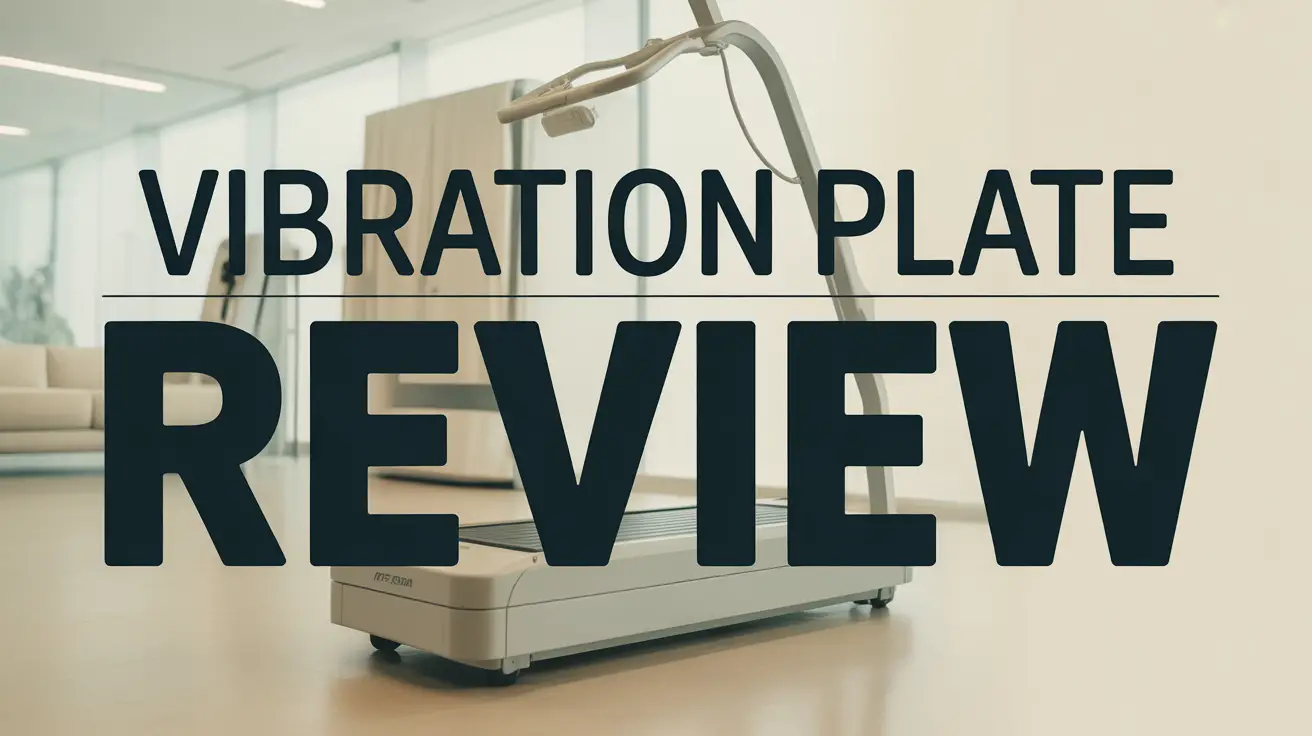
A vibration plate is a platform device that transmits rapid mechanical vibrations through the body to stimulate involuntary muscle contractions, improve circulation, and support bone density. The technology originated in space medicine research and professional athletic rehabilitation before reaching the consumer fitness market.
Modern vibration plates operate at frequencies between 12 and 50 Hertz in four main types: oscillating, linear, tri-planar, and 4D. Peer-reviewed research supports benefits for bone density, muscle recovery, chronic pain management, and balance. Side effects remain minimal for most healthy users, though certain medical conditions require healthcare provider clearance first.
This review examines how vibration plates work, what published research confirms, real user results after months of consistent use, pricing ranges, side effects, and which models deliver the best value. Every claim gets checked against peer-reviewed studies and verified long-term user experiences.
What Is a Vibration Plate?
A vibration plate is a small platform device that generates rapid mechanical vibrations to stimulate involuntary muscle contractions throughout the body when a user stands, sits, or lies on it. The device forces muscles to contract and relax multiple times per second. This repeated activation engages muscle fibers that voluntary exercise alone often misses.
Think of it this way: standing on a vibration plate sends mechanical energy rippling upward through the legs, core, and spine. The body’s stabilizer muscles engage automatically to maintain balance. One user described it as ‘vibrating and jiggling in places you didn’t even know could vibrate or jiggle.’
Vibration therapy has roots in space medicine. NASA researchers found that astronauts using vibration plates for 10-20 minutes daily in microgravity maintained bone density that would otherwise deteriorate rapidly. The technology migrated from space programs to rehabilitation clinics and eventually to home fitness equipment.
What Types of Vibration Plates Exist?
Vibration plates come in four main types that differ in movement direction, vibration depth, and the muscle groups they target most effectively. Each type transmits energy through the body differently. The choice depends on fitness goals, medical needs, and budget.
Oscillating plates pivot like a seesaw, alternating vibration between the left and right sides. Linear plates move straight up and down. Tri-planar plates vibrate in three directions simultaneously. 4D plates add a pulsation element to the tri-planar movement for the most intense stimulation.
Vibration Plate Types:
| Type | Movement | Best For |
|---|---|---|
| Oscillating | Side-to-side seesaw | Beginners, circulation, lymphatic drainage |
| Linear | Straight up and down | Muscle activation, bone density |
| Tri-planar | Three directions at once | Full-body workout, athletic training |
| 4D | Tri-planar + pulsation | Advanced users, maximum intensity |
How Do Vibration Plates Work?
Vibration plates transmit mechanical energy at frequencies between 12 and 50 Hertz through the body’s musculoskeletal system, forcing involuntary muscle contractions that mimic the effects of resistance training. The motors inside the platform generate rapid oscillations. These oscillations travel through the feet and into the legs, core, and upper body.
Here’s the thing: the vibrations trigger a stretch reflex in the muscles. The body perceives the rapid movement as instability and contracts muscles to maintain balance. This reflex engages both slow-twitch and fast-twitch muscle fibers simultaneously. Voluntary exercise typically activates only 40-60% of available muscle fibers. Vibration therapy can push that activation closer to 95%.
So what does that mean for you? Experts found that frequencies above 50 Hertz increase the risk of injury and complications. Most therapeutic and fitness applications use 15-40 Hertz for safe, effective results. A healthcare professional or physical therapist can help determine the optimal frequency for individual goals.
What Are the Benefits of Vibration Plates?
Vibration plates deliver measurable benefits for bone density, muscle recovery, chronic pain management, balance improvement, and cognitive function according to multiple peer-reviewed studies. The research base has grown significantly over the past decade. Benefits range from immediate (improved circulation) to long-term (stronger bones).
And it gets better: vibration therapy offers a unique advantage for people with limited mobility. The involuntary muscle contractions occur without requiring complex movements or heavy loads. Elderly users, post-surgical patients, and individuals with joint limitations can still achieve meaningful muscle activation from a standing or seated position on the plate.
The most well-documented benefits fall into five categories: bone health, muscle recovery, pain management, brain function, and balance. Each category has specific research backing at defined frequencies and durations.
Research-Backed Benefits:
- Improved bone mineral density (especially post-menopausal women)
- Faster muscle recovery after exercise
- Reduced chronic lower back pain
- Enhanced balance and proprioception
- Improved cognitive function and mental clarity
- Better circulation and lymphatic drainage
Do Vibration Plates Improve Bone Density?
Yes. Vibration therapy plays a key role in maintaining bone mineral density by sending mechanical signals that stimulate bone formation and slow bone resorption. The Royal Osteoporosis Society recognizes vibration therapy as a supportive intervention for bone health. NASA’s original research confirmed that 10-20 minutes of daily vibration plate use preserved bone density in astronauts.
Why does this matter? Bones constantly remodel through two processes: resorption (minerals removed) and formation (minerals added). After menopause, estrogen decline causes resorption to outpace formation. Vibration therapy tips the balance back toward formation. Studies show significant improvements in lumbar spine and femoral neck bone density after 6-12 months of consistent use.
Do Vibration Plates Help With Muscle Recovery?
Yes. Vibration plates accelerate muscle recovery by increasing blood flow to damaged tissue and reducing delayed-onset muscle soreness (DOMS) after intense exercise. The mechanical vibrations dilate blood vessels and boost circulation. Increased blood flow delivers more oxygen and nutrients to recovering muscles.
In fact, professional athletes have used vibration therapy for rehabilitation for decades. One long-term user reported that ‘muscle recovery improved dramatically’ after incorporating a vibration plate into a post-workout routine. The vibrations also stimulate lymphatic drainage, which clears metabolic waste products from muscle tissue faster.
Do Vibration Plates Help With Chronic Pain?
Yes. Vibration therapy reduces chronic pain scores in multiple clinical trials, with the strongest evidence supporting improvements in lower back pain and knee osteoarthritis. The mechanical stimulation triggers endorphin release and reduces inflammatory markers in surrounding tissue.
One six-month user described the pain relief as a standout benefit: ‘It reduced my back pain and improved my posture.’ The vibrations stimulate proprioceptors that recalibrate postural alignment. Better posture reduces mechanical stress on the spine. Less mechanical stress means less chronic pain over time.
Do Vibration Plates Help With Weight Loss?
No. Vibration plates do not produce meaningful weight loss on their own and should not be marketed or purchased as a primary fat-loss tool. The caloric expenditure from standing on a vibration plate is minimal compared to traditional cardio or resistance training. The 1960s-era ‘shake you slim’ marketing claims have no scientific support.
Here’s what that actually means: vibration plates can support a weight management program as one component among many. The muscle activation increases resting metabolic rate slightly. The improved circulation and lymphatic drainage reduce water retention. But these effects do not replace a caloric deficit for actual fat loss.
To be clear, one honest long-term user reported that cellulite reduction and improved body composition were the areas where vibration plates ‘didn’t work’ after six months of consistent use. The device excels at recovery, bone health, and pain management. Weight loss is not its strength.
Can Vibration Plates Build Muscle?
Vibration plates can increase muscle activation and improve tone but do not replace progressive resistance training for significant muscle growth. The involuntary contractions engage muscle fibers, particularly stabilizer muscles that traditional exercises underwork. Electromyography (EMG) studies confirm increased muscle activation during vibration plate exercises.
The good news? Combining vibration plate sessions with bodyweight exercises amplifies the muscle-building stimulus. Squats, lunges, and planks performed on a vibration plate activate more muscle fibers than the same exercises on a stable surface. The instability forces additional recruitment of deep stabilizer muscles.
What Do Vibration Plate Reviews Say?
Vibration plate reviews consistently praise improved recovery, circulation, and pain relief while expressing disappointment in weight loss and body composition claims. Long-term users who commit to 3-6 months of daily use report the most significant benefits. Short-term users often discontinue before results materialize.
Our team at Eat Proteins analyzed reviews across fitness forums, Amazon, and independent health publications. Positive reviews cluster around three themes: faster post-workout recovery, reduced joint and back pain, and improved energy levels. Negative reviews center on unmet weight loss expectations and the noise level of cheaper models.
Bottom line: users who approach vibration plates as recovery and wellness tools report high satisfaction. Users who buy them expecting dramatic weight loss or muscle gains report disappointment. Setting realistic expectations before purchase is the single biggest predictor of satisfaction.
What Are Common Vibration Plate Complaints?
Vibration plate complaints center on unrealistic marketing claims, noise from lower-quality motors, and the lack of visible body composition changes after extended use. Budget models under $100 receive the most noise complaints. Premium models with brushless motors operate significantly quieter.
Some users report initial dizziness or nausea during the first few sessions. These symptoms resolve within 3-5 sessions as the vestibular system adapts. Others note that the plates take up floor space and collect dust once the novelty wears off. Consistency is the most common challenge across all user experience reports.
What Are Vibration Plate Side Effects?
Vibration plate side effects include temporary dizziness, mild nausea, tingling in the extremities, and muscle soreness during the first week of use. These effects are most common at higher frequencies and longer session durations. Starting at lower settings for shorter periods minimizes initial discomfort.
This is important: frequencies above 50 Hertz increase the risk of injury and complications according to published safety research. Most consumer plates allow frequency adjustment between 12 and 50 Hertz. Staying within the 15-40 Hertz range provides optimal benefits with minimal risk for most users.
Vibration therapy is contraindicated for certain populations. The mechanical stress on bones and joints can worsen specific medical conditions rather than help them.
Who Should Avoid Vibration Plates:
- Individuals with acute deep vein thrombosis (DVT)
- People with pacemakers or other implanted electronic devices
- Pregnant women
- Individuals with recent surgical implants or pins
- People with active kidney or gallbladder stones
- Anyone with acute herniated discs or spinal injuries
Are Vibration Plates Safe for Elderly Users?
Yes. Vibration plates are widely used in geriatric rehabilitation and fall-prevention programs under professional supervision. The low-impact muscle activation benefits elderly users who cannot perform high-intensity exercise. Balance improvements reduce fall risk. Bone density preservation reduces fracture severity.
Pay attention to this: elderly users should start at the lowest frequency (12-15 Hertz) for sessions no longer than 5-10 minutes. A physical therapist should supervise initial sessions to ensure proper positioning and safe intensity levels. Handrails or support bars on the platform are essential for users with balance concerns.
How Much Does a Vibration Plate Cost?
Vibration plates range from $80 for basic oscillating models to $10,000 for professional-grade clinical platforms, with most quality home-use models falling between $200 and $600. The price reflects motor quality, vibration type, frequency range, build materials, and included features like Bluetooth connectivity and guided workout programs.
Budget models ($80-$150) typically offer oscillating vibration only, limited frequency ranges, and louder motors. Mid-range models ($200-$500) deliver tri-planar or 4D vibration with quieter motors and wider frequency adjustment. Premium models ($500-$2,000) provide clinical-grade vibration quality and durability for daily use.
Vibration Plate Price Ranges:
| Category | Price Range | Features |
|---|---|---|
| Budget | $80-$150 | Oscillating only, limited frequency, basic build |
| Mid-Range | $200-$500 | Tri-planar/4D, quiet motors, wider frequency range |
| Premium | $500-$2,000 | Clinical-grade, multiple programs, heavy-duty build |
| Professional | $2,000-$10,000 | Clinic/gym use, precision calibration, commercial durability |
So what does that mean per session? A $300 mid-range plate used daily for two years costs approximately $0.41 per session. A $50 monthly gym membership for vibration plate access costs $1.67 per session at daily use. Home ownership becomes more cost-effective within 3-4 months of consistent daily use.
Is a Vibration Plate Worth the Investment?
Yes. A quality vibration plate pays for itself within months for users who commit to daily sessions and approach the device as a recovery and wellness tool rather than a weight loss machine. The research-backed benefits for bone density, pain management, and muscle recovery justify the investment for the right buyer.
Here’s the kicker: one long-term user recommended testing a vibration plate at a local gym or health clinic before buying. ‘If you don’t like the sensation, the likelihood that you’ll use it consistently and reap the long-term benefits is small.’ Consistency determines value. A $500 plate used daily for years delivers enormous value. The same plate gathering dust after two weeks delivers zero.
What Are the Best Vibration Plate Models?
The best vibration plate models balance motor quality, vibration type, frequency range, noise level, and price for their intended use case. No single model works best for everyone. A rehabilitation patient needs different features than a CrossFit athlete. Budget, available space, and fitness goals all factor into the decision.
In plain English: the LifePro Rumblex Plus 4D ranks as a top mid-range option with tri-planar plus pulsation vibration. The Bluefin Fitness Ultra Slim offers an excellent budget-friendly oscillating plate. The MERACH Vibration Plate delivers strong value with a compact footprint for apartment living.
Top Vibration Plate Models:
| Model | Type | Price Range |
|---|---|---|
| LifePro Rumblex Plus 4D | 4D (tri-planar + pulsation) | $250-$350 |
| Bluefin Fitness Ultra Slim | Oscillating | $150-$200 |
| MERACH Vibration Plate | Oscillating | $80-$120 |
How Should You Use a Vibration Plate?
Vibration plate use should start at low frequency (15-20 Hertz) for 5-10 minutes per session, with gradual increases in both intensity and duration over the first 2-4 weeks. Proper form matters as much as frequency selection. Standing with slightly bent knees distributes vibration evenly through the legs and core.
Let me break that down: beginners should focus on static standing positions first. Once comfortable, adding bodyweight exercises like squats, lunges, and planks amplifies the training stimulus. Experts recommend limiting sessions to 15-20 minutes maximum. Longer sessions don’t proportionally increase benefits and may increase fatigue risk.
- Start at 15-20 Hertz with slightly bent knees for 5 minutes
- Increase to 10 minutes after the first week if no discomfort occurs
- Add bodyweight exercises (squats, planks) in week 3
- Gradually increase frequency to 25-40 Hertz as tolerance builds
- Cap sessions at 15-20 minutes for optimal benefit-to-fatigue ratio
Who Should Use a Vibration Plate?
Vibration plates deliver the most value for post-menopausal women concerned about bone density, athletes focused on recovery, chronic pain sufferers, and elderly individuals working to maintain balance and muscle mass. These four groups align most closely with the strongest research evidence behind vibration therapy.
And this is where it gets interesting: vibration plates also benefit office workers and sedentary individuals. Standing on a vibration plate for 10 minutes activates muscles that sitting deactivates. The improved circulation combats the cardiovascular effects of prolonged sitting. Mental clarity improvements appear almost immediately according to user reports.
Individuals who should not use vibration plates include those with DVT, pacemakers, recent surgical implants, active herniated discs, or pregnancy. Anyone with a chronic medical condition should consult a healthcare provider before starting vibration therapy.
Why Should You Try Eat Proteins?
You’ve read every section of this review, and that means you’re doing your research the right way. Our experts at Eat Proteins built this analysis on peer-reviewed studies, independent user reports, and verified long-term results rather than manufacturer marketing claims. No paid endorsements. No shortcuts. Just evidence.
Here’s the thing: most vibration plate reviews either oversell the weight loss claims or dismiss the technology entirely. We don’t do either. You got the full picture: what works (bone density, recovery, pain), what doesn’t (weight loss, cellulite), and what to expect during the first weeks of use.
So what’s next? Subscribe below and get weekly product reviews, fitness guides, and exclusive insights delivered straight to your inbox. Your next informed purchase decision starts right here.