
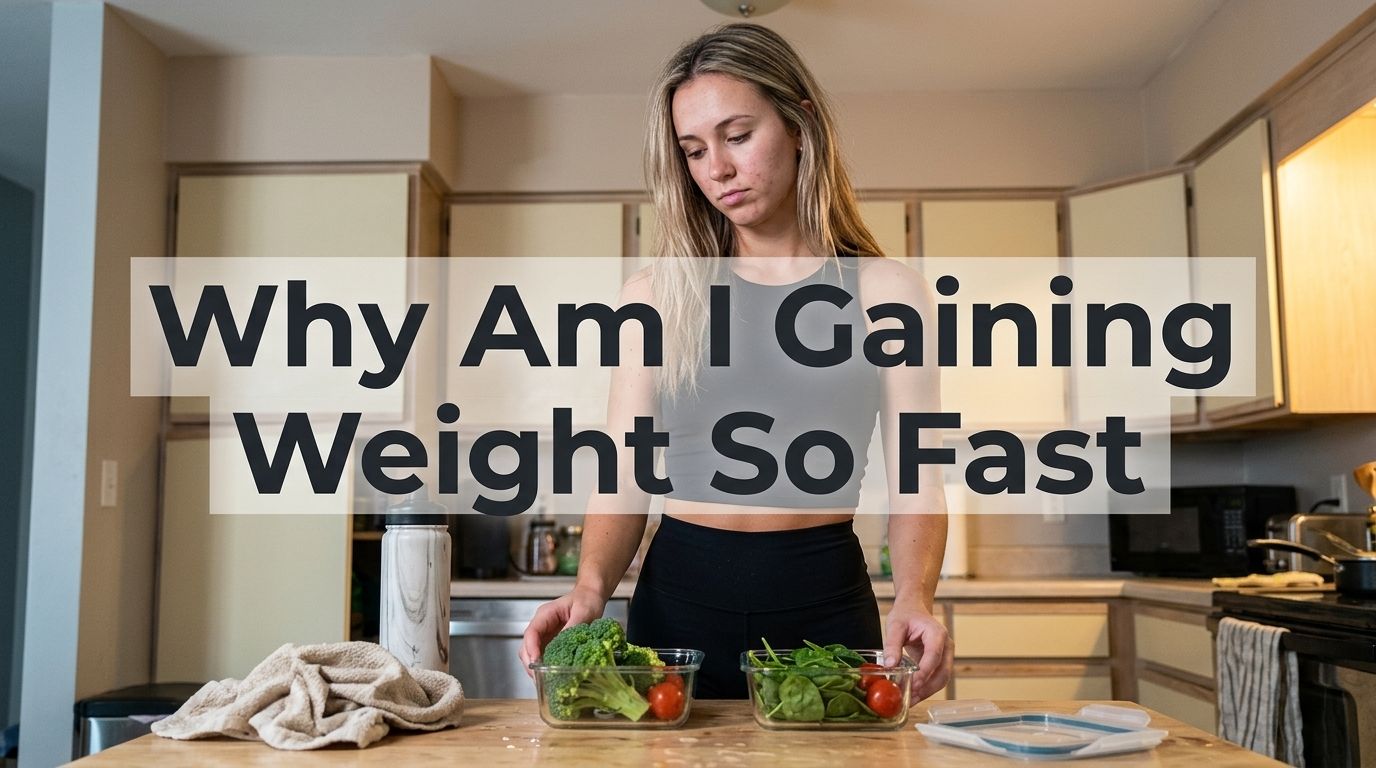
Gaining weight fast without changing eating habits or activity levels signals an imbalance in metabolism, hormones, sleep, stress, or an underlying medical condition. Identifying the specific cause is the first step to reversing it. This guide covers every major driver of rapid and unexplained weight gain.
Poor sleep dysregulates hunger hormones and drives caloric surplus. Chronic stress raises cortisol, which promotes abdominal fat storage and comfort eating. Ultra-processed diets add approximately 500 extra calories per day versus unprocessed eating. Hormonal imbalances in insulin, thyroid, cortisol, estrogen, and testosterone all drive weight gain independently of calorie intake. Medical conditions including hypothyroidism, PCOS, and heart failure cause rapid weight gain through fluid retention and metabolic disruption.
Rapid weight gain of 2 to 3 pounds (0.9 to 1.4 kg) per day or 5 pounds (2.3 kg) per week requires prompt medical attention. This guide explains what causes each pattern, which warning signs indicate a serious condition, and how to address the most common lifestyle drivers effectively.
What Is Unexplained Weight Gain?
Unexplained weight gain is gaining weight without deliberately increasing food intake or decreasing physical activity. It can occur slowly over time or as rapid weight gain, and often results from caloric needs declining without any corresponding change in eating habits.
Here’s the tricky part. Weight gain can result from lifestyle factors, hormonal changes, medical conditions, or medication side effects — and these causes often stack on top of each other. That’s why it can feel impossible to pinpoint without a proper evaluation.
What Is Considered Rapid Weight Gain?
Rapid weight gain is clinically defined as gaining 2 to 3 pounds (0.9 to 1.4 kg) per day or 5 pounds (2.3 kg) per week. Gaining 5% or more of total body weight in a single month also meets the threshold that healthcare providers consider medically concerning.
Short answer: not all weight increases are equal. Normal short-term fluctuations of 1 to 2 kilograms (2.2 to 4.4 lbs) within 3 days are common and don’t represent true fat gain. These swings come from dietary changes, water retention, and daily activity differences — not actual fat accumulation.
Why Does Body Weight Fluctuate Each Day?
Body weight can swing by as much as 5 to 6 pounds (2.3 to 2.7 kg) in a single day depending on food and fluid intake, movement levels, stress, and hormonal changes. These swings are temporary and do not reflect real fat gain or loss.
Water retention drives most of it. High sodium intake, prolonged sitting or standing, hormonal fluctuations around the menstrual cycle, and certain medications all cause temporary water weight increases. In most cases, they resolve within 24 to 48 hours.
Causes of Daily Weight Fluctuations:
- Food and fluid intake variations
- Water retention from high sodium intake
- Hormonal fluctuations around the menstrual cycle
- Physical activity level differences
- Stress and cortisol elevation
- Medication effects on fluid balance
What Lifestyle Habits Cause Rapid Weight Gain?
The most common lifestyle drivers of unexplained weight gain are poor sleep, chronic stress, sedentary behavior, excess processed and sugary food consumption, yo-yo dieting, and late-night eating — all of which disrupt caloric balance or hormonal regulation independently of conscious overeating.
And processed food makes it dramatically worse. Research found that people on an ultra-processed diet ate approximately 500 more calories per day than those on an unprocessed diet. That’s a daily surplus that compounds over weeks into real, measurable fat gain.
Does Poor Sleep Cause Weight Gain?
Yes. Poor sleep quality dysregulates the body’s hunger hormones, increasing hunger and cravings for high-calorie foods. Sleep apnea — a disorder characterized by pauses in breathing during sleep — is directly associated with weight gain through this same hormonal disruption pathway.
But it goes further than hunger. Sleep deprivation triggers stress hormone release, which puts the body into energy-conservation mode. The body treats insufficient sleep as a threat and responds by holding onto fat stores rather than burning them. So you eat more and burn less — a double hit.
Does Stress Cause Weight Gain?
Yes. Chronic stress raises cortisol levels consistently, which increases appetite, promotes cravings for high-calorie comfort foods, and directs the body to store unused energy as abdominal fat. Cortisol’s biological role is energy replenishment — and fat storage is how it delivers that.
Stress also changes behavior in ways that make things worse. People under chronic stress reach for comfort foods that are high in sugar, unhealthy fat, and excess calories. This pattern creates a caloric surplus independent of true hunger signals. Our coaches at Eat Proteins see this cycle in almost every client dealing with stubborn belly fat.
Does Eating Processed Foods Cause Weight Gain?
Yes. People on an ultra-processed diet consume approximately 500 more calories per day than those eating unprocessed foods, per research. That daily surplus directly drives weight gain when it continues over weeks and months without a compensating increase in activity.
Sugary beverages are the single largest source of added sugar in the United States and are strongly linked to weight gain. Does the source of sugar matter? For weight gain, yes — liquid calories from sugary drinks bypass satiety signals more completely than solid food calories do.
Lifestyle Causes of Unintentional Weight Gain:
| Cause | Mechanism | Effect |
| Poor sleep | Dysregulates hunger hormones | Increased hunger, high-calorie cravings |
| Chronic stress | Elevates cortisol | Abdominal fat storage, comfort eating |
| Ultra-processed diet | Excess caloric density | ~500 extra calories/day vs unprocessed |
| Sedentary lifestyle | Reduces calorie burn | Caloric surplus even at normal intake |
| Yo-yo dieting | Triggers starvation mode | Reduced metabolic rate, fat preservation |
| Late-night eating | Increases hunger, slows metabolism | Higher body fat accumulation |
What Hormonal Changes Cause Weight Gain?
Hormones regulate metabolism, appetite, and fat storage. Imbalances in cortisol, insulin, thyroid hormones, estrogen, and testosterone disrupt the body’s normal metabolic processes and drive weight gain independent of caloric intake. You can eat perfectly and still gain weight when hormones are out of balance.
Insulin resistance is one of the most common and underdiagnosed hormonal causes. When cells stop responding to insulin, blood sugar stays elevated and fat storage increases — especially around the abdomen. This process often progresses silently for years before it’s detected.
Hormones That Cause Weight Gain When Imbalanced:
- Cortisol — elevated by chronic stress, promotes abdominal fat storage
- Insulin — resistance causes elevated blood sugar and abdominal fat gain
- Thyroid hormones — deficiency (hypothyroidism) slows metabolism
- Estrogen — decline in women (menopause, age 35+) shifts fat to the midsection
- Testosterone — decline in men increases body fat and reduces muscle mass
Does Cortisol Cause Weight Gain?
Yes. Chronically high cortisol increases appetite, promotes cravings for high-calorie foods, and directs the body to store excess energy as abdominal fat. Cortisol’s job is energy replenishment — and when it stays elevated, fat storage becomes the body’s default setting.
Cushing’s syndrome is the extreme version of this. Abnormally high cortisol levels cause significant weight gain in the midsection, face, and upper back. It’s a vivid example of how powerfully cortisol shapes fat distribution when it stays elevated over time without resolution.
Does Thyroid Dysfunction Cause Weight Gain?
Yes. Hypothyroidism slows metabolism because the thyroid gland doesn’t produce enough hormone to regulate the body’s energy use normally. Weight gain, fatigue, and depression are the hallmark symptoms — and they arrive gradually, making the thyroid easy to overlook as the cause.
The good news? It’s fixable. Healthcare providers diagnose hypothyroidism through hormone lab tests. Once identified, thyroid hormone replacement restores metabolic rate and reverses the slow, steady weight accumulation the underactive gland was driving. For many people, the results are dramatic.
Does Aging Slow Metabolism and Cause Weight Gain?
Yes. After age 40, the body’s basal metabolic rate decreases approximately 5% per decade — requiring roughly 60 to 100 fewer calories per day every 10 years. Eating the same number of calories as at a younger age creates a growing surplus that quietly accumulates as fat year after year.
And it’s not just metabolism. Muscle is lost, bone density decreases, and body fat increases with age. Muscle burns more calories at rest than fat does. That composition shift means the body burns fewer calories even with unchanged eating habits — a passive weight gain mechanism most people don’t account for.
What Medical Conditions Cause Rapid Weight Gain?
Medical conditions that cause unexplained weight gain include hypothyroidism, PCOS, Cushing’s syndrome, diabetes, heart failure, kidney disease, and cirrhosis — each operating through distinct mechanisms involving hormones, fluid balance, or metabolic disruption. These aren’t diet problems. They require medical diagnosis.
Fluid retention from organ dysfunction is the most rapid form. Heart failure, kidney disease, and cirrhosis all impair the body’s ability to manage fluid. That fluid builds up in tissues and can add 10 pounds (4.5 kg) or more to the scale in a single week. This is not fat gain — it’s a medical emergency.
Medical Conditions That Cause Unexplained Weight Gain:
| Condition | Mechanism | Type of Weight Gain |
| Hypothyroidism | Slows metabolism | Gradual fat accumulation |
| PCOS | Insulin resistance + hormone imbalance | Abdominal fat + fluid |
| Cushing’s syndrome | Elevated cortisol | Midsection, face, upper back fat |
| Insulin resistance / Diabetes | Elevated blood sugar, fat storage | Abdominal fat |
| Heart failure | Fluid retention | Rapid fluid weight (feet, legs, belly) |
| Kidney disease | Impaired fluid excretion | Rapid fluid weight |
| Cirrhosis | Fluid retention in abdomen | Rapid fluid weight (abdomen) |
Can PCOS Cause Unexplained Weight Gain?
Yes. PCOS causes hormonal imbalances — including elevated androgens and insulin resistance — that drive fat accumulation and fluid retention. This weight gain is driven by hormonal dysfunction, not caloric excess, and it doesn’t respond well to diet alone without medical support.
PCOS-related insulin resistance pushes fat toward the abdomen. Cells stop responding to insulin, blood sugar stays elevated, and fat storage keeps rising. Here’s the part most people miss: no amount of calorie cutting fully addresses this without first tackling the insulin resistance driving it.
Can Heart or Kidney Problems Cause Rapid Weight Gain?
Yes. The American Heart Association recommends seeking medical attention for weight gain of 2 to 3 lbs (0.9 to 1.4 kg) per day or 5 lbs (2.3 kg) per week — as this pattern may indicate heart failure. Heart failure causes fluid accumulation in the feet, ankles, legs, and belly.
Kidney disease adds a second mechanism. Impaired kidneys can’t filter and excrete fluid efficiently. That retained fluid accumulates in tissues and drives rapid weight increases that have nothing to do with fat. This kind of weight gain is a medical emergency, not a nutrition problem.
Can Medications Cause You to Gain Weight Fast?
Yes. Many medications affect brain chemicals that regulate appetite, making people significantly hungrier than usual and driving excess food intake. Others, like prednisone, cause direct fluid retention — adding scale weight rapidly without any real increase in body fat.
Quitting smoking follows a similar pattern. Nicotine raises metabolism and suppresses appetite. When someone stops, metabolism slows and hunger rises. Most people gain 4 to 10 pounds (1.8 to 4.5 kg) in the first 6 months. For heavy smokers, that range can be even higher. It’s a predictable physiological response, not a failure of willpower.
Which Medications Are Most Likely to Cause Weight Gain?
Antidepressants and antipsychotics affect metabolism and increase appetite, making weight gain a well-documented side effect. Anyone concerned about medication-driven weight gain should talk to their doctor about alternative prescriptions that carry a lower weight-gain risk.
Corticosteroids like prednisone cause water weight in short-term use and actual fat mass gain with prolonged use. At the same time, the inflammation they treat activates the cortisol-fat storage cycle. Both mechanisms compound weight gain for people on long-term steroid therapy.
Medications Known to Cause Weight Gain:
- Antidepressants — increase appetite by affecting brain chemistry
- Antipsychotics — alter metabolism and raise appetite
- Corticosteroids (prednisone) — cause fluid retention and fat mass gain
- Insulin and diabetes medications — can promote fat storage
- Beta-blockers — reduce metabolic rate
- Antihistamines — may increase appetite
When Should You See a Doctor About Rapid Weight Gain?
Medical care is needed immediately when weight gain reaches 2 to 3 lbs (0.9 to 1.4 kg) per day, 5 lbs (2.3 kg) per week, or 5% or more of total body weight in one month. These thresholds point to potential heart failure, fluid retention disorders, or serious underlying conditions.
A healthcare provider evaluates unexplained weight gain through physical examination, BMI calculation, and hormone level lab tests. The findings shape a personalized treatment plan that targets the actual cause — not a generic calorie-reduction prescription that misses the real problem. Ready to start losing weight faster with a plan that addresses root causes? Our nutritionists at Eat Proteins built exactly that.
What Are Warning Signs That Weight Gain Is Dangerous?
Weight gain accompanied by swelling in the feet, ankles, legs, or belly, combined with fatigue or shortness of breath, may indicate heart failure and requires immediate medical evaluation. This is not a dietary problem. Exercise and food changes won’t fix it.
Cancer treatment also causes unexpected weight gain — particularly for breast, prostate, and ovarian cancer — due to the medications involved. Any unexplained weight gain occurring during or after cancer treatment should be reported to the treating physician without delay.
Want Your Free Plan to Stop Gaining Weight and Start Losing It?
You now know the real reasons weight piles on fast — poor sleep, chronic stress, hormone imbalances, processed food habits, and medical conditions that most people never think to check. The lifestyle causes are the most common and the most reversible. And they respond to the right plan.
Our nutritionists at Eat Proteins built a free plan built around high-protein, whole-food meals that restore metabolic health, stabilize blood sugar, cut stress-driven cravings, and build sustainable fat loss from the ground up. Stop guessing. Get the framework that actually works.