
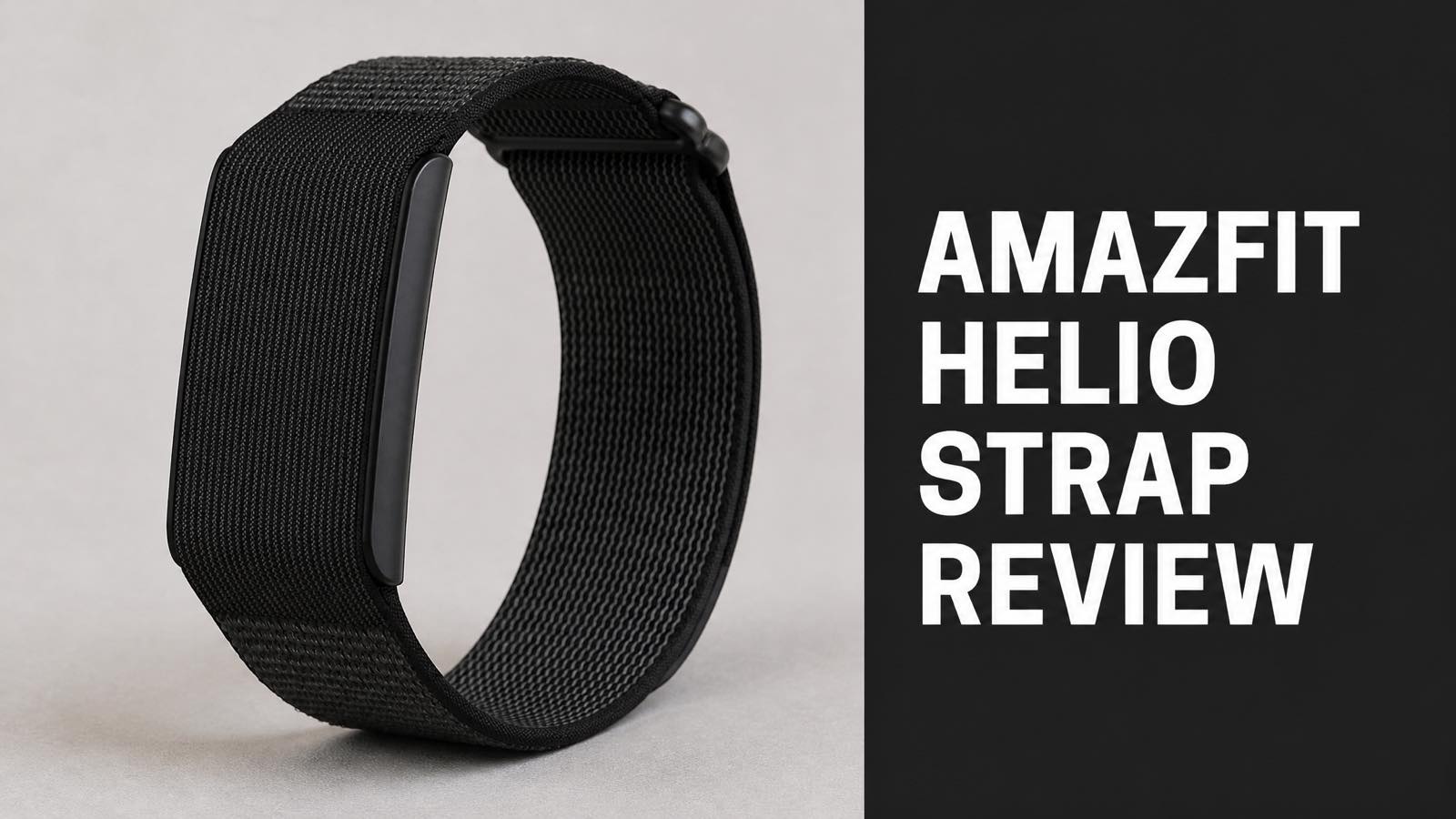
The Amazfit Helio Strap is a screen-free fitness tracker from Amazfit, priced at $99.99. It sits on your wrist or upper arm and logs heart rate, sleep, stress and workouts around the clock. You read everything in the Zepp app on your phone. No subscription is required for the core features.
This review covers how the strap works and what it tracks. Reviewers widely praise its accurate heart rate readings and its battery life of 7 to 10 days. They criticize generous sleep scores and overeager workout detection. The article also compares it with the Whoop, the Polar Loop and the Garmin Index Sleep Monitor on price, features and battery life.
You’ll also see real costs, safety notes and where to buy the strap. By the end, you’ll know whether a no-screen tracker fits your training and your budget. Our team at Eat Proteins tells you who wins with it and who needs to skip it. Read on for the full verdict. Every claim comes from published reviews.
What Is the Amazfit Helio Strap?
The Amazfit Helio Strap is a screen-free fitness and health tracker built around the BioTracker 6.0 sensor. Amazfit sells it for $99.99 with no required subscription. The sensor module weighs 20 grams (0.7 ounces) and clips into a 22mm nylon strap. You read every metric and trend in the Zepp app on your phone. Amazfit offers it in one color, black.
Here’s the thing: the strap has no display, no watch face and no buttons. Is it a smartwatch? Not at all. Our team at Eat Proteins sees it as a data collector that stays out of your way.
Who Is the Amazfit Helio Strap For?
The Amazfit Helio Strap suits people who want health tracking without another screen on the wrist. Lifters, runners and sleep trackers get the most value. Reviewers at GearBrain and Wareable describe it as a rival to the Whoop band. The big difference is that Amazfit charges no yearly membership fee, and that’s the whole pitch. Daily wear works well too.
Best For:
- Strength trainers who find a watch awkward
- Runners who prefer an upper-arm sensor
- Budget shoppers who want to avoid subscriptions
- Sleep and recovery trackers who want daily readiness scores
In plain English: if you want data and not distractions, this tracker fits. If you want notifications, music controls or a clock, it doesn’t.
How Does the Amazfit Helio Strap Work?
The Amazfit Helio Strap reads your pulse every second through an optical BioTracker 6.0 sensor. The same module estimates blood oxygen, stress and sleep stages. The strap then sends the data to the Zepp app over Bluetooth 5.2. Our team at Eat Proteins calls that setup simple, and simple is the point. The sensor sits on your skin and logs data day and night.
The strap stores heart rate data offline for up to 21 days. Why does that matter? You can leave your phone at home and sync after the run.
Setup Steps:
- Charge the sensor on its clip-on cradle.
- Pair the strap with the Zepp app on your phone.
- Wear the sensor on your wrist or upper arm.
- Start a workout from your phone or let the strap detect it.
- Sync the strap to review your metrics.
What Does the Zepp App Show?
The Zepp app turns the strap’s raw data into readiness, sleep, training and recovery scores. BioCharge shows your daily energy level, much like Garmin’s Body Battery. Post-workout screens add VO2 max (maximal oxygen uptake), training load, training effect and recovery time. The core features cost nothing extra, and Amazfit builds them into the free app.
What’s more, Amazfit sells Zepp Aura, an optional paid service. Zepp Aura adds deeper sleep stats, breathing exercises and personalized music. McGST wasn’t sure it was worth paying for. Most buyers can skip it.
What Features Does the Amazfit Helio Strap Have?
The Amazfit Helio Strap packs heart rate, blood oxygen, stress, sleep and workout tracking into a 20-gram body. The tracker covers dozens of sports modes, such as strength training and a dedicated HYROX Race mode. The strap also recognizes 25 strength movements. Live heart rate broadcasting over Bluetooth works with other devices, which suits gym sessions.
Water resistance is rated 5 ATM (50 meters, 164 feet). The fiber-reinforced polymer body fits any standard 22mm watch strap. Color choice is limited. The strap comes only in black.
Key Specs:
| Spec | Detail |
|---|---|
| Price | $99.99 |
| Weight | 20 g (0.7 oz) |
| Size | 33.97 x 24.3 x 10.59 mm |
| Battery | 232 mAh, up to 10 days |
| Connectivity | Bluetooth 5.2 |
| Water resistance | 5 ATM |
How Long Does the Battery Last?
The Amazfit Helio Strap lasts about a week in real use, with a rated maximum of 10 days. Wareable reached a week easily and up to 10 days with heavier use. Active Gear Review measured roughly 7 days. Amazfit claims the 10-day figure, so expect a range of 7 to 10 days between charges. Heavy workout logging and sleep tracking drain the battery faster.
A full charge takes about two hours. By comparison, the Whoop lasts up to 14 days and the Polar Loop up to 8 days. The Helio Strap lands in the middle. The good news? The strap doesn’t drain while you’re not wearing it.
What Are the Benefits of the Amazfit Helio Strap?
The Amazfit Helio Strap delivers continuous tracking, flexible wear positions and zero subscription cost for $99.99. You wear it on the wrist all day or move it to your upper arm for training. The screen-free design removes notification distractions. Reviewers praised that mix of low price and broad features. The band suits both casual and serious users.
And here is the best part: Whoop members pay $199 to $359 per year. The Helio Strap costs a single payment. Over two years, the gap only grows.
Main Benefits:
- Heart rate tracking every second
- Wrist or upper-arm wear
- Free core features in the Zepp app
- Rep, set and rest tracking for strength training
- Offline storage for up to 21 days
Does the Amazfit Helio Strap Track Heart Rate Accurately?
Yes. The Amazfit Helio Strap delivers consistent heart rate readings during runs, gym sessions and cycling. GearBrain called its readings accurate and consistent over a month of testing. Wareable also praised accuracy across exercises. Upper-arm wear reduces interference from wrist motion, gripping and sweat during hard training. Wrist readings hold up too.
To be clear, rest is harder. Active Gear Review logged a sleeping heart rate of 69 BPM while other devices read 48 BPM. The reviewer blamed looseness or movement. Does fit matter? Clearly, yes.
Does the Amazfit Helio Strap Track Sleep Well?
Yes. The Amazfit Helio Strap records sleep duration and stages, including REM, with solid accuracy. McGST found the sleep stats comprehensive. The Zepp app also tracks hypopnea (shallow breathing episodes) to flag sleep apnea risk. Active Gear Review found its duration and stage data matched other devices. Sleep tracking runs on the same sensor all night.
The bad news? The sleep score runs generous. Active Gear Review says a restless night still earns a high score. Is the number useful? Not really. Trust the stages and duration instead.
What Do Amazfit Helio Strap Reviews Say?
Amazfit Helio Strap reviews are largely positive, with praise for value, accuracy and battery life. GearBrain tested the strap for a month. Wareable tested it for a couple of months and called it a true Whoop challenger. McGST, a veteran of Fitbit, Apple Watch and Garmin devices, called it impressive for the price. Value runs through all of these reviews.
Complaints exist, but they’re minor. Most target software polish rather than the sensor. Do the gripes ruin the experience? Reviewers say no, since the core tracking works.
What Do Reviewers Like?
Reviewers like the price, the battery life and the accurate heart rate tracking. Wareable liked the light 20-gram body and the free core features. McGST liked the food photo logging and the logical app design. GearBrain liked wearing the sensor on the upper arm while running and pairing it with the Zepp app. Connectivity problems never appeared in that test.
In fact, McGST compared sensor results with a Fitbit Luxe and an Apple Watch Ultra 2. The readings looked very similar. The test was non-scientific, but that’s strong praise at $99.99.
Pros:
- Low $99.99 price with no required subscription
- Accurate heart rate during workouts
- Battery life of 7 to 10 days
- Lightweight 20-gram design
- Free BioCharge readiness metric
What Are the Common Complaints?
Common complaints focus on automatic workout detection, generous sleep scores and a limited one-color lineup. Wareable found the automatic exercise recognition overly sensitive. Active Gear Review called the AI workout tracking merely okay. GearBrain noted the missing display, and Wareable noted the single black finish. None touch the sensor itself.
The list doesn’t stop there. The Exertion score tops out at 100 percent, even after harder efforts. Wareable said the Zepp interface needs polish. McGST found the stock strap a little stiff.
Cons:
- No screen for time or notifications
- Overly sensitive automatic exercise recognition
- Sleep score runs high
- Exertion score caps at 100 percent
- Only available in black
How Does the Amazfit Helio Strap Compare to Whoop and Polar Loop?
The Amazfit Helio Strap costs far less than the Whoop and undercuts the Polar Loop on price. Whoop charges $199 to $359 per year, hardware included. Polar charges $200 once. Amazfit charges $99.99 once. All three skip the screen and focus on recovery, sleep and training data. Price is the clearest gap among them. Amazfit also skips yearly renewals.
Whoop’s top plan adds ECG and daily blood pressure insight, which McGST says is still in beta. The Helio Strap lacks both. Whoop MG also weighs more, at 27.3 grams versus 20 grams. Is the extra tech worth the fee? That’s your call.
Screen-Free Tracker Comparison:
| Tracker | Price | Max Battery |
|---|---|---|
| Amazfit Helio Strap | $99.99 one-time | 10 days |
| Whoop | $199-$359 per year | 14 days |
| Polar Loop | $200 one-time | 8 days |
What About the Garmin Index Sleep Monitor?
The Garmin Index Sleep Monitor is built mainly for sleep monitoring and is worn only on the upper arm. Wareable lists its price at $170 (about £150 in the UK). The Helio Strap costs less and tracks workouts, stress and daily activity too. Buyers who want a sleep-only tool still have a clear alternative. Both devices clip onto the arm and skip the display.
Think of it this way: Garmin focuses on one job. Amazfit covers sleep, training and recovery together. Which is better? The answer depends on whether you want one metric or a full picture.
Is the Amazfit Helio Strap Safe?
Yes. The Amazfit Helio Strap is a legitimate product from an established wearable brand. Amazfit has built a reputation on value-driven smartwatches and trackers. The company sells the strap directly through its official store. None of the reviews our team read flag a safety problem with the device. Reviewers wore it day and night for weeks on end.
To be clear, the readings are fitness estimates. McGST notes that no fitness tracker currently offers perfectly accurate tracking. The hook-and-loop strap can also catch when you pull off clothes, per Wareable.
Who Needs to Skip the Amazfit Helio Strap?
Anyone who wants a screen needs a smartwatch instead of this tracker. GearBrain notes you can’t check messages, control music or run your smart home from the wrist. Golfers who want course features also need a dedicated golf watch. The strap logs golf rounds as health data, not as on-course guidance, so golf-focused buyers need a very different device.
Serious athletes wanting precise load numbers face limits too. The Exertion score caps at 100 percent. The sleep score runs high. Bottom line: casual and mid-level trainers benefit most.
How Much Does the Amazfit Helio Strap Cost?
The Amazfit Helio Strap costs $99.99 in the US and £99.90 in the UK, with no required subscription. One payment covers the sensor and access to all core Zepp features. Only optional extras, such as Zepp Aura and the upper-arm band, add cost. Whoop members also pay between $199 and $359 per year instead. No hidden fees show up in any review we read.
Short answer: it’s cheap. Is it cheap for what you get? McGST and Wareable both say yes. A comparable Whoop plan costs more than the strap within a single year.
Two-Year Cost:
| Tracker | Year One | Two Years |
|---|---|---|
| Amazfit Helio Strap | $99.99 | $99.99 |
| Polar Loop | $200 | $200 |
| Whoop | $199-$359 | $398-$718 |
Where Can You Buy the Amazfit Helio Strap?
Amazfit sells the Helio Strap through its official online stores, including us.amazfit.com for the US. The same store lists the newer Helio Strap Pro, which Amazfit also markets as subscription-free. Buying direct gives you the maker’s current listing and price. UK shoppers can use uk.amazfit.com for the £99.90 listing. Check the page for any current deals.
Check the listing for the black colorway, the only option. Pair it with a 22mm strap or the optional arm band if you want upper-arm wear.
Why Should You Try Eat Proteins?
Eat Proteins gives you honest, research-backed reviews before you spend a dollar. Our team reads the reviews, checks the specs and tells you the trade-offs. You get the facts first. Price matters when a $99.99 tracker competes with memberships that cost hundreds of dollars every year, so details count. Smart buyers always read first, then buy wisely.
Ready to buy smarter? Our experts at Eat Proteins have more reviews waiting. Browse them, pick the tool that matches your training and start today.
Is the Amazfit Helio Strap Worth Buying?
Yes. The Amazfit Helio Strap is worth buying for anyone who wants subscription-free tracking without a screen. The strap delivers accurate heart rate data, 7 to 10 days of battery life and a free Zepp app. Wareable, GearBrain and McGST agree on the value. The compromises are small, and the price is hard to beat. A full charge takes about two hours.
Bottom line: grab it if you want data and quiet. Skip it if you need a display. You know what you want, so go get it.