
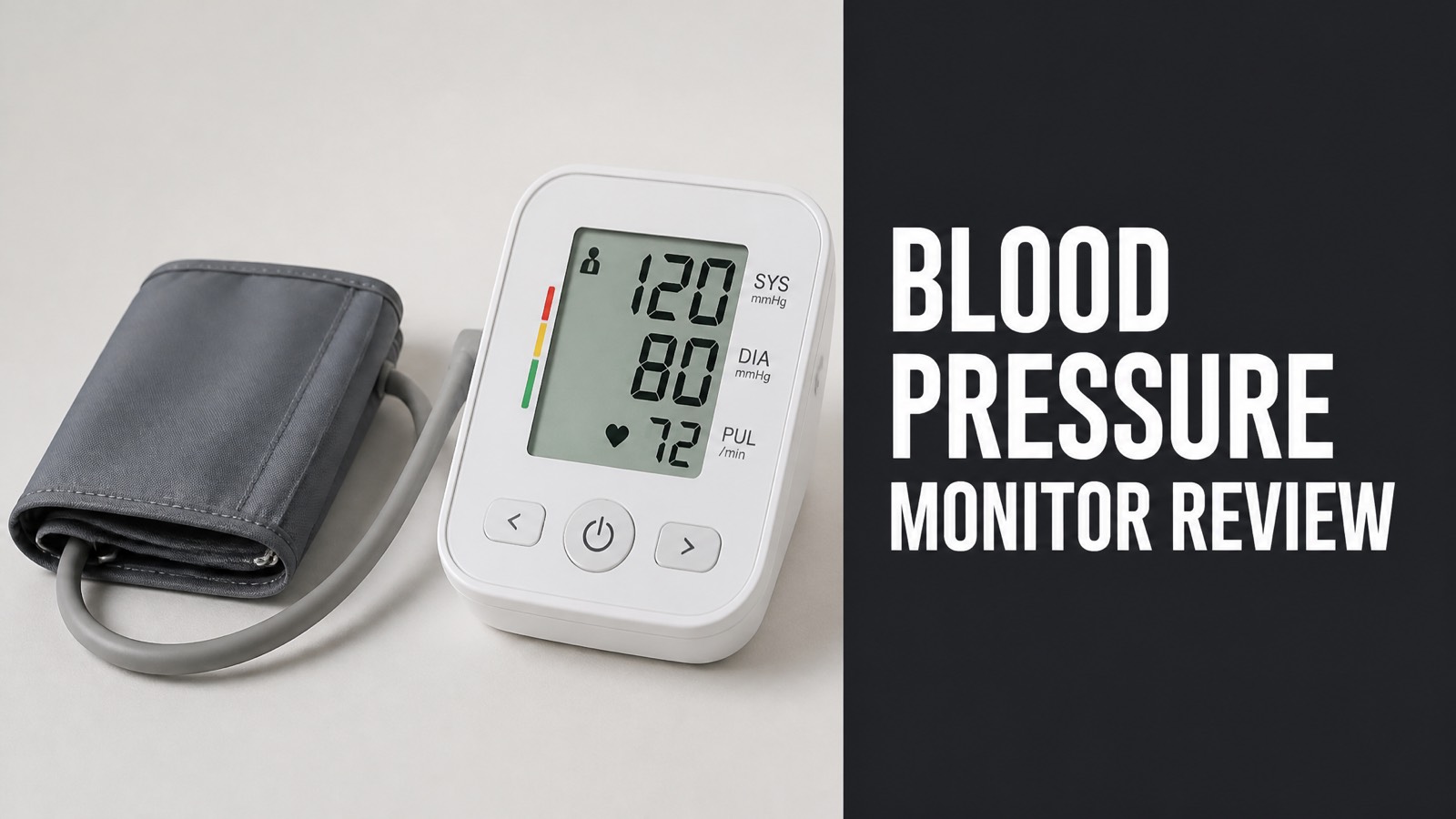
A blood pressure monitor is a home device that measures systolic pressure, diastolic pressure, and pulse with an inflatable cuff. Top 2026 models from Omron, Greater Goods, and A&D Medical cost $40 to $289. Doctors rely on home readings to track hypertension between office visits.
Upper-arm monitors deliver more accurate readings than wrist models. The American Heart Association recommends them for home use. Validated devices appear on the listing at validatebp.org. Cuff size and technique matter as much as the device itself. Wirecutter picks the Greater Goods Bluetooth monitor. Consumer Reports rates the Omron Evolv highly.
The real value lies in steady trends, not single numbers. Weeks of consistent readings reveal whether a treatment works. The sections below cover how monitors work, what buyers report, top models, safety, prices, and insurance. Read on to choose a validated monitor with real confidence and skip the costly mistakes.
What Is a Blood Pressure Monitor?
A blood pressure monitor is a home device that measures systolic pressure, diastolic pressure, and pulse rate. The machine, called a sphygmomanometer, uses an inflatable cuff around the upper arm or wrist. Results appear in millimeters of mercury (mm Hg). Home units simply track trends between checkups, but they don’t replace a doctor’s formal diagnosis.
Systolic pressure is the top number, measured as the heart beats. Diastolic pressure is the bottom number, measured between beats. The American Heart Association defines hypertension as 130 or higher systolic, or 80 or higher diastolic. Normal blood pressure sits below 120/80 mm Hg.
Four types exist for home use. Automatic upper-arm monitors inflate at the press of a button. Manual upper-arm models need a hand pump. Wrist and fingertip monitors round out the market. But the American Heart Association recommends only the automatic upper-arm style.
Who Needs a Home Blood Pressure Monitor?
People with diagnosed hypertension benefit most from a home blood pressure monitor. The Centers for Disease Control and Prevention says nearly half of US adults have high blood pressure. Why does home tracking matter so much? High blood pressure rarely causes symptoms. So regular home checks are the most reliable way to catch rising numbers early on.
Pregnant patients are another key group. Dr. Veronica Gillispie-Bell of Ochsner Health uses home readings to spot early signs of preeclampsia. Some of her patients came to the hospital because of numbers they recorded at home. Those readings flagged trouble between visits.
Home monitors also help people with ‘white coat syndrome.’ Here’s the thing: the stress of a doctor’s office can spike blood pressure. Readings taken at home show a truer daily picture. Consumer Reports notes that self-monitoring is linked to better blood pressure control.
How Does a Blood Pressure Monitor Work?
A digital blood pressure monitor works by inflating a cuff until blood flow in the arm’s main artery briefly pauses. The cuff then deflates slowly and steadily. Sensors read pressure pulses in the artery wall as blood starts moving again. A built-in chip converts those pulses into systolic and diastolic numbers, plus a pulse rate, and shows them on screen.
Most home models use this oscillometric method. No stethoscope is needed. Let me break that down: the device does the listening a nurse once did by ear. Good monitors also flag body movement during a reading. Movement distorts the pressure signal.
How a Reading Works:
- The user wraps the cuff snugly around the bare upper arm.
- The monitor inflates the cuff until blood flow in the artery pauses.
- The cuff deflates slowly while sensors track pressure pulses.
- The screen displays systolic pressure, diastolic pressure, and pulse rate.
- The device stores the reading in memory or syncs it to an app.
Are Upper-Arm Monitors Better Than Wrist Monitors?
Yes. Upper-arm monitors deliver more accurate home readings than wrist or fingertip models. The American Heart Association recommends an automatic, cuff-style upper-arm (biceps) monitor. Wirecutter skipped wrist and fingertip devices entirely for that reason. AARP and the National Council on Aging (NCOA) also left wrist models off their lists of top picks.
Are wrist monitors useless, then? Not quite. Consumer Reports rates the Omron BP6350 as its top wrist pick. Its soft cuff fits wrists from 5.3 to 8.5 inches (13.5 to 21.6 centimeters). AARP advises using wrist models only when a health care provider approves.
What Features Matter in a Blood Pressure Monitor?
The most important feature in a blood pressure monitor is clinical accuracy, followed closely by consistent readings. Wirecutter’s expert testers found consistency nearly as vital as precision. Why? Trends over weeks reveal far more than any single number. Using the same reliable device every day keeps those long-term trends trustworthy and easy to read.
Beyond accuracy, several extras make daily use easier. Large backlit screens help in dim rooms. Storage for two users suits couples. Irregular heartbeat detection flags rhythms worth discussing with a doctor. And Bluetooth syncing removes the need for a paper log.
Key Features to Look For:
- A spot on the US Blood Pressure Validated Device Listing
- A large, backlit display
- Memory for at least a few weeks of readings
- Two-user or guest mode
- Irregular heartbeat and body movement detection
- Averaging of the last three readings
- Bluetooth sync to a phone app
Warranty terms deserve a look too. Most monitors carry warranties of one to five years. By comparison, cuffs usually get just one year of coverage. A replacement cuff costs $15 to $60. And a cuff from another brand may not fit the device.
Why Does Cuff Size Matter?
Cuff size matters because a cuff that is too loose or too tight produces a false reading. Wirecutter’s physician sources say a poorly fitting cuff distorts the final results. Does the cuff really matter that much? Absolutely. Measure the arm halfway between the armpit and the elbow before buying a monitor or a spare cuff. A cloth tape measure works best.
Standard cuffs cover most adults. The Greater Goods kit cuff fits arms from 8.75 to 16.5 inches (22 to 42 centimeters). The Omron 3 Series cuff spans 9 to 17 inches (23 to 43 centimeters). Larger arms need an extra-large cuff option.
The cuff needs to feel snug but not tight. Pre-formed cuffs that slide over the arm are easier to use alone. And here’s the part most people miss: a printed position guide helps a lot. Greater Goods prints one right on its cuff.
Are Home Blood Pressure Monitors Accurate?
Yes. Validated home blood pressure monitors produce readings accurate enough for daily tracking at home. Experts quoted by Wirecutter want results within 10 mm Hg (1.3 kPa) of a doctor’s office machine. Consumer Reports checks each monitor against a mercury sphygmomanometer. The mercury device remains the gold standard for blood pressure measurement.
But not every monitor passes. Consumer Reports found that store brands from CVS and Walmart often trail name brands. Omron models stood out in its testing. Wirecutter also saw inconsistent readings from the iHealth Track. To be clear, a yearly check against the clinic’s machine catches a drifting monitor.
Does FDA clearance guarantee accuracy? No. The FDA does not validate the accuracy of the devices it clears. In fact, the better filter is the US Blood Pressure Validated Device Listing at validatebp.org. The American Medical Association created that listing to confirm accuracy.
How Do You Get an Accurate Reading?
An accurate reading depends on correct technique as much as on the monitor itself. The American Heart Association and the CDC both publish clear step-by-step guidance. What ruins most readings? A badly misplaced cuff, clothing under the cuff, crossed legs, and skipped rest. Each small mistake skews the numbers on the screen and muddies the overall trend.
Timing matters as well. Readings taken at the same time each day give the cleanest trend. Think of it this way: a steady routine removes noise from the data. Wirecutter suggests five quiet minutes with the cuff on before starting.
Steps for an Accurate Reading:
- Avoid caffeine, food, exercise, and smoking for 30 minutes beforehand.
- Empty the bladder before sitting down.
- Sit at a table with the back supported and feet flat on the floor.
- Place the cuff on bare skin, about 1 inch (2.5 centimeters) above the elbow.
- Rest the arm at heart level and stay quiet for five minutes.
- Take two readings one minute apart and record both.
What Do Blood Pressure Monitor Reviews Say?
Blood pressure monitor reviews praise top upper-arm models for accuracy, ease of use, and readable screens. The Omron 7 Series BP760N holds a 4.7 out of 5 rating at Best Buy. And 92% of those reviewers would recommend it to a friend. Shoppers say its readings often match the numbers from their doctor’s office. Best Buy’s summary lists no common complaints.
Large testing panels back up that feedback. Wirecutter has tested more than two dozen monitors since 2017, with testers aged 29 to 80. AARP tested eight popular devices and recommended only four. The NCOA compared 12 devices from 11 brands.
Affordability is a big concern for buyers. AARP’s October 2025 survey of 300 adults aged 50 and older ranked cost as a top worry. The good news? Several validated models cost well under $100.
What Do Users Like?
Users like monitors that give consistent numbers and work right out of the box. One Best Buy reviewer said the Omron 7 Series read within 4 or 5 points of the doctor’s office. So do home numbers really hold up? Mostly, yes, for validated models. Wirecutter testers loved the Greater Goods Bluetooth model and its quick slide switch between two separate users.
Color cues get frequent praise too. One Best Buy shopper liked the lights that show whether a reading is normal or high. What’s more, AARP testers liked the Homedics 700 Series for its color-coded display and five-day trend view.
Pros:
- Readings close to office measurements
- Simple one-button operation
- Bright, backlit displays
- Color-coded risk indicators
- App syncing for easy sharing with doctors
What Are Common Complaints?
Common complaints focus on hard-to-read screens, short cords, uncomfortable cuffs, and short device lifespans. AARP’s home tester, Daria, noted that the Omron 3 Series cord is short. The monitor has to sit on a lap or very close by during each reading. Are these dealbreakers? Rarely. But an awkward arm position can throw off the accuracy of a reading.
Display issues come up often. Some Wirecutter testers found the small on-cuff screen of the Omron Evolv hard to read. One AARP tester said missing digit segments on a Homedics screen made a two look like an eight.
Durability is another sore spot. Customer reviews suggest the Etekcity Bluetooth monitor has short-lived performance. Here is the kicker: Greater Goods doesn’t sell its cuffs separately. A new cuff means buying a whole new machine.
Cons:
- Small or segmented screens
- Short cuff cords
- Stiff or scratchy cuffs
- Clock resets after unplugging on some models
- No replacement cuffs sold separately
Which Blood Pressure Monitors Rank Best?
The best blood pressure monitors come from Omron, Greater Goods, and A&D Medical, based on expert testing. Wirecutter names the Greater Goods Bluetooth monitor its top pick after years of tests. Consumer Reports gives the Omron Evolv BP7000 top marks for accuracy and comfort. AARP names the A&D Medical Multi User monitor its best overall choice for home use.
Rankings differ for a simple reason. Each source weighs features differently. Here’s how the leading models compare on price and standout traits.
Top Blood Pressure Monitors Compared:
| Model | Price | Standout Trait | Picked By |
|---|---|---|---|
| Greater Goods Bluetooth | $65 | Averages last three readings | Wirecutter |
| Greater Goods Kit | $40 | Budget pick, no app | Wirecutter |
| Omron Evolv BP7000 | $120 | All-in-one cuff design | Wirecutter, Consumer Reports |
| Omron 3 Series BP7150 | From $70 | Best value with Bluetooth | AARP, NCOA |
| CONNEQT Pulse | $289 | Care+ heart health reports | AARP |
Premium models add extra services. The CONNEQT Pulse includes a 30-day trial of the Care+ plan. After the trial, Care+ costs $25 per month or $199 per year. Most buyers don’t need that level of analysis.
Is Omron Better Than Greater Goods?
No. Omron isn’t clearly better than Greater Goods, because each brand wins different expert tests. Wirecutter prefers the Greater Goods Bluetooth model for its value, storage, and app features. Consumer Reports gives the Omron Evolv and 3 Series top accuracy marks in lab tests. Both brands have models on the US Blood Pressure Validated Device Listing.
Omron offers the wider range. Its upper-arm lineup runs from the 3 Series to the 10 Series and Platinum models. Prices start around $59 and climb past $100. The Evolv also carries a five-year warranty, versus two years on Greater Goods monitors.
Greater Goods wins on price. Its Bluetooth monitor costs $65, and the kit version costs just $40. Bottom line: budget buyers lean toward Greater Goods. Buyers who want more models and longer warranties lean toward Omron.
Are Blood Pressure Monitors Safe?
Yes. Home blood pressure monitors are safe, noninvasive home devices when used as the instructions direct. The cuff squeezes the upper arm firmly for a short time and then releases its pressure. Is there any real risk? Very little for most adults. Wirecutter reports that some testers with larger arms found the rigid ring on the Omron Evolv uncomfortable.
The bigger risk is false confidence. A home monitor is not a diagnostic device. Wirecutter stresses that it supports a doctor’s care rather than replacing it. Unusual readings still need a professional review.
Some numbers demand fast action. Readings at or above 180/120 mm Hg count as a medical emergency in American Heart Association guidance. In plain English: a reading that high calls for immediate medical help.
Who Should Talk to a Doctor First?
People with heart rhythm problems need a doctor’s guidance before relying on a home monitor. Wirecutter’s sources say consistently irregular pulse readings are worth discussing with a physician. Many modern monitors flag irregular heartbeats with an icon on screen. But a warning symbol on a home device is not a formal diagnosis of any heart condition.
Pregnant patients need a clear plan from their care team. Home readings help detect early preeclampsia. Users with very large or very small arms also need guidance. The wrong cuff size skews every reading.
Groups Who Need Medical Guidance:
- People with irregular heartbeat readings
- Pregnant patients tracking preeclampsia risk
- Anyone with readings at or above 180/120 mm Hg
- People whose arms fall outside standard cuff ranges
- Anyone considering a wrist monitor
How Much Does a Blood Pressure Monitor Cost?
A home blood pressure monitor costs between $40 and $289, based on its features and brand. The NCOA’s reviewed models ranged from $46 to $289. Wirecutter’s budget runner-up, the Greater Goods kit, costs $40. Most validated upper-arm models with Bluetooth sit between $60 and $120. Premium devices add paid subscriptions or advanced heart health analysis.
Does a buyer need to spend $289? Not at all. Ongoing costs stay small. Most monitors run on AAA or AA batteries, and many accept an AC adapter. A replacement cuff costs $15 to $60.
Price Tiers at a Glance:
| Tier | Price Range | Example Models |
|---|---|---|
| Budget | $40-$60 | Greater Goods Kit |
| Mid-range | $60-$120 | Greater Goods Bluetooth, Omron 3 Series |
| Premium | $120-$289 | Omron Evolv, CONNEQT Pulse |
Tax-advantaged accounts help too. Buyers with a flexible spending account (FSA) or health savings account (HSA) can use those funds. Some primary care and hypertension programs even lend monitors for a set period.
Does Insurance Cover Blood Pressure Monitors?
No. Original Medicare doesn’t typically cover home blood pressure monitors for everyday use. Medicare Part B may cover the rental of an ambulatory monitor once a year in some situations. An ambulatory monitor is worn through the day for continuous tracking. Some Medicare Advantage plans include home monitors as a wellness benefit, so plan details matter.
Medicaid coverage depends on the state. As of 2024, 42 state Medicaid plans covered self-measured blood pressure devices, AARP reports. Private insurance may also pay when a monitor is medically necessary or prescribed.
Calling the insurer before buying is the smart move. The reason is simple: plan terms vary and can change from year to year. Some plans also require purchase through a specific supplier.
Is a Blood Pressure Monitor Worth It?
Yes. A validated blood pressure monitor is worth it for anyone with hypertension or rising readings. A $40 to $70 device delivers months, even years, of daily data. Is the cost justified? For most people with high readings, absolutely. Warning signs often show up at home long before a yearly checkup catches them. Early action protects the heart over time.
The value comes from consistency. One reading tells very little. Weeks of readings show whether diet, exercise, or medication changes are working. And doctors get a clearer picture than a single office visit provides.
Skip the cheapest unvalidated models, though. Consumer Reports found store brands less accurate than name brands. A few extra dollars for a listed model protects the quality of every reading.
Should You Try Eat Proteins?
Eat Proteins gives you honest, research-backed reviews of the health tools you use every day. Our team at Eat Proteins digs deep through expert testing, user reviews, and medical guidance. Then we boil it all down. You get clear answers without the marketing noise. So you can buy your next health tool with total confidence, and skip all the guesswork.
Blood pressure is only one piece of heart health. Diet plays a huge role too. Our experts cover protein, nutrition, and fitness gear in the same plain-English style. Don’t wait for a scary reading to start paying attention.
Pick a validated upper-arm monitor. Learn the right technique and track your numbers for a few weeks. Then explore more guides from Eat Proteins. Your next smart health move starts today.
How Does Eat Proteins Support Heart Health Goals?
Eat Proteins supports heart health goals with practical guides on nutrition, fitness, and home health tracking. Our coaches connect what you eat with the numbers on your monitor. Want proof that a change is working? Track your blood pressure and log your meals side by side for a few weeks. Small, steady changes show up in the data faster than most expect.
You don’t need a perfect plan to start. Small steps add up, like moving more each day and eating more whole foods. Check in with Eat Proteins for new reviews and nutrition tips. Your heart will thank you.