
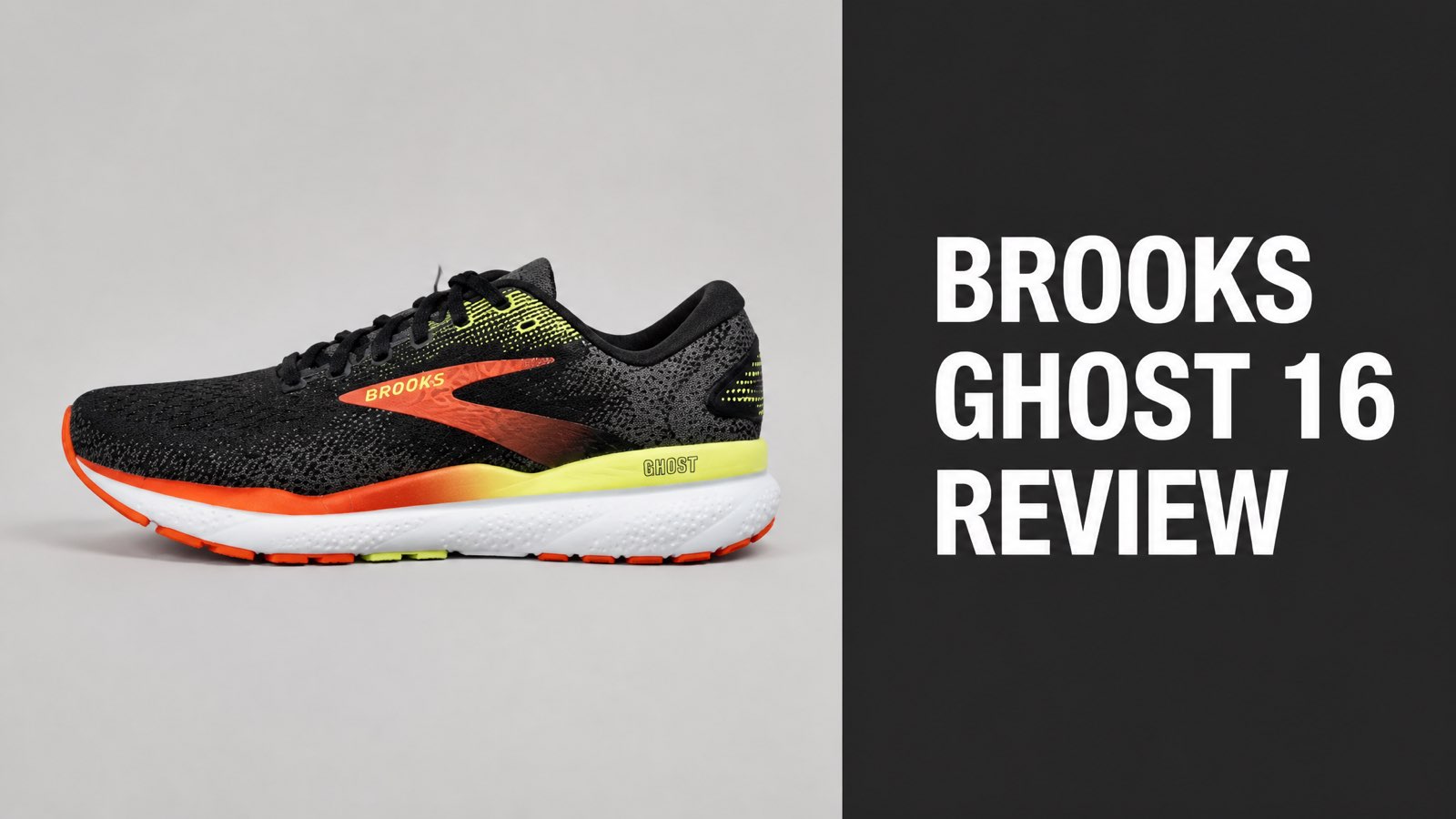
The Brooks Ghost 16 is a neutral daily running shoe with a 12 mm drop. Brooks released it on May 1, 2024, at a $140 list price. The shoe is the 16th version of the brand’s best-known trainer. Brooks aims it at heel strikers who want a dependable shoe for easy runs, long runs, and daily wear.
The headline change is the new DNA Loft v3 foam, which replaces the older v2 foam. The shoe also lost weight and gained a RoadTack rubber outsole. Lab tests show better energy return, a stable heel, and a very durable outsole. But several testers call the ride firm and a bit dull. The 12 mm drop also splits opinion. So does this proven trainer still hold up in 2026?
Here’s the big picture. The Ghost 16 is a reliable workhorse, not an exciting one. And that’s great news for heel strikers, beginners, and loyal Ghost fans. Below, you’ll learn how it works and how it fits. You’ll also see what reviewers say, how it compares, and what it costs now.
What Is the Brooks Ghost 16?
The Brooks Ghost 16 is a neutral, high-drop daily trainer built for easy miles, long runs, and everyday wear. Brooks launched it on May 1, 2024, at $140. RunRepeat scores it 89 for daily running and 83 for stability. Race pace? The shoe earns only 44 there. In fact, RunRepeat still calls the Ghost one of the best value daily trainers on the market today.
Who buys it? Mostly runners who want zero surprises. Believe in the Run notes that many new runners start their journey in a pair of Brooks. The Ghost is the clearest example of that pull.
The series has a long history. Shoe Geeks says the Ghost line started in 2008. Runner’s Lab calls it the most popular series in the Brooks lineup.
Ghost 16 at a Glance:
- Neutral daily trainer with a 12 mm drop
- DNA Loft v3 nitrogen-infused midsole
- RoadTack rubber outsole with a Segmented Crash Pad
- Engineered air mesh upper
- Launch price of $140
What Changed From the Ghost 15?
The Ghost 16 swaps the old DNA Loft v2 foam for DNA Loft v3 and adds RoadTack rubber. WearTesters calls the new midsole possibly the biggest upgrade in Ghost history. Brooks also kept the classic 12 mm drop. Why keep it? Loyal fans expect it, and RunRepeat says changing the drop would disappoint a legion of buyers. Fans still get the same familiar fit.
The shoe also got lighter. RunRepeat measured 9.4 oz (266 g), which is 0.4 oz (11 g) lighter than the Ghost 15. Shoe Geeks saw a drop from 286 g (10.1 oz) to 278 g (9.8 oz) in a UK 8.
The upper got a refresh, too. Running Shoes Guru says the new mesh is softer and more breathable. Stack height rose by about 1 mm (0.04 in) at the heel and forefoot.
How Does the Brooks Ghost 16 Work?
The Brooks Ghost 16 pairs a nitrogen-infused DNA Loft v3 midsole with a segmented rubber crash pad. Nitrogen gas goes into EVA foam during production. Runner’s Lab says the process makes v3 lighter and softer than v2. Does softer mean bouncier? Not quite. Here’s why: the foam is soft first and responsive second, so the ride stays calm, steady, and safe.
Northern Runner explains the idea well. Think of it this way: the sealed gas acts like an inflated yoga ball. The foam springs back instead of flattening, and it lasts longer.
The outsole does the rest. Brooks calls it a Segmented Crash Pad. Runner’s Lab describes it as a caterpillar-like system that smooths each landing. The rocker shape is subtle.
How the Ride Comes Together:
- The wide heel and stiff counter guide your heel landing.
- The DNA Loft v3 foam absorbs impact under the heel.
- The Segmented Crash Pad rolls the foot forward.
- The 12 mm drop tips you toward the toe-off.
Who Is the 12 mm Drop For?
The 12 mm drop is built for heel strikers and runners who want less strain on the Achilles and calves. RunRepeat measured an actual drop of 12.4 mm (0.49 in). The average shoe in its lab sits at 8.4 mm. Drew from WearTesters calls the high drop a godsend for people with Achilles issues, since it eases strain. Heel strikers gain the most from this design.
Midfoot strikers don’t always agree. Annie from WearTesters found transitions awkward and the forefoot thin with her midfoot gait.
OutdoorGearLab measured an even higher 14 mm (0.55 in) drop on its pair. The team says the Ghost 16 suits heel strikers only.
What Are the Key Specs of the Brooks Ghost 16?
The Brooks Ghost 16 weighs 9.8 oz (277 g) in a men’s 9 with a 36 mm (1.42 in) heel. The forefoot sits at 24 mm (0.94 in). The gap between them creates the 12 mm drop. Lab numbers run a bit lower. RunRepeat measured 35.1 mm (1.38 in) at the heel and 22.7 mm (0.89 in) up front. Small gaps like these are normal in lab tests. Fit and feel stay consistent.
The women’s version is lighter. WearTesters lists it at 8.8 oz (249 g). Brooks offers narrow, normal, wide, and extra-wide sizes, according to RunRepeat.
Eco details matter to some buyers. Runner’s Lab says the upper uses 67.3% recycled material. The shoe is also certified carbon neutral and vegan.
Brand Specs vs Lab Results:
| Spec | Brooks Claim | RunRepeat Lab |
|---|---|---|
| Weight (men’s 9) | 9.8 oz (277 g) | 9.4 oz (266 g) |
| Heel stack | 36 mm (1.42 in) | 35.1 mm (1.38 in) |
| Forefoot stack | 24 mm (0.94 in) | 22.7 mm (0.89 in) |
| Drop | 12 mm | 12.4 mm |
How Does the Brooks Ghost 16 Fit?
The Brooks Ghost 16 fits true to size, with average width overall and a slightly pointy toebox. RunRepeat counted 2,319 votes for true to size. Its gel mold measured 96.1 mm (3.78 in) at the widest point. The figure sits close to the 95.2 mm average. The toebox is tighter, though, at 72.1 mm (2.84 in). Wide feet? Try a wide size. Most runners feel fine.
Feelings about the fit vary. Shoe Geeks has narrow feet and found the forefoot spacious. OutdoorGearLab felt the toebox ran narrower than other Brooks shoes.
The heel locks down well. Northern Runner points to an extra eyelet for a heel lock. RunRepeat notes the tongue isn’t gusseted, so it can slide on long runs.
What Are the Benefits of the Brooks Ghost 16?
The Brooks Ghost 16 delivers dependable comfort, strong stability, and an outsole that lasts for hundreds of miles. RunRepeat lists great stability, improved responsiveness, and a long-lasting outsole as top pros. The shoe also works for many activities. Gym days? City tours? RunRepeat says the Ghost handles both with ease. Best part? The price is fair.
Stability is a quiet strength. RunRepeat rates the heel counter 5 out of 5 for stiffness. Reinforced sidewalls and a wide 94.7 mm (3.73 in) heel add support for light overpronators.
The upper earns praise, too. Chad from Believe in the Run calls it one of the most comfortable uppers he has ever tried.
Main Benefits:
- Comfortable, well-padded upper
- Stable ride for a neutral shoe
- Very durable outsole rubber
- Good grip on wet roads
- Four width options
Does the Brooks Ghost 16 Feel Cushioned?
Yes. The Brooks Ghost 16 feels well cushioned at the heel but firmer and thinner under the forefoot. RunRepeat measured 133 SA of heel shock absorption, just above the 131 SA average. The forefoot scored only 92 SA, below average. And the durometer? The foam read 41.5 AC, firmer than the 35.5 AC average. To be clear, firm isn’t harsh for this type of shoe.
Energy return improved a lot. RunRepeat recorded 57.0% at the heel and 62.7% at the forefoot. The new figures beat the weak results of the Ghost 15.
Not every tester felt plushness. Larry Lam of Running Shoes Guru called it soft but not soft enough, similar to the New Balance 880.
Is the Brooks Ghost 16 Durable?
Yes. The Brooks Ghost 16 is one of the most durable daily trainers in its class. RunRepeat’s Dremel test left just 0.7 mm (0.03 in) of wear. The average shoe shows 1.1 mm (0.04 in). The rubber is also 4.1 mm (0.16 in) thick. Will the outsole survive 600 miles (966 km)? RunRepeat expects plenty of rubber to remain. Few rivals come close on that test.
Real mileage backs that up. Larry Lam saw very little wear after 60 miles (97 km). Shoe Geeks logged over 275 km (171 miles) in the pair.
The upper holds up as well. RunRepeat scored toebox durability 3 out of 5 and heel padding 4 out of 5.
What Do Brooks Ghost 16 Reviews Say?
Brooks Ghost 16 reviews praise the comfort and durability but often call the ride safe, firm, and unexciting. Runner’s Lab gives it 9 out of 10. Running Shoes Guru gives it 7 out of 10. OutdoorGearLab says the Ghost feels like a shoe from the mid-2010s. So who’s right? Both camps are. The answer turns on your stride and your goals. Read on for details.
The split tracks with foot strike. Heel strikers tend to love it. Midfoot strikers often struggle with the high drop and thin forefoot.
Speed also divides testers. Shoe Geeks found it fine for occasional uptempo runs. But the reviewer says the Ghost is not built for speed.
Review Scores:
| Reviewer | Score | Main Takeaway |
|---|---|---|
| Runner’s Lab | 9/10 | Comfortable, durable, affordable |
| RunRepeat | 85/100 | Top value daily trainer |
| Running Shoes Guru | 7/10 | Nothing to hate, nothing to love |
What Do Runners Like?
Runners like the comfortable upper, the no-break-in fit, and the shoe’s long-distance reliability. Shoe Geeks felt comfortable right from the first run. The longest test run hit 30 km (18.6 miles) without fatigue issues. Remember the dragging feel of the Ghost 15 late in long runs? Shoe Geeks says that problem is gone. Comfort held up from start to finish.
The grip earns praise. Larry Lam ran on wet roads and in rain. He rated traction 9 out of 10.
Loyal fans stay happy. One Running Shoes Guru reader went through three pairs at about 400 miles (644 km) each. The same reader ran a 4:05 marathon in them.
What Are the Common Complaints?
The most common complaints are the high drop, a firm and thin forefoot, and a ride that lacks excitement. Runner’s Lab says some testers found the 12 mm drop too high. OutdoorGearLab felt choppy transitions through the midfoot. The firm forefoot also caused discomfort past 15 miles (24 km). Here’s the kicker: fans rarely mind. Newcomers notice them more.
Heat is another issue. Larry Lam got hot spots after 90 minutes in humid North Carolina weather.
Some testers just want more fun. Renaldo of Believe in the Run says the shoe didn’t raise his resting heart rate one beat.
How Does the Ghost 16 Compare to Rivals?
The Ghost 16 competes with the ASICS Gel-Cumulus 26, Saucony Ride 17, and New Balance 880 at $140. All four are neutral daily trainers with medium cushioning. The Ghost has the highest drop at 12 mm. The Cumulus and Ride both sit at 8 mm. Which one feels softest? Testers often pick the Cumulus. The Ghost wins big on outsole life and wet grip, though.
Brooks has its own options. The Ghost Max offers more cushion and a 6 mm drop. The Glycerin is the plusher step up in the lineup.
Newer shoes now exist, too. RunRepeat lists the Ghost 18 at 10.2 oz (289 g), heavier than the Ghost 16.
Ghost 16 vs Rivals:
| Shoe | Weight | Drop | List Price |
|---|---|---|---|
| Brooks Ghost 16 | 9.5 oz (269 g) | 12 mm | $139.95 |
| ASICS Gel-Cumulus 26 | 8.9 oz (252 g) | 8 mm | $139.95 |
| Saucony Ride 17 | 10.1 oz (286 g) | 8 mm | $140 |
Is the Ghost 16 Better Than the Gel-Cumulus 26?
No. The Ghost 16 is not better than the Gel-Cumulus 26 for most testers, though it wins on durability and grip. Larry Lam would pick the Cumulus at the same price. The ASICS shoe has a rocker, feels softer, and weighs half an ounce (14 g) less. Does the Ghost win anywhere? Yes, on toughness and wet grip. Its outsole and build score far higher in tests.
Running Shoes Guru scored the Cumulus 8 and the Ghost 7. But the Ghost earned a perfect 10 for build quality and durability.
Heel strikers may still prefer the Ghost. Its 12 mm drop and stiff heel counter guide a heel landing better.
Who Should Avoid the Brooks Ghost 16?
Forefoot and midfoot strikers should avoid the Brooks Ghost 16 because its 12 mm drop limits their comfort. RunRepeat suggests mid-drop shoes like the Nike Vomero 17 or Saucony Ride 17 instead. Speed lovers should look elsewhere, too. Why? The Ghost scores just 62 for tempo runs and 44 for racing in RunRepeat’s lab. Lighter rocker shoes suit them better.
Heavier runners need more cushion. Runner’s Lab says runners over 100 kg (220 lb) may find it limited.
Fun seekers have better picks. RunRepeat points to the ASICS Novablast 4 and HOKA Mach 6 for a livelier ride.
Better Picks by Runner Type:
- Midfoot strikers: Nike Vomero 17 or Saucony Ride 17
- Runners wanting more forefoot cushion: HOKA Clifton 9
- Runners wanting a fun ride: ASICS Novablast 4 or HOKA Mach 6
- Heavier runners: Brooks Ghost Max
Can the Brooks Ghost 16 Cause Discomfort?
Yes. The Brooks Ghost 16 can cause knee stress, forefoot soreness, or hot spots for some runners. Chad from Believe in the Run is a bigger runner. He felt the 12 mm drop added stress to his knees. He also absorbed more force than in lower-drop shoes. Is the problem common? Mostly for heavier runners or non-heel strikers. Light heel strikers rarely complain.
The firm forefoot matters on long runs. OutdoorGearLab noted discomfort on runs longer than 15 miles (24 km).
Warm feet are possible in hot weather. Shoe Geeks felt the shoe get warm above 30°C (86°F) in Mumbai.
How Much Does the Brooks Ghost 16 Cost?
The Brooks Ghost 16 launched at $140 but now sells for much less as newer Ghost models arrive. Running Shoes Guru spotted the men’s version at $98.73 on Amazon. The deal knocks 29% off the $139.95 list price. OutdoorGearLab also saw the shoe 26% off at REI. Will prices drop further? Older models usually do. Shop around before you ever pay full price.
International prices vary. Shoe Geeks reports an Indian list price of ₹15,499, often sold at 50% off.
Stock is thinning, and wide sizes are scarce. Runner’s Lab suggests the Brooks website for narrow, wide, or extra-wide pairs.
Ghost 16 Prices Spotted:
| Retailer | Price Seen | Discount |
|---|---|---|
| Brooks (launch) | $140 | None |
| Amazon (men’s) | $98.73 | 29% off |
| REI | Sale price | 26% off |
Is the Brooks Ghost 16 Worth the Price?
Yes. The Brooks Ghost 16 is worth the price for heel strikers who want a durable daily trainer at a discount. RunRepeat calls the Ghost one of the best value daily trainers for another year. The outsole alone outlasts many rivals. Is full price still fair today? Not really, since newer and livelier shoes cost the same. Discounts make the case far stronger.
Sale prices change the math. At around $100, few trainers match its build quality and lifespan.
Bottom line: buy it on sale for easy miles and long life. Skip it if you want speed or bounce.
Should You Try Eat Proteins?
Yes. Eat Proteins helps you fuel the miles you’ll log in shoes like the Ghost 16. A durable shoe protects your legs. But your muscles still need protein to repair and recover. Our team at Eat Proteins shares simple, practical guides for runners and active people. Why guess about recovery? Start with a plan that works. Your legs will thank you later.
Don’t let a great shoe do all the work. Pair your daily miles with smart nutrition and bounce back faster.
How Can Eat Proteins Help Your Running?
Eat Proteins gives runners clear advice on protein, recovery meals, and daily intake. Our experts explain protein sources, meal timing, and portion sizes in plain English. You’ll also find honest reviews of running gear and supplements. Ready to train smarter? Explore Eat Proteins today and build habits that last. Each guide keeps things short and simple.
Your next run starts in the kitchen. Check out our latest guides and keep your body ready for every mile.