
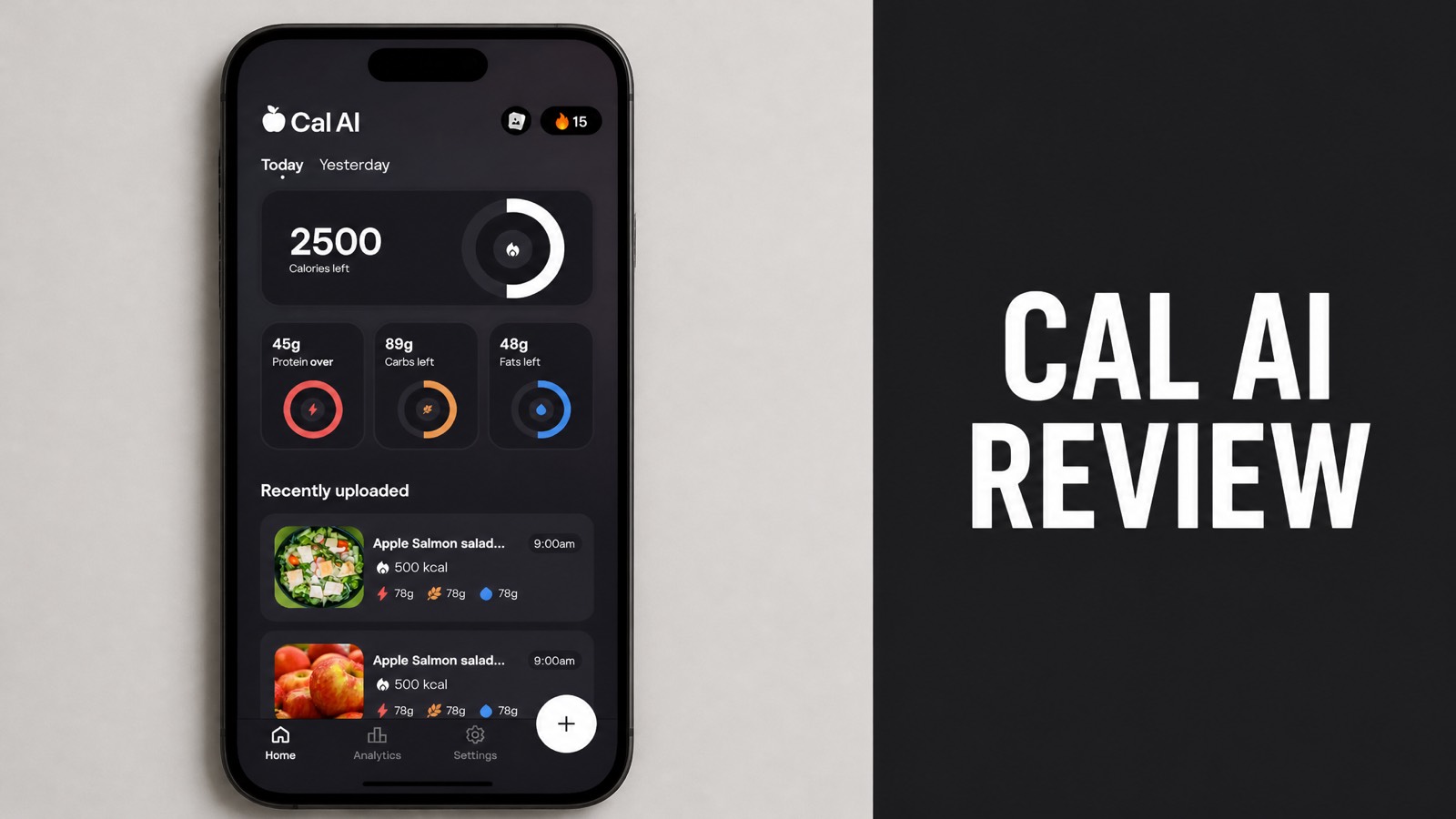
Cal AI is a calorie tracking app that turns a meal photo into calories and macros. Zach Yadegari launched it in May 2024, and MyFitnessPal later bought it. The app now counts millions of users and hundreds of thousands of store ratings. It runs on iPhone and Android as a free download with a paid subscription.
Our Cal AI review covers how the app works, how accurate the photo scans are, and what the subscription costs. Users praise the speed and the barcode scanner. Critics point to unclear pricing, billing complaints, and an April 2026 Apple removal that exposed the paywall design. Our team at Eat Proteins checked every claim against the public sources.
You’ll learn whether the speed justifies the price and who gets the most from the app. You’ll also see the best alternatives and how to cancel safely. By the end, you can decide with the full record in front of you. We also flag the details that matter most before you start a free trial.
What Is Cal AI?
Cal AI is a calorie tracking app that turns a photo of your meal into calories and macros. Zach Yadegari and friends launched the app in May 2024. Users snap a picture, scan a barcode, or describe a meal, and the app returns a nutrition breakdown. The tool targets people who find manual calorie logging tedious. Setup takes a few minutes of quiz questions.
In plain English: Cal AI replaces manual food logging with your phone camera. The app is free to download. Food scanning results require a subscription, and our team at Eat Proteins sees that detail trip up new users first.
Cal AI at a Glance:
| Detail | Value |
|---|---|
| Launch date | May 2024 |
| App Store developer | Viral Development LLC |
| iPhone rating | 4.8 stars from 374K ratings |
| Google Play rating | 4.7 stars from 272K reviews |
| Android installs | 1M+ downloads |
| Owner | MyFitnessPal (deal closed December 2025) |
Who Makes Cal AI?
Cal AI comes from teenage founder Zach Yadegari and a small team that started in his parents’ New York home. CNBC reports that the app earned over $28,000 in its first month. By September 2025, the company employed 30 people and spent heavily on advertising. Yadegari had already sold a gaming website, so he brought prior startup experience to the project.
MyFitnessPal bought Cal AI, and the deal closed in December 2025. Terms stayed private. Does that change anything day to day? Not yet. MyFitnessPal’s CEO said there are no plans at the moment to fold Cal AI into the main app.
How Does Cal AI Work?
Cal AI uses your phone camera and AI to estimate the calories and macros in a meal. The company says your phone’s depth sensor calculates food volume. The AI then splits the meal into calories, protein, carbs, and fat. Results arrive within seconds of the photo. Users still review and correct the estimate before they save the entry to the daily log.
Here’s the process the App Store listing lays out. Each step takes a moment, and that speed is the whole pitch.
Steps:
- Answer lifestyle questions to build your plan.
- Snap a photo of your meal.
- Get your nutritional breakdown.
What Features Does Cal AI Include?
Cal AI includes photo scanning, barcode scanning, text meal logging, custom foods, and exercise tracking. The app also tracks weight, water, and nutrition goals. A dark mode arrived as a newer feature. The company’s site lists a database of over 1 million foods for manual search. Together, those tools make Cal AI a full tracker, not a camera gimmick.
What’s more, Cal AI connects to fitness products. Does that help? One App Store reviewer praised the step count meter, because other apps leave active days underfed. Users can also edit any macro value by hand when the database lacks a food.
Is Cal AI Accurate?
Yes. Cal AI reads simple, recognizable foods and barcodes well, but struggles with mixed plates and home cooking. CEO Zach Yadegari claims a 90% accuracy rate. CNBC notes that customer reviews show many accuracy complaints and manual corrections. Results vary by meal type, so the headline accuracy claim is hard to verify for any single dish in practice.
Photo estimates have a built-in limit. Why? A camera can’t see cooking oil, sugar in a sauce, or bowl depth. The limit applies to every photo calorie app, not only this one.
Even the new owner is blunt. MyFitnessPal CEO Mike Fisher told TechCrunch that Cal AI is for those preferring speed over accuracy. Here’s the thing: that is a fair summary of the trade-off.
Where Accuracy Slips:
- Home-cooked dishes and mixed plates
- Re-scans of the same meal that return different counts
- Portion sizes that tend to run high
- Rare glitches, such as a bowl of popcorn logged near 8000 calories
Does Cal AI Handle Home-Cooked Meals?
No. Home-cooked meals are the documented weak spot for Cal AI and other photo-based trackers. Hidden oils, butter, and sauces never show up in a picture. Users report overestimated portions and different results when they rescan the same plate. Mixed dishes with many ingredients create the largest gaps between the estimate and the true calorie count.
The fix is simple. Edit the macros by hand, or scan the barcode and nutrition label instead. One reviewer says a retake usually fixes an absurd count. So what’s the verdict? Treat photo results as a starting estimate, not a lab measurement.
What Do Cal AI Reviews Say?
Cal AI reviews are strongly positive on the app stores and sharply negative on billing. The App Store shows 4.8 stars from 374K ratings. Google Play shows 4.7 stars from 272K reviews. Billing complaints are the recurring theme behind the lower scores. Most five-star praise targets the logging experience, not the payment and billing side of the account.
To be clear, our team at Eat Proteins separates app quality from business practices. The tracker works for many people. The subscription flow is where trust breaks down.
What Do Users Like?
Users praise the speed, the barcode scanner, and the freedom to edit macros by hand. One three-month user reported significant weight loss and calorie counts usually within 10 percent of the real figure. Another says the layout feels clean instead of overwhelming. Reviewers also like that the app remembers favorite meals for fast repeat logging every day.
Think of it this way: older apps need many steps to log a multi-ingredient meal. Cal AI cuts that to a tap. Why does that matter? Easy logging is the main reason people stick with it.
What Do Users Complain About?
Users complain most about unexpected charges, slow loads, and wildly wrong calorie counts. Reviews describe charges after cancelling and trials that converted at prices people did not expect. Refund requests reportedly bounce between the developer and the app stores. Many complaints repeat across store reviews, which points to a pattern, not isolated cases.
The glitches get strange. One reviewer saw a small bowl of popcorn logged near 8000 calories. A candy bar once showed 27 million. The good news? Retaking the photo usually fixed it.
Common Complaints:
- Charges after cancelling
- Trials that convert at unexpected prices
- Meals that vanish after a slow load
- Absurd calorie counts on some scans
- Steps and walks that cannot be logged manually
How Much Does Cal AI Cost?
Cal AI costs about $29.99 per year, with reported monthly prices between $2.49 and $9.99. The company does not list a price on its site. The offer appears only after the onboarding quiz, and third-party guides report weekly, monthly, and yearly variants. Prices shift between sources, so the figure on your own screen at checkout is the one that counts.
Here is the kicker: prices look dynamic. Is one price posted? No. What you see can depend on your location, device, and quiz answers. No official source publishes the full list, so treat every figure as reported, not confirmed.
Reported Cal AI Pricing:
| Plan | Reported Price | Source |
|---|---|---|
| Weekly | $2.99 | Third-party guides |
| Monthly | $2.49 | CNBC (2025) |
| Monthly | $9.99 | Third-party guides (2026) |
| Yearly | $29.99 | CNBC and third-party guides |
| Yearly (high) | $49.99 | Third-party guides |
| Family yearly | $59.99 | Third-party guides |
Is Cal AI Worth the Price?
Yes, for some users. Cal AI is worth the price when you eat packaged or restaurant food and value speed over precision. At $29.99 per year, the cost lands near $2.50 per month. The free download covers only basic search and barcode scanning, per third-party guides. Home cooks and anyone who needs precise macros get less value from the same subscription.
Now here’s the thing: a 3-day free trial needs a payment method and auto-renews. Subscribers must cancel at least 24 hours before the period ends. Set a calendar reminder the day the trial starts.
Is Cal AI Legit and Safe?
Yes. Cal AI is a real app owned by MyFitnessPal, but billing practices drew an Apple removal in April 2026. The app has millions of users and a top-ten Health and Fitness ranking. Trust issues center on subscriptions, not on the food tracking itself. Reviewers on both stores still report charges they did not expect after trial periods, per user reviews.
Bottom line: the app is legitimate. Is the risk financial? Yes. Read every paywall screen. Confirm the billed price, not the weekly equivalent. Manage the subscription through Apple or Google, never through the app.
Why Did Apple Remove Cal AI?
Apple removed Cal AI from the App Store in mid-April 2026 over billing and payment violations. TechCrunch and MacRumors reported the removal on April 21. Apple cited three separate issues with the app’s paywall and subscription flow, listed below. The removal was brief, and the app returned once Cal AI fixed the paywall problems that Apple flagged.
Apple’s Three Cited Violations:
- Bypassing in-app purchases through an embedded Stripe checkout (Guideline 3.1.1)
- Deceptive billing design that showed weekly prices above the billed amount (Guideline 3.1.2(c))
- Manipulative tactics that routed decliners into a second offer (Guideline 5.6)
Cal AI fixed the issues and returned to the store. The app re-ranked at No. 4 in Health and Fitness. Per TechCrunch, neither Cal AI nor MyFitnessPal answered requests for comment. Notably, the removal came months after the acquisition closed.
How Does Cal AI Compare to Other Apps?
Cal AI wins on logging speed and loses on database depth, accuracy, and pricing transparency. Competitors trade speed for precision. MyFitnessPal offers the deepest food database. Cronometer leads on micronutrient data. MacroFactor suits lifters who want an adaptive calorie target. Each rival fills a different gap, so the best pick depends on your habits.
In fact, the comparison starts with a caution. Several head-to-head tests online come from rival apps’ marketing blogs. Treat their specific error percentages with suspicion.
Cal AI vs Alternatives:
| App | Known For |
|---|---|
| Cal AI | Fast photo and barcode logging |
| MyFitnessPal | 20 million foods and 68,500 brands |
| Lose It! | Snap It photo feature on a mature tracker |
| Cronometer | Best micronutrient data, no real photo AI |
| MacroFactor | Manual logging with an adaptive TDEE algorithm |
Which Cal AI Alternatives Are Worth Trying?
MyFitnessPal is the strongest alternative for users who want accuracy backed by the largest food database. Its database holds 20 million foods, 68,500 brands, and meals from more than 380 restaurant chains. The meal scan feature sits in its premium tier. Pairing it with a barcode habit keeps most daily logging fast and reasonably precise for most meals.
Cronometer suits micronutrient trackers, and MacroFactor suits lifters. Yazio focuses on meal planning. Lose It! offers its own Snap It photo feature. So which one wins? The one that matches how you actually eat.
Where Can You Get Cal AI?
Cal AI is available on the Apple App Store and Google Play as a free download with in-app purchases. The Android version shows more than 1M downloads. The calai.app site links to Google Play and offers a login page and a subscription manager. Google Play rates the Android app suitable for everyone, and the iPhone listing carries an age rating of 9+ years.
The free download carries a catch. Food scanning results require a subscription. Download first, then read the paywall slowly before you tap anything.
How Do You Cancel Cal AI?
Subscribers cancel Cal AI through their phone’s subscription settings, not inside the app. The company’s own FAQ says so. Deleting the app does not cancel the subscription. Cancel at least 24 hours before renewal to avoid the next charge. Missing that cutoff lets the next billing period begin, and Apple or Google then bills the full renewal price again.
Steps:
- On iPhone, open Settings, tap your name, tap Subscriptions, and choose CalAI.
- On Android, open Google Play, tap your profile icon, choose Payments and subscriptions, and pick CalAI.
- Tap Cancel Subscription and confirm that the renewal date disappears.
Refunds go through Apple or Google rather than Cal AI directly. What if the paywall still shows after you paid? Tap Restore Purchase, signed into the same Apple ID or Google account.
Should You Try Eat Proteins?
Cal AI counts calories. Eat Proteins helps you decide what is worth buying before you pay. Our experts compare nutrition products and tools, so you skip the paywall surprises. You want honest answers, and you want them fast. Our team reads the fine print on every nutrition product, app, and supplement we cover, so you never have to guess about value.
Don’t wait for a trial to auto-renew. Browse the Eat Proteins reviews first, then choose the tool that fits your goals.
Who Needs to Skip Cal AI?
Home cooks, mixed-dish eaters, and price-sensitive shoppers skip Cal AI or test it very carefully. Photo AI struggles with homemade meals. The price appears only after a long quiz. The trial renews unless you cancel in time. Anyone who dislikes auto-renewing trials faces the same risk with this paywall design, so plan ahead before you subscribe now.
Want a smarter next step? Visit Eat Proteins today. Compare the options, protect your wallet, and pick the tracker you’ll actually use. Your goals deserve better than a surprise charge.