
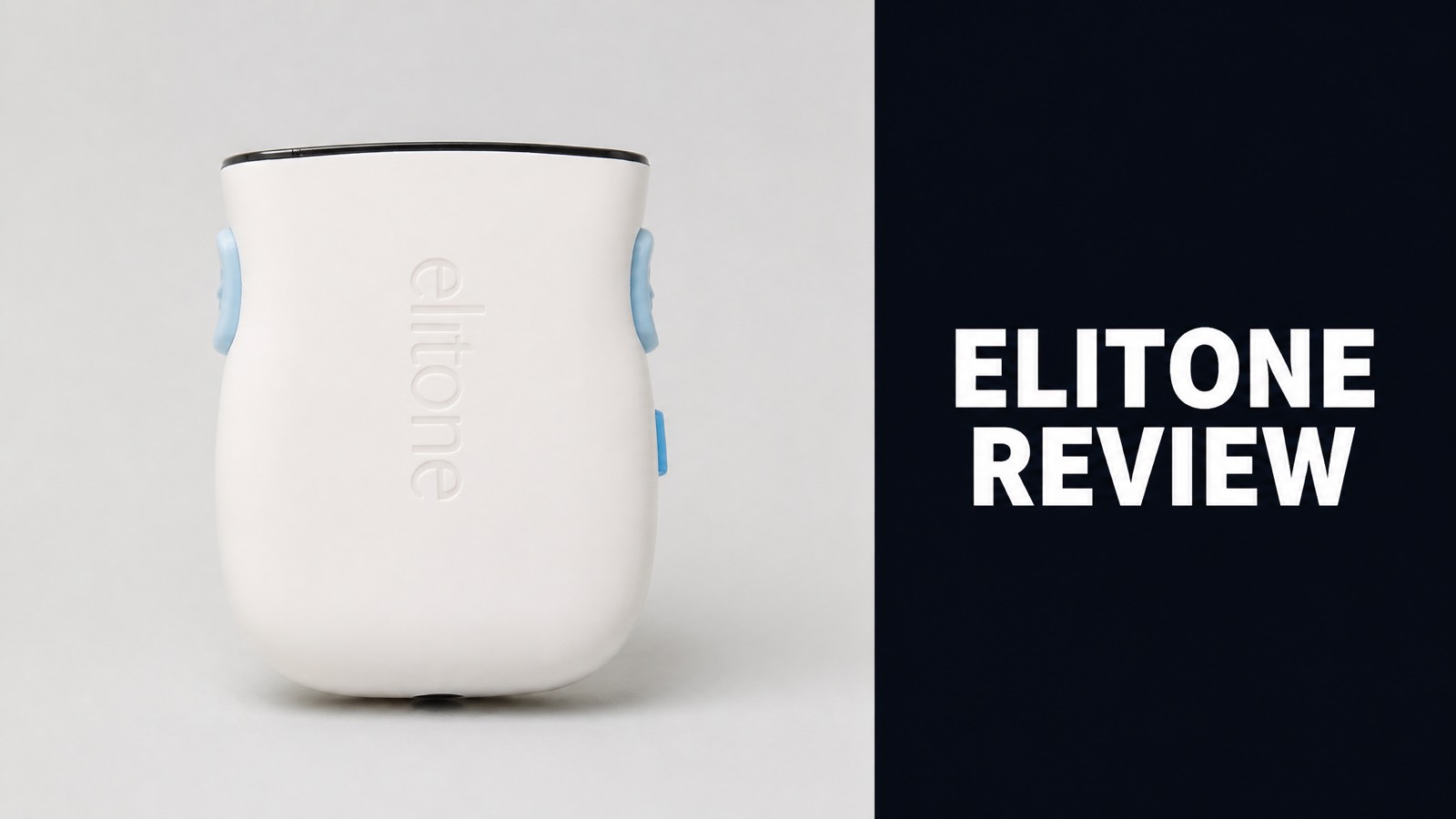
Elitone is an FDA-cleared wearable device from Elidah that treats bladder leaks at home. It sends gentle electrical signals to the pelvic floor during 20-minute sessions. The company says over 40,000 women use its products. This Elitone review checks the clinical claims, user feedback, safety limits, and price.
Elitone treats stress leaks, while Elitone URGE targets overactive bladder. The maker reports more than 70% fewer leaks in six weeks. Reviews run strong on the brand site and mixed on Trustpilot. Gel pad placement takes practice. The device costs as low as $36 per month or $399 upfront. Medicare and HSA funds apply. Five sessions a week drive results.
The big picture is simple. Elitone offers real, regulated treatment, but results depend on steady use over six to twelve weeks. Read on to learn who qualifies, who must avoid it, and whether the price makes sense for you. The article also covers Kegels, pads, and medication options.
What Is Elitone?
Elitone is an FDA-cleared wearable device that treats stress urinary incontinence at home. Elidah, the maker, sells it without a prescription. The device sends small electrical signals to the pelvic floor muscles. The company says more than 40,000 women have used its products so far. Treatment happens externally, with no vaginal insert and no pills.
Here’s the thing: Elitone isn’t a supplement or a phone app. Our team at Eat Proteins sees it as a medical device with one clear job. It tones weak muscles that cause leaks during coughs, sneezes, and workouts.
The brand also sells Elitone URGE. That version targets overactive bladder and urge leaks, so the two devices serve different problems.
Who Is Elitone For?
Elitone is built for women who leak urine when they cough, sneeze, laugh, or exercise. That pattern is called stress incontinence. Women with sudden urges to urinate need the URGE model instead. The maker offers a free online assessment that matches each woman to the right device. Results vary, though steady weekly use drives progress for most women.
So who gains the most? Women who can’t tell if they do Kegels correctly. One reviewer on the maker’s site said she never felt she did them right. She saw fewer leaks after about five weeks.
How Does Elitone Work?
Elitone uses external neuromuscular electrical stimulation to strengthen the pelvic floor. Small currents travel between four areas of conductive gel on a pad worn against the perineum. The stimulation tones the muscles and nerves that control the bladder. No vaginal insert or medication is needed. Sessions run while the wearer stays fully dressed.
In plain English: FEMSelect says this treatment used to live in clinics only. Now it fits into a normal day. Users wear it under clothes while they move around.
How a Session Works:
- Peel the gel pad and press it into place so all four gel areas touch the skin
- Attach the controller to the pad
- Start the program on the controller
- Wear the device for 20 minutes during normal activity
- Repeat the session five times a week for six to twelve weeks
How Long Is Each Session?
Each Elitone session lasts 20 minutes, and the maker asks for at least five sessions a week. Results build over six to twelve weeks. Muscle tone builds with the standard Elitone. Elitone URGE stabilizes the same tissues instead. Sessions fit around a work day or school run. Skipping days slows progress with either model, so a steady routine matters.
Does the schedule matter? Yes. One user on the maker’s review page used the device five times a week for ten weeks. She expected a better result. Steady use is the price of admission.
What Are the Benefits of Elitone?
Elitone offers a non-invasive way to reduce bladder leaks without drugs or surgery. The treatment is discreet, wearable, and takes just 20 minutes a day. The maker also notes that pads can cost $750 per year. Many users report fewer leaks within weeks. Medicare and HSA eligibility can lower costs, and users skip clinic visits and waiting rooms entirely.
What’s more, the device is FDA-cleared for over-the-counter use. No prescription or clinic visit stands in the way. That convenience is a big part of the appeal.
Main Benefits:
- FDA-cleared for at-home use
- No prescription required
- Worn discreetly under clothing
- Sessions of only 20 minutes
- HSA and FSA eligible
- Medicare eligibility listed by the maker
Does Elitone Actually Reduce Bladder Leaks?
Yes. The maker reports a leak reduction of more than 70% in six weeks across clinical studies. It also says 95% of women reported fewer leaks. Those numbers come from the company, so they are brand claims. MadeForMums scored effectiveness at 4.8 out of 5. Independent testers report similar gains over about six weeks. Individual results still vary a lot.
Do real users agree? Mostly. One nurse noticed a difference in three weeks and dropped from a size 4 pad to a size 1. Another reviewer called her control about 75-80% effective. One more advised against expecting a 100% fix.
Does Elitone URGE Help With Overactive Bladder?
Yes. Elitone URGE is FDA-cleared to treat urge urinary incontinence, also called overactive bladder leaks. It uses the same wearable design as the standard model. One user said she became leak free and gained control over sudden urges after a few months of twice-weekly use. Sessions last 20 minutes, like the standard device, and stay hidden under clothes.
The good news? A drug-free option exists. One reviewer had tried medication with bad side effects and acupuncture. She was considering Botox before she found Elitone.
What Do Elitone Reviews Say?
Elitone reviews run strongly positive on the maker’s site and more mixed on independent platforms. The brand’s own page shows many five-star stories. Trustpilot gives Elidah a 3.2 out of 5 score from 27 reviews. Editorial outlets such as MadeForMums and Woman and Home give strong marks. Both camps agree on ease of use, and few complain about comfort.
Why the gap? Brands curate their own pages. Our team at Eat Proteins weighs independent sources more heavily. Trustpilot also notes that the company hasn’t invited reviews recently, so its score may not be representative.
Review Sources at a Glance:
| Source | Rating | Notes |
|---|---|---|
| Elitone.com reviews | Mostly five-star | Brand-curated stories |
| Trustpilot | 3.2 out of 5 | 27 reviews, mixed results |
| MadeForMums | 4.8 out of 5 for effectiveness | Editorial test |
| FEMSelect | 4.5 stars | Partner listing |
| Woman and Home | Positive | Six-week test, ‘zero effort’ |
What Do Users Like?
Users praise the comfort, the discreet wear, and the drop in leaks during coughs and sneezes. MadeForMums scored ease of use and comfort at 4.5 out of 5. Several reviewers say they can now run, laugh, or use a treadmill without leaking. One user said Medicare paid for her device. Fewer pad changes also matter to them, and daily routines feel normal again.
And here is the best part: upkeep is light. One reviewer now runs sessions once a week for two cycles in a row. Another stopped for three weeks and saw symptoms return. Results came back after she restarted.
What Are the Common Complaints?
Complaints center on gel pad placement, slower results, and the need for steady weekly use. One reviewer said getting all four gel pads to conduct isn’t easy. Another expected a better result after ten weeks of five sessions weekly. Trustpilot’s 3.2 score shows some buyers leave unhappy. Most complaints stay mild, and users tend to solve them with practice.
The bad news? There’s a learning curve. Placement takes practice. One user found that waiting a few minutes helped the pads adjust to body temperature and stick better.
How Does Elitone Compare to Kegels and Perifit?
Elitone stimulates the pelvic floor for the user, while Kegels and trainers like Perifit demand active effort. The maker says trainers only measure, while Elitone delivers therapy. Kegels depend on correct technique, which many women struggle to confirm. Electrical stimulation removes that guesswork. Trainers still help women who enjoy guided exercise.
So which one wins? That depends on the user. Women who already do Kegels correctly may not need a device. Women who can’t feel the right muscles get a clear alternative here.
Elitone vs Alternatives:
| Option | How It Works | Effort |
|---|---|---|
| Elitone | External electrical stimulation | Low, wear for 20 minutes |
| Kegel exercises | Manual muscle squeezes | High, technique matters |
| Pelvic floor trainers | Biofeedback and guided exercise | Active exercise required |
| Pads | Absorb leaks only | None, but no treatment |
How Does Elitone Compare to Medication and Surgery?
Elitone avoids the side effects of drugs and the risks of invasive procedures. The maker calls bladder sling surgery invasive and dangerous by comparison. One reviewer said her urologist suggested a $500 monthly medication with no end date. She called Elitone a practical, non-invasive alternative. Elitone keeps control at home, while surgery needs a clinic.
Does that make surgery obsolete? No. Severe cases still need a doctor’s call. The maker notes that early treatment works best before incontinence becomes too severe for non-surgical options.
Is Elitone Safe?
Yes. Elitone is FDA-cleared for over-the-counter use by women, with no prescription required. The clearance covers stress incontinence for the standard model and urge incontinence for URGE. A short eligibility screen still applies. Women with implanted electronic devices, such as cardiac pacemakers, are flagged as contraindicated. Users read the manual.
To be clear, the maker’s eligibility quiz screens for these risks first. A flagged answer triggers a warning and a note to speak with a doctor. Our team at Eat Proteins recommends a doctor visit when leaks are new or sudden.
Check Before You Start:
- Ask a doctor if you have an implanted device such as a pacemaker
- Read the full contraindications list on the maker’s site
- Match the model to your leak type
- Keep sessions to the 20-minute length
- Discuss new or sudden leaks with a doctor
Who Should Avoid Elitone?
Elitone is contraindicated for women with an implanted electronic device such as a cardiac pacemaker or defibrillator. The maker’s eligibility check asks about these devices first. A positive answer triggers a warning and a prompt to see a doctor. The full contraindication list is posted on the maker’s site. Anyone unsure about an implant must ask first.
What about unclear cases? Ask a doctor. Eat Proteins never replaces medical advice, and the posted contraindication list has the final word.
How Much Does Elitone Cost?
Elitone costs as low as $36 per month or $399 upfront on the maker’s site. FEMSelect, a partner, lists both Elitone and Elitone URGE at $429. HSA and FSA funds apply to both devices. The maker lists Medicare eligibility, and promo codes worth $30 to $40 off appear regularly. Monthly plans spread the cost over a year, and sale periods cut the total.
Prices change often. Check the checkout page for the current code before you pay.
Pricing Snapshot:
| Seller | Price | Notes |
|---|---|---|
| Elitone.com | $399 or $36 per month | Promo codes seen at $30-$40 off |
| FEMSelect Elitone | $429 or $36 per month | Partner doctor access |
| FEMSelect Elitone URGE | $429 or $36 per month | Same price as standard model |
Is Elitone Worth the Price?
Yes. Elitone pays back its cost against pads that run up to $750 per year. The kit includes a gel pad pack, so the first purchase covers the start of treatment. One reviewer faced a $500 monthly medication quote. Against that, a few hundred dollars looks modest. Savings add up quickly for daily leakers, who often change pads several times each day.
Is it a gamble? Somewhat. Results vary, and one user saw less than she expected after ten weeks. Still, the upside is real for many women who tried Kegels already.
Where Can You Buy Elitone?
Elitone sells through its own website and through doctor partners such as FEMSelect. The brand also entered the United Kingdom in January 2025. MadeForMums and Woman and Home reviewed it there. Buying from the official site gets you the current codes and the full kit. Both routes carry the same two models, and partners add doctor access to the process.
Watch out for random resellers. Authentic kits come from the maker or its named partners.
Why Should You Trust Eat Proteins on Elitone?
Our team at Eat Proteins weighs brand claims against independent reviews and real user complaints. That balance matters for a medical device. Elitone has real clearance and real limits. Eat Proteins lays out both so you can decide with full information. The goal is an honest verdict, not a sales pitch, and every claim here traces back to a named source.
The result? You get the clinical numbers, the user praise, and the gel pad headaches in one place.
What Should You Do Before Buying Elitone?
Buyers gain the most by checking eligibility, matching the right model, and reading the contraindications. The free assessment on the maker’s site covers the first two steps. A doctor visit covers any doubt. Then a six-week trial shows whether the device fits your body. Patience matters here, because the device needs weeks to show its full effect on leaks.
Here’s the bottom line: if leaks run your day, Elitone deserves a serious look. Take the assessment. Talk to your doctor. Start your six-week test. Eat Proteins has the facts, and the next step is yours.