
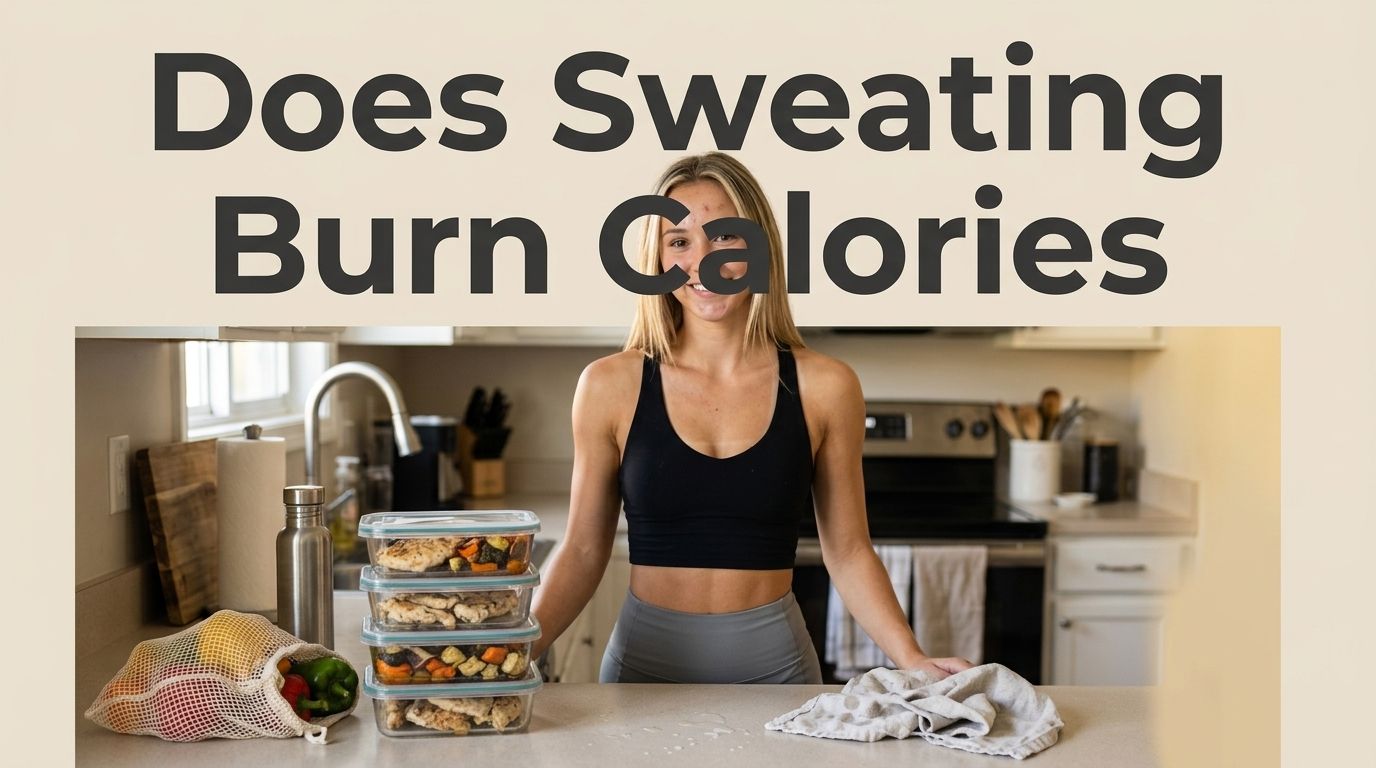
Sweating during exercise is one of the most misunderstood signals in fitness. Most people assume heavy sweat equals heavy calorie burn. The science tells a different story, and understanding it changes how you train and track real progress.
Here’s the thing: sweat is a cooling mechanism, not a fat-burning process. The calories you burn come from muscle contractions, elevated heart rate, and metabolic work. Two people doing the same workout can differ dramatically in sweat output while burning identical calories.
This article breaks down what actually drives calorie burn, what the research says about heated workouts and saunas, and what to do if you want lasting fat loss results rather than temporary water weight loss.
What Is Sweating?
Sweating is the body’s primary thermoregulation mechanism, activated when core temperature rises above a set threshold. The hypothalamus detects heat and signals eccrine sweat glands to release fluid. That fluid evaporates from the skin surface and carries heat away from the body.
The human body contains 2 to 4 million sweat glands. Eccrine glands are distributed across the entire body surface, with the highest density on the palms, soles, and forehead. The fluid they produce is composed of 99% water alongside sodium, chloride, and potassium.
Sweating begins when core temperature rises approximately 0.2 to 0.5 degrees Celsius above the individual baseline. This threshold varies by fitness level, body size, and ambient temperature. Athletes reach their sweat threshold faster because trained bodies are more efficient at managing heat. And here is the best part: that early sweating in fit people is a sign of an efficient system, not of harder effort.
How Does the Body Produce Sweat?
Eccrine sweat glands draw fluid from surrounding blood vessels and push it through a coiled duct to the skin surface where evaporation dissipates heat. The glands are innervated by the sympathetic nervous system, which is why emotional stress, not just heat, can trigger sweating.
The rate of sweat production ranges from 0.5 to 2 liters per hour during moderate exercise, rising to 3 liters per hour in elite athletes during high-intensity activity in hot conditions. Electrolytes are lost alongside the water. This is why rehydration with fluids containing sodium is essential after prolonged sessions, not just plain water.
Why Do Some People Sweat More Than Others?
Sweat rate is influenced by genetics, body mass, fitness level, and environmental temperature, none of which correlate with calories burned per session. Larger bodies generate more heat during movement due to greater mass. Fitter athletes sweat earlier and more profusely because their thermoregulatory system is highly efficient.
Gender also plays a role. Research shows men typically sweat more than women at the same exercise intensity, partly due to higher lean muscle mass. Acclimatization to heat increases sweat volume over 7 to 14 days of heat exposure. That’s a physiological adaptation, and it has nothing to do with fat burn capacity.
Does Sweating Actually Burn Calories?
Sweating does not directly burn meaningful calories; it’s a heat-dissipation response, not an energy-expenditure pathway. The body does use a small amount of energy to operate sweat glands, estimated at fewer than 5 calories per hour of active sweating. The real calorie burn comes from the physical work generating the heat in the first place.
So, does more sweat mean you burned more? No. The misconception persists because sweat and calorie burn occur simultaneously during exercise. The correlation is not causation. Sitting in a hot room produces substantial sweat with near-zero calorie expenditure above resting metabolic rate. The activity drives the calories burned. Sweat is a side effect of the internal heat that activity creates.
Here’s what that actually means for the scale: temporary weight loss after a sweaty session is almost entirely water loss. A person can lose 0.5 to 1 kg (1 to 2.2 lb) of water weight during one hour of vigorous exercise. Drinking water after the session restores that weight within hours. Fat loss requires a sustained caloric deficit across days and weeks, not a single sweat-heavy workout.
Key Facts:
- Sweat is a cooling response, not fat burning
- Water weight lost during exercise returns after rehydration
- Calorie burn is driven by movement intensity, not sweat volume
- Two people can burn identical calories with very different sweat levels
What Does Science Say About Sweat and Calorie Burn?
Research on exercise physiology consistently shows calorie expenditure correlates with oxygen consumption (VO2), heart rate, and muscular activation, not with sweat rate. Studies using metabolic carts measure calorie burn through respiratory gas exchange, a method that has no connection to sweat volume measurements.
A 2020 review published in the Journal of Strength and Conditioning Research confirmed that sweat rate is a poor predictor of energy expenditure across different exercise modalities. Cyclists and swimmers performing the same caloric workload showed 40% differences in sweat output. That difference was driven by environmental temperature and heat dissipation efficiency, not metabolic rate.
Does More Sweat Mean a Better Workout?
No. More sweat does not indicate greater calorie burn or a more effective training session. Workout quality is measured by progressive overload, heart rate zones, and metabolic adaptation. Sweat reflects thermal load, which depends heavily on room temperature, clothing, and individual physiology.
Low-sweat activities like strength training in a cool gym or swimming burn as many or more calories per session than hot yoga or outdoor running in summer heat. But here is the part most people miss: what separates an effective workout from an ineffective one is intensity, duration, and recovery stimulus, not the amount of fluid leaving the skin.
What Truly Drives Calorie Burn During Exercise?
Calorie burn during exercise is determined by metabolic rate, which scales directly with exercise intensity, muscle mass recruited, and session duration. The body converts stored glycogen and fat into ATP energy through aerobic and anaerobic pathways. This conversion produces mechanical work and heat, both of which increase proportionally with effort.
Resting metabolic rate accounts for 60 to 70% of total daily energy expenditure in sedentary individuals. Exercise adds to this baseline. Higher-intensity exercise recruits more motor units, forces greater oxygen uptake, and raises the metabolic rate far above resting levels for the duration of the session and for hours afterward through the EPOC effect.
Think of it this way: the EPOC effect (excess post-exercise oxygen consumption) means the body keeps burning elevated calories for 24 to 48 hours after an intense resistance training session. That’s calorie burn that happens while you’re asleep, sitting at a desk, or watching TV. No sweat required.
How Does Exercise Intensity Affect Calorie Burn?
Exercise intensity is the single largest variable in calorie expenditure per unit of time, with high-intensity intervals burning 25 to 30% more calories than moderate steady-state cardio of the same duration. At higher intensities, the body shifts toward anaerobic metabolism, burning glycogen rapidly and creating an oxygen debt repaid at rest through elevated post-exercise calorie burn.
Heart rate zones provide a practical guide here. Zone 3 (moderate, 70 to 80% of max heart rate) burns primarily fat. Zone 4 and Zone 5 (high intensity, 80 to 95% of max heart rate) burn more total calories per minute, including a higher proportion from glycogen. A combination of both zones across the week maximizes total calorie expenditure and metabolic adaptation.
Which Exercises Burn the Most Calories?
Running burns approximately 600 to 800 calories per hour for a person weighing 70 kilograms (154 pounds), making it one of the highest-calorie-burn activities per unit of time. Cycling burns 500 to 600 calories per hour at a vigorous pace. Rowing engages both upper and lower body and burns 600 to 700 calories per hour.
Strength training burns 300 to 500 calories per session, but the benefit extends well past the session itself. Muscle tissue burns 6 to 10 calories per kilogram (2.7 to 4.5 calories per pound) per day at rest. Build more muscle and the resting metabolic rate rises permanently. That’s a compounding advantage that cardio alone can’t replicate.
Calorie Burn by Exercise Type:
| Exercise | Calories/Hour (70 kg) | Primary Fuel |
| Running (moderate) | 600-800 | Glycogen + Fat |
| Cycling (vigorous) | 500-600 | Glycogen + Fat |
| Rowing | 600-700 | Glycogen + Fat |
| Strength Training | 300-500 + EPOC | Glycogen |
| Hot Yoga | 300-450 | Fat |
| Swimming | 500-600 | Fat + Glycogen |
Do Heated Workouts or Saunas Burn More Calories?
Heated workouts do increase calorie burn modestly, by roughly 5 to 10%, because the body expends additional energy maintaining core temperature under heat stress. Thermoregulation in a hot environment forces the cardiovascular system to divert blood to the skin for cooling, increasing heart rate and metabolic demand beyond what the exercise alone would require.
Hot yoga sessions in rooms heated to 38 to 40 degrees Celsius (100 to 104 degrees Fahrenheit) produce substantially more sweat than the same yoga routine at room temperature. The calorie difference is real but modest. And here is the kicker: the elevated sweat volume creates a significant dehydration risk that can impair performance and negate the intensity advantage if fluids aren’t replaced.
Does a Sauna Help You Lose Weight?
A sauna produces rapid water weight loss of 0.5 to 1 kilogram (1 to 2.2 pounds) per 20-minute session, but this weight returns immediately after rehydration. The metabolic calorie burn in a sauna is estimated at 1.5 to 2 times the resting metabolic rate, roughly 100 to 150 calories in a 30-minute session.
Sauna use does offer real cardiovascular benefits with repeated sessions. Research from the University of Eastern Finland found that men who used a sauna 4 to 7 times per week had a 50% lower risk of fatal cardiovascular events compared to those using it once per week. Fat loss from sauna use alone, without dietary changes or exercise, is not clinically significant. But as a recovery and cardiovascular tool, it earns its place.
Ready to speed things up? Get a proven weight loss plan built around the exercises and habits that actually move the scale.
What Are the Risks of Excessive Sweating?
Excessive sweating carries serious health risks including dehydration, electrolyte imbalance, heat cramps, heat exhaustion, and in severe cases heat stroke. The body loses sodium, potassium, and chloride alongside water. These electrolytes regulate muscle contraction, nerve signaling, and fluid balance in every cell.
Losing just 2% of body weight in fluids reduces exercise performance by 10 to 20% and impairs cognitive function. At 5% fluid loss, heat exhaustion symptoms appear: nausea, dizziness, weakness, and rapid heartbeat. The Eat Proteins approach is simple: drink 400 to 600 milliliters (14 to 20 fluid ounces) of water per hour of intense exercise, and add electrolytes for any session lasting more than 60 minutes.
Warning Signs of Dehydration During Exercise:
- Dark yellow urine before or after training
- Dizziness or lightheadedness mid-session
- Muscle cramps during or after exercise
- Dry mouth and reduced sweat despite continued effort
- Rapid heart rate without a corresponding increase in perceived effort
Can Sweating Too Much Lead to Dehydration?
Yes. Dehydration from sweat loss begins affecting performance before most people notice thirst, making proactive hydration critical for anyone training at moderate to high intensity. Thirst is a late signal. By the time that sensation appears, performance is already compromised.
Hyponatremia, or dangerously low sodium levels, is a risk for endurance athletes who drink excessive plain water without electrolyte replacement during long events. Sodium loss through sweat averages 1 gram per liter, meaning a marathon runner losing 2 liters per hour needs roughly 2 grams of sodium per hour from fluids or food to maintain balance. In plain English: water alone isn’t always enough.
How Long Does It Take to See Calorie Burn Results?
Visible results from a consistent exercise program typically emerge within 2 to 4 weeks, beginning with improved endurance and energy levels before body composition changes become measurable. Metabolic adaptation starts within days: resting heart rate drops, oxygen efficiency improves, and the body begins preferentially oxidizing fat at lower exercise intensities.
Body composition changes require a sustained caloric deficit. A deficit of 500 calories per day through combined exercise and dietary adjustment produces approximately 0.45 kilograms (1 pound) of fat loss per week. Consistent training 4 to 5 times per week at moderate to high intensity burns 1,500 to 2,500 additional calories per week above the sedentary baseline. Is that a lot? For sustainable fat loss, yes. It’s exactly the rate that preserves muscle while losing fat.
What Results Can You Expect From Regular Exercise?
Regular exercise produces measurable body composition improvements, metabolic adaptations, and cardiovascular benefits that compound over months of consistent training. Visible fat loss is typically noticeable in clothing fit and waist measurements within 4 to 8 weeks for most people starting from a sedentary baseline.
Muscle gain and fat loss can occur simultaneously in untrained individuals during the first 6 to 12 months of structured resistance training combined with adequate protein intake. After the initial adaptation period, maintaining both goals requires careful dietary management. Protein targets of 1.6 to 2.2 grams per kilogram (0.7 to 1 gram per pound) of body weight per day are the standard our coaches at Eat Proteins recommend to protect lean mass during a calorie deficit.
What to Expect Month by Month:
- Weeks 1-2: Improved energy, reduced soreness, better sleep quality
- Weeks 3-4: Noticeable endurance improvement, resting heart rate drops
- Weeks 5-8: Visible changes in clothing fit and waist circumference
- Months 3-6: Measurable fat loss, increased lean muscle, sustained metabolic gains
Want Your Free Fat-Burning Meal Plan From Eat Proteins?
You have the science. Now you need the plan. Most people know exercise burns calories. But without a structured approach that matches food intake to training output, results stall within weeks.
Here’s what that looks like in practice: you work out consistently, you sweat, you feel good. But the scale barely moves. That’s a nutrition gap, not an effort gap. Our nutritionists at Eat Proteins built a free 7-day fat-burning meal plan around the same principles in this article. High-protein targets. Calorie timing around your workouts. Hydration protocols that keep performance up through every session.
You get the full plan, the shopping list, and the macros, sent directly to your inbox. Don’t keep guessing. Get the structure that turns consistent effort into consistent results.