
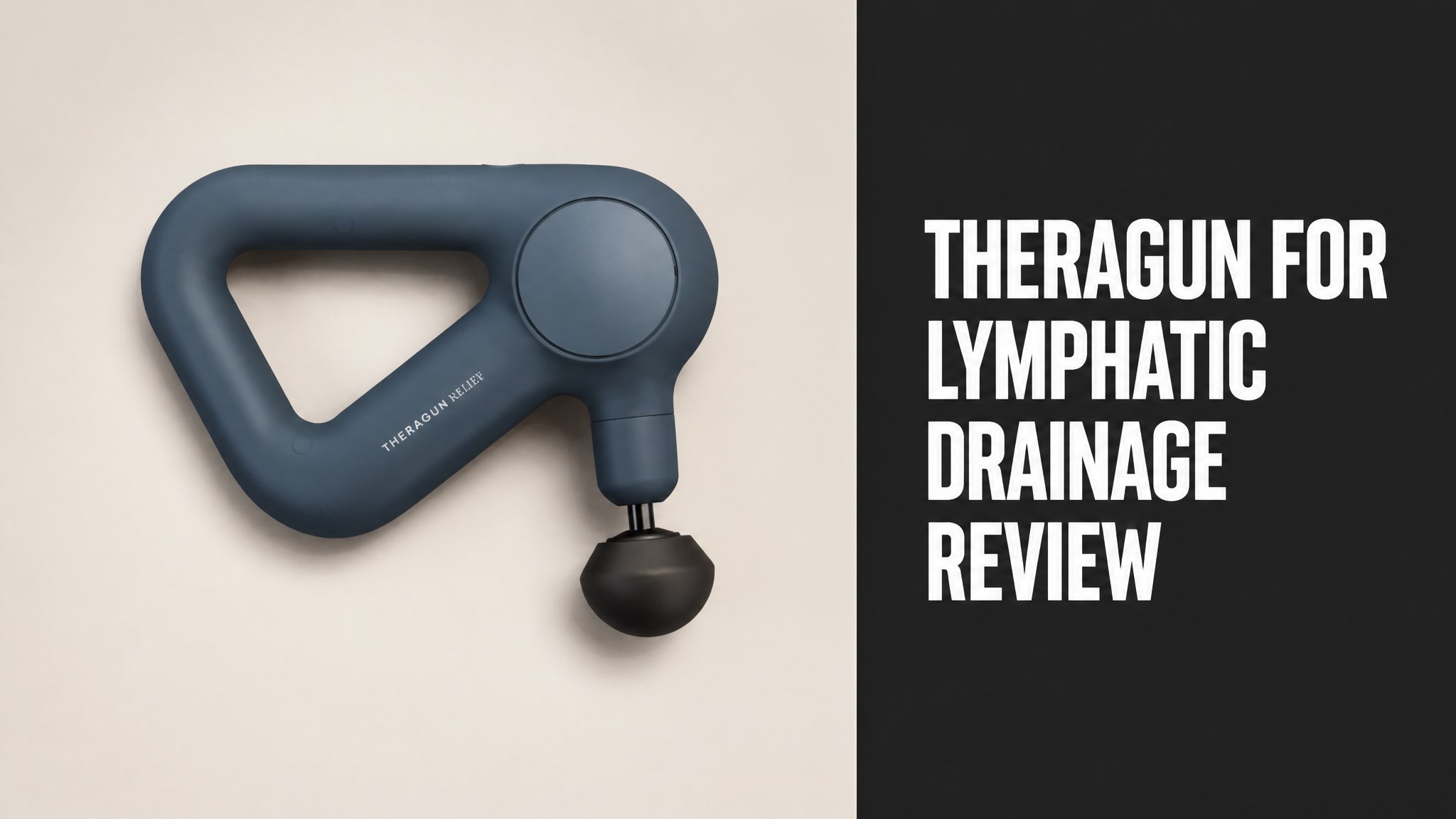
The Theragun is a handheld percussion massage device built by Therabody. It uses rapid pulsing strokes to press deep into muscle and soft tissue, aiming to speed recovery, loosen chronic tension and support lymphatic movement after workouts or long, sedentary days.
Athletes praise its ergonomic grip and strong motor. Physical therapists debate its actual role in lymphatic drainage work. Reviewers report reduced swelling, smoother circulation and looser fascia after regular sessions, while others note battery limits and a real learning curve for the light-touch technique true lymphatic drainage demands.
Skeptical buyers want proof, not marketing claims from a wellness brand chasing trend cycles. This review breaks down the mechanism, the real evidence, the risks and the price tag. Read on to learn whether a Theragun genuinely supports lymphatic drainage or simply rides the hype cycle.
What Is a Theragun for Lymphatic Drainage?
The Theragun is a percussive therapy device engineered by Therabody to drive rapid, concentrated pulses into soft tissue. Massage therapists increasingly pair its lightest attachments and lowest speed setting with manual lymphatic drainage routines. The device targets muscle recovery first, but its gentler settings also move stagnant fluid toward drainage points near the neck, underarms and groin.
Here’s the thing: Therabody built the device around a triangular ergonomic handle. The design lets a single user reach the back, hips and legs without straining the wrist or shoulder during a session.
The line spans several models, from the compact Mini to the professional Pro Plus. Does the price gap change the drainage results much? Not really. Each model swaps a common set of interchangeable foam attachment heads, letting users match pressure to sensitive lymphatic zones.
Theragun Models at a Glance:
| Model | Weight | Best For |
|---|---|---|
| Theragun Mini | 1.43 lbs (0.65 kg) | Travel and light drainage |
| Theragun Relief | 1.4 lbs (0.64 kg) | Entry-level drainage and daily aches |
| Theragun Elite | 2.2 lbs (1.0 kg) | General recovery and drainage |
| Theragun Pro Plus | 3.64 lbs (1.65 kg) | Deep-tissue and clinical recovery |
What Is Percussion Therapy?
Percussion therapy delivers short, rapid pulses that press into muscle tissue at high frequency. The technique borrows from traditional massage but automates the repetitive pressing motion through a motor. Practitioners apply the same underlying principle to fascia and superficial lymph channels once they lower the amplitude and speed considerably.
Michael Kummer’s review describes the goal as improving muscle function and shortening recovery windows. The pulses increase local blood flow and loosen tight fascia around joints and lymph pathways.
Standard percussion settings run too aggressive for lymphatic work. Does that mean the device is off-limits for drainage? Not at all. Therapists simply dial the amplitude down and glide the head slowly along drainage pathways instead of pressing deep into a single point.
How Does a Theragun Work for Lymphatic Drainage?
A Theragun works by driving a motorized arm that oscillates an attachment head up to 2,400 times per minute. The device converts that motion into a wave of pressure that moves through skin, fascia and superficial lymph vessels. Slower speeds and a soft attachment turn that same mechanism into a gentle drainage tool rather than a deep-tissue one.
In fact, standard use presses the head straight into a muscle belly. Lymphatic drainage instead skims the head lightly across the skin, following the direction lymph naturally flows toward the nearest node cluster.
Users adjust amplitude, the distance the head travels per pulse, from 10 millimeters (0.4 inches) up to 16 millimeters (0.6 inches) on higher-end models. Lower amplitude and the softest foam head suit lymphatic sessions best.
What Attachments Support Drainage Work?
The dampener attachment supports lymphatic drainage work because its soft, low-density foam spreads pressure across a wider surface. Firmer heads like the thumb or wedge concentrate force too tightly for this purpose. Choosing the correct head matters as much as speed selection when the goal is fluid movement rather than deep muscle release.
The standard ball head sits between the two extremes. Does one head do it all? Not really. Some therapists use it on larger areas like the thighs or back, then switch to the dampener near sensitive nodes in the neck or underarm.
Therabody’s app-connected models display real-time amplitude and force data. That readout helps first-time users confirm they stay within a gentle range instead of accidentally applying deep-tissue pressure.
Attachment Heads for Drainage:
- Dampener head: softest option, best for sensitive lymphatic zones
- Standard ball head: mid-firmness, suited to larger surface areas
- Thumb and wedge heads: firmer pressure, not recommended for drainage work
What Are the Benefits of a Theragun for Lymphatic Drainage?
A Theragun delivers three consistent benefits for lymphatic work: reduced surface swelling, smoother circulation and looser fascia around the treated area. Reviewers across Wired and Good Housekeeping report these results within a single session. Consistent daily use compounds those effects, according to multiple long-term owner reviews of the Elite and Relief models.
The good news? Regular users describe less puffiness in the legs and face after consistent use. The rhythmic pulses appear to encourage fluid movement toward the body’s natural drainage points.
Post-workout recovery improves alongside drainage benefits. Does it beat a foam roller? Michael Kummer’s testing found faster relief from muscle spasms and tension compared to a standard foam roller.
Portability adds a practical benefit. A cordless, USB-C-charged device lets users apply light drainage strokes daily instead of scheduling a professional appointment each week.
Main Benefits:
- Reduced surface swelling in legs and face
- Smoother local circulation
- Looser fascia around treated areas
- Faster post-workout recovery
- Cordless, daily-use portability
Does a Theragun Actually Reduce Swelling?
Yes. A Theragun reduces visible swelling when used with light pressure along established lymphatic pathways. The Good Housekeeping Institute’s testers reported noticeably less puffiness after repeated sessions with the Theragun Relief. Consistency mattered more than a single long session for these testers.
Let me explain: the reduction comes from mechanical fluid movement, not a chemical or hormonal effect. Gentle percussive pressure nudges stagnant fluid toward nodes that filter and drain it naturally.
Results vary by technique. A device used with heavy pressure or the wrong attachment can aggravate tissue instead of calming it, so proper drainage-specific settings matter.
Does a Theragun Improve Circulation?
Yes. A Theragun improves local circulation by increasing blood flow to the treated muscle and surrounding tissue. Wired’s testing across multiple Therabody models confirmed a warming, blood-flow effect within minutes of use. That warmth signals dilated vessels actively carrying more fluid through the area.
Better circulation supports the lymphatic system indirectly. Does that matter for drainage specifically? Yes. Blood vessels and lymph vessels run in parallel, so improved flow in one network tends to support movement in the other.
Heated attachments, available on higher-end models like the Pro Plus, add a secondary circulation boost. The heat attachment reaches 131 degrees Fahrenheit (55 degrees Celsius) at its highest setting.
What Do Theragun Reviews Say About Lymphatic Drainage?
Theragun reviews describe consistent satisfaction with build quality, ergonomics and drainage-adjacent recovery benefits. Michael Kummer’s in-depth review awarded the Elite model 4.4 out of 5 stars overall. That score held steady across craftsmanship, ergonomics, accessories, noise and battery categories combined.
And here’s the best part: verified buyers on Good Housekeeping highlight the Relief model as an accessible entry point. Testers called it a device they ‘swear by’ for everyday aches and mild swelling.
YouTube reviewers echo similar themes. Best Massage Tech’s walkthrough of the Theragun Relief recommends it specifically for users with smaller hands or limited grip strength.
What Positive Experiences Do Users Report?
Users report faster muscle recovery, reduced tension and lighter, less puffy skin after consistent Theragun use. The ergonomic handle earns particular praise for solo back and shoulder sessions. That praise repeats across independent reviews from Wired, Good Housekeeping and YouTube testers alike.
Reviewers on Wired specifically call out the OLED force meter on premium models. Does a screen really change results? It does. The screen shows real-time pressure, helping users stay in the gentle range drainage work requires.
Long-term owners note the device holds up well. Michael Kummer’s review, updated after months of regular use, still rated craftsmanship and durability among the product’s strongest traits.
Pros:
- Excellent ergonomics for solo use
- Outstanding build quality
- Strong, consistent motor power
- Easy to operate with minimal setup
What Complaints Do Users Report?
Users report battery life as the most common Theragun complaint, alongside a noticeable learning curve for gentle lymphatic technique. Several reviewers wished for longer runtime between charges. New owners often default to firmer settings out of habit before adjusting to drainage-specific pressure.
Glossy plastic housing on some models shows fingerprints quickly. Is that a dealbreaker? Hardly. Kummer’s review flagged this as a minor cosmetic issue rather than a functional problem.
Newer users sometimes apply too much pressure out of habit. Therapists recommend starting on the lowest speed setting until the lighter drainage motion feels natural.
Cons:
- Battery life could be longer
- Glossy plastic shows fingerprints
- Learning curve for gentle drainage technique
How Does Theragun Compare to Hypervolt and Exogun?
The Theragun competes directly with Hypervolt and Exogun in the percussion massage category, differing mainly in amplitude range and attachment variety. All three brands offer a dampener-style soft head suited to drainage work. Build quality and app integration separate the three brands more than raw drainage performance.
By comparison, Hypervolt devices run slightly quieter than comparable Theragun models. Exogun, on the other hand, positions itself as a budget alternative with fewer speed settings and a shorter warranty.
Kummer’s review notes he switched from an Exogun DreamPro to a Theragun Elite after a year of use, citing stronger build quality and a more comfortable grip during extended sessions.
Brand Comparison:
| Brand | Starting Price | Drainage Attachment |
|---|---|---|
| Theragun | $175-$650 | Dampener head included |
| Hypervolt | $129-$399 | Soft cushion head included |
| Exogun | $99-$249 | Foam head included |
Which Model Fits Lymphatic Work Best?
The Theragun Mini or Relief fits lymphatic drainage work best among the full Theragun lineup because of its lighter weight and lower default amplitude. Larger Pro Plus models suit deep-tissue recovery more than gentle drainage. Buyers focused purely on drainage rarely need the flagship model’s added power or attachments.
Compact models also travel easily. Does weight really matter this much? It does over a 10 to 15 minute daily drainage routine, since a device under two pounds (0.9 kilograms) stays comfortable that whole time.
Budget-conscious buyers can start with a smaller model and upgrade later. The dampener attachment ships standard across nearly every Theragun tier, so drainage capability doesn’t require the flagship unit.
What Are the Side Effects of a Theragun for Lymphatic Drainage?
A Theragun carries a real risk of bruising, tenderness and aggravated swelling when used with excessive pressure over lymph nodes. Manufacturer guidance limits sessions to short bursts on any single area. Following the lightest recommended settings avoids nearly all of these documented risks.
Pay attention to this: overuse on inflamed tissue can worsen symptoms instead of relieving them. Users recovering from surgery or injury should confirm safe zones with a physician before starting sessions.
Skin irritation occasionally follows repeated use of firmer attachment heads. Switching to the softest dampener head resolves most cases within a few sessions.
Possible Side Effects:
- Bruising or tenderness from excessive pressure
- Temporary aggravated swelling over lymph nodes
- Mild skin irritation from firmer attachment heads
Who Should Avoid Using a Theragun?
People with active blood clots, severe varicose veins or recent lymph node removal should avoid Theragun use without medical clearance. Percussive pressure near compromised vessels carries added risk. A brief consultation with a physician or lymphedema specialist settles the question quickly for most people.
Pregnant users and anyone with a pacemaker also fall into a caution category. Should they skip percussion devices entirely? Not necessarily. Therabody’s own safety guidance simply flags both groups for a doctor consultation first.
Cancer patients undergoing active treatment should skip self-directed drainage devices entirely. A licensed lymphedema therapist can determine whether percussive tools fit safely into their care plan.
How Much Does a Theragun Cost?
Theragun devices cost between $175 and $650 depending on the model, with the Relief and Mini Plus sitting at the affordable end. The flagship Pro Plus commands the highest price in the current lineup. Mid-tier models like the Elite and Prime Plus land comfortably between those two extremes.
Bottom line: Good Housekeeping’s review priced the entry-level Relief at £125 (roughly $160), calling it a fraction of the cost of the PRO model at over £400 less (roughly $500 less).
Replacement attachment heads and travel cases add modest extra cost. Most bundles already include the dampener head needed for lymphatic drainage sessions.
Is a Theragun Worth the Price for Drainage Work?
Yes. A Theragun is worth the price for drainage work when it replaces recurring professional massage appointments over time. A single Relief-tier device pays for itself within a few months for regular users. Frequent travelers also gain a portable option unavailable through scheduled clinic visits.
So what does that mean for you? Buyers seeking only occasional drainage support might find a manual technique or cheaper massage tool sufficient. The investment makes more sense for daily or weekly routines.
Warranty coverage varies by model, typically running one to two years. That coverage adds long-term value against a device used multiple times per week.
Steps to Choose the Right Model:
- Decide whether drainage or deep-tissue recovery is the main goal.
- Pick a model that ships with a dampener attachment.
- Confirm the weight and battery life fit a daily routine.
- Compare warranty length across Theragun, Hypervolt and Exogun.
Should You Try Eat Proteins for Lymphatic Support?
Eat Proteins pairs nutrition strategy with recovery tools like the Theragun to support lymphatic health from the inside and outside at once. Our team at Eat Proteins builds protein-forward plans that reduce the inflammation driving swelling in the first place, not just the symptoms.
Think of it this way: a percussion device moves fluid mechanically. Diet and hydration determine how well that fluid clears and stays clear. Our experts at Eat Proteins pair both angles into one coaching approach.
Ready to support your lymphatic system the smart way? Explore the Eat Proteins coaching approach today and pair the right nutrition plan with the recovery tools already in your routine.
How Does Eat Proteins Help Lymphatic Support?
Eat Proteins helps lymphatic support by matching a personalized nutrition plan to each client’s inflammation and hydration needs. Our coaches at Eat Proteins review daily protein and fluid intake alongside recovery habits.
So what does that mean for you? A plan built around real intake data closes the gap a massage device alone can’t close on its own.
Bottom line: pairing the right coaching plan with a Theragun routine gives swelling two ways to resolve instead of just one.