
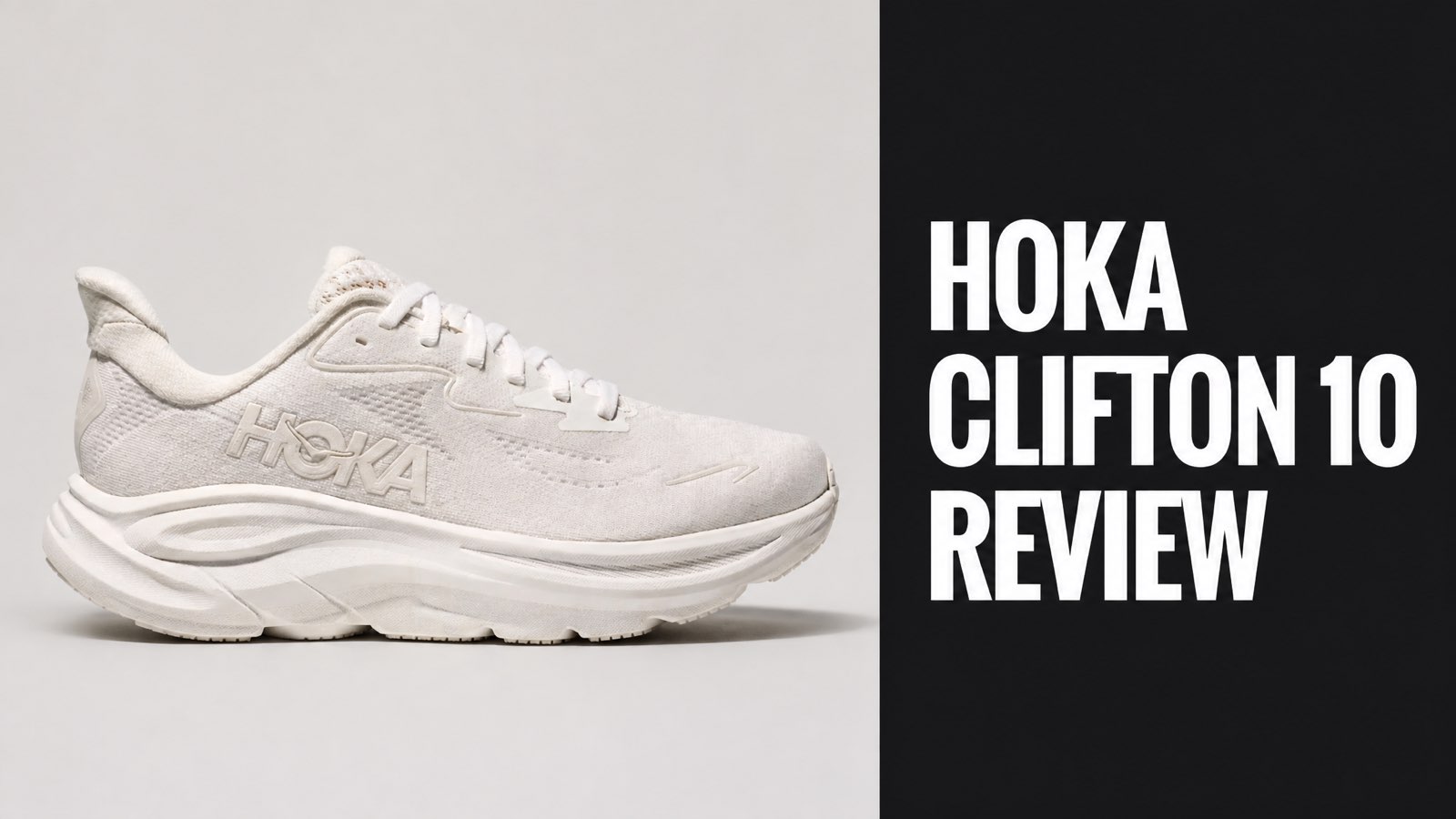
The Hoka Clifton 10 is a cushioned neutral daily trainer for road running and walking. Hoka released it in spring 2025 at $150. It’s the tenth version of the shoe that made Hoka famous. Runners, walkers, and nurses all wear it for easy miles, long runs, and long workdays on their feet.
This version adds 3 mm (0.12 in) of heel foam. It also moves to an 8 mm drop, a first. The CMEVA midsole and Meta-Rocker keep the ride smooth. A brand new last gives the forefoot more room. Testers praise the comfort, the fit, and the secure heel. But many find the foam dated, and the outsole wears out fast. So is the Clifton 10 still worth buying?
Here’s the big picture. The Clifton 10 is a safe, comfortable shoe that won’t surprise you. That’s great for easy runs and all-day wear. It’s less exciting for speed work. Below, you’ll learn how it works and how it fits. You’ll also see what reviewers say and how it stacks up against rivals.
What Is the Hoka Clifton 10?
The Hoka Clifton 10 is a neutral, high-cushion daily trainer built for easy runs, long runs, and everyday walking. Hoka launched it in 2025 at $150. Northern Runner calls the Clifton Hoka’s first everyday road shoe with a real market impact. Road Runner Sports calls it the base model for the whole Hoka brand. You see it everywhere these days, don’t you?
Why does the Clifton matter so much? RunningShoesGuru names the Clifton and the Bondi as Hoka’s two best sellers. In fact, Hoka’s revenue grew 28% in 2024. Nike grew only 1% in the same period.
Who wears it? Pretty much everyone. Road Runner Sports sees it on daily walks, at work, and as casual wear. Believe in the Run tester Caryn even wore it through a 14-hour nursing shift.
What Changed From the Clifton 9?
The Clifton 10 gains 3 mm of extra heel cushion, a higher 8 mm drop, and a wider forefoot. Northern Runner lists the men’s stack at 42 mm (1.65 in) heel and 34 mm (1.34 in) forefoot. The drop jumps from 5 mm to 8 mm (0.31 in). Hoka also built it on a brand new, roomier last. Is that a big deal? For a Hoka shoe, it really is. Every past Clifton used 5 mm.
Here’s the second change: the upper. Hoka swapped the mesh for a jacquard knit. Road Runner Sports felt it breathes a bit less. The tongue also lost its partial gusset.
The shoe got heavier, too. A men’s US 10 went from 9.4 oz (266 g) to 9.8 oz (278 g). The price rose from $145 to $150.
Clifton 9 vs Clifton 10:
| Spec | Clifton 9 | Clifton 10 |
|---|---|---|
| Drop | 5 mm (0.20 in) | 8 mm (0.31 in) |
| Weight (men’s US 10) | 9.4 oz (266 g) | 9.8 oz (278 g) |
| Upper | Engineered mesh | Jacquard knit |
| Tongue | Partly gusseted | Not gusseted |
| Price | $145 | $150 |
How Does the Hoka Clifton 10 Work?
The Hoka Clifton 10 works by pairing thick CMEVA foam with a curved Meta-Rocker sole that rolls each step forward. CMEVA is short for compression-molded EVA. The foam soaks up impact. The rocker moves you from landing to toe-off with less effort. RunningShoesGuru says that makes it easier to run in than flat-soled shoes. It’s a simple idea, isn’t it?
Now here’s the thing about the foam. CMEVA is light and airy, but it isn’t bouncy. RunningShoesGuru says it gives little energy return. It’s still the same foam family Hoka has used for years.
There’s also a rearfoot-focused Active Foot Frame. The midsole edges rise around the heel like low walls. Those walls guide the heel as it lands, even though the shoe is neutral.
How the Ride Works:
- The heel lands inside the raised foam walls of the Active Foot Frame.
- The CMEVA midsole compresses and absorbs the impact.
- The Meta-Rocker rolls the foot forward through midstance.
- The curved forefoot speeds up toe-off with less calf effort.
Why Did Hoka Switch to an 8 mm Drop?
Hoka switched to an 8 mm drop so the heel still feels right after the soft foam compresses. A Hoka contact explained the reason to the team at Believe in the Run. Heavy Clifton users crushed the heel foam over hundreds of miles of running. That wear made the old 5 mm drop feel almost flat. The extra heel foam fixes the problem. Pretty clever, isn’t it?
In plain English, the shoe is built to wear in, not wear out. Northern Runner logged over 100 miles (161 km) and felt no change in the ride.
Did testers notice the new drop? Barely. Believe in the Run’s Thomas felt it at first. After a few minutes, the difference faded.
What Are the Key Features of the Clifton 10?
The Clifton 10 combines a CMEVA midsole, a Meta-Rocker, a jacquard knit upper, and a Durabrasion rubber outsole. Believe in the Run lists those four parts as its key features. Northern Runner adds a firm plastic heel counter and a swallowtail Achilles tab. That tab cuts down rubbing on the back of the heel. Those small details add up to big comfort.
The lacing got smarter, too. A dual lace loop on the tongue stops it sliding sideways. An extra eyelet allows a runner’s knot for a snugger heel.
The outsole uses rubber pods only at high-wear spots. Meta Endurance says that design saves weight and adds flex. But the bare foam in between wears faster.
Key Features:
- Compression-molded EVA (CMEVA) midsole
- Early-stage Meta-Rocker geometry
- Rearfoot-focused Active Foot Frame
- Jacquard knit upper with a padded collar
- Durabrasion rubber outsole pods
- Regular, wide, and extra-wide options
How Does the Clifton 10 Fit?
The Clifton 10 fits true to size for most runners and has a roomier forefoot than earlier Clifton versions. Believe in the Run, OutdoorGearLab, and RunningShoesGuru all found it true to size. RunningShoesGuru calls it the most comfortable Clifton upper yet. You no longer need the wide version unless your feet are very wide. That’s great news, right?
But not every foot agrees. Meta Endurance tester Maisie found it narrow across the forefoot. She blistered on a 15-mile (24 km) run and cut it short.
Women’s sizing also shifted. One Believe in the Run reader said a women’s US 10 now matches a UK 8. That’s a bit snugger than the Clifton 9.
What Are the Benefits of the Hoka Clifton 10?
The Hoka Clifton 10 delivers soft, steady cushioning, a smooth rolling ride, and a secure, comfortable upper for daily miles. Meta Endurance’s Andy called it one of his favorite daily trainers. He ran everything from easy 5 km (3.1 mi) jogs to a 25 km (15.5 mi) long run in it. Every single run felt smooth and easy. Not bad for a basic trainer, right?
And it gets better: the shoe is stable for its height. Your foot sits inside the midsole, not on top. Northern Runner says that cradle reduces the wobble of a tall stack.
It’s also versatile. Meta Endurance found it handled tempo paces well. RunningShoesGuru says the firmer foam makes it easy to pick up speed.
Main Benefits:
- Deep cushioning for joint protection
- Smooth rocker transitions
- Stable ride for a high-stack shoe
- Comfortable, padded upper with good lockdown
- Works for running, walking, and long shifts
Is the Clifton 10 Good for Easy Runs?
Yes. The Clifton 10 is excellent for easy runs because its soft foam and gentle rocker keep the ride relaxed. Northern Runner calls it purpose-built for easy runs. It used the shoe mostly for 40 to 45 minute recovery runs. The tester’s posture felt strong and cadence stayed high. The shoe never pushed for speed. Isn’t that the point of an easy day?
The rocker is gentle, too. Northern Runner says it doesn’t drag tired legs forward on downhills. You stay in control on climbs and descents.
The foam also helps on hills. It compresses under the forefoot. That eases tension on the calves when climbing.
Is the Clifton 10 Good for Walking and Long Shifts?
Yes. The Clifton 10 is a strong walking and work shoe because its thick foam absorbs almost every step. OutdoorGearLab’s team tested it as a walking shoe on hard ground. Each step felt like walking on a pile of marshmallows, from the first to the 10,000th. Comfort scored 8 out of 10, its best test category. What more could a daily walker really ask for?
Long shifts are no problem either. Believe in the Run’s Caryn, a pediatric ICU nurse, wore it for 14 hours. She called the shift pain-free.
Watch the terrain, though. OutdoorGearLab says the soft sides collapse on uneven ground. It’s best on smooth pavement and indoor floors.
What Do Hoka Clifton 10 Reviews Say?
Hoka Clifton 10 reviews call it a comfortable, reliable daily trainer that plays it safe and lacks bounce. Believe in the Run gave it a B for design, value, and performance. RunningShoesGuru gave it 7 out of 10 from its expert. Users there scored it 9.7. OutdoorGearLab gave it 68 out of 100 as a walking shoe. The results are mixed, but mostly positive.
Why the gap between experts and users? Experts compare it to newer foams. Everyday runners care more about comfort. One reader ran three ultras in the Clifton 9 and still loved the 10.
The verdict on the ride splits, too. RunningShoesGuru found it firm. Meta Endurance found it soft and fun.
Review Scores:
| Source | Score | Main Take |
|---|---|---|
| Believe in the Run | B (design, value, performance) | Classic Clifton comfort |
| RunningShoesGuru (expert) | 7 out of 10 | Firm and overpriced |
| RunningShoesGuru (users) | 9.7 out of 10 | Fun for easy and long runs |
| OutdoorGearLab (walking) | 68 out of 100 | Plush but unstable on rough ground |
What Do Happy Runners Like?
Happy runners like the Clifton 10’s plush comfort, smooth transitions, and the way it still feels fresh after many miles. Believe in the Run’s Meaghan logged 40 miles (64 km) with no loss of cushioning. Caryn hit 50 miles (80 km) and said it felt brand new. Northern Runner passed 100 miles (161 km) with the same ride. That’s a really great sign, right?
Lockdown wins praise, too. Thomas found no hotspots and no heel lift. The odd, bulbous heel counter still locked his heel in place.
Some fans love the ride itself. One RunningShoesGuru reader ran a fartlek in it. He called it the most fun, bounciest shoe he’d ever worn.
What Are the Common Complaints?
Common complaints focus on dated EVA foam, big toe rubbing, a warm upper, and an outsole that wears quickly. OutdoorGearLab calls the foam dated and lifeless next to leading rivals. Believe in the Run’s Caryn wanted a supercritical foam upgrade. Two of its three road testers felt some big toe rubbing. Is that a deal breaker? For some feet, it really is.
Heat is another gripe. RunningShoesGuru says the padded upper suits cool climates. Meta Endurance’s upper took days to dry after wet runs.
Some runners dislike the heel walls. RunningShoesGuru felt pressure on the inner heel. Runs over 10 km (6.2 mi) left the tester sore.
How Does the Clifton 10 Compare to Rivals?
The Clifton 10 offers more stability and a classic rocker ride, but less bounce than most rivals. RunningShoesGuru names the ASICS Novablast, Saucony Ride, Brooks Ghost, and Adidas Supernova Rise. All four cost less and return more energy underfoot. Meta Endurance says the Novablast 5 is livelier, but far less stable. So which of those matters more to you?
The Saucony Ride 18 is less plush. Northern Runner says it’s more versatile for faster running. Both come in two widths.
The New Balance 880 v15 feels firmer and more responsive. Northern Runner calls it more of an all-rounder. The Brooks Ghost Max 2 is bouncier as well.
Rival Comparison:
| Shoe | Ride Feel | Best For |
|---|---|---|
| Hoka Clifton 10 | Soft to firm, stable rocker | Easy runs, walking |
| Hoka Bondi 9 | Plusher supercritical EVA | Max cushion comfort |
| Saucony Ride 18 | Less plush, more responsive | Mixed-pace training |
| New Balance 880 v15 | Firmer, less compression | All-round training |
| ASICS Novablast 5 | Lively and bouncy | Fun daily miles |
Clifton 10 vs Bondi 9: Which Is Better?
The Bondi 9 is better for pure cushioning, while the Clifton 10 is better for lighter, more responsive daily training. Believe in the Run’s Thomas says the Bondi suits pure comfort seekers. The Clifton adds a welcome touch of responsiveness. Meta Endurance found the Clifton much better at uptempo paces, too. So which camp are you in: comfort or speed?
Price splits them, too. The Bondi 9 lists at $170, or $20 more. RunningShoesGuru says its supercritical EVA feels plusher and livelier.
RunningShoesGuru even prefers the Bondi for most runners and walkers. It cites better outsole durability and more rocker. But the Clifton weighs less.
Who Should Avoid the Hoka Clifton 10?
Runners who want a bouncy, energetic ride should skip the Clifton 10 because its EVA foam offers little energy return. RunningShoesGuru says it lacks the fun factor of modern trainers. Road Runner Sports’ reviewer agrees the foam isn’t the most expressive at $150. Speed lovers can try the Hoka Mach 6 or Mach X 2 instead. Want more pop? Look there first.
Wide or bunion-prone feet need care. Two Believe in the Run testers felt big toe rubbing. Meta Endurance strongly advises a fit check before buying.
Trail walkers face a different issue. OutdoorGearLab rated support just 5 out of 10. The soft sides give way on uneven paths.
Skip It If You:
- Want a bouncy, high-energy ride
- Dislike rearfoot guidance walls
- Have bunions or very wide feet in the regular width
- Walk mostly on rough or uneven trails
- Run in hot, humid weather
Is the Clifton 10 Durable?
No. The Clifton 10 has a tough upper, but its soft outsole and exposed foam wear down faster than average. RunningShoesGuru saw heavy wear on the outer heel after 110 km (68 mi). Meta Endurance saw clear lateral forefoot wear after just 100 km (62 mi). The tester also felt the soft foam flatten a little. Is that ideal for a $150 shoe? Not really, no.
The upper is a different story. OutdoorGearLab calls it tough and abrasion resistant. The toe box even has a bit of rubber for protection.
Heavier runners face the biggest risk. Meta Endurance expects faster wear under more body weight. Midfoot strikers hit the bare foam most.
How Much Does the Hoka Clifton 10 Cost?
The Hoka Clifton 10 costs $150 at full retail price, which is $5 more than the Clifton 9. RunningShoesGuru notes the price rose $20 over two versions. The Clifton 8 cost $130. The average mid-range daily trainer costs about $140 today. So you pay a small premium for the famous Hoka name. Is that premium fair? It really depends on the deal you find.
Here’s the good news. Discounts are common now. RunningShoesGuru found it for $88 at Hoka, 41% off list price.
Return policies vary by store. Running Warehouse offers free shipping and 90-day returns. Road Runner Sports offers a 90-day fit promise for VIP members.
Where to Buy:
| Retailer | Recent Price | Key Perk |
|---|---|---|
| Hoka | From $88 | Full size and width range |
| Amazon | From $93 (men’s) | Fast Prime shipping |
| Zappos | From $108.50 | Free returns |
| Running Warehouse | $150 | Free shipping, 90-day returns |
| Road Runner Sports | $150 | 90-day VIP fit promise |
Is the Clifton 10 Worth the Price?
Yes. The Clifton 10 is worth the price on sale for runners and walkers who want reliable, well-cushioned daily comfort. Believe in the Run gave it a B for value. At $88 to $108, it’s a very fair deal for a proven shoe. At full price, RunningShoesGuru calls it overpriced. So timing matters a lot here, doesn’t it? Watch for seasonal sales before you buy.
The full-price math is harder. RunningShoesGuru says cheaper rivals offer more energy return. Its value score was just 6 out of 10.
Bottom line: buy it if you loved past Cliftons. Thomas at Believe in the Run sums it up well. It won’t blow you away, but it delivers.
Should You Try Eat Proteins?
Yes. Eat Proteins is worth trying if you want simple nutrition advice that helps your body recover from every mile. Great shoes protect your joints. But your muscles do the real work on every run and shift. Our team at Eat Proteins shares protein guides, easy meals, and honest gear reviews. Why stop at better shoes? Start fueling your body better, too.
Don’t wait for sore legs to slow you down. Small changes to your plate add up fast. Our experts make those changes easy to start today.
How Does Eat Proteins Help Runners Recover?
Eat Proteins helps runners recover with clear protein tips that support muscle repair and steady energy. Easy miles still break down muscle. Enough protein helps that muscle rebuild before your next run. Our coaches turn the science into quick meals and snacks. The Eat Proteins approach fits busy training weeks. Ready to feel stronger on your next run?
Pair the right shoes with the right fuel. Browse our guides and start with one simple change this week. Your legs will thank you.