
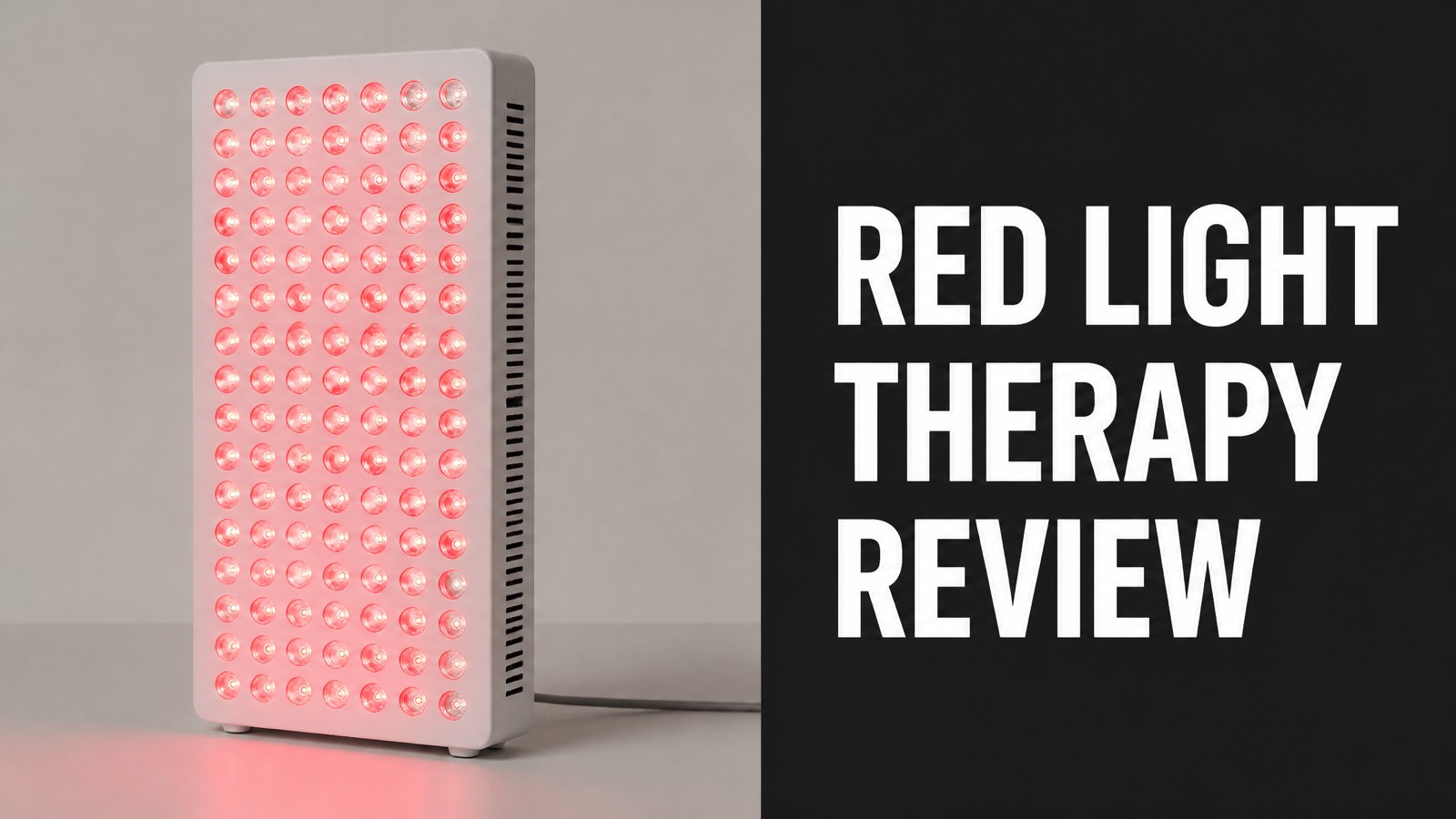
Red light therapy is a treatment that uses low levels of red and near-infrared light to stimulate cells. Devices include masks, panels, wands, caps, and beds. Home use has surged, so shoppers now ask whether the gear delivers real, lasting results for skin, pain, hair, and recovery.
Experts say the light feeds mitochondria and boosts collagen. Research shows promise for skin, hair, acne, and pain. Evidence stays modest, and clinic devices beat most home units. Prices range from $400 masks to $1,295 panels. Safety is good when users follow label guidance and wear eye protection during every session. A doctor check-in helps first.
The big picture is clear: consistent use matters more than hype. This review covers how the therapy works, who needs a doctor first, what reviews say, and whether the cost makes sense. Readers also learn which wavelengths, power levels, and labels to check before buying any device.
What Is Red Light Therapy?
Red light therapy is a treatment that exposes skin to low levels of red and near-infrared light. Experts also call it photobiomodulation. Devices use LEDs or low-energy lasers. Our team at Eat Proteins sees it sold as masks, panels, wands, caps, and full-body beds. Sessions run 10 to 15 minutes and feel painless, with only a mild warmth at a studio.
Other Names:
- Photobiomodulation
- Low-level light therapy
- Low-level laser therapy
- Low-power laser therapy
Here’s the thing: the light isn’t UV. Is it like a tanning bed? No. Tanning beds use ultraviolet rays that raise skin cancer risk. Red light therapy skips UV entirely, and WebMD found no evidence that it causes cancer.
In fact, dermatologists already offer in-office light therapy for acne, rosacea, and aging skin. Home devices only recently went mainstream. Shoppers now face dozens of brands with very different power levels.
How Does Red Light Therapy Work?
Red light therapy works by feeding light energy to the mitochondria inside your cells. Mitochondria are the cell’s energy sources. Researchers think the extra energy helps cells repair themselves. WebMD says the process uses very low heat, so it doesn’t hurt or burn the skin. Cells then make more energy, and that fuels repair in the treated tissue.
Red light travels deeper into skin than blue light. Why does that matter? The light reaches the dermis, where collagen and elastin form. Those proteins keep skin firm and elastic.
To be clear, the exact mechanism isn’t fully proven. Researchers are still working out the best dose, session length, and frequency. UCLA Health adds that the long-term effects of the therapy remain unknown.
What Devices Are Used for Red Light Therapy?
Red light therapy devices come in five main forms: masks, panels, wands, caps, and beds. Each form targets a different body area. Masks treat the face, panels cover small to large zones, and beds expose the whole body. The right form depends on the area being treated. Prices and power vary widely across all five forms, so specs matter more than labels.
Device Types:
| Device | Coverage | Best For |
|---|---|---|
| Mask | Full face | Wrinkles and acne |
| Panel | Small to large areas | Skin and body zones |
| Wand | Very small spots | One knee or a facial spot |
| Cap or helmet | Scalp | Hair regrowth |
| Bed | Whole body | Full-body exposure |
Wirecutter tested 11 red-light devices over three months. Its three favorites were a rigid mask, a soft mask, and a wand. Testers called most devices comfortable and seemingly beneficial for firmness. They called relaxing self-care the real strength.
And here’s the part worth noting: Everyday Health quotes dermatologists on home results. They say devices deliver visible gains within weeks of consistent use. Those same experts say at-home units are no substitute for a doctor’s office.
Which Wavelengths Matter?
Wavelength decides how deep the light travels into the body. Red light near 630 to 660 nanometers (nm) treats skin. Near-infrared light near 810 to 850 nm reaches deeper. Wirecutter’s top mask pairs 630 nm red with 830 nm near-infrared, plus 415 nm blue for acne. Dermatologists use these ranges as the benchmark for quality, so buyers compare devices fairly.
Power matters too. Irradiance measures light power in milliwatts per square centimeter (mW/cm²). Wirecutter’s dermatologists wanted at least 30 mW/cm² for soft masks and 50 mW/cm² for hard masks. Wands needed at least 49.5 mW/cm².
Higher numbers sound better. Does distance matter too? Yes. Garage Gym Reviews notes that direct contact shortens the path infrared light travels. That helps it reach deeper muscle and joints.
How Do Home Devices Compare With Clinic Sessions?
Clinic devices use stronger lights than most home units. WebMD says home devices are usually less powerful and take longer to work. A typical studio session lasts 10 to 15 minutes. Restore, a studio chain, suggests three to five sessions each week. Studios also supply goggles, so eye safety needs no extra purchase. Home users buy protection themselves.
Now, watch this: Wirecutter says in-office treatments use the same wavelengths as home gear. The panels are simply more effective. So what’s the real gap? Power, plus a trained provider who handles dose and eye protection.
What Are the Benefits of Red Light Therapy?
Red light therapy shows promise for skin, hair, pain, and cognition, but the evidence is uneven. WebMD calls the research ongoing. UCLA Health lists aging skin, hair regrowth, acne, cognitive function, and chronic pain as the main benefits. Most trials are small, so larger studies are still needed. Anyone expecting a transformation will be disappointed.
Evidence Snapshot:
| Concern | What Research Shows |
|---|---|
| Aging skin | FDA-cleared home devices exist; a mask study showed gains after three months |
| Hair loss | Reviews show regrowth and thicker hair in androgenic alopecia |
| Acne | A small study found less oil and better lesions after six treatments |
| Pain | Reviews are mostly positive, but more studies are needed |
| Dementia | A 2021 review found benefits, but studies were small and lacked controls |
| Weight loss | Body contouring effects are temporary, not real weight loss |
Bottom line: the evidence is real but modest. Why does that matter? Small trials and short follow-ups limit what any brand can promise. Claims of miracle results go beyond the data.
Does Red Light Therapy Improve Skin?
Yes. Red light therapy improves skin texture, fine lines, and sun damage in several studies. The light stimulates collagen, which helps elasticity. UCLA Health cites a mask study that found better skin quality after three months of use. FDA-cleared devices exist for aging skin. Dermatologists also say results appear within weeks of regular use at home.
The results lasted up to a month after therapy stopped, per that study. That’s encouraging. But what does it mean for you? Consistency matters, because skin gains fade once the sessions end.
Acne works differently. Why? Red light calms inflammation instead of destroying bacteria like blue light does. In a small study, six treatments every two weeks cut skin oil and improved lesions. No adverse effects appeared.
Does Red Light Therapy Relieve Pain?
Yes. Red light therapy relieves some types of pain, especially pain from inflammation. A review of 11 studies found mostly positive results. The authors still asked for more research. WebMD also reports short-term help for morning stiffness in rheumatoid arthritis. Benefits show up most for tendon, joint, and muscle complaints in the studies reviewed.
UCLA Health cites gains in fibromyalgia, knee osteoarthritis, and non-specific low back pain. But in many cases the pain returned within weeks of ending therapy. Evidence for other arthritis types is mixed.
A review of 17 trials on tendinopathy found low-to-moderate quality evidence for less pain and better function. Is that strong? Not quite. Our experts at Eat Proteins call it a fair reason to try, not a cure.
What Do Red Light Therapy Reviews Say?
Red light therapy reviews praise comfort and relaxation more than dramatic results. Wirecutter’s testers found most devices comfortable and seemingly beneficial for firmness and fine lines. They named relaxing self-care as the strongest benefit. Reviewers from several outlets cluster around that same theme. Dramatic claims rarely appear in tested reviews.
What Do Users Like?
Users like the easy routine, the short sessions, and visible changes within weeks. Everyday Health testers ran each device for six weeks. One Wirecutter tester saw softer lines around her mouth within a month. Another said her broken-out areas shrank by morning. Mask users also praise how easily a program fits an evening routine, and that helps consistency.
Comfort wins fans too. The reason is simple: fit and eye protection keep people using a device. Wirecutter’s top rigid mask, the Shark CryoGlow, has adjustable straps and plush silicone eye pads.
What Are the Common Complaints?
Common complaints center on price, fit, and missing eye protection. Wirecutter’s top soft mask costs around $400 and ships without eye shields. Its fit is just okay. Wirecutter also skipped cheap Amazon masks that looked too good to be true. Weak instructions and unclear power claims frustrate buyers too, and returns follow. Refund requests follow.
Top Complaints:
- High prices for strong devices
- Weaker power than clinic gear
- Loose or awkward fit on soft masks
- No eye shields in the box
- Results fade after use stops
The bad news? Results don’t last on their own. Do results stay forever? No. UCLA Health says chronic pain often returned within weeks of stopping. Ongoing use is part of the deal.
Is Red Light Therapy Safe?
Yes. Red light therapy is mostly safe when used correctly, especially in the short term. It uses no UV rays, and WebMD found no evidence of a cancer link. UCLA Health says devices labeled FDA-cleared pose a low risk. Long-term effects are still unknown, so research continues. Experts still recommend a doctor visit first for any new user starting out.
Still, risks exist. An early trial found that high-level red LEDs caused blistering and redness. Eye damage is possible too. This is important: protective goggles belong on every session near the face.
Watch the label. What does FDA approved mean here? Nothing. UCLA Health says only FDA-cleared counts, and the FDA reviews device safety, not effectiveness.
Who Should Avoid Red Light Therapy?
Anyone with skin cancer history, eye problems, or open wounds needs a doctor’s approval before using red light therapy. Everyday Health gives that guidance. The American Academy of Dermatology Association also urges a dermatologist visit first, and it urges extra care for darker skin. Extra care applies to anyone with sensitive skin or a medical history.
Talk to a Doctor First With:
- A history of skin cancer
- Eye conditions
- Open wounds
- Darker skin tones
- Pregnancy
Darker skin tones are more sensitive to red light, and that sensitivity can cause dark spots (hyperpigmentation). Pregnancy data is thin. WebMD reports that one study of 380 pregnant women found laser light treatments safe.
How Much Does Red Light Therapy Cost?
Red light therapy costs a few hundred dollars for masks and over $1,000 for strong panels. Wirecutter capped its testing budget at $600. Its priciest top pick, a soft mask, runs around $400. Garage Gym Reviews lists a compact full-spectrum panel at $1,295 for stronger coverage. Studio sessions are another route when a device is out of budget for now.
Price Examples:
| Item | Price |
|---|---|
| Omnilux Men soft mask | Around $400 |
| Wirecutter testing budget cap | $600 |
| Charging stand for the Shark mask | About $70 |
| RLT Total Spectrum COMPACT panel | $1,295 |
Cheap options flood Amazon. Wirecutter skipped them as dupes. Does cheap ever work? Possibly, but unverified power claims make it a gamble. A device that never reaches proper irradiance wastes every dollar.
Is Red Light Therapy Worth the Price?
Yes. Red light therapy is worth the price for buyers who want firmer skin or relaxation and who use it consistently. It isn’t worth it for fast fixes. Consumer Health Digest cites visible results after four to six weeks of regular use, and benefits fade after stopping. Buyers must also accept a slow start before real results appear and sessions stay regular.
Think of it this way: a mask used 10 minutes daily beats a pricey panel left in a closet. Is it a quick fix? No. Studio sessions suit people who want pro power. Home gear wins on convenience.
Should You Try Eat Proteins?
Yes. Eat Proteins gives you straight answers on wellness gear before you spend a dollar. Our team reads the research, checks the claims, and flags the hype. Red light therapy has real promise and real limits. And here is the best part: you get both sides of the story before buying. Our readers value that honest approach, and we keep it simple and clear.
Don’t buy on social media hype. Compare more Eat Proteins reviews before you commit. The right device pays off. The wrong one gathers dust in a drawer.
What Should You Do Next?
Your next move is a simple five-step plan built around one clear goal. Our experts at Eat Proteins say a clear goal prevents wasted money. Follow the steps below, and the choice gets easy. Skip them, and a drawer of unused gadgets is the likely result. Skipping steps risks a drawer of unused gadgets and wasted money for every buyer who rushes in today.
Next Steps:
- Talk to a doctor or dermatologist before starting.
- Pick one goal, such as skin, hair, or pain.
- Choose an FDA-cleared device that matches that goal.
- Check the wavelength and irradiance on the spec sheet.
- Use the device consistently for four to six weeks and track results.
Ready to dig deeper? Explore more Eat Proteins reviews today. Every week you wait is another week guessing. Your skin, joints, and wallet will thank you.