
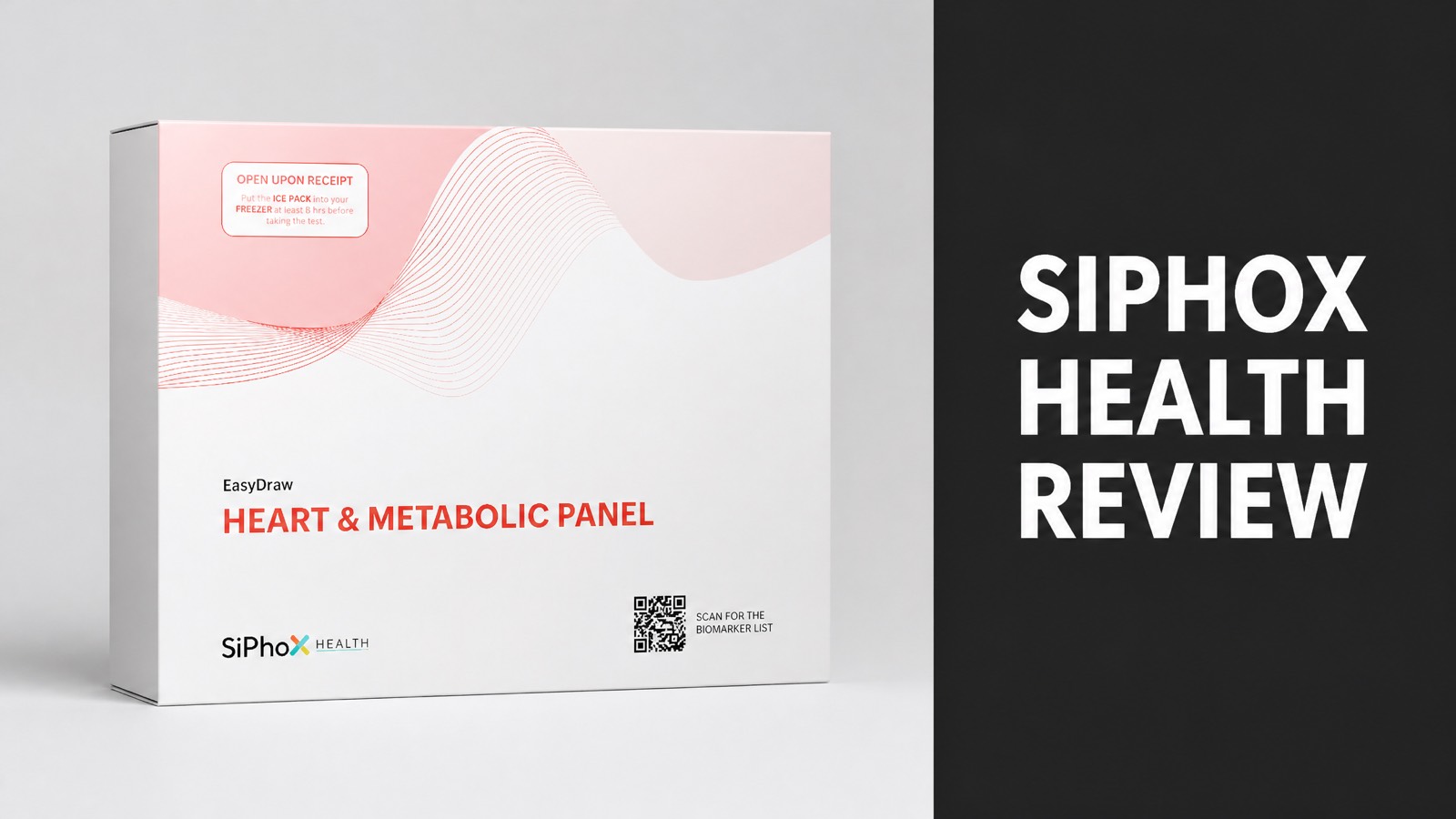
SiPhox Health is an at-home blood testing service that launched in 2020. Members collect a small blood sample at home, mail it to a partner lab, and read their biomarker results online. This review explains how the service works, who it fits, and where it falls short for some users.
Our team covers how the kit works, what each panel tests, and how accurate the results are. The review also shares what customers say and how SiPhox Health compares with InsideTracker. Safety, medical limits, and the cost of joining get a clear answer too. Each section opens with a direct verdict, and tables sum up the key facts at a single glance.
The service suits regular testers who want clear data and simple next steps. Some users report app glitches and rare support delays. By the end, readers will know the strengths, the weak spots, and whether this membership fits their health goals and budget. A practical next step closes the guide.
What Is SiPhox Health?
SiPhox Health is an at-home blood testing company that mails members a kit and returns lab results online. The company launched in 2020. Members collect a small sample at home, ship it back, and read their biomarker data in a dashboard. The kit arrives by mail and every step happens on your own schedule. Support staff help with questions along the way.
Core Features:
- At-home blood collection kit
- Online biomarker dashboard
- Supplement and lifestyle recommendations
- Wearable and lab-upload integration
- One-on-one coaching access
In fact, the platform goes beyond a single test. Our team at Eat Proteins sees it as a tracking hub. The platform adds supplement tips, wearable data, and coaching on top of the lab numbers.
To be clear, SiPhox Health is a technology company. Independent third-party labs run the actual analysis. The company says it is not a medical provider.
Who Is SiPhox Health For?
The service fits people who want regular biomarker data without visiting a lab. Longevity trackers, athletes, and busy professionals form the core audience. Members can test monthly, quarterly, or every six months. The model suits anyone who tracks health markers over time and wants clear numbers. Convenience drives most sign-ups. Needle fear is common too.
The reviewer on Bob’s Review Warehouse hated needles. He called the lab visit draining. Why did he switch? He wanted a cheaper, easier option at home.
How Does SiPhox Health Work?
SiPhox Health works in four steps: join, pick a health focus, test at home, then review insights. Kits ship within three days of joining. Members swap panels at any time. Results land in the dashboard roughly seven to ten days after the test. Each step is guided online and by live support. Members can test monthly or wait six months. Timing is flexible.
How It Works:
- Join and choose a panel focus.
- Receive the kit within about three days.
- Collect the blood sample at home in around five minutes.
- Mail the sample back for same-day pickup and lab processing.
- Review results, supplement tips, and an action plan online.
Here’s the thing: the process is simple on paper. Is it really that easy? Mostly, yes. You order, collect, and mail the sample. The platform then turns raw numbers into supplement and lifestyle steps.
And there’s an AI layer. Members can chat with Sai, the company’s AI longevity assistant, about their results. At the same time, coaches handle deeper questions.
What Does the EasyDraw Kit Involve?
The EasyDraw kit collects blood from the upper arm without a vein draw or fingerprick. The company says the process takes five minutes. A Certified CLIA lab processes the sample after pickup. The kit packs every item in one box. Members reuse the box to ship the sample back. Support staff stay available during the draw. Steps are printed in clear order.
Live help is included. Members can join a 1:1 call for the first collection. Reviewers on Trustpilot praised support staff who walked them through each step. One user even needed a second try the next day.
What Does SiPhox Health Test?
SiPhox Health tests up to 62 biomarkers across heart, metabolic, hormone, thyroid, liver, kidney, and nutrition systems. The top Ultimate 360 panel covers that full range. Standard panels cover fewer markers. Heart, thyroid, hormone, and nutrition markers all appear in one report. Members choose a panel that matches their goals. Add-ons extend that.
Panel Comparison:
| Panel | Focus | Access |
|---|---|---|
| Longevity Essentials | Heart, metabolic, hormone, nutrition | Included with membership |
| Thyroid Focus | Metabolism, energy, mood | Included with membership |
| Hormone Focus | Performance, fatigue, fertility | Included with membership |
| Heart & Metabolic | Heart risk, weight, healthspan | Included with membership |
| Ultimate 360 | Up to 62 biomarkers | Membership plus upgrade |
A routine physical checks far fewer markers. That’s the real selling point. The YouTube reviewer started with a 40-biomarker kit and noted a 60-marker upgrade existed.
Add-ons exist too. Members can add IGF-1 and a Complete Blood Count to most panels. What’s more, the dashboard shows trends across tests, so one result never stands alone.
Which SiPhox Health Panels Are Available?
Four panels come with membership, and two more are paid upgrades. The upgrades are the GLP Optimization Panel and Ultimate 360. Members can switch panels without extra cost for the included four. Optional add-ons such as IGF-1 and a Complete Blood Count extend the included panels for members with specific goals. Each panel suits a different health goal.
The GLP panel targets people on GLP-1 medication. The panel tracks liver, kidney, nutrition, hormones, and body composition trends. Does it treat anything? No. The panel only monitors, so treat it as a bundle.
Does SiPhox Health Actually Work?
Yes. SiPhox Health delivers real lab data with clear explanations, though accuracy depends on collection quality. Several Trustpilot reviewers said results matched their recent in-lab bloodwork. Others praised how clearly trends were shown. Each report adds recommended actions. Reviewers found the report easy to act on at home. Support answers questions.
What Members Get Back:
- Biomarker values against target ranges
- Systems scores such as heart and liver health
- Supplement and lifestyle actions
- Trend comparisons versus the previous test
Does that mean every number is perfect? Not quite. A third-party comparison from Nucleus noted that some users saw metrics differ from standard venous draws. The company says it verifies samples against venous tests.
The good news? Results come with context. Each marker links to an action, such as taurine or vitamin D steps. Bottom line: the data is useful, but confirm odd results with a doctor.
Are SiPhox Health Results Accurate?
Accuracy is generally rated as reliable, with a few reported mismatches against venous draws. The partner lab holds CLIA certification. Nucleus also reported that the lab partner name was not publicly disclosed. The company says it checks samples against venous tests and pairs each report with clear target ranges. Reviewers largely agree. Results vary.
One Trustpilot reviewer valued the transparency of the workflow. Another said results closely matched lab work. Is that enough proof? Not for your own blood. The sample size is small.
What Do SiPhox Health Reviews Say?
Customer reviews lean strongly positive for the testing process and mixed for the mobile app. Trustpilot shows 561 reviews with an overwhelmingly positive summary. App Store reviews split between praise and frustration. Customers rate the lab side highly. App complaints focus on navigation and missing results. Each platform shows a different side. Read both.
Review Snapshot:
| Source | Overall Tone | Main Theme |
|---|---|---|
| Trustpilot | Very positive | Easy collection, helpful support |
| App Store | Mixed | Great dashboard, buggy navigation |
| YouTube review | Positive | Cheaper and easier than a lab visit |
Here’s why that split matters. The lab experience and the software experience are separate products. A user can love the kit and still dislike the app.
So read both sides before joining. Our experts at Eat Proteins always check Trustpilot and app reviews together. One source rarely tells the whole story.
What Do Users Like?
Users praise the easy collection, clear results, and responsive support team. One reviewer said the live session made the draw quick and painless. Another liked seeing trends and context around each marker. Several reviewers also called the whole experience convenient and easy to repeat. Support quality comes up often in positive reviews. Coaches help.
Others credit the health coaching. One user said the coach clarified results and gave a thorough action plan. App users also like the body scan and the single-dashboard view.
What Are the Common Complaints?
Common complaints center on the mobile app and occasional kit registration or support problems. One App Store reviewer said tapping a result closed the app. Another could not delete imported labs. Support delays were reported by a small number of users, and pricing worries appeared in app reviews. Most issues look fixable. The app remains the weakest part.
One Trustpilot reviewer failed five times to register a kit and reported no reply from support. The reviewer asked for a refund. Is that typical? No, it’s a single report. But it shows where friction can appear.
How Does SiPhox Health Compare to InsideTracker?
SiPhox Health offers at-home collection and coaching, while InsideTracker requires a phlebotomist blood draw. InsideTracker launched in 2009 and tests up to 48 biomarkers. SiPhox Health launched in 2020 and tests up to 50 in the Nucleus comparison. Both services pair lab results with an action plan. InsideTracker offers no coaching. Pricing differs sharply.
Quick Comparison:
| Feature | SiPhox Health | InsideTracker |
|---|---|---|
| Launched | 2020 | 2009 |
| Collection | At home | Phlebotomist draw |
| Biomarkers | Up to 50 | Up to 48 |
| Coaching | Yes | No |
| Starting price | $83 per kit | $348 per year |
By comparison, the price gap is large. Nucleus listed SiPhox kits from $83 and InsideTracker plans from $348 per year. Prices change, so check both sites before buying.
Both are HSA and FSA eligible. Neither takes insurance. And both send samples to CLIA-certified labs.
How Do the Test Methods Differ?
The methods differ mainly in who draws the blood and where. SiPhox members collect their own sample at home. InsideTracker members visit a certified phlebotomist or request a mobile draw in select regions. The two services share the same goal, which is a clear view of key biomarkers and practical next steps. Cost and convenience separate them most of all.
Venous draws are the clinical standard. Are they better? Clinically, yes. At-home collection trades some of that for convenience. For many people, that trade makes regular testing far more likely.
Is SiPhox Health Legit and Safe?
Yes. SiPhox Health is a real company that uses independent CLIA-certified labs and publishes clear disclaimers. The Trustpilot base is large and mostly positive. The sample collection itself carries very little physical risk. Reviewers on Trustpilot also described smooth customer service for results and questions. Live help is offered for first collections.
Safety Notes:
- Labs are independent and CLIA certified
- Results are informational, not a diagnosis
- Elevated markers need a doctor visit
- Medication changes need medical guidance
The catch? The company is not a doctor. The company states its content is general information only. Always discuss abnormal values, such as elevated AST, with a licensed provider.
Is SiPhox Health a Medical Provider?
No. SiPhox Health describes itself as a technology company, not a lab or medical provider. Independent third parties deliver the laboratory and medical services. The terms of service say the content is not medical advice. Members should treat every report as information for a doctor conversation rather than a diagnosis or treatment plan. Always ask a doctor.
Such wording is standard for the category. To put it simply, treat the report as a conversation starter. Bring it to your doctor for any treatment decision.
How Much Does SiPhox Health Cost?
SiPhox Health runs on a membership model, and the pages reviewed did not list a fixed monthly price. The company says members can cancel anytime. A third-party comparison from Nucleus listed single kits starting at $83. Panel upgrades add cost on top of that base. Costs vary by panel, so compare options. Coaching and wearable sync come with it. Check rates.
Cost Factors:
- Membership versus single kit
- Panel upgrades such as Ultimate 360
- Optional IGF-1 and CBC add-ons
- HSA or FSA payment options
Because pricing shifts, confirm the current rate on the checkout page. Ask what each panel and upgrade adds. Also check HSA or FSA eligibility, since the company says it qualifies.
What does a membership include? Coaching access, supplement recommendations, wearable integration, and the dashboard. The Ultimate 360 and GLP panels cost extra.
Is SiPhox Health Worth the Price?
Yes. SiPhox Health is worth the price for people who test regularly and use the coaching and tracking. The YouTube reviewer called it a fraction of the cost of a traditional lab panel. Value drops if you test once and ignore the plan. Members who follow the supplement and lifestyle actions see the clearest return. Casual users gain less than heavy testers.
Frequent testers get the most out of it. Trend lines need multiple data points. Does a one-off kit matter? Far less than a steady habit does. Honestly, consistency drives the value here.
Should You Try Eat Proteins?
Eat Proteins helps you turn lab data into daily nutrition choices that actually move your numbers. Blood work shows the gaps. Your plate closes them. Our coaches at Eat Proteins focus on protein intake, meal planning, and simple habits. Every guide on the site is written to be practical. Our team keeps each plan simple. Start with one habit this week.
You’ve seen what SiPhox Health can measure. Now what will you do with it? Don’t let another test sit unread in a dashboard. Start with the Eat Proteins guides and build a plan today.
What Should You Do Next?
The next step is to pick one biomarker goal and match it with one nutrition habit. Vitamin D, triglycerides, and glucose are common starting points. Retest in three to six months to confirm progress. The approach works best when each change is tracked against the next lab report. Small, steady changes beat big resets. Share results with your doctor too.
Keep it simple. Our team at Eat Proteins recommends one change at a time. Do big overhauls last? Rarely. Small steps stick.